|
|
|
|
|
|
 Photo: Fukuchi-in (fukuchiin.com)
Japan has two great traditions of physical and mental rest. The first is Buddhist contemplation — early bedtime, dawn chanting, vegetarian meals on lacquerware. The second is onsen bathing — sliding into mineral-rich water that has been heated by the earth itself, often for a thousand years before you got there. The strange thing is that, on most trips, these two traditions live on completely separate itineraries. You do a temple stay one week, a hot-spring inn another.
A small number of shukubo combine the two on the same site. Not many — fewer than ten in the entire country, by a strict reading of the Onsen Law. This article maps those temples. It is not a list of shukubo with a nice bath. It is a list of temples where the water in the tub comes from a registered natural spring, plus a few honourable mentions with very good cypress baths fed by mountain water. We will be clear about which is which.
The Japanese word ofuro (お風呂) just means bath. It can be any bath — a soak in your apartment tub, the wooden tub at a temple, the heated pool at a guesthouse. The water can be ordinary tap water, warmed in a boiler. Most shukubo across Japan have an ofuro of this kind. It is perfectly pleasant. It is not onsen.
Onsen (温泉) is regulated by the Onsen Law (温泉法), enacted in 1948. To be called onsen, the water must come from a natural spring and either emerge above 25°C at the source or contain a defined minimum concentration of one or more named minerals — sulphur, sodium chloride, iron, calcium sulphate, and so on. Every certified onsen posts a 温泉成分分析表 (analysis sheet) at the bathhouse showing source temperature, mineral content, and the date of last testing. If the sheet is on the wall, the bath is real onsen. If not, it is ofuro.
The eight temples below are the ones we consider worth flagging for onsen-seeking travellers. We will tell you, honestly, which are unambiguous onsen, which are excellent spring-fed cypress baths that fall outside the strict legal definition, and which are simply marketed loosely. The distinction matters because if you have travelled across Japan partly for the soak, you deserve to know what is actually in the tub.

The ranking below is ordered by how unambiguously the bath qualifies as onsen, and by how well it integrates with the rest of the temple-stay experience. Prices, room counts, and exact bath schedules change year to year — confirm at booking. What does not change is the spring source.
Fukuchi-in is the flagship and the only proper onsen on Mt. Koya proper. The temple sits on the 900–1,000m granite plateau where Kukai founded the Shingon school in 816. Real onsen here is geologically improbable — the plateau has no volcanic activity — so Fukuchi-in pipes its water from a registered sulphate/calcium spring source within the temple property. The bathhouse offers both an indoor uchiyu and an outdoor rotenburo, the latter half-screened by cedar and open to the mountain air. The water comes out faintly mineral, not strongly sulphurous, and is fine for sensitive skin.
The rest of the shukubo is also among the most polished on Koyasan. Some rooms have private en-suite facilities, the shojin ryori dinner is presented at an unusually high level, and the morning Goma fire ceremony is held in a Shingon main hall built around a 12th-century inner sanctum. Fukuchi-in is the recommended single-night choice for travellers who want onsen and temple stay genuinely fused on the same site.
Practical notes: the bath is open from roughly mid-afternoon until the 21:00 temple curfew, and reopens for an early morning soak before breakfast. Both indoor and outdoor sections are split by gender on a fixed schedule; check the printed timetable in your room on arrival, because the men's and women's hours rotate. Yukata and small towels are provided, but bring your own larger drying towel if you prefer one. The garden visible from the outdoor tub is the formal Edo-period karesansui garden registered as a Place of Scenic Beauty — designed to be looked at, not walked on, which is conveniently also the right position for a long sit in 41°C water.
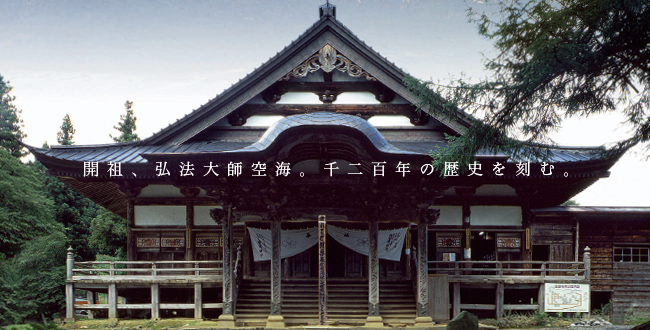
Churen-ji sits at the foot of Mt. Yudono, the holiest of the three Dewa Sanzan peaks in Yamagata Prefecture. Mt. Yudono is famous in Shugendo circles for a single feature: a sacred red boulder from which mineral hot water flows continuously. The shukubo here taps water from the same volcanic field. Bathing is part of the pilgrim discipline, not an add-on. Churen-ji is also known for housing one of Japan's sokushinbutsu — a self-mummified ascetic monk — which gives the place a gravity quite different from a polished commercial inn.
The rooms are simple, the meals are mountain-style shojin ryori, and the bath is a small uchiyu fed by spring water. If you want a no-marketing pilgrim experience with genuine onsen, Churen-ji ranks higher than almost any modern shukubo on the list.
Practically, Churen-ji takes some effort to reach. The closest rail station is Tsuruoka on the JR Uetsu Line, from which a rural bus or taxi covers the remaining 90 minutes inland toward the Yudono valley. Public transport thins out after early afternoon, so plan arrival in daylight and confirm the return schedule before you check in. The shukubo accepts walk-ins less often than commercial inns; book ahead by phone or through a Dewa Sanzan-specialised intermediary. English support is limited, and a few short Japanese phrases or a translation app go a long way.
Dainichi-bo is the sister-temple to Churen-ji, also at the foot of Mt. Yudono. It similarly houses a sokushinbutsu, and the spring-water bath is drawn from the same volcanic system. Most pilgrims pick one or the other; some serious Shugendo travellers stay at both back-to-back. The bath itself is small — a single tub in a tiled room — so this is not the place for a long luxurious soak. It is, however, a thoroughly real onsen at a thoroughly real pilgrim temple.
Tip
Both Yudonosan temples sit in a Shugendo precinct where photography is restricted in certain areas, especially near the sacred boulder of Mt. Yudono itself. Read the temple guidance carefully and put the camera away when asked.
Saikan is the pilgrim's lodge halfway up the 2,446-step stone staircase that climbs Mt. Haguro, the most accessible of the Dewa Sanzan peaks. The shukubo is run by the Hagurosan Shugendo lineage, and the bath is a traditional cypress tub fed by mountain spring water. Whether this counts as onsen in the strict legal sense is borderline — the source temperature is moderate, and the mineral profile sits at the edge of the legal threshold. What is not borderline is the quality of the bathing: a wooden tub in a wooden room, with the smell of hinoki cypress and the sound of the surrounding cedar forest.
Saikan is the most atmospheric of the Dewa Sanzan shukubo. The 600-year-old building, the yamabushi-prepared shojin ryori dinner, and the proximity to the Five-Storied Pagoda and Sanjingosaiden shrine at the summit make it the strongest single-temple base for the region. Add it to any Dewa Sanzan itinerary.
Two things to know before booking Saikan. First, the lodge is up the stone staircase, not at the trailhead, so you climb to your room with your overnight bag. A small backpack is fine; a full suitcase is not. Second, the dinner is structured around mountain vegetables and tofu prepared by the resident yamabushi household, and portions assume you have just walked up 2,446 steps. If you arrived by the back road or the summit bus, the meal may feel generous. Either way it is one of the most distinctive shojin ryori dinners in northern Japan.

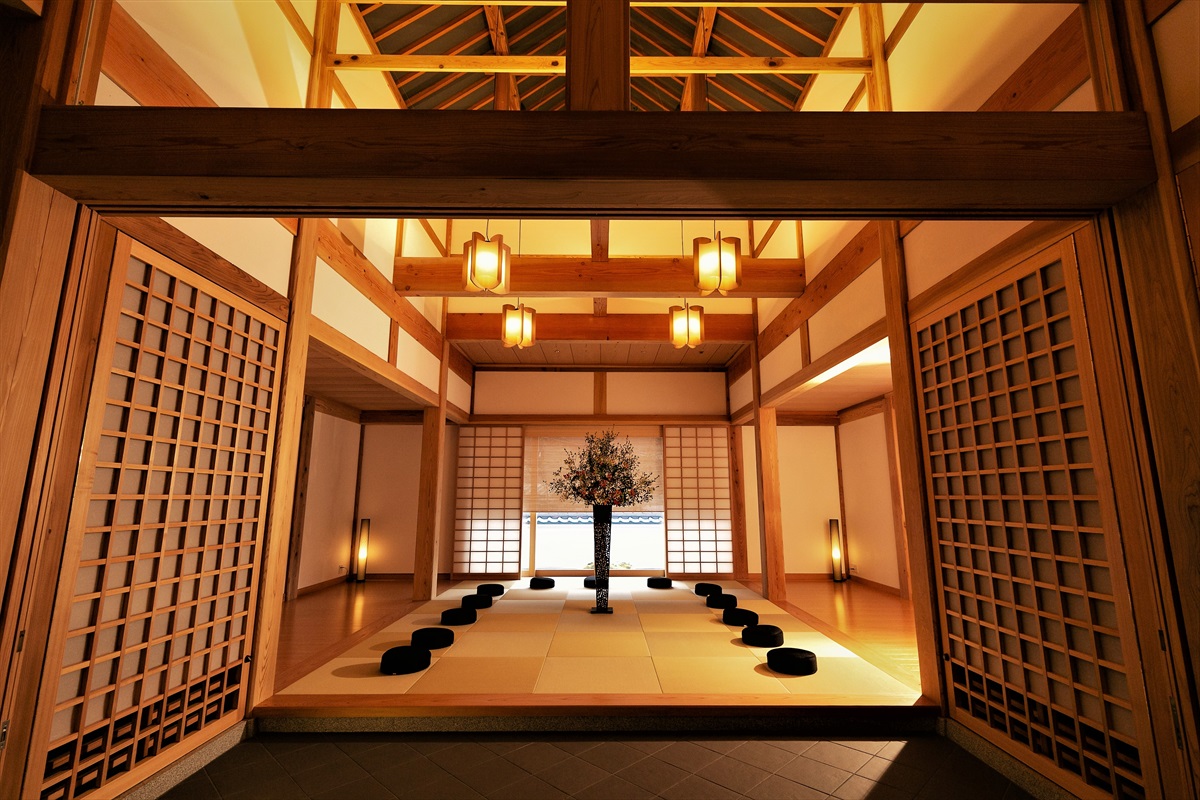
Hakujukan is the contemporary luxury option, built in 2019 immediately next to the great Soto Zen monastery of Eiheiji in Fukui. The design is by architect Kengo Kuma's studio influence — pale wood, restrained lines, large windows — and the bath is a hinoki cypress tub fed by local Fukui spring water. Strictly speaking it is not classified as full onsen under the Onsen Law; it is spring-fed cypress bathing of a very high standard. The temperature, mineral, and skin feel are excellent.
Hakujukan is also the only temple stay on this list where you can attend zazen and morning service at Eiheiji proper — a 750-year-old training monastery for Soto Zen monks — and then come back to a modern bed, a heated cypress bath, and a contemporary kitchen interpretation of shojin ryori. For travellers who want austerity and comfort on the same trip, this is the place.
Access is straightforward by Japanese rural-temple standards. Take the shinkansen to Fukui Station on the Hokuriku line, then the Eiheiji Liner direct bus, or local train plus connecting bus, for a total of roughly 90 minutes. Hakujukan accepts international credit cards, has full English support at reception, and runs a structured guest program that pairs an evening orientation lecture with an early-morning visit to Eiheiji for zazen and the monastic morning service. The bath is open later than at traditional shukubo — usually until 23:00 — making this also the gentlest option for travellers who simply cannot wind down by 21:00.
Shozen-in is a Tendai-lineage shukubo near the foot of Mt. Haguro. The shared cypress bath is fed by a mountain spring, and while the temple does not aggressively market it as onsen, the source is the same Dewa Sanzan water system as Saikan and the Yudonosan temples. The bath is small and traditional, the building is over a century old, and the surrounding cedar avenue is one of the most beautiful approach paths to any shrine-temple complex in Japan.
Pair Shozen-in with a half-day at Haguro summit or with a Saikan night — they sit close enough that a two-night Haguro plan is realistic.
Kongo Sanmai-in is one of Koyasan's historic temples, founded in 1211. The shukubo bath is an ofuro that draws from a local mountain spring source on the plateau. By the strict reading of the Onsen Law it does not classify as onsen — the source temperature and mineral content fall below the legal threshold — but the water is unambiguously spring water rather than municipal tap, and the bath itself is in a classical wooden room with a restful atmosphere.
We include Kongo Sanmai-in because it is one of the few Koyasan shukubo that is honest about drawing local spring water. It is a softer claim than Fukuchi-in but not a false one.
Tonan-in is a smaller Koyasan shukubo with a traditional bath that draws local mountain spring water for at least part of the day. The classification is the loosest on this list — most stay nights are essentially good ofuro, not onsen — but Tonan-in earns inclusion because the rooms are quiet, the morning service is unhurried, and the kitchen has a reputation for unusually careful shojin ryori. Treat the bath as a bonus, not the main event.
Tonan-in suits travellers who have already done a more famous Koyasan shukubo (Eko-in, Fukuchi-in, Rengejo-in) on a previous trip and want to come back to a smaller, slower temple where the priest may well check you in personally. It is not the place for a guest who expects English signage, online booking, and 24-hour service. It is the right place for a second or third visit to Mt. Koya.
Tip
A useful general rule: if a Koyasan shukubo claims onsen and is not Fukuchi-in, ask politely for the temperature and mineral analysis at booking. Real onsen on the plateau is geologically constrained, and the polite question filters real claims from marketing language.
Mount Koya is a 900–1,000m flat granite plateau in Wakayama Prefecture. It is high, it is sacred, and it is cold in winter, but it is not volcanic. Almost every onsen-rich region in Japan — Hakone, Beppu, Kusatsu, Noboribetsu, Yufuin — sits on or near an active or recently active volcanic system that heats groundwater and pushes mineralised water to the surface. Mt. Koya does not have that geology. The water under the plateau is mostly cold, mostly low-mineral, and mostly behaves like ordinary groundwater anywhere else in granitic terrain.
Fukuchi-in is the exception because it draws from a specifically registered sulphate/calcium source — a small, isolated mineralisation in the plateau — and the temple has gone through the formal Onsen Law certification process. Most other Koyasan temples have shared bathhouses with municipal water or local mountain spring water heated in a boiler. Both are pleasant. Neither is onsen in the regulated sense.
We mention this because Koyasan is by far the most popular shukubo destination for international travellers, and many arrive expecting the temple-stay-plus-onsen combination as a default. It is not the default on Mt. Koya. If onsen is what you want from a Koyasan night, book Fukuchi-in or build a second night somewhere with a stronger spring profile — a Dewa Sanzan temple or Hakujukan at Eiheiji.
This is also why the broader Wakayama region is sometimes recommended as a two-stop combination: one night at Fukuchi-in for the onsen-and-temple package on Koyasan itself, plus a second night down the mountain at Kawayu or Yunomine onsen in the Kumano Kodo pilgrim route, where the volcanic geology produces some of the most famous spring water in Honshu. The two-stop plan keeps the religious axis (Koyasan as Shingon centre, Kumano as Shugendo pilgrim circuit) intact while giving the body proper onsen on both nights.
The Dewa Sanzan in Yamagata Prefecture — Mt. Haguro, Mt. Gassan, and Mt. Yudono — are three sacred peaks central to Shugendo, the ascetic mountain religion that blends Buddhist, Shinto, and Taoist practice. The Dewa Sanzan pilgrimage has been continuously walked by yamabushi for more than 1,400 years. Mt. Haguro represents present life, Mt. Gassan past life, and Mt. Yudono rebirth.
The geology of the Dewa Sanzan is volcanic — Mt. Gassan is an extinct stratovolcano, and the Yudono area still hosts active hot springs. Pilgrims walking the three peaks have always alternated mountain austerities with hot-spring soaks. The body needs the heat after the climbs, and the water became part of the religious circuit, not a separate touristic indulgence. This is the only region in Japan where the onsen-plus-temple combination is structurally built into a thousand-year-old pilgrimage.
The realistic shukubo onsen combination here is Saikan on Mt. Haguro paired with one of the two Yudonosan temples. Add Hagurosan Shozen-in if you want a third night with a quieter cypress bath. The Dewa Sanzan deserves three or four days; it is not a single-night detour.
Seasonality matters more on Dewa Sanzan than almost anywhere else on this list. Mt. Yudono is effectively closed by snow from early November to late April. The Yudonosan temples scale down or close entirely outside the official pilgrim season (broadly May to early November), and even Mt. Haguro — the most accessible peak — is cold and quiet in winter. Saikan stays open year-round, but the staircase climb in fresh snow becomes a different exercise. The classic Shugendo pilgrim season is mid-July to late August, when all three mountains are walkable and the Hassaku festival fills Mt. Haguro with white-robed pilgrims.

If you are scanning a Japanese-language shukubo page or a translation of one, the bath section tends to use a small fixed vocabulary. Knowing the words removes most of the ambiguity.
露天風呂 (rotenburo): outdoor bath. Open to the air, usually walled off for privacy but with a roof opening or no roof at all. Considered the gold standard for atmosphere.
内湯 (uchiyu): indoor bath. A standard enclosed bathhouse with one or more tubs. Most shukubo have only uchiyu.
源泉掛け流し (gensen kakenagashi): continuously flowing fresh spring water, never recirculated, never reheated. This is the gold standard for water quality. If a temple claims gensen kakenagashi and posts the analysis sheet, you are getting the best onsen experience the property can offer.
温泉成分分析表 (onsen seibun bunsekihyo): the analysis sheet itself, usually posted on the bathhouse wall. It lists the source name, source temperature, mineral content by type and concentration, pH, and the date of last testing. Photograph it as a souvenir.
加水 (kasui) and 加温 (kaon): water added (kasui) or heat added (kaon) to the spring source. Both are common and not disqualifying — many onsen require dilution or warming to be safely bathable — but a temple that uses neither is closer to the natural source.
The basic onsen rules apply at a shukubo. Wash thoroughly at the seated shower station before entering the tub. No towel in the water. No swimsuits. Tie up long hair. Tattoos may or may not be tolerated; ask at booking. Genders are separated by physical division or by posted schedule.
But a temple bath is also embedded in the rhythm of a religious institution, and that changes the rules in three ways. First, noise level matters more. The temple is asleep by 21:00, the walls are thin shoji panels, and a voice that would be normal in a commercial ryokan carries down the corridor. Speak quietly or not at all. Second, baths close early. Most shukubo bathhouses are open from late afternoon until 21:00 or 22:00 to match the temple curfew. There is no 24-hour bathing here. If you want a late soak before bed, plan for the hour before curfew.
Third, the walk back through the corridor matters. You will likely be in the temple's cotton yukata, which is fine, but tie it correctly — left side over right (right over left is reserved for the dead). Carry your small towel and toiletries discreetly. If you pass a monk in the hallway, a quiet nod is the right greeting.
One further point that catches first-time guests: the changing area at a shukubo bath is often shared with the main corridor, and the boundary between bath, dressing room, and hallway can feel less defined than at a commercial onsen. Take a moment when you arrive to walk the route from your room to the bathhouse in daylight, so you are not navigating an unlit wooden corridor in a yukata at 20:50, five minutes before the water shuts off. Most accidents at temple baths are slips on wet flooring in the transition zone, not in the tub itself.
Tip
Many shukubo do not provide bath towels — only the small modesty towel. Check the room amenities sheet on arrival, and if a full towel is not provided, the front desk can usually loan one.
The right combination depends on how much time you have and which spiritual tradition interests you most. Four shapes work well.
The simplest soak-and-pray plan. Arrive on Koyasan from Osaka by mid-afternoon (about two hours by Nankai Limited Express plus cable car), check in at Fukuchi-in, take a long bath before dinner, eat shojin ryori at the temple, sleep in a tatami room, attend the 6 AM Goma fire ceremony, and depart after breakfast. You can pair this with an Okunoin cemetery walk in the late afternoon before check-in, or with a morning visit to Kongobu-ji after check-out.
Pilgrim immersion with twice-daily bathing. Take the train to Tsuruoka in Yamagata, bus or taxi to the base of Mt. Haguro, climb the 2,446-step stone staircase to the summit shrine (about 60 to 90 minutes), and check in at Saikan. Two nights at Saikan gives you time to walk the full mountain, attend Shugendo-style morning practice, and bathe in the cypress tub at the end of each long walking day.
Saikan on Mt. Haguro, then Churen-ji at the foot of Mt. Yudono, then Dainichi-bo on the same valley. This is the closest thing to a real Shugendo pilgrim circuit available to ordinary visitors. The bath quality climbs as you move from Haguro to the Yudono volcanic zone. The food simplifies. The atmosphere deepens. Allow a full day for the inter-temple travel by car, taxi, or rural bus.
The luxury-and-austerity contrast. Hakujukan in Fukui is a contemporary lodge with a cypress bath fed by local spring water, and it sits steps from the gates of Eiheiji — a working Soto Zen training monastery founded by Dogen in 1244. Two nights at Hakujukan lets you attend a structured Eiheiji visit (or the half-day sanro program for guests) and recover each evening in the bath. This is a strong choice for travellers who find traditional shukubo too rustic but still want real Zen contact.
Policy varies by temple and is not always public. Fukuchi-in is generally tolerant given the high share of international guests, but ask at booking and disclose visible tattoos. The smaller Dewa Sanzan temples are more conservative; small tattoos may be accepted if covered with a waterproof patch, but full-sleeve work may be refused. The honest answer is: ask before you book, and have a back-up plan.
Almost never at a shukubo. Mixed bathing (konyoku) survives at a handful of rural commercial onsen but is essentially absent from temple stays. Genders are separated either by physical division (two bathhouses) or by posted schedule (e.g. men 16:00–18:00, women 18:00–20:00). Couples bathe separately and meet for dinner.
No. All shukubo bathhouses close to match the temple curfew, typically between 21:00 and 22:00. Hot water is shut off and the bathhouse may be physically locked. Plan a soak in the hour before curfew if you want a pre-sleep bath, and plan a second soak in the morning if the temple opens the bath before breakfast (many do).
Yes. Shojin ryori breakfast is served after the morning service, typically between 7:00 and 8:00. It is lighter than dinner — rice, miso soup, grilled tofu, simmered vegetables, pickles — and is included in the room rate. If you have skipped the morning service you will still be served breakfast at the scheduled time.
Some temples offer higaeri nyuyoku (day-use bathing) for non-staying visitors. Fukuchi-in has historically offered limited higaeri access; the Dewa Sanzan temples generally do not. Day-use is not the norm and pricing is per-visit. If onsen is your main interest, an overnight stay is structurally easier and gives you both evening and morning bathing.
Look for the 温泉成分分析表 (analysis sheet) posted at or near the bathhouse entrance. By law, every certified onsen in Japan must display this sheet, with source name, temperature, mineral content, and test date. If you cannot find the sheet, ask politely at the front desk. If the temple cannot produce it, the bath is ofuro, not onsen — which may still be lovely, but is a different thing.
Most shukubo onsen tubs are kept at 40–42°C, which is the standard Japanese bathing range. Outdoor rotenburo at Fukuchi-in are slightly cooler in winter because of the open air. If you are new to onsen heat, enter slowly, stay seated, and rest if you feel light-headed. Drink water before and after. A standard pattern for a first proper soak is three to four minutes in the water, two minutes resting on the rim, repeated two or three times. Pushing past 15 continuous minutes is not the goal; the spring water keeps working on the body for hours after you leave the tub.
Limited. Most shukubo bathhouses involve at least a few steps, slippery tile floors, and a low entry into the tub. Hakujukan, as a 2019 build, is the most accessible by design. Fukuchi-in has some accessible features but the older buildings are still challenging. The Dewa Sanzan pilgrim shukubo are essentially not accessible by modern standards. Contact the temple directly to discuss specific needs.
Tip
Hydrate before the bath. A 40°C soak draws a surprising amount of water from the body in 15 minutes. Drink a full glass of water in the changing room, and have another waiting for after.
Tip
Skip alcohol before bathing. The combination of hot water and alcohol drops blood pressure quickly and is the most common cause of bath-related incidents at Japanese inns. Have the beer or sake with dinner, after the bath, not before.
Tip
Bring a small modesty towel even if the temple provides one. Folded on the head while soaking, it is the proper Japanese way to keep the towel out of the water and sweat off the forehead at the same time.
Tip
Plan a second soak. If the bath is open before breakfast, take a 10-minute morning dip after the service. The combination of pre-dawn chanting, fresh air, and hot spring water in the same 90 minutes is the entire point of an onsen shukubo.
Tip
Photograph the analysis sheet. The 温泉成分分析表 lists the source name, mineral profile, and certification date. It is the closest thing to a souvenir certificate of the water that touched your skin that night.
The case for combining a shukubo with an onsen is older than the Onsen Law, older than the modern hot-spring resort, older even than most of the temples on this list. For more than a thousand years, Japanese pilgrims have walked sacred mountains, sat in chanting halls before dawn, and ended the day by lowering aching bodies into water heated by the earth. The two practices are not a marketing combination. They are the same practice, observed from two angles.
Eight temples in the entire country make the combination available in a single night. Fukuchi-in on Koyasan is the simplest entry point. Saikan and the Yudonosan temples on Dewa Sanzan are the most authentic pilgrim version. Hakujukan at Eiheiji is the contemporary luxury take. Pick one, book early, arrive with a small towel and an open evening, and let a thousand years of practice do what it has always done.
One final note on intent. The list above is short because the criteria are honest, not because Japan lacks good temple baths. Hundreds of shukubo across the country offer beautifully maintained ofuro that will leave you warm, clean, and ready for sleep. If your priority is a meaningful temple stay, almost any of them will serve. The eight listed here are for the narrower case — the traveller who wants to bathe in registered spring water on the same night they sit for the morning service. That combination is rare, and worth planning around when you find it.
Ready to book?
Browse our curated collection of authentic Buddhist temple stays across Japan. Filter by region, sect, and experience.
Start ExploringRecommended Temples for This Guide
福智院
The only Koyasan shukubo with a natural hot spring, three Mirei Shigemori gardens, and refined shojin ryori.
from $175 /per night

羽黒山参籠所 斎館
The only Edo-era shukubo still standing on the Haguro-san summit, run by Dewa Sanzan Jinja, with Michelin-listed mountain-herb shojin ryori.
from $75 /per night
湯殿山 注連寺
A 9th-century Shingon temple of Yudonosan founded by Kukai as a women's worship hall, enshrining the sokushinbutsu of Tetsumonkai Shonin and rated two stars by Michelin.
from $75 /per night

湯殿山総本寺 瀧水寺金剛院 大日坊
The Shingon head temple of Yudonosan, founded by Kukai in 807, enshrining the Shinnyokai Shonin sokushinbutsu (living Buddha) and a National ICP Shaka Nyorai.
from $75 /per night
永平寺 親禅の宿 柏樹関
A modern Zen inn at the gate of Eiheiji, with 18 cedar-built rooms, evening zazen and access to the temple's pre-dawn morning service.
from $195 /per night
Explore Destinations

