|
|
|
|
|
|
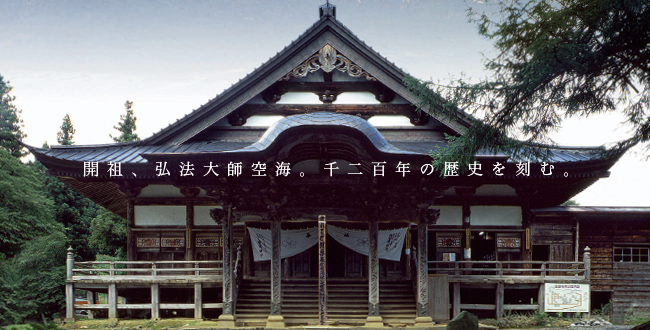
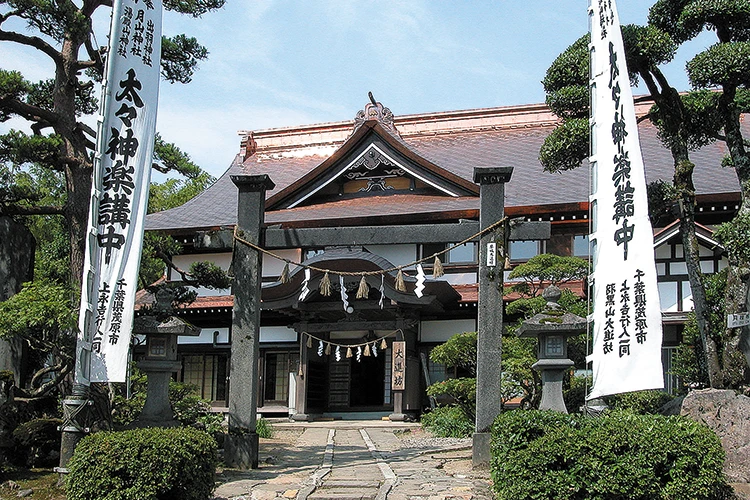
弘法大師空海が天長2年(825年)に女人遥拝所として開いた湯殿山の真言宗智山派寺院。即身仏「鉄門海上人」を安置し、ミシュラン二つ星評価。
Churen-ji was founded by Kobo Daishi in 825 as a yohaisho (distant-worship hall) for women, who were forbidden to enter the male-only sacred precincts of Yudonosan in those centuries.
The temple enshrines the sokushinbutsu of Tetsumonkai Shonin (1759–1829), who completed 2,000 days of mokujiki tree-bark ascetic practice in Senninsawa before final nyujo. The mummified figure can be venerated in the hall.
The 2009 French Michelin Green Guide Japon awarded Churen-ji an overall two-star rating, with the sokushinbutsu itself rated two stars and the painted ceiling one star — making this remote Shingon temple one of the most internationally recognised Yudonosan sites.
湯殿山 注連寺
2社で価格比較 — 最大20%お得に予約
予約リンクにはアフィリエイトが含まれる場合があります。追加料金は一切かかりません。
最寄り駅
Onami Bus Stop (Yamagata Kotsu, from JR Tsuruoka Station)
関西国際空港(KIX)から
1. JR Haruka Express → Kyoto Station ~75 min
2. Local train/taxi → Onami Bus Stop (Yamagata Kotsu, from JR Tsuruoka Station) ~10 min
東京から
1. Tokaido Shinkansen → Kyoto Station ~2h 15m
2. Local transit → Onami Bus Stop (Yamagata Kotsu, from JR Tsuruoka Station) ~10 min
大阪から
1. JR Special Rapid → Kyoto Station ~30 min
or Hankyu Railway → Kawaramachi ~45 min
ワンポイント: 駅でICカード(ICOCAまたはSuica)を購入すれば、バスや電車をタッチで簡単に利用できます。
💡 ジャパンレールパスでお得に
新幹線+JR在来線が乗り放題
湯殿山 注連寺に関する12件の質問
Churen-ji was founded by Kobo Daishi in 825 as a yohaisho (distant-worship hall) for women, who were forbidden to enter the male-only sacred precincts of Yudonosan in those centuries.
The temple enshrines the sokushinbutsu of Tetsumonkai Shonin (1759–1829), who completed 2,000 days of mokujiki tree-bark ascetic practice in Senninsawa before final nyujo. The mummified figure can be venerated in the hall.
The 2009 French Michelin Green Guide Japon awarded Churen-ji an overall two-star rating, with the sokushinbutsu itself rated two stars and the painted ceiling one star — making this remote Shingon temple one of the most internationally recognised Yudonosan sites.
湯殿山 注連寺に関する12件の質問