
|
|
|
|
|
|
 Photo by Paolo Nicolello on Unsplash
It is 6:03 in the morning at the back of a small wooden hall on Mt. Koya. The air is cold enough that your breath shows. A junior monk in a black robe lifts a long match and touches the tip to a stacked tower of cedar sticks at the centre of the altar. The wood is already coated in something — resin, oil — and the fire takes immediately. Within three seconds the entire hall is orange, the gold-leaf carvings behind the altar catch the light, and the smell of burning cedar fills the room. The senior monk, who has been kneeling motionless for the last six minutes, raises his hands into a complex mudra, lowers his eyelids, and begins to chant in a low, even voice that does not stop for the next forty minutes.
This is the goma (護摩) — a Shingon Buddhist fire ritual that has been performed, with very few alterations, every dawn at Koyasan temples for more than a thousand years. It is also, increasingly, one of the most-searched temple experiences on Klook. This guide is for the traveler who wants to attend one — to actually book a seat in a hall like this, in English, before flying — and who would like an honest answer about which experiences are worth the click, which ones require direct booking, and which are basically tourist demonstrations. We have sat through ten of them. Here is what we would book.
Goma is the Japanese name for the Sanskrit homa — a Vedic fire ritual at least three and a half thousand years old, absorbed into Tantric Buddhism in seventh-century India, transmitted into China during the Tang dynasty, and carried to Japan in 806 CE by the monk Kukai, who founded Shingon Buddhism on Mt. Koya. The ritual centres on a controlled fire fed with cedar wood, ladles of oil, and inscribed prayer sticks called gomagi (護摩木). The fire is treated as a transformative agent — it consumes the worshipper's symbolic obstacles (delusion, anger, attachment) and carries written wishes to the cosmic Buddha Mahavairocana (Dainichi Nyorai) through the wisdom flame of Fudo Myo-O, the wrathful protector who guards the rite.
For depth on the history, doctrine, and what each chant means, see our longer cultural guide to the goma fire ceremony. This article is the booking companion: which temples actually take Klook reservations, what the seat looks like, and how the platform price compares to walking in.
Six experiences cover almost everything a first-time visitor will want. The Koyasan dawn ceremony at Eko-in is the iconic version — the one most travelers see in YouTube clips — and it is the rare goma that bundles cleanly with a Klook-bookable shukubo stay. The other five trade off price, location, and depth. None of them are bad; the question is which trade-offs match your itinerary, your appetite for an early alarm, and how much English support you want around a religious rite that was never originally designed for an audience of foreign guests. Quick comparison:
| Experience | Region | Time | Price band | Klook anchor | | --- | --- | --- | --- | --- | | Eko-in dawn goma + shukubo | Koyasan | 6:00–6:40 a.m. | ¥18,000–¥30,000 (overnight) | yes (overnight bundle) | | Henjoko-in morning goma | Koyasan | 6:30–7:10 a.m. | ¥14,000–¥22,000 (overnight) | indirect (Klook listing varies) | | Kyoto Shingon goma (Toji-area) | Kyoto | varies by month | ¥3,000–¥6,000 (session) | yes (tour) | | Tokyo / Narita-accessible goma | Narita & Takaosan | most days | ¥0–¥4,000 (walk-in or tour) | partial | | Goma + zazen combo | Koyasan or Kyoto | half-day | ¥8,000–¥15,000 | yes | | Private goma viewing (premium) | Koyasan | by arrangement | ¥40,000+ | direct only |
Eko-in is the temple most travelers mean when they say "the Koyasan fire ceremony." The hall is small — maybe forty cushions deep — and the dawn goma begins at 6:00 a.m. sharp (7:00 in winter), preceded by a ten-minute English explanation from a senior monk who has been giving it, in some cases, for fifteen years. You receive a printed bilingual program so you can follow which sutra is being chanted. The hall is lit only by candles and the central fire. It is, by consensus, the strongest single-hour religious experience on offer in Japan.
Eko-in is not a walk-in goma in any practical sense — almost every seat in the hall belongs to overnight guests of the temple, and the ceremony is effectively reserved for shukubo guests. The good news is that the overnight stay itself is bookable on Klook (and on Stay22 and Booking.com), bundling room, shojin ryori dinner, breakfast, the Okunoin night tour, and the dawn goma into a single price. Expect ¥18,000 to ¥30,000 per person for a single-occupancy room with private dinner course and morning ceremony seat (book on Klook →). The price tiers correspond mostly to room grade — a corner room with a private garden view runs at the top of the band, a standard interior room with shared bath at the bottom. The ceremony seat is identical regardless of which room you book; the senior monk does not know whether you paid ¥18,000 or ¥30,000 the night before. Honest pro: there is no substitute for this temple's English support and atmosphere. Honest con: the price has risen roughly 40 per cent since 2023, and the most-photographed temple in Koyasan is also the most-booked — autumn weekends fill ninety days out, and the entire November cherry-versus-momiji corridor (mid-October through early December) is essentially gone by August. Book early or pivot to a quieter neighbour like Fukuchi-in.
Henjoko-in runs a daily 6:30 a.m. goma that draws fewer foreign guests than Eko-in and consequently feels less performed. The hall is older, the wood darker, the cushions slightly fewer. There is usually no English explanation before the ceremony, but the printed Heart Sutra is provided and most overnight guests are handed a one-page summary of what they are about to see. Fudo-in (the very temple dedicated to Fudo Myo-O, the deity of the goma fire) is the other strong quieter option — smaller, more austere, and especially recommended for a second Koyasan visit.
Klook listings for Henjoko-in come and go — sometimes you will find the overnight bundle on the platform, sometimes the temple is only bookable through Stay22 or direct. Expect ¥14,000 to ¥22,000 per person overnight, which is roughly 20 per cent cheaper than Eko-in for a comparable room and meal level. Honest pro: the atmosphere is closer to a working temple than an experience venue. Honest con: English support is minimal — bring our Koyasan temple stay shortlist if you want to weigh the trade-offs before clicking. A practical hybrid that some experienced travelers use: book Eko-in for the first night (English support, dawn goma, the iconic version), then move to Henjoko-in or Fudo-in for a second night without the platform handholding. The two-night stay lets you compare the same ritual performed by two different lineages within walking distance of each other, and it teaches the form better than any single sit. The cost premium over a one-night stay is usually 60 to 80 per cent — less than double, because the second night does not include the additional cable-car-and-Osaka transit cost.
Several Kyoto Shingon temples — Toji, Daikaku-ji, and a handful of subtemples around the Higashiyama district — perform monthly or twice-monthly goma rituals open to the public, and Klook has begun listing them inside half-day "Buddhist Kyoto" guided experiences. The format is different from Koyasan: the ceremony usually takes place mid-morning rather than at dawn, the hall is larger, and the guide gives a forty-minute English orientation in a café or temple anteroom before the rite begins. Expect ¥3,000 to ¥6,000 per person for a guided three-hour session, no lodging included.
The Kyoto option is the right call if you have a single day in the city, do not want to commit to the two-night Koyasan detour, and would accept a slightly less intimate hall in exchange for English narration and a same-day return to your Kyoto hotel. Honest pro: convenience, English support, no early wake-up. Honest con: schedule is fixed to the temple's monthly ritual calendar — check dates before booking flights, and confirm with Klook that the listed date matches an actual goma day rather than a substitute experience (book on Klook →).
For travelers who cannot leave the Tokyo region, two temples run regular public goma ceremonies that are reachable on a JR pass: Narita-san Shinsho-ji (forty-five minutes from central Tokyo via the Narita Sky Access line, fifteen minutes from Narita Airport) holds goma five times a day, every day, with no reservation required and no entrance fee — you simply arrive, sit on the cushions provided, and stay for the forty-minute ritual. Takaosan Yakuoin on Mt. Takao runs morning goma daily and is a popular hike-plus-temple half-day from Shinjuku.
Klook lists half-day guided tours to both — usually combined with a temple lunch and a brief explanation in English — at ¥4,000 to ¥9,000 per person. The honest comparison: the temples themselves are free, and a confident traveler can do the goma at Narita-san for the cost of a JR ticket. The Klook tour buys you English narration, a guide who handles the small etiquette moments (where to sit, when to bow, when photographs are allowed), and lunch. For a first-time visitor with a packed Tokyo itinerary, the tour is the right tradeoff. For a return visitor, walk in. The Narita-san version is also unusually convenient for a long-layover passenger: the temple is fifteen minutes from Narita Airport, the 11:00 a.m. ceremony fits cleanly into a four-hour transit window with bags checked at the airport, and the experience is genuinely the same rite performed at Koyasan, in a hall that has been continuously active since 940 CE (book on Klook →).
A growing category on Klook is the half-day or overnight bundle that pairs a goma ceremony with a zazen (Zen meditation) session. The pairing is theologically odd — Shingon (esoteric) and Zen (formless) sit on almost opposite ends of Japanese Buddhism — but it works practically as a way to sample two very different ritual textures in one day. The Koyasan version typically pairs the Eko-in dawn goma with a morning zazen at a neighbouring Soto-affiliated temple; the Kyoto version pairs a Toji-area goma with an afternoon sit at Shunkoin or a similar English-friendly Rinzai subtemple.
Expect ¥8,000 to ¥15,000 per person for a half-day combo (no lodging), or ¥25,000 to ¥40,000 for an overnight bundle including shukubo and both rituals. Honest pro: maximum ritual variety per yen, which is the right call for travelers with one shot at temple Japan. Honest con: each individual experience is necessarily shorter and less immersive than booking it on its own, and the bundles are usually run by third-party tour operators rather than the temples themselves. If you are choosing between depth and breadth, our zazen experience guide covers what an unhurried zen-only morning looks like (book on Klook →).
A small number of Koyasan temples and one or two Kyoto Shingon halls accept private goma viewings — a goma performed for your party alone, usually by arrangement with the head priest, often in support of a specific intention (memorial, business launch, anniversary). These are not standard Klook inventory. Klook occasionally lists concierge-style "exclusive temple experiences" in the ¥40,000-and-up category, but the more reliable booking route is direct contact with the temple, or via a Japanese-language travel agent.
Honest pro: you sit in the front row, can ask the monk questions in English (often through a bilingual intermediary), and the ceremony is dedicated to whatever you bring. Honest con: the price reflects the labour involved — a senior monk and one or two assistants performing a forty-minute ritual for your party of two or four. Most travelers do not need this. The standard dawn goma at Eko-in is already the front row for forty people, performed by the same monks, with the same chants, and witnessed by an audience small enough to feel personal. The private option is for life-event-grade occasions: a memorial for a parent, a milestone anniversary, the launch of a serious undertaking. If that is what you are bringing, the temple will treat it with the gravity it deserves. If it is not, save the money for a second overnight at a quieter neighbour. Our shukubo booking comparison covers when direct contact beats the platform, and which Japanese-language travel agents the temples themselves recommend for non-standard arrangements.

Arrival. The hall is opened around 5:55 a.m. (or whatever the temple's posted time is). You remove your shoes at the entrance, accept a printed program if one is offered, and sit on a flat zabuton cushion toward the back of the room. Most temples place laypeople in rows behind the central fire pit, with the senior monk's seat directly facing the pit on the opposite side. Candles and oil lamps are already lit. A small mountain of gomagi — the cedar sticks inscribed with the previous day's prayer requests — sits stacked beside the altar. Most halls also place a small wooden box near the entrance for visitors who wrote a stick that morning rather than the night before; you can drop yours in on your way to the cushion and the assistant monk will add it to the bundle before the fire is lit. Take a moment, before the ceremony begins, to look up at the ceiling — most goma halls have a coffered timber ceiling with hand-painted lotus motifs, lit by the oil lamps in a way that does not survive electric light.
Monks enter, mantras begin. The senior monk and one or two assistants enter in procession, prostrate three times toward the altar, and take their positions. The chant begins almost immediately — usually the Heart Sutra (Hannya Shingyo) first, then a series of esoteric mantra in Sanskrit-derived syllables associated with Fudo Myo-O and Mahavairocana. The rhythm is marked by a small wooden gong (mokugyo) and the deeper note of a singing bowl. The chant does not stop for the next thirty to forty minutes. Even when the monk moves to add wood or oil to the fire, the syllables continue uninterrupted. If you are sitting close enough to see the senior monk's hands, you will notice that he is also performing a continuous sequence of mudra — folding the fingers into precise geometric shapes that change every few minutes, each one corresponding to a stage of the visualisation he is holding silently in his mind. The hands are doing what the voice is saying are doing what the mind is seeing. This is the Shingon practice of the "three secrets" rendered visible.
Fire lit, gomagi burned, closing. The senior monk ignites the central stack with a long taper. The flame jumps high almost immediately and is fed several times during the ritual — more sticks, ladles of oil, grains of rice, sesame seeds. Each offering corresponds to a stage of the visualisation being performed silently in the monk's mind. About halfway through, an assistant walks the bundles of inscribed gomagi forward; the senior monk raises each handful, touches it briefly to his forehead, and feeds it into the fire. (If you bought a gomagi the night before, this is the moment your prayer is offered.) The flames roar suddenly higher as a fresh batch lands — by design, the moment is supposed to feel like watching something inside yourself being released. When the chanting ends, the monk performs a final series of mudras, prostrates three times again, and rings a small bell. Visitors are then invited to approach the altar one by one and pass their hands through the residual smoke, which is said to carry the blessing of the deity onto whatever you bring near it: a wallet, a phone, the back of your neck.
Tip
Photography is forbidden during the ritual itself at almost every Koyasan temple, and the rule is enforced quietly but firmly. Most temples allow photos of the empty altar before the ceremony and the residual fire after it ends. Never use flash. Never photograph the monks' faces during the rite. Dress: layered, dark, no shorts, no strong perfume — the hall is unheated even in summer mornings, and fragrance in a small wooden room with an active fire is considered disrespectful. A yukata over a long-sleeved layer is perfectly acceptable if you came straight from the futon.
The honest answer depends on the temple. Some goma ceremonies — Narita-san Shinsho-ji being the clearest example — are walk-in by design. You arrive, sit, and stay; there is no entrance fee, no reservation, no English handout, and the ritual is performed five times a day regardless of audience size. For these temples, Klook adds an English guide and a packaged lunch, but does not buy you a seat you could not otherwise have. The marginal value is real (forty minutes of context from a guide can change what you see) but bounded.
Other temples — Eko-in and most Koyasan halls — are effectively closed to walk-ins. The goma is performed for the shukubo guests staying that night, and the cushion is bundled with the room. Here Klook is genuinely useful: the platform lists the overnight package, handles the booking flow in English, confirms in writing, and gives you a clear cancellation policy. Direct booking on the temple's Japanese-language website is technically cheaper (no platform commission) but harder to navigate, and the price difference is usually 5 to 10 per cent — not enough to justify the friction for most travelers on a one-shot Japan trip.
A third category — Kyoto half-day goma tours, goma-plus-zazen combos — exists only on the platforms. The tours are stitched together by third-party operators (Magical Trip, JTB experience, smaller bilingual operators) and would not be findable, much less bookable, without Klook or its peers. For these, the platform is the only path. The trade-off you accept is that the temple visit is one stop on a guided itinerary rather than your own appointment with the hall. For first-time visitors with a packed week, the trade-off is usually correct. Read the listing carefully before clicking: a small number of tours described on the platforms as "fire ceremony experiences" turn out to be staged demonstrations at commercial cultural centres rather than working goma at active temples. The tell is the location (a hotel banquet hall, a tourist district storefront) and the time (mid-afternoon, when no working temple performs goma). Real goma rituals take place in active temple halls, usually in the morning, and the listing will name the specific temple.
Tip
Heuristic: if the goma is bundled with a shukubo stay, Klook is the right path (English flow, written confirmation, easy cancellation). If the goma is a single-session walk-in like Narita-san, skip the platform and just go. If the goma is a guided combo or a Kyoto half-day, the platform is the only option and is worth it.
The single strongest argument for staying overnight at a temple in Koyasan is the dawn goma. Almost everything else about a shukubo (temple lodging) — the shojin ryori dinner, the futon on tatami, the morning prayer service — exists elsewhere in Japan in some form. The 6:00 a.m. fire ceremony does not. The act of waking at 5:30, walking through a still temple corridor with your breath visible, and being in your seat as the first match is struck is the experience that overnight guests describe as the reason for the entire trip.
Practically, this means: book the shukubo with the dawn goma as the anchor and structure the rest of the day around it. Arrive at Koyasan by mid-afternoon (the cable car runs every fifteen minutes from Gokurakubashi Station; the trip from Osaka takes about ninety minutes door-to-door), check in, walk Okunoin in late afternoon light, return for shojin ryori at 6:00 p.m., be in your futon by 9:30. The 5:30 alarm will not feel cruel because you went down with the temple's rhythm. Our Koyasan temple stay shortlist covers which shukubo bundle the goma cleanly and which do not. One small detail that matters more than it should: do not over-schedule the morning after the goma. Most temples serve breakfast around 7:30, the checkout window runs until 10:00, and the natural rhythm of the day is a slow shojin breakfast and a final walk through Okunoin before the cable car back down to Osaka. Booking a 9:00 a.m. Kyoto shinkansen will compress the morning into a logistic problem; aim for an early afternoon departure and let the goma stay with you over breakfast.
On the surface, the goma looks like spectacle — fire, smoke, chant, gold. The point of the rite is not the spectacle. In Shingon doctrine, the fire is the externalised image of an internal process. The wood represents the practitioner's ignorance, anger, and attachment; the wisdom flame of Fudo Myo-O is consuming those obstacles. The deity at the centre of the visualisation, Mahavairocana (Dainichi Nyorai, 大日如来), is the cosmic Buddha — not a personal saviour, not an external god, but the principle of awakened reality itself. Fire, in this reading, is what transformation looks like when it is given a physical form.
This is not metaphor that the worshipper is asked to manufacture. The monk performing the rite is, simultaneously, executing a mudra sequence with his hands, reciting mantra with his voice, and holding a visualisation in his mind — the unification of body, speech, and mind that Shingon calls the "three secrets." The fire externalises the practice for everyone in the hall to witness. You do not have to share the cosmology to feel something shift while watching it. The reason foreign visitors consistently describe the goma as the most affecting religious experience on offer in Japan is, in part, exactly this: a thousand-year-old ritual is, in front of you, openly doing what most ritual does covertly. The chants you hear at a Koyasan goma are still partly in Sanskrit, transliterated through Chinese into Japanese pronunciation — meaning the syllables themselves have, in a real sense, been preserved unchanged for four thousand years. Standing at the back of the hall in 2026, you are listening to phonemes that were spoken aloud at fire altars in Vedic India before Homer wrote the Iliad. That continuity is not advertised. The temple does not put it on a brochure. It is simply there, in the room, the moment the chant begins.
Yes, at every temple covered in this guide. Koyasan in particular has been welcoming international guests since the 1970s, and Eko-in routinely conducts its dawn goma in front of an audience that is half or more non-Japanese. There is no entrance test, no statement of religious affiliation, and no expectation that you understand the chant. The courtesies you observe — bowing on entry, removing shoes, sitting still, not photographing during the rite — acknowledge that you are a guest in a working religious tradition. Show up with the same respect you would bring to any active house of worship.
You just watch. The goma is not a participatory ritual in the sense that a yoga class is; the monks chant, and the laypeople sit silently. The one exception is the Heart Sutra near the beginning, which printed bilingual programs at Eko-in and a few other temples invite you to chant along with if you wish. Following along is welcomed but never required. Most foreign visitors simply listen, follow the rhythm of the wooden gong, and watch the fire. The active participation, in the Shingon reading, is the simple fact of sitting in attention while the rite is performed.
Almost never during the ritual itself. Most Koyasan temples allow photos of the empty altar before the ceremony and the residual fire after it ends. At Eko-in, the head monk often invites visitors to take photographs at the very end, once the chanting has finished and the fire has settled. Never use flash. Never photograph the monks' faces during the rite. If in doubt, ask the staff member who escorts you in — they will give you a clear yes or no, and they will not be offended by the question. Tokyo-area temples like Narita-san are slightly more relaxed but the same etiquette is appreciated.
Gomagi (護摩木) are flat wooden sticks roughly the size of a tongue depressor, sold at the temple reception for a few hundred yen each. You write a single wish on the front (in any language — English is fine, the prayer is symbolic) and your name and age on the back. Common requests are "good health for my mother," "safe travel," "success in studies." You hand the stick to the monk before the ceremony or drop it in the offering box at the front of the hall the night before. About halfway through the rite, the senior monk adds the bundled gomagi to the fire. As they burn, the prayers are said to be carried — through the wisdom flame of Fudo Myo-O — toward enlightenment. There is no upper limit on how many you can write.
Entirely. Japanese Buddhism has, for most of its history, accommodated practitioners and observers of all backgrounds — the religion is woven into national life rather than gated behind formal conversion. You do not need to identify as Buddhist, recite anything you do not believe, or sign a statement of faith to sit through a goma. Many of the foreign visitors who describe the rite as the most affecting experience of their Japan trip are Christian, Jewish, Muslim, agnostic, or unaffiliated. The form of the ritual — the fire, the chant, the smell of cedar at dawn — operates on a level that does not require doctrinal agreement. Show up, sit still, and let the forty minutes do whatever they do.
If you take one thing from this guide, take this: the dawn goma at Koyasan is the single religious experience in Japan most worth structuring your itinerary around, and the cleanest way to attend is an overnight stay at Eko-in booked through Klook (or via the comparison platforms we cover in our shukubo booking guide). Book the room, take the cable car up Mt. Koya in the late afternoon, eat shojin ryori at 6 p.m., sleep by 9:30, and walk into a hall at 5:55 the next morning where a thousand-year-old fire is about to be lit. The rest of the temple stay is incidental. That hour is why you came (book on Klook →).
Ready to book?
Browse our curated collection of authentic Buddhist temple stays across Japan. Filter by region, sect, and experience.
Start ExploringRecommended Temples for This Guide
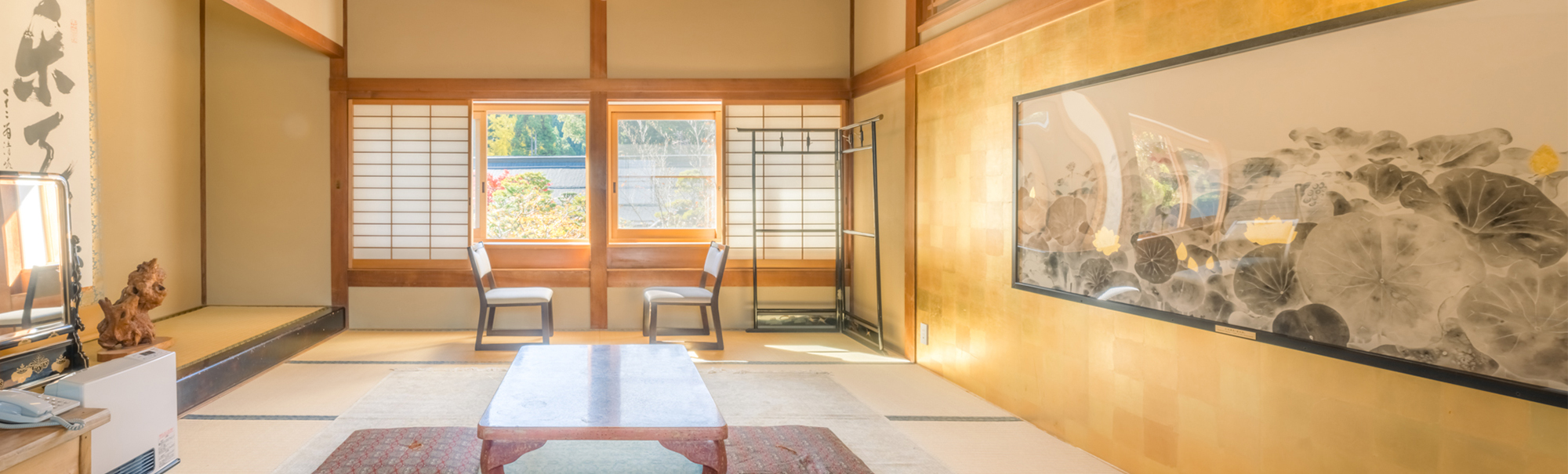
恵光院
A flagship Koyasan shukubo with English-guided Goma fire ceremony, Ajikan meditation, and nightly Okunoin tours.
from $130 /per night

福智院
The only Koyasan shukubo with a natural hot spring, three Mirei Shigemori gardens, and refined shojin ryori.
from $175 /per night
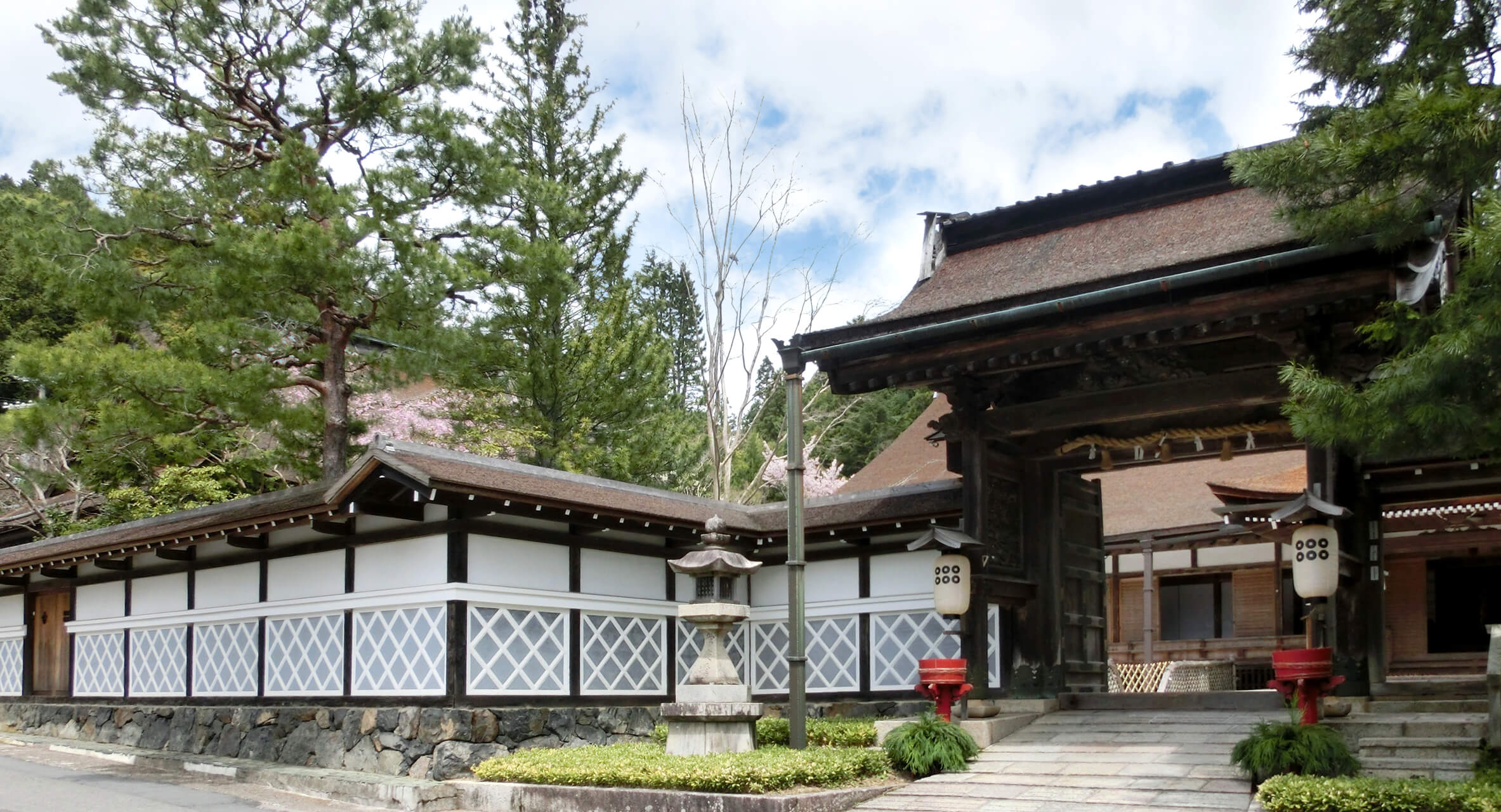
蓮華定院
A Sanada-family bodaiji shukubo on Mt. Koya with English-speaking monks, just 13 rooms, and a strong samurai-era heritage.
from $230 /per night
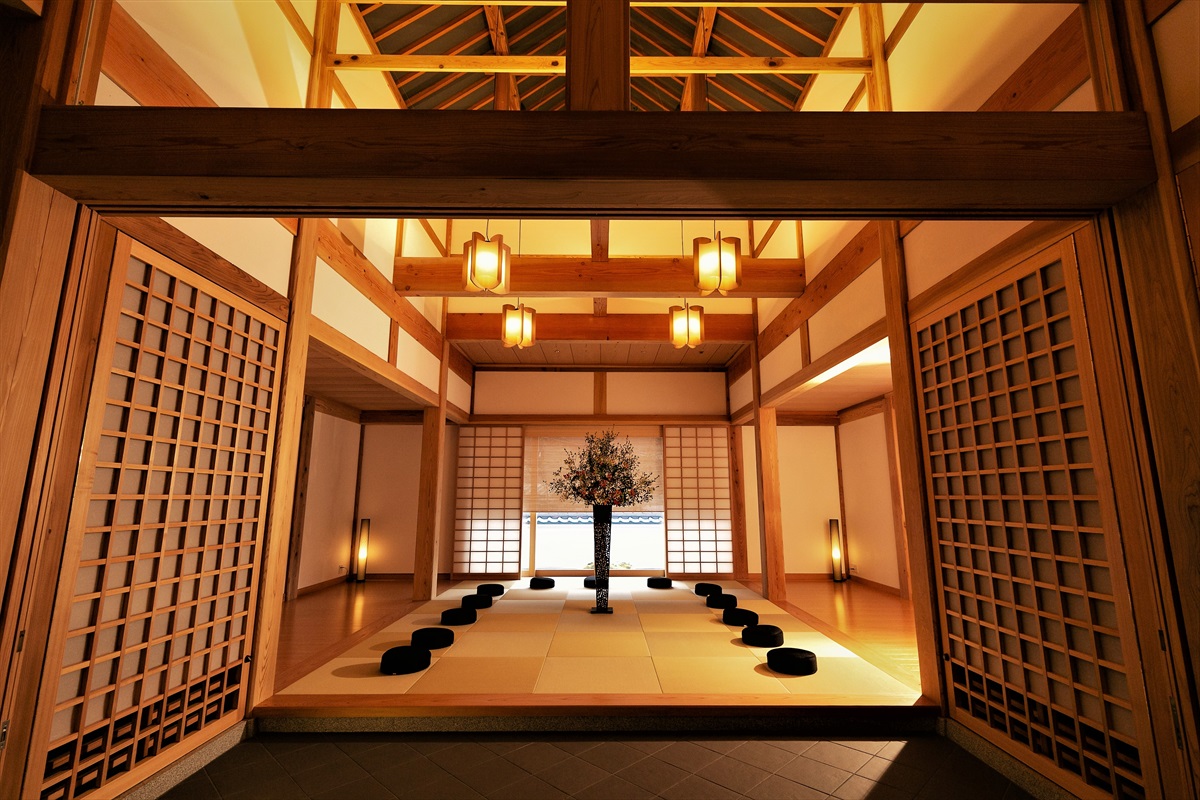
永平寺 親禅の宿 柏樹関
A modern Zen inn at the gate of Eiheiji, with 18 cedar-built rooms, evening zazen and access to the temple's pre-dawn morning service.
from $195 /per night
Explore Destinations

