
|
|
|
|
|
|
 Photo: Unsplash
From Osaka Namba station to the cable car base of Mt. Koya is exactly 90 minutes on the Nankai Limited Express Koya, and from there another five minutes by cable car and ten minutes by bus delivers you to the lantern-lit precincts of one of Japan's most sacred Buddhist mountains. On paper it looks straightforward. In practice, first-time visitors miscalculate every part of it: the cable car schedule is tight, the bus passes are confusing, the temples are spread across two kilometres of forest, and the founder of Kobo Daishi's mausoleum sits 45 minutes on foot from where the bus first sets you down. A guided tour fixes every part of that timing problem. Viator, the affiliate partner this site links to, lists more Koyasan tours in English than any other platform, and for travellers based in Osaka or Kyoto with a single day to spare, those tours are often the highest-leverage spend of an entire Japan trip.
This guide ranks the six most useful Koyasan tours bookable on Viator in 2026 — one-day trips from Osaka, Okunoin night walks, multi-day combinations with shukubo lodging, private guided options, and dual-mountain combos that pair Koyasan with Nara or Kumano Kodo. It covers what is realistically included, what each tier actually costs, the booking windows that matter (autumn books three months ahead, winter is half-empty), and the days when a guide makes no sense at all and you should just walk it yourself with a Nankai day pass. Pricing bands and English-language notes are current as of May 2026. Where we link to a Viator listing, it is the affiliate destination — booking through that link funds the next round of on-the-ground reporting from Mt. Koya. The companion piece for travellers who specifically want the night cemetery walk in detail is the Okunoin night tour guide; the lodging-side companion is the 10 best Koyasan temple stays.
Of all the Buddhist destinations in Japan that you could put on a short itinerary — Kyoto temple circuit, Nara's Todaiji, Kamakura's Great Buddha, Eiheiji in Fukui, Hieizan above Lake Biwa — Koyasan is the one most likely to leave a traveller saying it was the trip. There are concrete reasons. Mt. Koya is the headquarters of Shingon Esoteric Buddhism, founded by the monk Kobo Daishi (Kukai) in 819 CE. It is a working monastic city of 117 sub-temples on an 800-metre forested plateau in Wakayama, of which more than fifty operate as shukubo temple lodgings — meaning you can sleep inside the active religious institution itself, not in a hotel adjacent to it. UNESCO inscribed the entire mountain as part of its "Sacred Sites and Pilgrimage Routes in the Kii Mountain Range" listing in 2004, and unlike most heritage sites it has not been converted into a museum. The daily rituals are still performed by ordained monks the same way they were performed twelve hundred years ago.
The headline experiences justify the trip on their own. Okunoin, the two-kilometre cemetery approach to Kobo Daishi's sealed mausoleum, passes more than 200,000 mossy tombstones beneath a canopy of 600-year-old cedars and ends at the Toro-do lantern hall where roughly 10,000 hanging lanterns glow continuously — two of them said to have burned without interruption since 1016. The Danjo Garan founding precinct holds the iconic vermilion Konpon Daito pagoda, the symbolic heart of the Shingon mandala and the visual postcard of Mt. Koya. Most shukubo offer a 6:00 AM goma fire ceremony in which wooden prayer sticks are burned as offerings to the Buddha while monks chant Sanskrit mantras — a ritual you can attend as a paying overnight guest and which exists in this accessible form almost nowhere else in Japan. For a thematic comparison with the other great Japanese monastic mountain, the Koyasan vs Eiheiji breakdown maps the doctrinal and atmospheric differences.
If you have neither the time nor the patience for the full breakdown, the table below summarises the six tours we recommend, ranked by how many travellers each one suits. The 1-day Osaka tour is the volume winner — it works for almost everyone and books fastest. The overnight shukubo tour is the higher-margin, higher-reward option that fewer travellers pull the trigger on but most regret skipping. The Okunoin night walk slot is best filled by booking the official Eko-in tour directly rather than via Viator if you are already sleeping on the mountain — but Viator carries the same product for travellers who want a single booking platform.
| Tour | Best for | Typical price | Length | | --- | --- | --- | --- | | 1-Day Koyasan from Osaka | First-time visitors, tight schedules | USD 130-180 | 10-11 hours | | Okunoin Night Cemetery Walk | Travellers already overnighting on the mountain | USD 25-45 | 90 minutes | | Multi-Day with Shukubo Lodging | Travellers who want the dawn goma ceremony | USD 350-550 | 2 days / 1 night | | Private Guided Koyasan Tour | Families, groups, accessibility needs | USD 600-1200 | Customisable | | Koyasan + Nara Combo | Buddhist-focused short itinerary | USD 200-280 | 2 days | | Koyasan + Kumano Kodo Dual Pilgrimage | Walking pilgrims, longer trips | USD 800-1500 | 4-6 days |
The single most-booked Koyasan product on Viator is the one-day group tour departing from central Osaka in the morning and returning in the early evening. The format is consistent across the two or three operators who run this product: a Japanese or bilingual guide meets a group of 8 to 20 travellers at an Osaka pickup point (typically Namba, Umeda, or a Shin-Osaka hotel cluster) around 8:00 AM, escorts the group on the Nankai Limited Express to Gokurakubashi station, transfers to the cable car and bus, and spends roughly five hours on the mountain walking the headline sites — the Danjo Garan precinct, Konpon Daito pagoda, Kongobu-ji head temple, and the full Okunoin cemetery approach to the Toro-do lantern hall — before returning to Osaka by around 18:30 to 19:00.
Pricing runs roughly USD 130-180 per adult, typically including all transport (Nankai Limited Express, cable car, bus), all temple entry fees, an English-speaking guide, and in most cases a shojin ryori vegetarian lunch served at one of the central Koyasan restaurants or at a participating sub-temple. The honest case for this tour is that it solves the logistics problem completely — you do not have to figure out the Nankai reservation system, the World Heritage bus pass options, or the unmarked walking distances between sites, and the guide narrates Shingon doctrine and the historical tombs at Okunoin in a way that a self-guided visitor simply cannot replicate. The honest case against is that you skip the dawn goma fire ceremony, you miss Okunoin at dusk when the lanterns are lit, and you eat a lunch designed for groups rather than the more refined evening shojin ryori served at a shukubo. Viator listing → search "Koyasan day tour from Osaka" for the current operator lineup.
The Okunoin night walk is the single most-photographed experience on Mt. Koya, and Viator lists the official Eko-in temple night tour as a bookable standalone product. The tour departs from the Eko-in lobby nightly at 19:00, is led by a resident monk in fluent English, and runs roughly 90 minutes through the full two-kilometre cemetery approach to the Toro-do lantern hall and back. Pricing on Viator runs USD 25-45 per adult — slightly above the direct booking rate of 1,500-2,500 JPY on eko-in.jp, but with the convenience of a single English checkout and a Viator-format confirmation that some travellers find easier than the temple's direct form.
The trade-off is straightforward. If you are already booking other tours on Viator and want a single consolidated itinerary, the platform markup is modest and the booking flow is fast. If you are travelling on a tight budget and you have a few minutes to spare, booking direct via eko-in.jp saves a few hundred yen per person. Either way, the tour is the same — same departure time, same monk-led commentary, same access. The deeper companion piece on what you actually see along the walk, including which tombs the monks pause at and why photography is prohibited beyond the Gobyobashi bridge, is the Okunoin night tour guide. Viator listing → search "Okunoin night tour" or "Koyasan cemetery walk."
The highest-margin and most genuinely transformative Koyasan tour on Viator is the two-day, one-night package that includes a shukubo overnight stay at a participating temple. Pricing runs roughly USD 350-550 per person, depending on the temple tier and the season, and what you get is the full experience: arrival on Mt. Koya in the late morning, guided afternoon walks of Danjo Garan and Kongobu-ji, check-in at the shukubo, a formal evening shojin ryori dinner served in your tatami room or in a communal dining hall, the Okunoin night walk after dinner, lights out by 22:00, and the dawn goma fire ceremony at 6:00 or 6:30 the next morning followed by a shojin breakfast and unhurried departure.
The temples that partner with Viator on these packages are typically the larger, English-friendly shukubo on the mountain — Eko-in, Fukuchi-in, Rengejo-in, and a rotating handful of others. The room category is usually mid-tier (a standard tatami room with garden view, futon bedding, shared communal bath; not the premium suites that some temples reserve for direct-booked guests). For travellers who want the dawn goma ceremony — which is the single ritual that most justifies an overnight stay on Mt. Koya — this is the cleanest Viator product. Booking direct via the temple's own website or via Stay22 will usually save 10-20 percent, but you lose the guided afternoon tour, the bilingual coordination, and the consolidated itinerary that Viator provides. Viator listing → search "Koyasan overnight shukubo tour."
For families, groups of three to six, travellers with accessibility needs, or anyone who wants to set their own pace, Viator lists private guided Koyasan tours run by independent licensed guides. Pricing for these starts at roughly USD 600 for a half-day private tour and runs up to USD 1,200 or more for a full-day private excursion with vehicle transport from Osaka. The vehicle option matters more than it sounds — the Nankai Limited Express plus cable car plus bus combination is workable but tiring for travellers with limited mobility, families with young children, or anyone over 70, and a private hire car compresses the journey from three hours of public transport into roughly two hours of door-to-door driving.
The honest case for a private tour is fit-of-itinerary. A small group with specific interests — a serious Shingon Buddhism enthusiast who wants extra time at the Reihokan Museum, a family with a stroller, a couple wanting wedding photos at the Konpon Daito — gets a customised day that no group tour can match. The honest case against is that the per-person cost is two to four times that of the group tour, and the marginal experience improvement for travellers without specific needs is modest. If you are simply curious about Koyasan, the standard group tour delivers 90 percent of the experience at a quarter of the price. Viator listing → filter "Koyasan" by "private tour."
A small but useful category on Viator is the two-day combo tour pairing Koyasan with Nara — the other foundational Buddhist landscape of Kansai, home to Todaiji's Great Buddha and the deer-filled Nara Park. The combo product typically runs day one in Nara (Todaiji, Kasuga Taisha, Nara Park) and day two on Koyasan, or vice versa, with a hotel night in between in either Osaka or central Nara. Pricing runs USD 200-280 per adult, including transport between the three cities, all temple entry fees, an English-speaking guide for both days, and accommodation.
The case for this combo is curatorial: Nara represents Nara-period (8th century) imperial Buddhism, all monumental scale and Tang-dynasty Chinese influence, while Koyasan represents Heian-period (9th century) esoteric Buddhism, all mountain seclusion and ritual mandala — and seeing them back-to-back is one of the cleanest ways to understand how Japanese Buddhism evolved. The case against is pace: two of the densest Buddhist sites in Japan in 48 hours is a lot for one trip, and many travellers would be better served by giving each its own day with a rest day in Osaka between. Viator listing → search "Koyasan Nara two day tour."
The most ambitious Koyasan product on Viator is the four-to-six-day dual-pilgrimage tour pairing Mt. Koya with the Kumano Kodo — the UNESCO-listed pilgrimage trail network that runs through the same Kii Peninsula mountains. The historical link between the two is the Kohechi route, a high-mountain trail that ran for centuries between the Shingon Buddhist headquarters at Koyasan and the syncretic Kumano shrines to the south. Walking it (or being driven between the two with selected trail segments included) connects the two great pilgrimage centres of Wakayama into a single itinerary. Pricing runs USD 800-1,500 per person depending on the number of walking days, the shukubo and minshuku lodging tier, and whether luggage forwarding is included.
This is a niche product aimed at travellers who already know they want a multi-day Japanese pilgrimage experience — typically Camino de Santiago veterans, serious hikers, or older travellers who specifically want the slower walking pace. For most first-time Japan visitors it is overkill, but for the right traveller it is the single best Viator product on this list. The parallel deep-dive on the Kumano-side lodging and the standalone Kumano tours is the Kumano Kodo shukubo + Viator guide — or check the Kumano Kodo trail entry directly for route-by-route planning. Viator listing → search "Koyasan Kumano Kodo pilgrimage."
The single question every Koyasan-bound traveller asks first is whether to do it as a day trip from Osaka or to overnight at a shukubo. The honest answer is that they are two different experiences. A day trip works — the 1-day Viator tour from Osaka covers the headline sites competently, you get the lantern hall and the Konpon Daito and a reasonable lunch, and you sleep in your Osaka hotel that night with your bags untouched. For travellers on a 7-to-10-day Japan trip who have already committed nights to Kyoto, Tokyo, and one or two other stops, the day trip is a defensible compromise and roughly 60 percent of Viator's Koyasan bookings choose it.
The overnight is a different category. What you gain by sleeping on the mountain is the dawn goma fire ceremony at your shukubo — typically at 6:00 or 6:30 AM, conducted by resident monks in the temple's main hall, with chanted Sanskrit mantras and wooden prayer sticks burned as offerings while you sit on tatami fifteen feet from the altar. This ritual exists in this accessible form almost nowhere else in Japan, and it is the experience that most overnight guests describe as the trip's highlight. You also gain Okunoin at dusk — the cemetery approach when the stone lanterns have just been lit and the day-trippers have left, which is a fundamentally different walk from the noon visit you get on a day tour. The deeper unpacking of the goma ritual is in the goma fire ceremony guide.
What you lose on a day trip is the magic — there is no other word for it. Day-tripping Koyasan is functional. Overnighting is transformative. If you have one chance to visit Mt. Koya and the only consideration is time, prioritise the overnight even if it means cutting a half-day somewhere else in your itinerary. If you genuinely cannot afford an extra night, the day trip is honest and adequate. Do not pretend it is the same thing.
Tip
When to NOT bother with a guide: if you have a JR Pass and a Nankai All-Line pass, are already comfortable with Japanese public transport, are staying two nights at a Koyasan shukubo, and read Japanese tomb inscriptions confidently, skip the day tour entirely and walk the mountain yourself. The Eko-in night tour at 19:00 is the only guided experience worth the money in that scenario — the rest of Koyasan is well-signposted in English and easily walked solo.
The standard route from Osaka to Mt. Koya is the Nankai Limited Express Koya, which departs Namba station roughly hourly and reaches Gokurakubashi station (the cable car base) in approximately 90 minutes. The Limited Express requires a reserved seat (an extra 520-790 yen on top of the base fare) and is the comfortable option; the unreserved Nankai express trains take 100 minutes and are cheaper but standing room only during peak hours. From Gokurakubashi the Koyasan cable car climbs 800 metres in five minutes to Koyasan station, where the Nankai Rinkan Bus connects to central Koyasan in another 10-15 minutes depending on which stop you board at. Total Osaka-to-temple-doorstep is typically 2 hours 15 minutes by Limited Express, 2 hours 30 minutes by standard express.
From Kyoto the journey is roughly 30-40 minutes longer. The standard route is JR or Hankyu to Osaka, then transfer to Nankai at Namba — adding a station change and 30 minutes of travel time. Some Kyoto-based travellers prefer to break the journey with an overnight in Osaka rather than tackle the full three-hour-plus return in a single day, especially on day-trip tours that depart Osaka at 8:00 AM. The Nankai-Koya World Heritage Ticket bundles the round-trip Limited Express, cable car, and unlimited Rinkan Bus on the mountain for roughly 3,400 yen, and is the single best transport deal for self-guided day-trippers — but if you are on a Viator group tour, the operator handles all of this and the pass is unnecessary.
Once on the mountain, central Koyasan is compact — most shukubo, Kongobu-ji, and the Danjo Garan precinct are within 10-15 minutes on foot of each other along the main east-west axis. Okunoin is the outlier: the cemetery entrance at Ichinohashi bridge is roughly 25 minutes on foot from central Koyasan, and the full walk through to the Toro-do lantern hall and back is another 90 minutes minimum. The Rinkan Bus runs along the main road and is useful for travellers with limited time or mobility, with frequent stops at the major sites. Do not underestimate distances on a day visit; the time pressure on a 1-day Viator tour comes almost entirely from the Okunoin walk.
Koyasan demand is intensely seasonal. The autumn koyo peak (mid-October through mid-November), when the mountain's maples and ginkgos turn brilliant red and gold against the dark cedars, is the single most-booked window of the year — and the multi-day Viator tours, which include shukubo lodging in limited supply, sell out three months ahead. Cherry blossom (early to mid-April) is a strong secondary peak, though Koyasan's elevation pushes the bloom roughly two weeks later than Kyoto, so April travellers often combine Kyoto-end-of-bloom with Koyasan-start-of-bloom in a single trip. Golden Week (late April through early May) and the Obon holiday week (mid-August) are also peak.
Winter is the opposite story. From mid-December through February, Koyasan is half-empty, occasionally snowed in, and bookable on three to five days notice for most Viator products. The mountain at -5°C with snow on the cedars and lanterns is, for the right traveller, the single most atmospheric version of Koyasan available — and the multi-day shukubo packages drop in price by 15-25 percent. The trade-off is that the cable car and bus schedules thin out, some smaller temples close for winter retreat, and the dawn goma ceremony at 6:00 AM in a tatami room with no central heating is a genuinely cold proposition. Pack a thermal layer for the morning service.

A typical Viator-listed Koyasan day tour from Osaka includes, at minimum: round-trip transport from a central Osaka pickup point (Namba, Umeda, or a designated Shin-Osaka hotel) on the Nankai Limited Express plus cable car plus Rinkan Bus combination; entry fees to all major Koyasan temples including Kongobu-ji and the Reihokan Museum where the tour visits it; an English-speaking guide for the full duration; and a shojin ryori vegetarian lunch served at a participating Koyasan restaurant or sub-temple. The guide language is almost always advertised explicitly — "English-speaking guide" or "bilingual Japanese-English" — and you should confirm this in the Viator listing before booking. A handful of Japanese-only tours appear in the search results and will not deliver the experience an English-speaking traveller expects.
On overnight Viator products that include a shukubo, what is added is the temple lodging itself (a tatami room, futon bedding, communal bath), the formal evening shojin ryori dinner served in your room or in a communal hall, breakfast the following morning, and access to the dawn goma fire ceremony in the temple's main hall. Some packages also include the Okunoin night tour as part of the overnight bundle; others list it as an optional add-on for an additional 1,500-2,500 yen. Read the inclusion list carefully — the difference between "shukubo with goma ceremony" and "shukubo with goma ceremony plus Okunoin night tour" can be 20-30 USD, and the night tour is the experience most travellers regret skipping.
What is typically not included: dinner on the day-trip option (which ends in Osaka in the evening, with no meal on the way back); personal incidentals such as omamori amulet purchases at temples, drinks at the temple gift shops, or the small saisen offering coins at altars; travel insurance; and any pre-tour overnight accommodation in Osaka. Most operators offer a small group size of 8 to 20 — confirm this if you specifically want a smaller experience, as the larger group tours can feel crowded at the narrower Okunoin sections. Cancellation policies are usually 24 hours for full refund on group tours, 48-72 hours for private tours and overnight packages.
Tip
If you are vegetarian or vegan, the shojin ryori meals are perfectly suited — they are by definition free of meat, fish, and animal products by Buddhist monastic tradition. If you have stricter dietary needs (gluten-free, severe nut allergy, no soy), notify the Viator operator at least 72 hours in advance. Most shukubo can accommodate most restrictions if given lead time, but same-day requests at peak season have no margin.
The cleanest way to combine a Viator guided tour with a temple stay is to book the multi-day overnight package directly — but if you specifically want to choose your shukubo rather than accept the operator's assignment, the alternative is to book the day-tour separately and arrange your own shukubo for the overnight. The three most-recommended shukubo for international travellers in 2026 are Eko-in (the largest English-friendly temple on the mountain, with the famous nightly Okunoin tour), Fukuchi-in (the only shukubo on Mt. Koya with a genuine natural onsen, attractive for travellers who want hot-spring bathing alongside the temple experience), and Rengejo-in (founded in 1190, with multilingual reception and a strong garden tradition). Travellers who prefer a quieter, less-toured atmosphere at a comparable price point should also consider Shojoshin-in, one of the mountain's most authentically monastic shukubo with a strong tradition of zazen practice.
For higher-end travellers, Henjoko-in offers a more refined evening service with private bath options at the upper room category. Kongo-sanmai-in, one of the mountain's oldest sub-temples, is particularly well-regarded for its formal Shingon ritual atmosphere and garden, making it a strong choice for travellers who want a deeper immersion in the monastic setting. For travellers comparing the Koyasan shukubo experience against the other great Japanese monastic mountain, the Eiheiji-affiliated Hakujukan in Fukui — the only modern-style ryokan-format lodging at Soto Zen headquarters — is a useful contrast point and the Koyasan vs Eiheiji comparison covers this directly. The full breakdown of the ten most internationally suitable shukubo on Mt. Koya, with capacity, English support, and signature experiences for each, is in the 10 best Koyasan temple stays guide.
Can I do Koyasan as a day trip from Tokyo? Technically yes, but the answer is honestly no. The Tokyo-to-Koyasan round trip is roughly 6 hours one way by Shinkansen plus Nankai Limited Express plus cable car, meaning a same-day round trip leaves you with 3-4 hours on the mountain — barely enough for the Okunoin walk and a glance at Konpon Daito, and nothing like enough for the Goma ceremony or a proper shukubo dinner. The standard Tokyo-based plan is one night in Osaka or Kyoto on the way down, a full day or overnight at Koyasan, and the return Shinkansen the following day. If you are based in Tokyo and only have one extra day, do Kamakura or Nikko instead and save Koyasan for a longer return trip to Japan.
Is a guide really needed? For first-time visitors with no Japanese language ability, yes — the value of a guide on Koyasan is roughly 70 percent context (which tombs at Okunoin matter and why, what the Konpon Daito mandala depicts, why the goma ceremony works the way it does) and 30 percent logistics (cable car timing, bus passes, temple opening hours). Self-guided Koyasan is entirely doable with a good map and the Nankai-Koya World Heritage Ticket, but you will miss most of the meaning. Travellers who have already done a serious Buddhist temple tour in Japan and want a quieter, slower second visit can skip the guide; first-time visitors should book one.
What's the cheapest Viator Koyasan option? The Okunoin night tour at USD 25-45 per person is the cheapest standalone product on the platform — and is the highest-leverage spend on the mountain for travellers who have already arrived under their own steam. If you have a Nankai day pass and are spending the night at a shukubo you booked directly, adding the Viator-listed Okunoin night tour as a single 90-minute purchase delivers most of what a guided day tour delivers at a fraction of the price. The 1-day Osaka group tour at USD 130-180 is the next price tier and is the better choice for travellers who do not want to handle the Nankai logistics themselves.
Can I combine Koyasan with Kumano Kodo? Yes, and the historical Kohechi pilgrimage route was built explicitly for this connection — running from Koyasan south through the Kii Mountains to the Kumano Sanzan shrines over four high-mountain days. Modern travellers either walk the Kohechi (a serious multi-day hike with limited lodging) or take a series of buses and trains that connect the two pilgrimage centres in roughly 5-6 hours of public transport. Viator lists multi-day combo tours that pair the two for USD 800-1,500, handling the lodging and luggage forwarding. For travellers building this itinerary independently, allow at least four nights total — one or two at Koyasan, two or three at various points along the Kumano Kodo, with the connecting day in between.
Is winter Koyasan worth visiting? For the right traveller, absolutely — winter is when the mountain is at its most atmospherically extreme. Snow on the cedars, deep silence in Okunoin, the lantern hall glowing against a white forest, the dawn goma ceremony in a tatami room at sub-zero temperatures: it is the most photographically rewarding version of Mt. Koya and the easiest to book, with shukubo rates dropping 15-25 percent from peak season. The trade-offs are real cold (pack thermal layers, gloves, and serious footwear), occasional snow disruption to the cable car or bus, and some smaller temples closed for winter retreat. Travellers who specifically want the contemplative, off-season Mt. Koya should aim for late January or February. Travellers who want guaranteed pleasant weather should book April-May or October-November instead.
For Osaka and Kyoto-based travellers who have been circling the question of whether Koyasan is "worth a day," the practical answer is that the 1-day Viator tour from Osaka is one of the highest-return tour products in all of Kansai — and that if you can stretch it to an overnight with the dawn goma ceremony and a dusk Okunoin walk, the experience moves from interesting to genuinely formative. Pick the tier that matches your trip, book the Viator product that fits, and give Mt. Koya a day or two that is not also trying to fit Nara and Osaka Castle into the same itinerary. The mountain rewards the traveller who treats it as the trip, not the side quest.
Ready to book?
Browse our curated collection of authentic Buddhist temple stays across Japan. Filter by region, sect, and experience.
Start ExploringRecommended Temples for This Guide
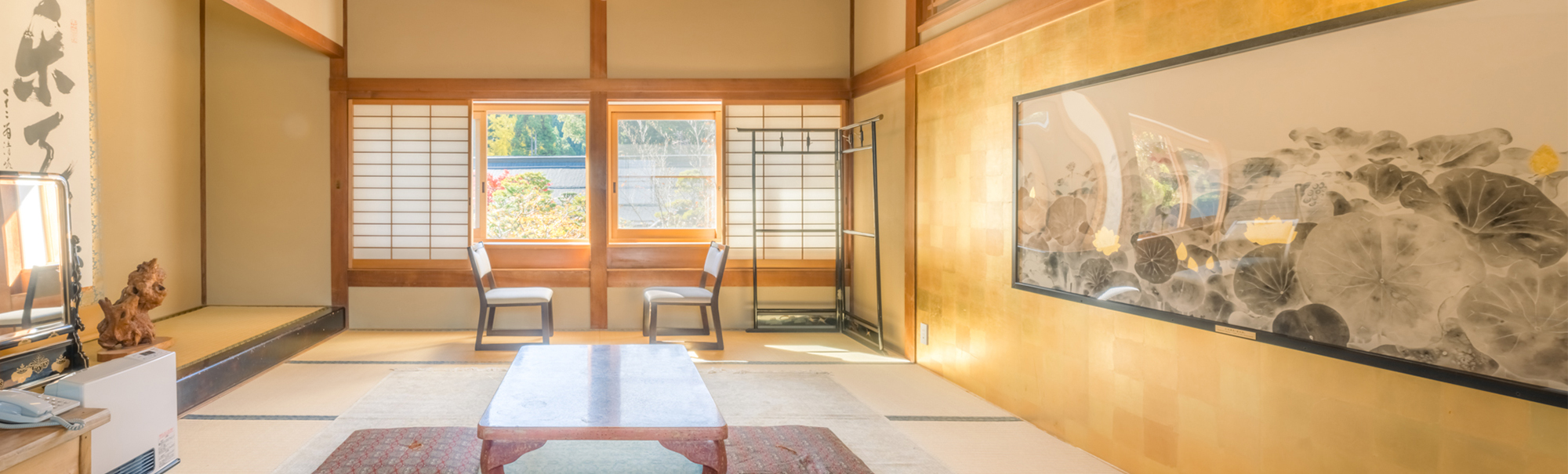
恵光院
A flagship Koyasan shukubo with English-guided Goma fire ceremony, Ajikan meditation, and nightly Okunoin tours.
from $130 /per night

福智院
The only Koyasan shukubo with a natural hot spring, three Mirei Shigemori gardens, and refined shojin ryori.
from $175 /per night
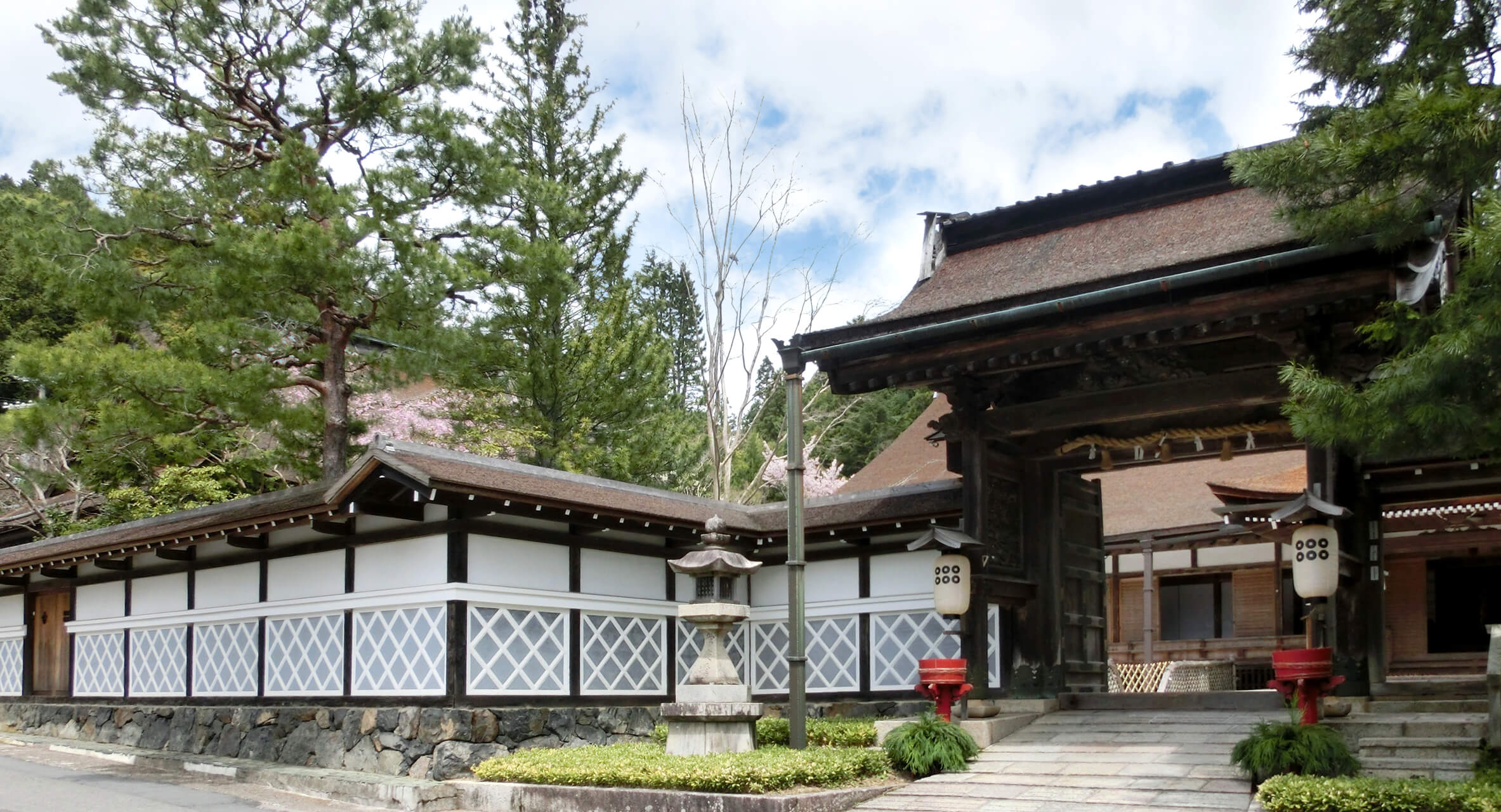
蓮華定院
A Sanada-family bodaiji shukubo on Mt. Koya with English-speaking monks, just 13 rooms, and a strong samurai-era heritage.
from $230 /per night
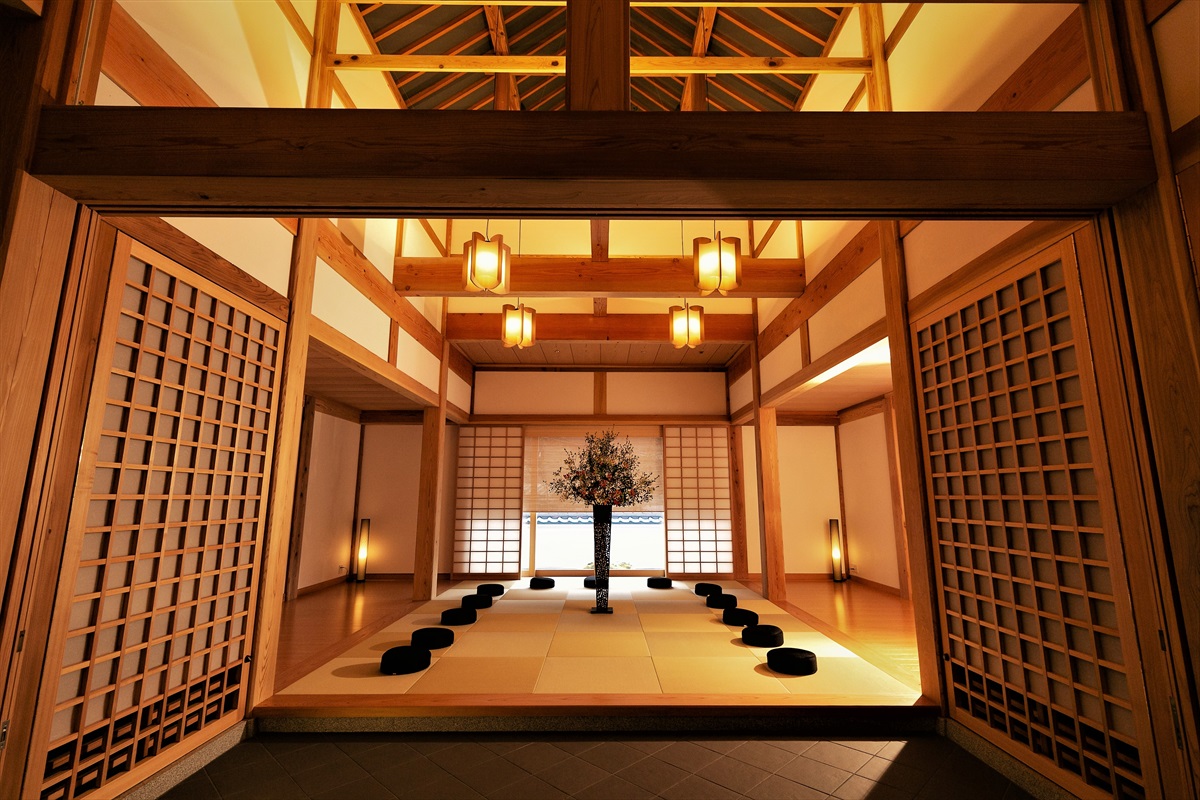
永平寺 親禅の宿 柏樹関
A modern Zen inn at the gate of Eiheiji, with 18 cedar-built rooms, evening zazen and access to the temple's pre-dawn morning service.
from $195 /per night
Explore Destinations

