
|
|
|
|
|
|
 Photo: Unsplash
You are four hours into the Nakahechi route. Your feet ache in a specific Kumano way — the cumulative damage of cobblestone, root, and damp stone step that no amount of city walking prepares you for. The cedar canopy overhead is so dense the light reads bluish-green, like you are under shallow water. You have not seen another walker in 45 minutes. Then, at a switchback, the trail flattens and you smell woodsmoke. A low wooden building with a tile roof appears through the trunks. There is a single carved oji shrine in the front yard, a small bell, and a hand-painted sign in Japanese and English that reads simply: Pilgrim Lodging. This is what people mean when they say the Kumano Kodo is different.
This guide is for travelers who want to walk the Kumano Kodo as a real pilgrimage — not as a viewpoint and a souvenir stop — and who want to know where the shukubo, shrine inns, and pilgrim minshuku actually are along the trail. We will also rank the five most useful Kumano-area tours bookable on Viator (the affiliate partner this site links to), with honest notes on which ones are worth paying for and which segments of the trail you should just walk yourself. Pricing bands and English-support notes are current as of May 2026, drawn from a mix of direct booking research, on-the-ground reporting from the Nakahechi and Kohechi routes, and conversations with several of the older shukubo and minshuku hosts along the trail.
The Kumano Kodo (熊野古道, "the old roads of Kumano") is a network of pilgrimage trails through the mountainous Kii Peninsula of Wakayama Prefecture, in southwestern Honshu. The routes converge on the three Kumano Sanzan grand shrines — Kumano Hongu Taisha, Kumano Hayatama Taisha at Shingu, and Kumano Nachi Taisha — which together have been a single sacred destination for more than 1,000 years. The trails were walked first by ascetics, then by retired emperors with retinues of hundreds, then by ordinary pilgrims from every level of society. In 2004 the whole landscape was inscribed by UNESCO as a World Heritage site under the title "Sacred Sites and Pilgrimage Routes in the Kii Mountain Range" — one of only two pilgrimage routes in the world on the UNESCO list, the other being the Camino de Santiago in Spain.
What makes the Kumano Kodo distinct from the more famous Kyoto temple circuit, or even from a mountain monastery like Koyasan, is its religious character. Kumano was, and is, a syncretic landscape. The Kumano deities are simultaneously Shintō kami and Buddhist buddhas — a doctrine called honji suijaku that held that the kami of the islands were local manifestations of the universal buddhas. For centuries pilgrims worshipped at both the shrines and at Buddhist temples on the same trip, with no clear boundary. The Meiji-era separation of Buddhism and Shintō in 1868 forced an official divide that the landscape itself never quite accepted. Today the shrines are administered as Shintō, but the practice you encounter on the trail still feels mixed: small oji shrines along the path bear Buddhist iconography, and several of the lodgings near the route are temple-affiliated shukubo.
The Kumano Kodo is also a cousin, in spirit, of the Shikoku 88-temple ohenro pilgrimage. Both involve walking long distances through sacred mountain landscapes, both use distinctive pilgrim white clothing for those who choose to wear it, and both have the same underlying premise — that the walking itself, not arrival at a destination, is the practice. The difference is structural: the ohenro is a closed loop of 88 specific Shingon temples around the coast of Shikoku island, while the Kumano Kodo is a network of converging trails through one mountain region. The ohenro is generally walked over 30 to 50 days; the Kumano Kodo can be done in segments ranging from a single day to a week or more. The two were formally twinned by a Memorandum of Understanding between Wakayama Prefecture and the Pilgrim Office of Santiago de Compostela in 1998, making the Kumano Kodo and the Camino de Santiago officially sister routes — pilgrims who complete both can register for a dual-pilgrim certificate at either end, an arrangement that has slowly built a small but devoted international constituency for the Kumano trail.
The Kumano Kodo is not one trail but a network. There are five named historical routes, but for almost all modern travelers the choice is between three: Nakahechi, Kohechi, and Ohechi. The Nakahechi is the imperial pilgrimage route that runs roughly east-west from the coastal town of Tanabe over the mountains to Hongu, then on to Shingu and Nachi. It is the most popular by an enormous margin, the best-marked, the one with the most lodging infrastructure, and the one almost every guided tour follows. It is also the route with the gentlest profile — significant climbs, but no extended high-altitude sections. For a first Kumano Kodo trip, walk the Nakahechi.
The Kohechi is the high mountain route that runs roughly north-south, connecting Koyasan to Hongu over four days through three high passes — Obako-toge, Miura-toge, and Hatenashi-toge — all above 1,000 meters. It is the most physically demanding of the routes by a wide margin, with sustained climbs and descents on rough trail surface, limited lodging, and almost no English signage until you near Hongu. The reward is that it is also the quietest and most remote: in shoulder season you can walk for an entire day and see no one. The Kohechi is also the historical link between the two great pilgrimage centers of Kii — Koyasan, the headquarters of Shingon Buddhism where Eko-in is one of the most storied shukubo, and Kumano, the syncretic shrine landscape. Walking it consciously connects the two.
The Ohechi is the coastal route, running along the Pacific shore from Tanabe south to Nachi. Most of its original trail has been overlaid by modern roads and railway, so the walkable portions are now short segments — most famously the climb over Daimon-zaka to Kumano Nachi Taisha and Nachi Falls, which is one of the most photographed staircases in Japan. The Ohechi is the best route for travelers who want a Kumano experience but cannot give it more than a day, or for older pilgrims who want shorter walking with sea views between segments. It is not a multi-day route in the modern sense.
Picking between them is mostly a question of time and fitness. If you have one day, walk the final 7 km of the Nakahechi from Hosshin-mon-oji to Hongu — the iconic approach to the grand shrine, almost entirely downhill, manageable for any reasonably fit adult. If you have two to three days, walk Takijiri-oji to Hongu via Chikatsuyu and Hosshin-mon-oji, the heart of the Nakahechi, with one overnight in Chikatsuyu and a second in Hongu or Yunomine. If you have four to five days and are a strong hiker, walk the full Kohechi from Koyasan to Hongu, then add a final day on the Nakahechi for the Hongu-to-Nachi connection. The Ohechi can slot in as a half-day addition to any of these via the Daimon-zaka approach to Nachi. For travelers building a longer regional itinerary, the Kumano walk also pairs naturally with the Yoshino-Omine Shugendō tradition further north — the Yoshino shukubo cherry blossom and Shugendō guide covers that adjacent mountain route in detail.

Lodging on the Kumano Kodo is fundamentally different from lodging at a temple-mountain destination like Koyasan — where a shukubo such as Eko-in offers morning goma fire ceremonies and formal shōjin ryōri — or Eiheiji. There is no single hub of fifty shukubo in one village. Instead, lodging is distributed along the trail in clusters — small minshuku (family-run guesthouses), shrine inns, and a handful of true shukubo — most with capacity for ten to twenty guests. The trail walks you from one to the next. You do not return to a base hotel and walk out again the next morning. Your bag often goes ahead by luggage forwarding service while you walk.
The main lodging clusters on the Nakahechi are, from west to east: Takijiri-oji at the trail entry (one or two minshuku), Chikatsuyu at the midpoint (the largest village on the route, with around a dozen lodgings), Hosshin-mon-oji about 7 km before Hongu (a small cluster of pilgrim lodgings), and then Hongu itself (the largest lodging hub, with a mix of minshuku, shrine inns, and small ryokan). East of Hongu, the trail descends into the Kumano River valley and connects to Yunomine (Japan's oldest hot spring village and a critical pilgrim resting place), Watarase, and on toward Koguchi, the staging village for the climb to Nachi.
True temple-affiliated shukubo on the Kumano Kodo are rare — most lodgings are minshuku run by ordinary local families, which is part of the trail's character. The shrine-side accommodations near Hongu and Kumano Hayatama at Shingu are the closest equivalents to a Koyasan shukubo experience, though even these are typically smaller and more home-scaled. If you specifically want a temple-stay-with-monastic-service experience on this trip, the cleaner option is to pair a night or two on the Kumano Kodo with a night at a Koyasan shukubo before or after — many pilgrims do exactly this, walking the Kohechi to bridge the two.
What is included in a typical Kumano Kodo lodging night looks roughly like this. Check-in around 3:00–4:00 PM after the day's walk. A futon laid out in a small tatami room, sometimes shared with your group, sometimes private. A simple evening meal — usually a regional set rather than formal shōjin ryōri, often featuring local river fish (ayu in season), mountain vegetables, and rice from the Kumano valley. A communal ofuro bath, occasionally an actual onsen at Yunomine and Watarase. Breakfast at 7:00 AM or so, packed lunch for the trail if you ask the night before. Total cost is typically 9,000–14,000 yen per person with two meals, slightly less than mid-range Koyasan shukubo and significantly less than a refined ryokan. Cash is preferred at most minshuku — many do not take credit cards, and ATMs are sparse on the trail. Withdraw enough yen for the full walk in Tanabe or Shingu before you start, calculated as roughly 12,000 yen per person per night plus 3,000 yen per day for incidentals, transport segments, and shrine offerings.
A practical note on which villages to stay in. For a two-night Nakahechi walk, the standard split is Chikatsuyu on night one and either Hongu or Yunomine on night two — Yunomine if you want the onsen bath and the historic pilgrim village character, Hongu if you want to be at the grand shrine for the morning. For longer walks, add Koguchi (between Hongu and Nachi) and Nachi-Katsuura on the coast. Hosshin-mon-oji lodgings are useful as a final-night base if you arrived late and want a short final walk into Hongu in the morning. The lodging style also shifts subtly as you cross the mountain — Takijiri and Chikatsuyu lean toward family minshuku with simple home cooking, Hongu has more shrine-affiliated guesthouses with slightly more formal evening service, and Yunomine is dominated by small onsen ryokan built around the hot spring. None of these are five-star accommodations and none try to be; the appeal is that the inn at the end of the day matches the day you just walked.
The Kumano Kodo is well-marked enough that strong independent walkers do not strictly need a guide for the standard Nakahechi sections. That said, guided tours are useful in two cases — when you want compressed cultural context that a self-guided walk cannot provide, and when you want logistics (luggage forwarding, shrine entry, transport between segments) handled for you. Below are the five Kumano-area tour types most commonly bookable via Viator, ranked by value for a typical first-time English-speaking traveler. Prices are approximate ranges as of May 2026 and assume two travelers.
Difficulty: easy to moderate. English support: full English guides on most listings. Price band: roughly 15,000–22,000 yen per person. Tour structure: pickup from Tanabe or Kii-Tanabe Station in the morning, bus transfer to Hosshin-mon-oji or Takijiri-oji, guided walk of either the final 7 km descent into Hongu or a roughly 8 km Takijiri-to-Takahara segment, lunch on the trail, and visit to Kumano Hongu Taisha at the end of the day before return transport. (Viator listing →)
Pro: this is the highest-value Kumano product on Viator for travelers with one day. You get the iconic Nakahechi cedar trail, the descent past Fushiogami-oji with the view of the world's largest torii gate at Oyunohara, and the grand shrine itself, with a guide explaining oji shrine etymology, Kumano syncretism, and the pilgrim tradition as you walk. Con: it is a tight one-day product and you do not stay overnight on the trail, which means you miss the early-morning silence on the path. If you can spare two days, the multi-day version below is better.
Difficulty: moderate. English support: most listings are English-speaking guide plus local Japanese-speaking innkeepers (translator app helpful). Price band: roughly 60,000–110,000 yen per person for two-night, three-day programs; 90,000–160,000 yen for three-night, four-day programs. Tour structure: pre-booked itinerary covering Takijiri to Hongu over 2–4 days with included lodging in Chikatsuyu, Hongu, and/or Yunomine, daily luggage forwarding, all transport, breakfasts and dinners included, lunch packets, and a guide who walks with you on at least the headline days. (Viator listing →)
Pro: this is the format the Kumano Kodo was designed for — overnight in pilgrim lodgings, walking village to village. Logistics that would be painful to assemble individually (booking minshuku that don't take foreign credit cards, arranging luggage forwarding, train timing) are handled. The guided portions provide context that improves the whole trip. Con: cost is meaningful, and you give up itinerary flexibility — most of these are fixed-route programs with set dates. For repeat visitors or budget-focused travelers, self-guided with the same lodgings booked direct is usually 30–40% cheaper but requires more planning.
Difficulty: very easy. English support: typically full English-speaking guides. Price band: roughly 12,000–18,000 yen per person. Tour structure: pickup from Kii-Tanabe Station or selected Wakayama hotels in the morning, bus transfer to Kumano Hongu Taisha, guided visit to the grand shrine and the massive Oyunohara torii, optional short walk on the final ridge above the shrine (1–2 km, optional), lunch in Hongu village, and return transport in the afternoon. (Viator listing →)
Pro: this is the right product for travelers with one day in the area who specifically cannot or do not want to do a serious hike — older parents joining a younger pilgrim, recovery days after Koyasan, or travelers in the rainy season when full-route walks are uncomfortable. It is also the cheapest way to physically reach Hongu without renting a car. Con: it bypasses the actual pilgrimage. If you can walk even the 7 km from Hosshin-mon-oji, do the one-day guided Nakahechi walk above instead.
Difficulty: easy. English support: most listings English-friendly. Price band: roughly 25,000–45,000 yen per person for one-night programs with onsen ryokan stay included. Tour structure: a guided one-day Hongu visit (often with the short final-descent walk from Hosshin-mon-oji), then transfer to Yunomine onsen — Japan's oldest documented hot spring, in continuous use for over 1,800 years — for one overnight, with a visit to Tsuboyu, the UNESCO-listed wooden tub on the river that pilgrims have used since the 12th century. (Viator listing →)
Pro: this is the most Kumano-flavored short package. Yunomine is not a polished resort onsen — it is a steep-walled valley with a hot spring that bubbles up through the riverbed and a thousand-year-old hot-water bathing tradition that pilgrims used as ritual purification (yu-gori) before entering Hongu. Tsuboyu, accessed by buying a 30-minute private slot, is one of the few UNESCO World Heritage hot springs in the world. Con: rooms at the best Yunomine ryokan book out months in advance for autumn and Golden Week. The Viator inventory is what is available at the listing time, which is rarely the best rooms.
Difficulty: customizable. English support: dedicated bilingual private guide for your group only. Price band: roughly 90,000–180,000 yen per day for groups up to 4, depending on guide certification and itinerary complexity. Tour structure: a fully customized itinerary built around your fitness level, days available, and lodging preferences, with the guide handling all logistics. Some private guides on Viator are nationally certified mountain guides; others are local Wakayama-based pilgrim-specialist guides who have walked the trails hundreds of times. (Viator listing →)
Pro: this is the right product for travelers with specific constraints — limited mobility, dietary restrictions, a tight schedule that requires real-time replanning, or a desire for deep cultural conversation beyond what a fixed group tour offers. For families with one strong walker and one less fit member, a private guide can split routes and meet at lodgings. Con: cost. The headline-cheap Viator private products are often newer guides; the most experienced bilingual Kumano specialists are at the upper end of the price band and worth it if the trip is structurally important to you.

The Kumano Kodo has two clear high seasons and one clear low season. The high seasons are spring (late March through May, with cherry blossom in early April and fresh green cedar in May) and autumn (late October through late November, with foliage peaking around November 10–20 at lower elevations). Golden Week, the week-long Japanese national holiday from late April into early May, is the single most crowded period of the year and books out lodgings six months ahead — if you want to walk during Golden Week, book Viator multi-day packages or shukubo direct by November of the previous year. Autumn weekends are similar.
Winter — late December through February — is mostly closed for the upper Kohechi and quiet on the Nakahechi. Lower-elevation segments of the Nakahechi (Hosshin-mon-oji to Hongu, Daimon-zaka to Nachi) remain walkable in normal winters, but many lodgings close for parts of January and February for off-season maintenance, and snow above 600 meters can make middle Nakahechi sections impassable for several days at a stretch. Summer — July through early September — is walkable but uncomfortable: humidity is severe and afternoon thunderstorms are routine on the higher passes. Most experienced Kumano walkers avoid July and August in favor of June (green and damp but cool) and September after the typhoons.
Tip
When to NOT book a guided tour: if you are an experienced multi-day hiker, are walking only the final 7 km from Hosshin-mon-oji to Hongu, are doing only the Daimon-zaka climb to Nachi, or are walking the Nakahechi in shoulder season (June or mid-September) with two or more days available — in all these cases the trail is well-marked enough that self-guided with direct-booked minshuku is the better choice. Save the Viator guided product for compressed schedules or for the Kohechi, where signage and logistics are genuinely harder.
The Kumano Kodo is studded with small oji shrines — subordinate sub-shrines that historically served as resting and worship points along the route. There were once 99 of these (the so-called Kumano kyūjūku-ōji); about 30 to 40 are still actively maintained. Each was dedicated to a deity considered a "child" or junior manifestation of the Kumano main deities, and pilgrims would historically pause at each to make a brief offering. Today the active oji shrines are marked with stone signage and a small offering box. The traditional etiquette is a small coin offering, two bows, two claps, a brief silent prayer, and one final bow — the standard Shintō nirei nihakushu ichirei form. You do not need to know the specific deity name.
Purification — sutaba or suteba, in the local dialect, more formally misogi or temizu — is also part of the route. The main shrines have stone purification basins where pilgrims rinse the left hand, then the right, then pour a small amount of water into the cupped left hand to rinse the mouth, then rinse the left hand again. The ladle is then rinsed by tilting it upright so that water runs down the handle. At Yunomine the historical pilgrim purification was yu-gori — bathing in the hot spring itself before entering Hongu — and at Hongu the modern equivalent is the standard temizu basin at the shrine entrance.
At the grand shrines themselves, the form is the same as at any major Shintō shrine. Approach the main hall, throw a small coin into the offering box (5-yen coins are traditional because the word go-en puns on the word for "fate" or "connection"), ring the bell if there is one, and offer two bows, two claps, a silent prayer, and a final bow. Photography is generally permitted in shrine grounds but not inside main halls; check signage. At Kumano Nachi Taisha and the Seiganto-ji temple immediately beside it, the rules differ slightly between the Shintō shrine side (no flash inside halls) and the Buddhist temple side (incense and prostrations permitted). This shrine-temple coexistence at Nachi is one of the most vivid examples of pre-Meiji syncretism still visible in Japan — comparable in spirit to the Tendai mountain complex on Hieizan where Enryakuji Kaikan offers overnight stays — and is worth slowing down for. The same building complex was once a single shrine-temple unit until the 1868 separation order forced it to be divided; today the wooden three-story pagoda of Seiganto-ji framed against the Nachi waterfall is the single most reproduced image of the entire Kumano landscape, and the view from the pagoda platform looking out at the waterfall is the appropriate place to absorb what the syncretic tradition actually meant.
Tip
Trail safety basics: carry at least one liter of water per person (refill points exist but are not frequent), wear proper hiking shoes (not sneakers — the cobblestone is brutally slippery in the wet), download offline maps for the Tanabe City Kumano Tourism Bureau official trail guide before you start, register your route at the Kumano Travel desk in Tanabe if walking the Kohechi, and carry a basic first-aid kit. There are bears in the Kii mountains; carrying a small bear bell is sensible on the Kohechi and on quieter Nakahechi shoulder-season days.
The classic dual-pilgrimage trip pairs Koyasan and Kumano in a single itinerary, and there are two ways to do it. The strong-hiker version walks the Kohechi from Koyasan to Hongu over four days, sleeping at minshuku at Omata, Miura-guchi, and Totsukawa Onsen along the way. This is the historical pilgrim route between the two sacred mountains and is the most rewarding option, but it is genuinely demanding — three high passes, sustained climbs, limited lodging — and is recommended only for travelers with previous multi-day hiking experience. Detail on each shukubo and ryokan on the Kohechi is best obtained from the Tanabe City Kumano Tourism Bureau before booking.
The lighter version uses public transport. Take the Nankai-Rinkan bus from Koyasan down to Hashimoto, JR to Wakayama, then the limited express to Kii-Tanabe — about 5 hours door-to-door — and start the Nakahechi from there. After finishing at Hongu, continue by bus to Shingu, then JR Kisei-honsen line back to Shin-Osaka or down to Nachi for the final segment. This route is roughly two nights in Koyasan plus three to four nights along the Kumano, and is the most common dual-pilgrimage version for international travelers. For travelers who have not yet done either, this guide pairs naturally with our Koyasan temple stays guide, the first-time shukubo guide, and the Yoshino Shugendō shukubo guide for travelers extending into Nara prefecture.

Tip
Q: Do I need to be Buddhist or Shintō to walk the Kumano Kodo? A: No. The Kumano deities were historically considered universal — Kumano was the rare medieval Japanese pilgrimage site that explicitly welcomed people of any class, gender, or religious background, including women, who were excluded from many other sacred mountains. The modern shrines maintain this open posture. Walk the route with curiosity and ordinary respect; no religious affiliation or background is expected. If you want a deeper context primer before going, the [Dewa Sanzan Shugendō guide](/blog/dewa-sanzan-shukubo-guide) covers the closest related mountain tradition.
Tip
Q: Is the trail safe to walk alone? A: Yes, on the Nakahechi, with normal hiking precautions. The trail is well-marked, frequently traveled in season, and has multiple emergency call points and shelters. Solo walkers (including solo female pilgrims) are common and the route is considered one of the safer multi-day hikes in Japan. On the Kohechi, solo walking is feasible for experienced hikers but you should register your route in advance and carry a SIM-enabled phone — sections are remote and signal is patchy. Avoid solo walking after heavy rain on any route, when trail surface becomes treacherous.
Tip
Q: Can I bring luggage on the trail? A: You can, but you should not. The Kumano Kodo has a well-developed luggage forwarding service (Kumano Kodo Travel and the Tanabe City Kumano Tourism Bureau both arrange it) that moves your main bag from lodging to lodging for roughly 1,500–2,500 yen per piece per transfer. Walk with a daypack containing water, snacks, rain layer, and a change of socks; let your suitcase travel ahead. The cobblestone and stone-step trail surfaces make rolling luggage genuinely impractical, and even carrying a 60-liter backpack on the Nakahechi will turn a pleasant walk into a slog.
Tip
Q: What's the difference between a *shukubo* and a *minshuku* on the trail? A: A *shukubo* is a temple- or shrine-affiliated lodging that historically housed pilgrims, often with some monastic-style elements (morning service, *shōjin ryōri* vegetarian dinner, on-site altar). A *minshuku* is a family-run guesthouse in the broader Japanese sense — a private home that takes paying overnight guests, often with a home-cooked dinner. On the Kumano Kodo, most lodgings are minshuku rather than true shukubo, because the trail historically passed through ordinary villages rather than monastic centers. The minshuku experience is excellent but is structurally closer to a homestay than to a [traditional shukubo stay](/blog/shukubo-first-time-guide); set expectations accordingly.
Tip
Q: Should I book guided tours or DIY? A: For one day on the Nakahechi, take the Viator one-day guided walk — the per-person cost is reasonable and the guide context is genuine added value. For two to four days on the Nakahechi, either option works; self-guided with direct minshuku bookings is 30–40% cheaper but requires you to handle Japanese-language phone bookings, luggage forwarding logistics, and bus schedules in advance. For the Kohechi, take a guided multi-day program — the route is harder, signage is sparser, and lodging is more limited. For the Daimon-zaka / Nachi day, DIY is straightforward.
Whichever route you choose, the unifying experience of the Kumano Kodo is the same: cedar canopy, stone steps worn smooth by 1,000 years of feet, small oji shrines appearing without ceremony at the right moment, and an evening at a minshuku or shukubo with a host who has watched walkers pass since they were children. Pair a multi-day walk with a Viator-bookable guided segment if you want the cultural context handled, or book lodgings direct and walk it yourself in shoulder season for the quietest version. If you want the deepest religious context, add a night or two at a Koyasan temple stay on either side of the Kumano walk and connect them — historically and physically — over the Kohechi. The trail has been waiting more than a thousand years. It will still be there when you arrive.
Ready to book?
Browse our curated collection of authentic Buddhist temple stays across Japan. Filter by region, sect, and experience.
Start ExploringRecommended Temples for This Guide
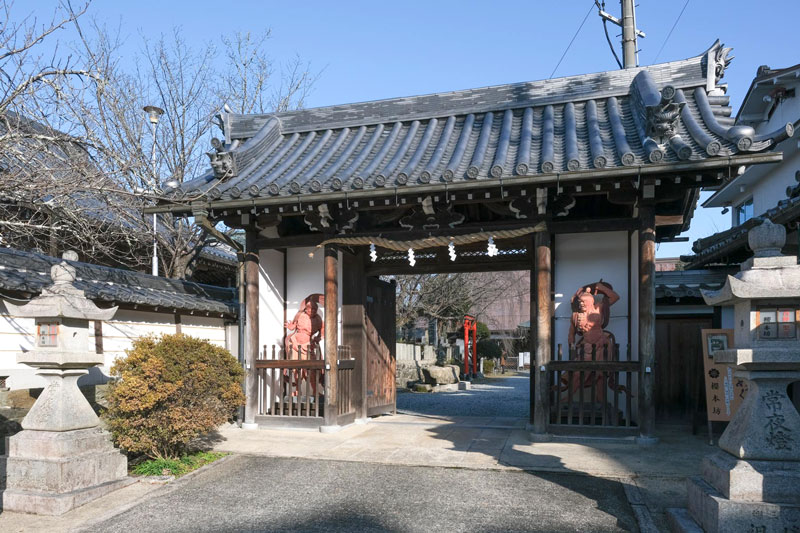
井光山 五臺寺 櫻本坊
A Shugendo training-hall shukubo on UNESCO-listed Yoshino-yama, founded by an Emperor Tenmu vow and home to three Important Cultural Property Buddhas.
from $80 /per night
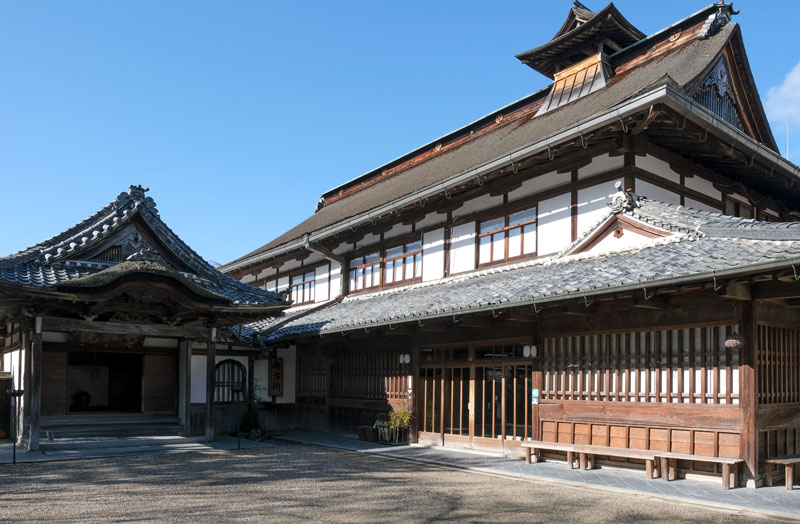
竹林院 群芳園
Yoshino-yama's most prestigious shukubo-ryokan, founded by Prince Shotoku and centered on Gunpoen — a Sen no Rikyu garden listed among the Three Great Gardens of Yamato.
from $110 /per night
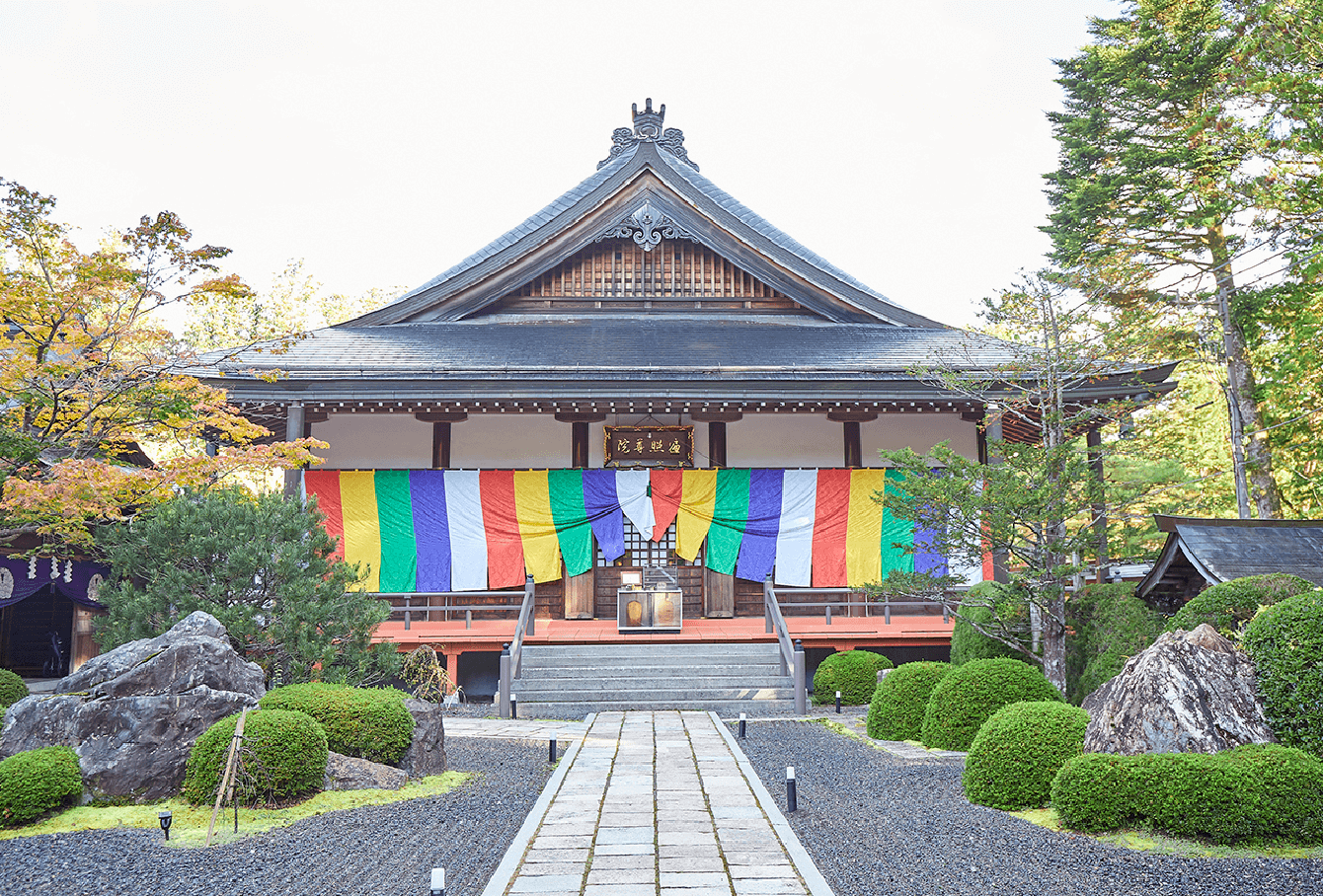
遍照尊院
A Koyasan shukubo built on the hill where Kobo Daishi practiced asceticism, with a large cypress bath and Ajikan meditation.
from $95 /per night

羽黒山参籠所 斎館
The only Edo-era shukubo still standing on the Haguro-san summit, run by Dewa Sanzan Jinja, with Michelin-listed mountain-herb shojin ryori.
from $75 /per night
Explore Destinations

