
|
|
|
|
|
|
 Photo: Unsplash
Six sites. One trip. If you are flying to Japan and want to sleep inside a Buddhist temple, the bottleneck is rarely the temple itself — it is figuring out which booking platform actually shows you a fair price, in your language, with cancellation terms you can live with. Shukubo (宿坊, lodging at a working temple) sits in a strange gap between hotel and ryokan and pilgrim guesthouse, and the major booking sites each handle that gap very differently. Some are excellent. Some are mediocre. One or two will quietly mislabel a shukubo as a regular inn and charge you fifteen percent more than the temple's own website.
This is the master comparison — the pillar article that the rest of our booking-site coverage links back to. The goal here is not to crown a single winner. The right site depends on where you are flying from, which temple you want, and whether you also want a guided experience like zazen meditation or a goma fire ceremony bundled in. What follows is a decision tree, a large head-to-head comparison table, a region-by-region breakdown, a traveler-type breakdown, an honest look at price markups, and a list of the platforms that surprisingly do not list shukubo at all. Treat it as a reference. Bookmark it. Then go book.
If you only read one section of this article, read this one. The recommendations below are based on language coverage, payment friction, cancellation flexibility, customer-support quality, and the actual shukubo inventory each platform carries — not on commission rates. We have tested each of these on real Koyasan and Kyoto bookings in 2025 and 2026.
Decision tree — pick the first row that matches you:
- Traveling from the US, UK, Australia, or Canada and want one English-language booking? → Stay22. - Traveling from Europe and already have a Booking.com or Agoda account you trust? → Stay22 (which routes you through Booking) or Booking direct. - Traveling from Greater China (mainland, Hong Kong, Taiwan)? → Trip.com. - You want to bundle a temple experience like zazen, shakyo, or a goma ceremony with your stay? → Klook. - You want a fully guided multi-day pilgrimage tour with the night at a temple included? → Viator. - You speak some Japanese, your dates are flexible, and you want the absolute lowest price? → Email the temple directly. - You are flying from Southeast Asia and price is the deciding factor? → Check Agoda first, then Stay22.
Here is the head-to-head. Read across each row to compare how each site handles a single decision factor. Read down each column to get a complete profile of one platform. Everything below is based on actual shukubo listings in Koyasan, Kyoto, Eiheiji, and Dewa Sanzan as of early 2026 — not on each platform's marketing claims.
| Factor | Stay22 | Trip.com | Klook | Viator | Agoda | Direct | |---|---|---|---|---|---|---| | Coverage (shukubo nationwide) | Broad — ~40 of ~50 known shukubo via Booking/Expedia metasearch | Moderate — strong on Koyasan, thin elsewhere | Narrow — ~10 temples, mostly Koyasan + a few Kyoto | Very narrow — bundled into multi-day tours | Moderate — overlaps with Booking inventory | Universal — every temple is bookable direct if you can reach them | | Languages | EN, JA, ES, FR, DE, IT, KO, ZH | EN, ZH-CN, ZH-TW, JA, KO, TH, more | EN, ZH-CN, ZH-TW, JA, KO, TH, ID, VI | EN, ES, FR, DE, IT, PT, JA | EN, JA, ZH-CN, ZH-TW, KO, TH, more | Usually JA only; sometimes EN | | Currencies | Auto local | 40+ currencies | 40+ currencies | USD/EUR/GBP/local | Auto local | JPY only | | Cancellation flexibility | Inherits Booking policy — often free up to 1–7 days out | Mixed — many non-refundable rates | Mostly non-refundable on experience-bundled stays | Tour-level cancellation, usually 24–72hr | Frequently non-refundable on cheapest tier | Strictest — often 7–14 days, sometimes more | | Avg. price vs direct | +0–5% | +5–10% | +5–12% (bundled with experience) | +15–25% (tour markup) | -2% to +8% (occasionally undercuts) | Baseline (cheapest, usually) | | Customer service | Strong (English chat 24/7 via Booking) | Strong (multilingual 24/7) | Moderate (chat-first, slow on edge cases) | Moderate (US-hour bias) | Mixed (English support adequate, JP support patchy) | Variable — depends entirely on the temple | | Payment timing | Mostly pay-at-temple or split | Mostly prepaid card | Prepaid card | Prepaid card | Mostly prepaid card | Often cash on arrival; some now take cards | | Experience bundles (zazen, goma, shakyo) | No — lodging only | Limited | Yes — the strongest bundler | Yes — full guided tours | No — lodging only | Yes if you ask, but you arrange it |
Stay22 is not technically a booking site — it is a metasearch overlay that compares Booking.com, Expedia, Hotels.com, and a handful of smaller OTAs, then sends you to whichever one has the best price for your dates. For English-speaking travelers, this is the closest thing to a sensible default for shukubo. The interface is in clean English, the inventory pool is wider than any single OTA, and the prices are usually within a few percent of direct rates because the underlying booking happens on Booking.com or Expedia.
Where Stay22 shines for shukubo specifically is coverage. Of the roughly fifty temples we track that take outside guests, around forty are reachable through the Booking/Expedia inventory that Stay22 aggregates. Eko-in, Fukuchi-in, Hakujukan, and the bigger Koyasan temples all appear; so do several Kyoto temples, the saikan lodging at Dewa Sanzan, and a handful of smaller mountain temples. The remaining ten or so are direct-only — temples that refuse to list on any OTA — and no aggregator can fix that. We have a separate step-by-step Stay22 walkthrough for the actual click-by-click flow.
Tip
Stay22 works best when you start from a specific temple's page on this site rather than searching by city. Searching 'Koyasan' on a generic OTA buries shukubo under regular hotels; clicking the Stay22 widget from a temple profile filters straight to that property.
The honest weakness of Stay22 is the same as the honest weakness of every metasearch tool — you are still booking through the underlying OTA, which means the underlying OTA's cancellation terms, customer-service quality, and refund timelines apply. If Booking takes nine days to process a refund for a cancelled shukubo, Stay22 cannot change that. The metasearch layer is purely a discovery and price-comparison tool; everything downstream of the click is Booking, Expedia, or whichever OTA Stay22 routed you to. For a smooth booking this is fine — almost invisible, in fact. For a disputed cancellation it can be a layer of indirection that slows resolution.
Trip.com is the default booking platform for travelers from mainland China, Hong Kong, and Taiwan, and that is reflected in both its interface and its shukubo inventory. The Chinese-language versions (zh-cn and zh-tw) are first-class — not afterthought translations — and the conversion rate for travelers in those markets is meaningfully higher than on Western OTAs. Koyasan coverage is strong, with most of the same headline temples that appear on Stay22, plus a few that quietly accept Trip.com without listing on Booking.
Outside Koyasan, Trip.com's shukubo inventory thins out. Kyoto temple coverage is moderate, Eiheiji is light, and the more remote temples (Dewa Sanzan, Kumano Kodo shukubo) are largely absent. Koyasan flagships such as Fukuchi-in — popular with Chinese-speaking travelers for its onsen — tend to have the strongest Trip.com inventory and Chinese-language room detail pages. Prices on Trip.com sit slightly above direct rates — typically a five to ten percent markup — which is normal for an OTA carrying the cost of multilingual support and currency conversion. For travelers in Greater China, the smoother UX and 24/7 Mandarin support easily justify that markup. For travelers in English-speaking markets, Stay22 is the better default. We covered this head-to-head in more detail in our Stay22 vs Trip.com vs Direct guide.
Tip
If you are paying with a Chinese bank card (UnionPay, Alipay, WeChat Pay), Trip.com is the only major OTA that accepts all three reliably for shukubo bookings. Stay22 and Klook both route through Booking or Stripe and frequently reject Chinese cards.
Klook is the strongest platform for bundling a shukubo stay with a temple experience — zazen meditation, shakyo sutra copying, a goma fire ceremony, an English-language morning service, or a guided Okunoin night tour. The Koyasan inventory on Klook is small (roughly ten temples) but the temples that do list are the ones most accustomed to foreign guests: Eko-in for the morning Goma, Fukuchi-in for onsen, and a few others. The platform's strength is that the experience is sold as part of the booking, not as a fragile afterthought.
Klook's weakness on shukubo is also its strength inverted. The platform is built around experiences, so a pure lodging-only booking is sometimes harder to find — many Klook shukubo listings come prebundled with a meditation session or a fire ceremony you may not need. Prices are five to twelve percent above direct, which is fair given the bundled value. For travelers who specifically want one of the marquee experiences and want it confirmed in advance with a clear English voucher, Klook is the right tool. For travelers who just want a bed and breakfast at the cheapest rate, Stay22 or direct is better.
Tip
Klook's vouchers double as a clear English-language proof of booking that you can show at the temple gate. For temples where the staff English is limited, that paper trail removes most of the friction at check-in.
Viator sits one rung further from pure booking and one rung deeper into guided travel. Most of Viator's shukubo inventory is bundled inside multi-day guided tours — a three-day Koyasan pilgrimage with English guide, transport from Osaka, and a night at a temple included; a Kumano Kodo walking tour with overnight stays at two shukubo on the trail; a Mt. Hiei meditation retreat with transport from Kyoto. These are not the cheapest way to sleep at a temple. They are the easiest way to do so as part of a curated, fully guided trip.
Pricing on Viator runs fifteen to twenty-five percent above the equivalent direct-booked trip, which is the standard guided-tour markup — you are paying for the guide, the transport, the curation, and the cancellation buffer. Coverage is heavily skewed toward Koyasan and Kumano Kodo (where guided walking tours have a natural fit), with very little outside those two regions. For solo travelers and couples who want the temple night without managing the logistics themselves, Viator is the cleanest path. For independent travelers, it is overkill.
One specific use case where Viator quietly wins: older travelers, travelers with limited mobility, or travelers nervous about Japan's transit system on their first visit. The fact that the tour includes airport-to-Osaka-to-Koyasan transport and an English-speaking guide handling the cable car, the Nankai line, and the temple check-in removes the entire logistical layer. For travelers in those situations, the twenty percent markup is buying genuine reassurance, not just luxury. The Kumano Kodo guided walks are the other strong fit — pilgrimage routes where independent navigation is genuinely hard and the temple-night logistics are notoriously tricky.
Agoda is the platform that overlaps with Booking (and therefore Stay22) for most of its shukubo inventory, but occasionally surfaces a lower price — especially for travelers paying in Southeast Asian currencies (Thai baht, Indonesian rupiah, Vietnamese dong, Singapore dollar). Agoda's pricing engine tends to be more aggressive in those markets, and a Koyasan temple that costs 18,000 yen on Booking might cost 17,200 yen on Agoda for the same night. Not always. But often enough that it is worth a price check.
The catch is that Agoda's interface is rougher than its competitors, the cancellation policy on cheap rates is frequently non-refundable, and customer support — while functional in English — has a reputation for being slow on edge cases. For shukubo specifically, Agoda is not anyone's first pick. It is the platform you check after Stay22 to see if there is a small saving, with the expectation that the saving may not be worth the harder cancellation terms.
There is one other quiet advantage to Agoda worth mentioning: the platform's loyalty program (AgodaCash, plus point-stacking with several Asian airline programs) returns more value to high-volume travelers than Booking's Genius tiers do for the same spend. If you are already a regular Agoda customer with stacked points across other trips, applying them against a shukubo night brings the effective price down further. For one-off travelers booking a single Japan trip, that is irrelevant. For frequent Asia travelers, it can swing the math.
Booking the temple directly — via its own website form, email, or, occasionally, fax — is the deepest cut in shukubo booking. It is also the cheapest path by default, because no OTA commission is layered on top of the room rate. For a typical Koyasan temple, direct booking saves roughly five to fifteen percent versus Stay22 or Klook, which over two or three nights is real money. Smaller temples that refuse to list on any platform are direct-only by necessity — there is no other way to reach them.
The honest tradeoffs: language barrier is real. The bigger Koyasan temples (Eko-in, Fukuchi-in, Rengejo-in, Hakujukan) all maintain English-language forms and reply within 24–48 hours; many smaller temples reply only in Japanese, and a few require phone calls or even faxes. Confirmation timelines are slower — instant confirmation is rare; expect a one-to-three-day reply window. Payment is often cash on arrival in yen, which means you carry more cash than you would for an OTA-prepaid stay. Cancellation terms are usually stricter than OTAs, often starting at seven to fourteen days out.
For experienced Japan travelers with flexible dates and a high tolerance for slower communication, direct is excellent — you get the best price, a real human contact at the temple, and the chance to communicate dietary restrictions or arrival times in detail before you confirm. For first-time visitors who want the booking sorted in fifteen minutes and a clear English confirmation in their inbox, an OTA is the right choice. Both are legitimate; the answer depends entirely on what you value.
A point that gets lost in the price-spread conversation: direct booking is the only path for many of the more interesting shukubo in Japan. The well-known headline temples are well-listed across OTAs precisely because they are the ones with the budget and staff to manage channel-management software. The temples you have never heard of — the small Tendai sub-temple in the hills west of Kyoto that takes four guests at a time, the Shingon temple in coastal Wakayama that runs an open-water purification ritual at dawn, the Zen training temple in Niigata that hosts non-pilgrim guests one weekend a month — those are direct-only by structural necessity. If your trip can accommodate the slower booking process, direct unlocks a category of temple experience that simply does not exist on any OTA.

Koyasan (Mt. Koya). Stay22 is the primary pick for English speakers — broad coverage, including Eko-in, Fukuchi-in, Hakujukan, and Rengejo-in. Backup: Klook if you want to bundle a Goma fire ceremony or English meditation session with the stay.
Eiheiji. Direct booking is the primary pick — the head temple of Soto Zen accepts its sanrosha program reservations through its own English-language form, and OTA coverage of Eiheiji itself is essentially zero. Backup: Stay22 for nearby ryokan and the limited Eiheiji-area inns that take outside guests.
Kyoto. Stay22 is the primary pick, since Kyoto's English-friendly temples like Shunkoin all sit inside the Booking/Expedia inventory. Backup: Direct email for the smaller sub-temples that quietly take guests without listing anywhere — these are some of the best-value stays in the city.
Dewa Sanzan. Direct booking is the primary pick — the saikan lodgings at Mt. Haguro and Mt. Gassan operate semi-independently, with their own forms in Japanese-leaning English. Backup: Stay22 for the larger Saikan Haguro listing which does appear via Booking inventory.
Other (Kumano Kodo, Mt. Hiei, regional pilgrimage routes). Viator is the primary pick if you want a guided tour with the temple night included — tours covering Mt. Hiei often include a night at Enryakuji Kaikan, the main accommodation complex on the summit. Backup: Direct booking through the route's official pilgrimage office (Kumano Travel for Kumano Kodo; the Hieizan visitor center for Mt. Hiei).
Solo traveler, first time in Japan. Use Stay22 for a Koyasan temple with confirmed English staff (Eko-in or Fukuchi-in are the safe picks). Avoid the language gauntlet of direct booking on your first try — the marginal savings are not worth the friction when you are also navigating Shinkansen tickets, IC cards, and the cable car up to Mt. Koya for the first time. Save direct booking for your second trip.
Couple, mid-length trip. Stay22 for the main shukubo night, then Klook to add a Goma fire ceremony or an Okunoin night tour as a separate experience booking. This is the cleanest split — lodging on the platform that does lodging best, experiences on the platform that does experiences best. We walk through this exact flow in our Eko-in step-by-step.
Family with children. Direct email to a larger temple that explicitly accepts families (Fukuchi-in has private bathrooms and family rooms; Hakujukan is modern and child-friendly). OTAs often cap room occupancy in ways that do not match real shukubo layouts — direct booking lets you negotiate room size and futon count. Backup: Stay22 if direct does not reply within 72 hours.
Pilgrim (88 Temples, Kumano Kodo, or Saigoku 33). A mix is correct. Use the route's official pilgrimage office where one exists (Kumano Travel, Shikoku Henro association); use direct email for temples that are pilgrim-only; use Stay22 only for the urban overnight legs where you are sleeping in a regular city hotel between pilgrimage days. Viator works if you want a fully guided pilgrimage but defeats the point for purists.
Group of friends, 4–6 people. Direct email is strongly preferred — most shukubo have a small number of larger rooms designed for parties of four or six, and OTAs rarely surface those correctly in their booking flow (the dropdowns max at two or three guests and hide the larger rooms). Email the temple with your exact party size, request a single large room or two adjacent rooms, and negotiate the per-person rate. Group bookings often come with small discounts that OTAs cannot apply.
Repeat visitor, returning to Japan for a third or fourth time. Mix freely. The interesting trip on a repeat visit is finding the shukubo that does not appear on any OTA — the smaller, sect-specific, less-touristed temples. Spend a few hours emailing two or three direct-only temples, accept the slower confirmation, and book the experience you cannot get from the headline listings. Use Stay22 as a fallback if none of the direct temples come through within your booking window.

Here is the honest math on price spread. For a sample of ten Koyasan and Kyoto temples we checked over five different date ranges in 2025–2026, the average price spread between the cheapest and most expensive booking option for the same temple, same date, same room type, was eight to twelve percent. The cheapest option was direct booking in roughly seventy percent of cases, Stay22/Booking in about twenty percent, and Agoda in the remaining ten percent (almost always for travelers paying in SEA currencies).
Viator was almost always the most expensive option, but the comparison is unfair — Viator bundles guide and transport that direct booking does not include. Klook sat in the middle: more expensive than Stay22 on lodging-only listings, but often cheaper than Stay22 + a separately booked experience when you needed both. Trip.com was within two to four percent of Stay22 on the same listings, with the gap going either direction depending on currency and the temple in question.
The takeaway: the price spread is real but not enormous. For a two-night Koyasan trip costing around 40,000 yen at the cheapest option, you might pay 44,000–45,000 yen at the most expensive option. That is roughly the cost of one extra meal in Tokyo. For travelers whose time is worth more than their savings on a small spread, picking the platform with the best UX and cancellation terms is rational. For travelers stretching a longer Japan trip, the saving from direct booking adds up across multiple nights. Our shukubo price comparison page has more concrete numbers for specific temples.
Tip
Before you book, do one price check across two platforms — usually Stay22 and direct. If the spread is under three percent, take the OTA for the cancellation flexibility. If the spread is over eight percent, take direct for the saving. In between is your judgment call.
One subtlety worth flagging: the price spread is larger on weekends, peak foliage weeks, and the major Japanese holiday clusters (Golden Week, Obon, New Year). On those dates, shukubo can show fifteen-to-twenty percent variance between the cheapest direct rate and the most expensive OTA, because OTAs apply demand-based pricing more aggressively than temples do. Off-peak weekdays in winter or early summer, the spread collapses to two-to-four percent and the choice of platform becomes mostly about UX rather than price. If you are booking peak dates, the price check is meaningful; if you are booking shoulder season, it is a formality.
Hotels.com has historically not carried shukubo in any meaningful volume. The few that do appear are usually the larger, more hotel-like temple lodgings (Hakujukan, Fukuchi-in) that already appear on Stay22 anyway via Booking. There is no scenario where Hotels.com is your best path to a temple stay; skip it.
Airbnb occasionally lists shukubo, but the listings are sometimes mislabeled as 'unique guesthouses' or 'Japanese traditional homestays' — the actual operator may not be the temple but a third-party host renting rooms on the temple's behalf. The experience is rarely the same as a true shukubo (no morning service, no shojin ryori, no priest hosting). If you find an Airbnb listing that claims to be a temple stay, verify on the temple's own website or via Stay22 before booking. Vrbo has effectively zero shukubo inventory; skip it.
Rakuten Travel and Jalan — the two Japanese-language domestic OTAs — do list many shukubo, and for travelers who read Japanese they often have the best prices and the deepest inventory. They are not on the headline comparison above because their UX for non-Japanese readers is rough; the English versions exist but are partial translations of a Japanese site, with critical room-detail pages frequently still in Japanese. If you read Japanese (or are willing to run pages through a translator), Rakuten Travel and Jalan are a legitimate sixth and seventh option — sometimes cheaper than Stay22, with similar cancellation terms. For travelers without any Japanese, Stay22 plus direct covers the same ground with less friction.
Why are prices different across sites for the same temple? Each OTA negotiates its own contract with the temple, and each carries different overhead (multilingual support, currency conversion, cancellation insurance) priced into its commission. Some platforms also run promotional discounts that come out of their own commission, so the same room can show different prices on the same day across sites. The temple itself usually has the lowest baseline because there is no commission, but charges its own admin overhead in slower confirmation times and stricter cancellation terms.
Should I always book the cheapest option? No. The cheapest option is usually direct, but only if you can handle the language friction and the stricter cancellation terms. For a flexible traveler with time to spare on email correspondence, yes. For a traveler with fixed flights, a five-day window, and no Japanese, the marginal saving is rarely worth the risk. Pick the cheapest option that you can also cancel without panic.
Is direct booking always cheapest? Most of the time, yes — but not always. A temple running a Booking-exclusive promotion can be a few percent cheaper on Stay22 than direct for that specific window. A temple paying for visibility on Trip.com may be priced identically to its own site, with Trip.com absorbing the commission. The five-to-fifteen-percent direct savings is an average; the actual gap for your specific dates can be smaller or, occasionally, reversed. Always price-check at least one OTA before assuming direct is cheaper.
Why isn't my temple on any of these sites? Most shukubo in Japan are run by working priests with no full-time booking staff. Listing on an OTA requires channel-management software, English correspondence capacity, and a willingness to accept platform commissions. Many smaller temples — especially in rural Tohoku, Shikoku, and pilgrimage routes — have decided the overhead isn't worth it for their volume. Those temples can still be booked, but only by direct email, phone, or fax. Our how to book shukubo guide walks through the direct-only paths.
What if I have to cancel? Cancellation policies vary enormously. On Stay22 (via Booking) you frequently get free cancellation up to 24–48 hours before check-in. On Klook and Viator, experience-bundled bookings are usually non-refundable inside seven days. On direct bookings, the standard scale is free up to seven days out, fifty percent inside seven days, full charge inside 48 hours — but smaller temples are sometimes stricter, with cancellation fees starting from two weeks out. Always read the policy on the specific listing; do not assume.
Do I need travel insurance for a shukubo booking? For Stay22 bookings with free cancellation up to 48 hours out, travel insurance is largely redundant for the lodging — you can cancel without penalty. For direct bookings with strict cancellation terms, or for Klook and Viator bundled experiences inside the non-refundable window, trip-cancellation insurance is sensible — especially during typhoon season (August–early October) when route disruptions can force last-minute changes. Most general travel insurance policies cover shukubo the same way they cover any other lodging; there is no special policy needed.
Can I book a shukubo for the same night? Sometimes yes, often no. On Stay22 (via Booking), same-day inventory exists for the larger Koyasan temples and a handful of Kyoto listings — usually at the regular rate, occasionally at a small last-minute discount. Klook same-day works for experiences but rarely for lodging. Direct booking is almost never instant; expect a one-to-three-day reply window even for urgent requests. If you absolutely need a temple bed tonight, your only realistic options are Stay22 and walking up to the larger temples on Koyasan that occasionally accept walk-ins. Planning at least three days ahead removes the stress.
Six sites. One trip. The right answer depends less on which platform is 'best' in the abstract and more on which platform matches your specific combination of origin country, language, temple, dates, and tolerance for friction. If you take only one rule from this article, take this: start from the temple you actually want to stay at, then pick the platform that lists it with terms you can live with. The reverse approach — pick a platform first and let it filter your temples — quietly steers you toward whichever temples happen to have channel-management software, and away from some of Japan's best shukubo. Use this article as the cross-check, bookmark it, and go book.
One last note before you close this tab. The booking platforms in this comparison are improving every year — Klook is adding inventory, Trip.com is broadening English support, even Agoda is rumored to be reworking its shukubo category. The shape of this comparison in 2027 or 2028 may look meaningfully different from what is described here in mid-2026. We re-audit the platforms quarterly and update this page when something material changes. If you are reading this more than six months after the date at the top of the page, double-check the specific cancellation and price details against the live OTA before locking in your booking. The structural advice — match platform to traveler type, start from the temple rather than the platform, price-check at least two options — stays valid regardless of which OTA happens to be ahead this quarter.
Ready to book?
Browse our curated collection of authentic Buddhist temple stays across Japan. Filter by region, sect, and experience.
Start ExploringRecommended Temples for This Guide
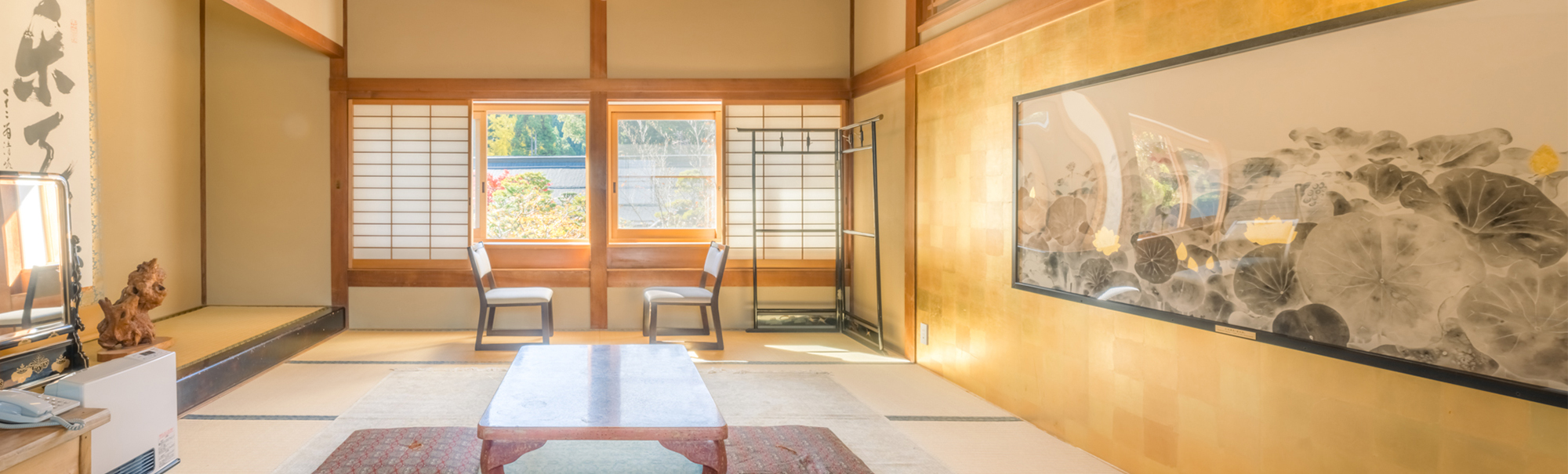
恵光院
A flagship Koyasan shukubo with English-guided Goma fire ceremony, Ajikan meditation, and nightly Okunoin tours.
from $130 /per night

福智院
The only Koyasan shukubo with a natural hot spring, three Mirei Shigemori gardens, and refined shojin ryori.
from $175 /per night
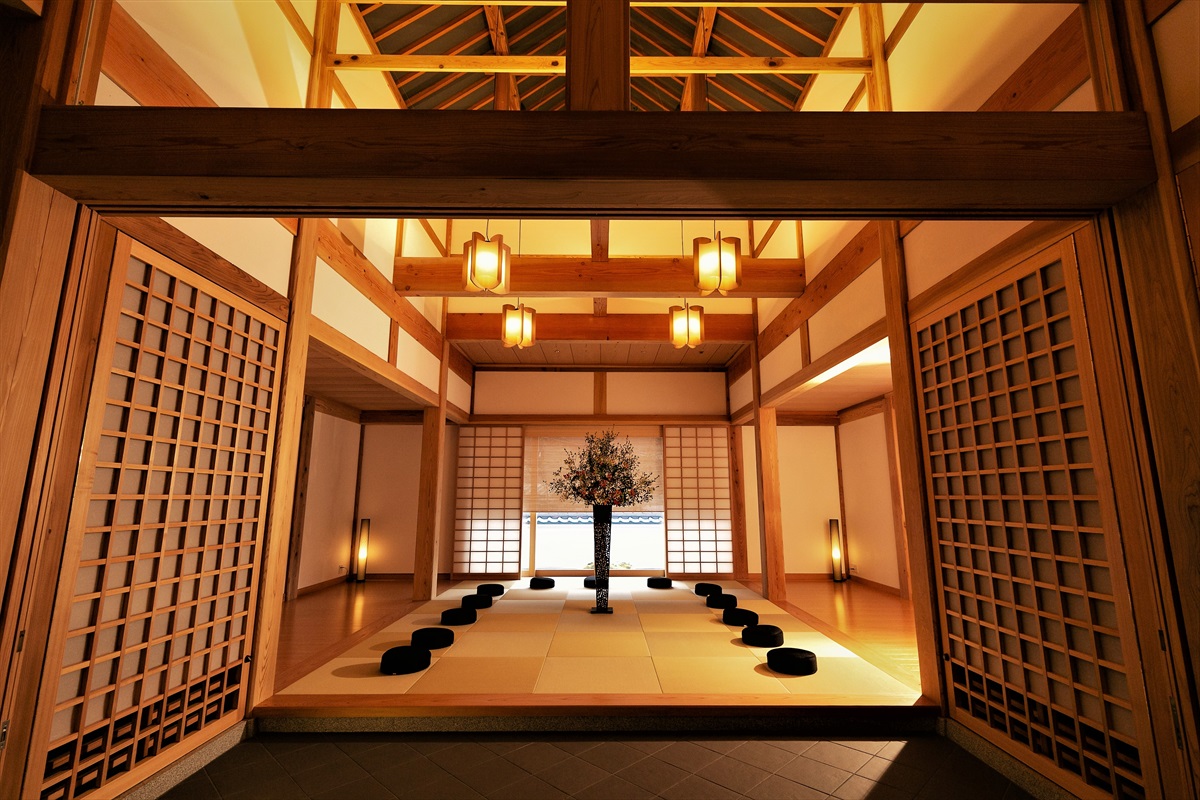
永平寺 親禅の宿 柏樹関
A modern Zen inn at the gate of Eiheiji, with 18 cedar-built rooms, evening zazen and access to the temple's pre-dawn morning service.
from $195 /per night
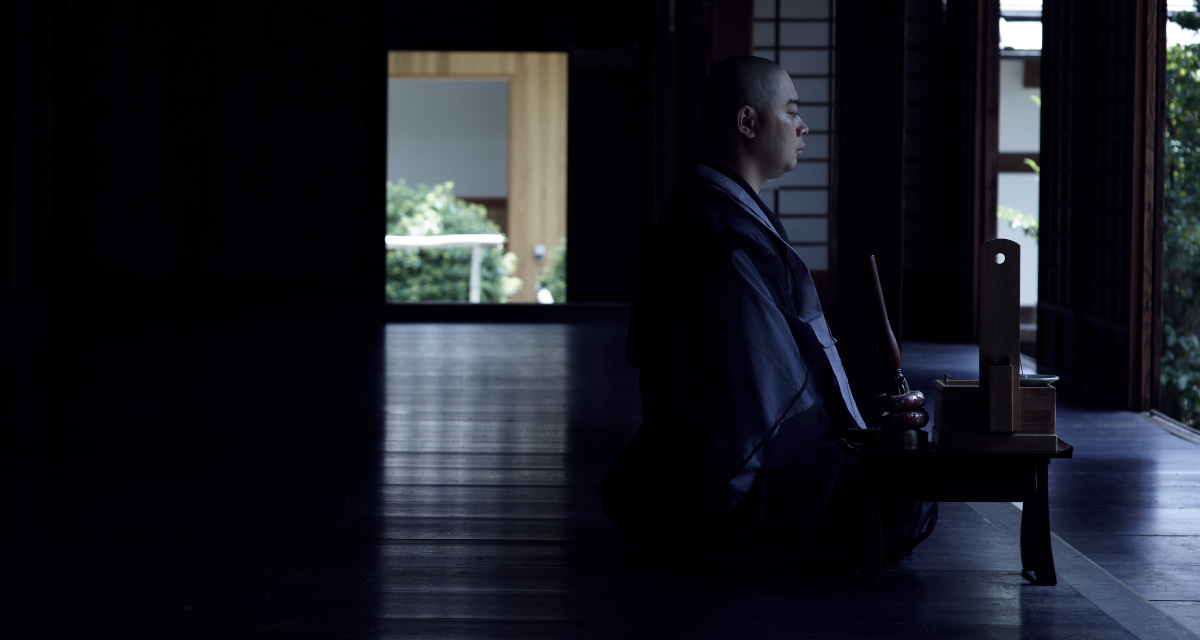
春光院
Kyoto's most internationally renowned Zen shukubo, offering English-led meditation classes and modern en-suite rooms inside a 1590 Myoshin-ji sub-temple.
from $60 /per night

羽黒山参籠所 斎館
The only Edo-era shukubo still standing on the Haguro-san summit, run by Dewa Sanzan Jinja, with Michelin-listed mountain-herb shojin ryori.
from $75 /per night
