
|
|
|
|
|
|
 Photo: Unsplash
Three guests check in to three different places on the same night. The first one slides open a wooden gate at 4:00 PM, leaves her shoes at the genkan of a 400-year-old sub-temple in Koyasan, and is handed a yukata and a paper schedule with a 6:00 AM morning service marked on it. The second steps off a small shuttle bus at a Hakone ryokan, is greeted by a kimono-clad nakai-san with chilled hojicha and a hot towel, and is shown to a tatami room overlooking a stream. The third walks into a glass lobby in Shinjuku, hands over a passport, and rides the elevator to the 24th floor where the bed is already turned down and a Nespresso machine waits on the desk. All three will sleep in Japan tonight. Almost everything else is different.
If you are deciding which of these to book, the usual guides will not help much. Most lump shukubo in as "a kind of ryokan." They are not. The three are different products that solve different problems, and choosing the wrong one is the easiest way to ruin a night of an otherwise great trip. This guide is the long-form version of the comparison most travel writeups skip — what each one is for, what each one is not, and which one belongs in which slot of your itinerary. Stay22, Trip.com, and Klook will all happily sell you any of the three. The question is which one you actually want.
Book a shukubo if you want at least one night of your Japan trip to feel different from any hotel night anywhere else in the world. You are curious about Buddhism, willing to wake before dawn, willing to eat shojin ryori (Buddhist vegetarian cuisine), and you understand you are a guest at a working temple, not a customer at a resort. Koyasan, Eiheiji, Yoshino, Dewa Sanzan, and a handful of Kyoto sub-temples like Shunkoin are the places to do this.
Book a ryokan if you want the canonical "Japanese luxury inn" experience: tatami room, kaiseki multi-course dinner, onsen hot spring, and an attendant who quietly anticipates your needs. Ryokan is hospitality as a high art form. The best ones in Hakone, Kinosaki, Yufuin, and Kyoto are some of the most refined hospitality in the world. They are also expensive, and the cultural content is aesthetic and culinary, not spiritual.
Book a hotel if you need a base camp. Late arrival, early departure, big luggage, a partner who hates futon, a meeting the next morning, or simply a night where you do not want anything to happen except sleep. A good Tokyo or Osaka hotel is fast, English-fluent, predictable, and frees the rest of your trip to be unusual. There is no shame in this. Most Japan trips work best as 1–2 nights ryokan, 1 night shukubo, and the rest in hotels — the proportion has held steady across thousands of trip plans we have seen, regardless of length or budget.
A shukubo is, literally, "a lodging within a temple." The institution dates to roughly the 12th century, when ohenro pilgrims walking the Shikoku and Kii mountain routes needed shelter — and the temples that hosted them began formalizing rooms, meals, and morning prayers for laypeople. About 500 shukubo operate in Japan today, concentrated heavily at Koyasan (around 52 active sub-temples) and clustered in smaller numbers at Eiheiji, Hieizan, Yoshino, Dewa Sanzan, Nikko, and certain Kyoto Zen complexes.
A standard shukubo stay is "1 night, 2 meals" (一泊二食). You check in between 15:00 and 17:00, leave shoes at the genkan, change into a yukata, take a shared bath, and eat a multi-course shojin ryori dinner in your room or a tatami dining hall around 18:00. Futon is laid out on tatami — sometimes by you, sometimes by a staff member who arrives quietly while you bathe. Lights out is typically 21:00–22:00 because the monks themselves are sleeping. Outer gates often close at the same time, so an evening stroll has to happen before then or not at all. You are woken before dawn — usually 5:30 to 6:00 at most temples, 4:00 at Eiheiji — and invited (rarely required) to attend the asagongyo morning service. Breakfast follows. Check-out is 09:00 or 10:00, much earlier than ryokan or hotel.
What makes shukubo distinct is that it is run by monks, not innkeepers. The person who pours your tea may be the same person leading the morning chant. The cook is bound by the precepts of Buddhist cuisine: no meat, no fish, no pungent vegetables (garlic, onion, leek, chive, scallion). The schedule is the temple's schedule, not yours. This is the whole point. You are paying — usually USD 95 to USD 280 per person — to step inside a living religious institution for 18 hours and follow its rhythm.
A ryokan is a secular traditional inn. The institution is older — some date their lineage to the 8th century post-stations of the old highways — and the modern ryokan crystallized in the Edo period as merchants, samurai, and pilgrims moved along the Tokaido. There are roughly 30,000 ryokan in Japan today, ranging from family-run minshuku-style places at USD 80 a night to legendary inns like Gora Kadan, Asaba, or Tawaraya Kyoto charging USD 1,500-plus per person.
The ryokan template: tatami room, low table with hojicha and a sweet on arrival, futon laid out by an attendant while you bathe, kaiseki multi-course dinner emphasizing seasonality and presentation, onsen or large communal bath, yukata for in-room and bath wear, and an unusually attentive nakai-san who is assigned to your room for the duration of your stay. The food is the soul of the experience — kaiseki is a structured culinary form (sakizuke, hassun, mukozuke, takiawase, yakimono, etc.) that the chef adjusts to season and to the inn's identity. Sashimi, simmered fish, A5 wagyu, local sake — none of which a shukubo would serve.
Ryokan is hospitality (omotenashi) as the product. The cultural content is aesthetic: ikebana in the alcove, calligraphed scrolls, lacquered trays, garden views framed deliberately through shoji screens. The schedule is your schedule — sleep in, soak at 11 PM, ask for late dinner. The best ryokan are quieter than most hotels and as personalized as a private home. They are also significantly more expensive than shukubo for what you get on paper, because the price is paying for the attendant, the kaiseki, and the onsen.
There is no spiritual content in a ryokan. The garden may be Zen-influenced, the architecture may be templelike in its joinery, the nakai-san may bow in a way that feels priestly — but the ryokan does not chant, fast, meditate, or rise before dawn. It is a refined Japanese hotel with a centuries-old script. Travelers who hope a ryokan night will somehow contain a "spiritual Japan" element are usually disappointed; that is what the shukubo is for. Travelers who want one of the best food-and-bath nights of their lives, served by people who have been doing exactly this for generations, will find the ryokan delivers without fail.
A Japanese hotel is, for the most part, what it is anywhere — a private room, a bed, an attached bathroom, a front desk, predictable service standards. The Japanese flavor shows up in small ways: the rooms are smaller than American or European equivalents, the toilet has a control panel, the slippers are folded just so, the front desk speaks workable English, and even budget chains like APA, Toyoko Inn, and Dormy Inn maintain unusually high cleanliness. International luxury brands (Park Hyatt, Aman, Mandarin Oriental, Bulgari, Janu, Four Seasons) operate at world-class level in Tokyo, Kyoto, Osaka, and Niseko.
What you gain at a hotel is liquidity. You can arrive at 1 AM, leave at 5 AM, store luggage for a week, request a room change, get a thousand small things in fluent English, and not have a single cultural negotiation. The price scales linearly with what you pay: USD 90 gets you a clean, narrow business room with predictable wifi; USD 300 gets you a comfortable upper-tier room with a city view and a decent breakfast; USD 1,500 gets you Aman Tokyo with a black-tile onsen 33 floors up and a service ratio that approaches the absurd. The product is well-understood and globally legible.

| Dimension | Shukubo | Ryokan | Hotel | |---|---|---|---| | Setting | Inside an active Buddhist temple | Traditional inn, often near an onsen town | Modern building, often near a station | | Room | Tatami-floored Japanese room (washitsu) | Tatami-floored Japanese room, sometimes with hinoki tub | Western bed, carpeted or wood-floored | | Bedding | Futon on tatami | Futon on tatami (sometimes Western bed on request) | Bed | | Bathing | Shared temple bath; sometimes natural onsen on-site | Onsen or large communal bath, often outdoor (rotenburo) | In-room shower or bathtub | | Dinner | Shojin ryori — Buddhist vegetarian, no meat, fish, or pungent veg | Kaiseki — multi-course, seasonal, often featuring local fish and wagyu | À la carte restaurant or room service; not included | | Breakfast | Shojin ryori — rice, miso, pickles, tofu, vegetables, served after morning service | Traditional Japanese set or Western buffet | Buffet or à la carte, included or extra | | Dress | Yukata in your room, modest streetwear elsewhere; cover shoulders for ceremonies | Yukata anywhere on the property; streetwear off-site | Streetwear | | Morning | Pre-dawn asagongyo prayer service with monks (optional but expected) | Soak in the onsen; quiet breakfast at your pace | Whatever you want; coffee from the in-room machine | | Social vibe | Contemplative, hushed, lights out 21:00–22:00 | Private and hospitable; couples and small groups | Functional and anonymous | | Price range (per person, half-board) | USD 95 – USD 280 | USD 180 – USD 1,500+ | USD 90 – USD 1,000+ (room only) | | English support | Excellent at Koyasan and Hakujukan; mixed elsewhere | Excellent at high-end inns; mixed at family-run | Excellent at chains and international brands | | What you take home | Memory of dawn, a sutra slip, possibly a changed sense of quiet | Memory of one of the best meals of your life | Sleep |
Shukubo: roughly USD 95–280 per person per night, half-board (dinner and breakfast included). The floor is set by mid-tier Koyasan temples like Henjoson-in, Saizen-in, and Rengejo-in (USD 95–140 per person). The mid-range — Fukuchi-in, Sekisho-in, Eko-in — runs USD 140–220 with private bath, English-fluent staff, and monk-led tours included. The ceiling is set by Hakujukan at Eiheiji (USD 195–320), which is technically a Michelin-rated inn with monastic concierge service, blurring the line between shukubo and ryokan. Note that shukubo almost always price per person, not per room — a couple at USD 150 each pays USD 300 for the room.
Ryokan: enormous range. Family-run minshuku-style ryokan at USD 80–120 per person with shared bath. Standard regional ryokan (Hakone, Kinosaki, Atami, Kawaguchiko) USD 180–400 per person half-board. Premium inns (Gora Hanaougi, Beniya Mukayu, Yumoto Fujiya) USD 500–900. Top tier (Asaba, Gora Kadan, Tawaraya, Hiiragiya, Hoshinoya Kyoto) USD 1,000–2,500 per person. The food and the attendant are where the money goes. A USD 800-per-person ryokan kaiseki typically uses ingredients that would cost USD 200–300 in a Tokyo restaurant; you are paying for the meal, the bath, the room, and the omotenashi all at once. Hotels are simpler: USD 90 buys you a clean business room, USD 250 buys you a comfortable upscale chain, USD 600 buys you an international 5-star, USD 1,500 buys you Aman or Bulgari.
Shojin ryori is Buddhist temple vegetarian cuisine, formalized in 13th-century Zen kitchens by Dogen Zenji's Tenzo Kyokun ("Instructions to the Cook"). It excludes all meat, fish, eggs, and the five pungent vegetables (garlic, onion, leek, chive, scallion). A typical shukubo dinner has 8–12 small dishes: sesame tofu (goma-dofu), simmered koyadofu (freeze-dried tofu invented at Koyasan), tempura of mountain vegetables, pickles, miso soup, white rice, a vinegared dish, perhaps a small dessert. It is not designed to impress; it is designed to nourish a monk through a long day of sitting. Done well — and it is done well at Eko-in, Fukuchi-in, Henjoson-in, and most reputable Koyasan temples — it is genuinely delicious. Done poorly, it can feel sparse to a Western palate. See our shojin ryori guide for what to actually expect on the tray.
Kaiseki is the secular counterpart, originally derived from the tea ceremony and developed in Kyoto from the 16th century onward. A full kaiseki has 9 to 14 courses served in strict sequence: sakizuke (appetizer), hassun (seasonal small plate), mukozuke (sashimi), wanmono (clear soup), yakimono (grilled, often fish), takiawase (simmered), sunomono (vinegared), shokuji (rice course), and so on. Local fish, A5 wagyu, in-season vegetables, premium sake. A good ryokan kaiseki is one of the great culinary experiences in the world. It is also nearly always non-vegetarian, and rarely accommodates dietary restrictions without significant advance notice.
Hotels do hotel food. The 5-star ones do it extraordinarily well — Park Hyatt Tokyo's breakfast is famous for a reason — but it is the same form you would find at a comparable hotel in Milan or Singapore. The cultural distinctiveness is mostly absent. If food is a primary reason you came to Japan, the hierarchy is clear: kaiseki at a serious ryokan first, shojin ryori at a serious shukubo second, hotel breakfast a distant third. One useful tactic: book one ryokan night specifically around its kaiseki reputation (Kinosaki Onsen's crab inns in winter, Hakone's mountain inns in spring), book one shukubo night for the shojin ryori at a temple known for it (Fukuchi-in and Eko-in are reliable), and use hotel nights as the framing.
Tip
Tell every shukubo and ryokan about allergies and dietary restrictions at booking, not on arrival. Shojin ryori uses heavy soy and gluten (soy sauce, wheat in soba/tempura). Kaiseki rotates fish constantly. Most temples and inns can adapt with notice, but they cannot improvise once the meal is plated. Severe nut allergies are usually fine; severe soy allergies make shukubo difficult and sometimes impossible.
At a hotel, morning is whatever you want. The blackout curtains hold. You make a coffee from the in-room machine, scroll your phone, eat the buffet at 9:30, check out at 11:00. The hotel has no opinion about your morning.
At a ryokan, morning is gentle. The bath opens at 6:00 AM. Many guests are up by 7:00 to take a quiet soak in the outdoor rotenburo with steam coming off the water and no one else in the bath. A traditional Japanese breakfast appears at 7:30 or 8:00 — grilled fish, rice, miso, tofu, nori, raw egg over rice (TKG), pickles, green tea — set on the same low table where you ate dinner. Check-out is usually 10:00 or 11:00. The whole morning is unhurried.
At a shukubo, morning is the point. A wooden clapper (han) or hand bell sounds through the corridors at 5:00 or 5:30 — at Eiheiji as early as 3:30. You walk in socks to the main hall, sit on a cushion in seiza or cross-legged, and watch the monks chant the morning service for 30–45 minutes. At Shingon temples like those at Koyasan, this includes a Goma fire ceremony with flames climbing toward a Sanskrit-inscribed ceiling, the abbot tossing prayer sticks one by one into the fire. At Soto Zen temples like Eiheiji, it is zazen and silent walking meditation followed by sutra chanting. Then you eat breakfast back in your room — a quieter, leaner version of the previous night's dinner, often centered on rice porridge or steamed rice with grilled tofu, miso, and pickles. You will check out by 9:00 or 10:00. The morning is where the price you paid earns itself back. People who skip the morning service to sleep in usually regret it; people who attend almost never do.
Shukubo wins for: travelers serious about Buddhism or meditation; solo travelers who want a contemplative night; couples on a multi-week trip who want one night that feels different from anywhere else they will ever sleep; photographers (the dawn light through cedar avenues at Koyasan is hard to top); writers and people processing a transition; and anyone who has done a yoga or meditation retreat and wants to see what the source material looks like in a 1,200-year-old form. See our first-time shukubo guide before you book.
Ryokan wins for: honeymooners and anniversaries; couples who want one truly memorable food night; travelers focused on onsen culture (Kinosaki, Kurokawa, Hakone, Beppu); families who want a private tatami room with a private rotenburo; older travelers who do not want a 5:30 AM wake-up but still want the tatami-and-yukata aesthetic; and anyone for whom kaiseki is itself a reason to visit Japan. Two nights at a good ryokan is one of the most replicable luxuries in travel.
Hotels win for: arrival and departure days; business trips and conferences; families with young children who need elevators, cribs, and a 24-hour front desk; travelers with significant dietary restrictions or accessibility needs; anyone with a flight that lands at 23:30 or departs at 06:00; long stays in Tokyo or Osaka where you need a base; and any night where the goal is simply to sleep well and start fresh. Most experienced Japan travelers use hotels as connective tissue between ryokan and shukubo nights.
Shukubo is the wrong call for: party trips and bachelor or bachelorette weekends (most temples close gates at 21:00 and have a 22:00 lights-out norm); travelers who cannot or will not eat vegetarian for a meal (the dinner is fixed shojin ryori and substitutions are limited); anyone with a severe soy or wheat allergy (shojin ryori leans heavily on both); families with toddlers who cannot keep quiet in shared corridors; very late arrivals (most temples need you on-site by 17:00 for dinner prep); and travelers who explicitly want a private en-suite bathroom and a Western bed — those exist at some shukubo (Fukuchi-in, Hakujukan, Eko-in modernized rooms) but are not the norm.
It is also not the right pick for the night before a 5 AM Shinkansen connection or an early international flight. The shukubo wake-up is real but it is for the morning service, not for the airport — and you will lose the experience you paid for if you have to leave at 04:30 to catch a train. Build shukubo into a day where you have nothing else to do until at least noon. Koyasan, Eiheiji, Yoshino, and Dewa Sanzan all require a real journey out and back; treat them as destinations, not waypoints. A useful test: if you cannot imagine staying at this shukubo for an extra half-day to walk the surrounding grounds (Okunoin cemetery at Koyasan, the cedar avenues at Eiheiji, the Kinpusenji approach at Yoshino), you have probably picked the wrong night to fit it in.

A 10-to-14-day Japan trip works best when it uses all three lodging types intentionally. A typical pattern: 3 nights Tokyo hotel (jet lag, big city, easy logistics), 2 nights Hakone or Kawaguchiko ryokan (onsen, kaiseki, view of Fuji), 2 nights Kyoto hotel (city sightseeing base), 1 night Koyasan shukubo (Eko-in or Fukuchi-in — your spiritual centerpiece), 2 nights Kyoto ryokan or hotel, 1 night Osaka hotel (airport-adjacent). The shukubo lands roughly in the middle of the trip, after you have settled into Japan and before energy flags at the end. Compare Koyasan vs Eiheiji if you are choosing which mountain to dedicate that night to.
Couples sometimes worry that a shukubo night will feel austere compared with a ryokan. In practice the contrast is the value — coming off two ryokan nights of kaiseki and onsen into a single quiet shukubo night with dawn prayer is one of the most affecting sequences a Japan itinerary can deliver. The shukubo is not competing with the ryokan; it is the deliberately different note that makes the rest of the trip resonate.
If your trip is shorter — say 6 to 8 days — you can still hit all three: 2 nights Tokyo hotel, 1 night Hakone ryokan, 1 night Kyoto hotel, 1 night Koyasan shukubo (overnight Osaka the night before to make morning access easier), 1 or 2 nights Kyoto ryokan, 1 night Osaka or Kansai-airport hotel. The geography is the constraint: do not try to fit Eiheiji into a Kansai-only itinerary, and do not try to fit Dewa Sanzan into anything under two weeks. Koyasan from Osaka or Yoshino from Nara are the most schedule-friendly shukubo destinations for a tight trip.
A simple rule: book shukubo direct or through a specialist; book ryokan on Trip.com or direct; book hotels on Stay22 or Booking.com via Stay22.
| Lodging type | Best booking path | Why | |---|---|---| | Shukubo (Koyasan, Eiheiji, Yoshino) | This site's temple pages, or direct via the temple website / Koyasan Shukubo Association | Many shukubo are not listed on Western OTAs. Direct booking is standard and usually gives the lowest rate. | | Shukubo (modernized, e.g. Hakujukan, Eko-in) | Trip.com or Stay22 | These are listed on major OTAs with English support and instant confirmation. | | Ryokan (premium) | Direct via the inn website or Trip.com | Top-tier ryokan often have English booking forms and reward direct guests. | | Ryokan (mid-range and regional) | Trip.com or Stay22 | Best inventory and price comparison for Hakone, Kinosaki, Yufuin etc. | | Hotel (Tokyo, Osaka, Kyoto city) | Stay22 (compares Booking, Expedia, Hotels.com) | Most price-competitive for hotels; instant English confirmation. | | Temple-day experiences (zazen, goma, shakyo) | Klook or Viator | Best for half-day add-ons even when you are not staying overnight. |
See how to book a shukubo for the step-by-step including dietary requests, deposit norms, and what "1 night 2 meals" actually means on a Japanese booking form.
Tip
If you are torn between two specific options — say, a Koyasan shukubo vs a Hakone ryokan for the same night — book the harder one first. Top shukubo at Koyasan during cherry blossom season (late March to mid-April) and autumn foliage (mid-October to late November) fill 3–4 months ahead. Hakone ryokan are usually findable inside a 2-week window. Lock the scarce inventory, then fill in around it.
Yes. The vast majority of shukubo guests at Koyasan, Eiheiji, and Hieizan are not Buddhist — many are not religious at all. Shukubo welcome anyone who will be respectful of the temple as a working religious institution: shoes off, quiet after 21:00, modest dress in the main hall, attentive (not distracted) presence during the morning service. No declaration of belief, no chanting along, no prior knowledge is required or expected. The temples earn part of their operating budget from lay guests and have been doing so for centuries — pilgrims of every religion and none have been welcomed on these grounds since well before the term "tourism" existed.
Per person, shukubo are typically cheaper than comparable ryokan — USD 95–280 vs USD 180–1,500+ — but the comparison is not apples to apples. A ryokan kaiseki dinner alone often costs more than an entire shukubo night. What you save in cash at a shukubo you trade in comfort: shared bath instead of in-room onsen, futon on tatami instead of premium bedding, vegetarian dinner instead of wagyu and sashimi, 21:00 lights-out instead of room service at midnight. Different products at different price points.
At most Koyasan temples, yes — sake and sometimes beer are offered with dinner, and historically Buddhist monks navigated the precept by referring to sake as hannya-to (般若湯, "wisdom water"). Eiheiji's Sanro program does not serve alcohol because it is a working monastic retreat. Yoshino and Dewa Sanzan shukubo generally do serve sake. The rule of thumb: if the shukubo is set up for tourists (most of Koyasan), alcohol is available; if it is closer to a working monastery (Eiheiji Sanro), it is not. Either way, drink moderately — this is a temple, not an izakaya.
Most shukubo have shared baths and shared toilets, in keeping with the traditional Japanese inn layout. A growing minority of Koyasan temples — Fukuchi-in, Sekisho-in, Eko-in's premium rooms, and a few others — offer rooms with private toilets, and Fukuchi-in has its own natural hot spring on premises. Hakujukan at Eiheiji has en-suite bathrooms in every room. If a private bath is non-negotiable, filter on it explicitly when browsing temple pages — the trade-off is usually price. One thing worth saying: the shared baths at most reputable shukubo are large, immaculate, and gender-separated, and they are usually empty in the windows just before dinner and just before lights-out. The "shared bath" anxiety many first-time guests bring rarely survives the first soak.
No. The first night after a long flight is the worst possible time to attempt a 5:30 AM wake-up and a culturally unfamiliar ritual. You will be jet-lagged, possibly disoriented, possibly not eating well, and the experience will land flat. Spend the first one or two nights in a Tokyo or Osaka hotel, get your bearings, then do the shukubo in the middle of the trip when you have absorbed enough of Japan that the morning service registers as the meaningful thing it is. The best shukubo nights happen to travelers who are awake enough to notice them.
The three lodging types are not in competition. Hotels make the logistics work. Ryokan delivers Japanese hospitality at its highest. Shukubo opens a door into a religious tradition that has been continuous on these islands for 1,400 years. The traveler who uses all three deliberately ends up with a trip that the traveler who used only one cannot reconstruct. Whichever you start with, the others are easier to imagine once you have spent a night inside the first.
If this is the part of the planning where you have been going back and forth for an hour and you still cannot decide, the heuristic is simple. Pick one night, somewhere near the middle of your trip, on a day where you have nothing else scheduled. Make that the shukubo night. Book a ryokan for the night that comes with your most photogenic destination — Hakone for Fuji, Kinosaki for crab, Yufuin for the mountain bath. Make every other night a hotel. That is how almost every well-planned Japan itinerary ends up structured, and the reason is the one you have been working toward this whole article: each lodging type does one thing extraordinarily well and several things poorly. The trip is best when each one is doing the job it is good at.
Ready to book?
Browse our curated collection of authentic Buddhist temple stays across Japan. Filter by region, sect, and experience.
Start ExploringRecommended Temples for This Guide

福智院
The only Koyasan shukubo with a natural hot spring, three Mirei Shigemori gardens, and refined shojin ryori.
from $175 /per night
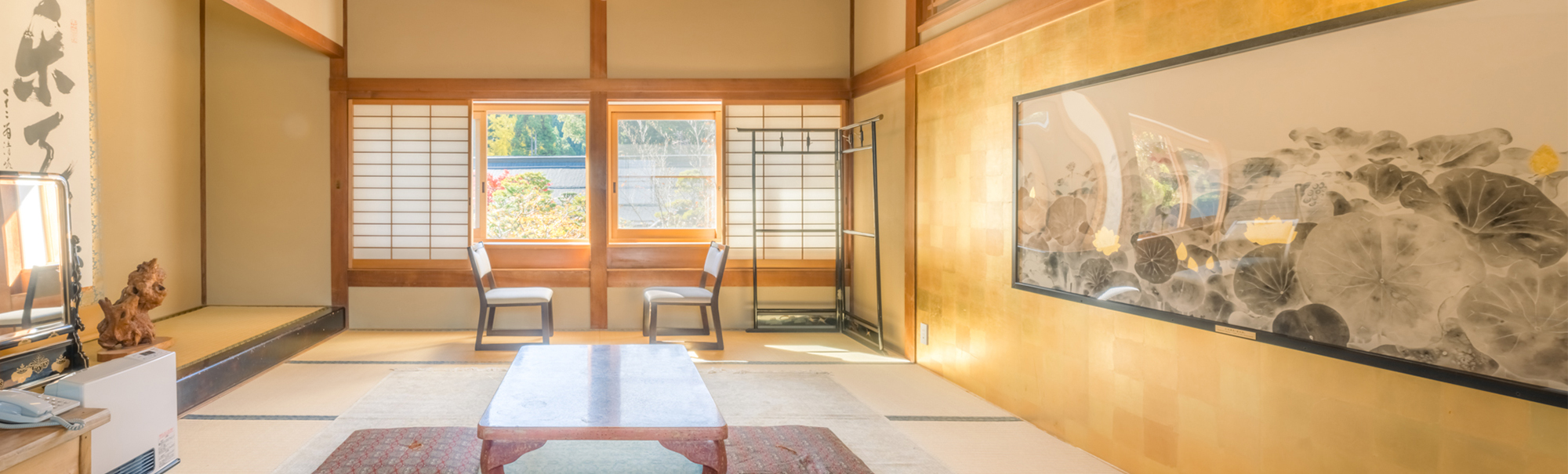
恵光院
A flagship Koyasan shukubo with English-guided Goma fire ceremony, Ajikan meditation, and nightly Okunoin tours.
from $130 /per night
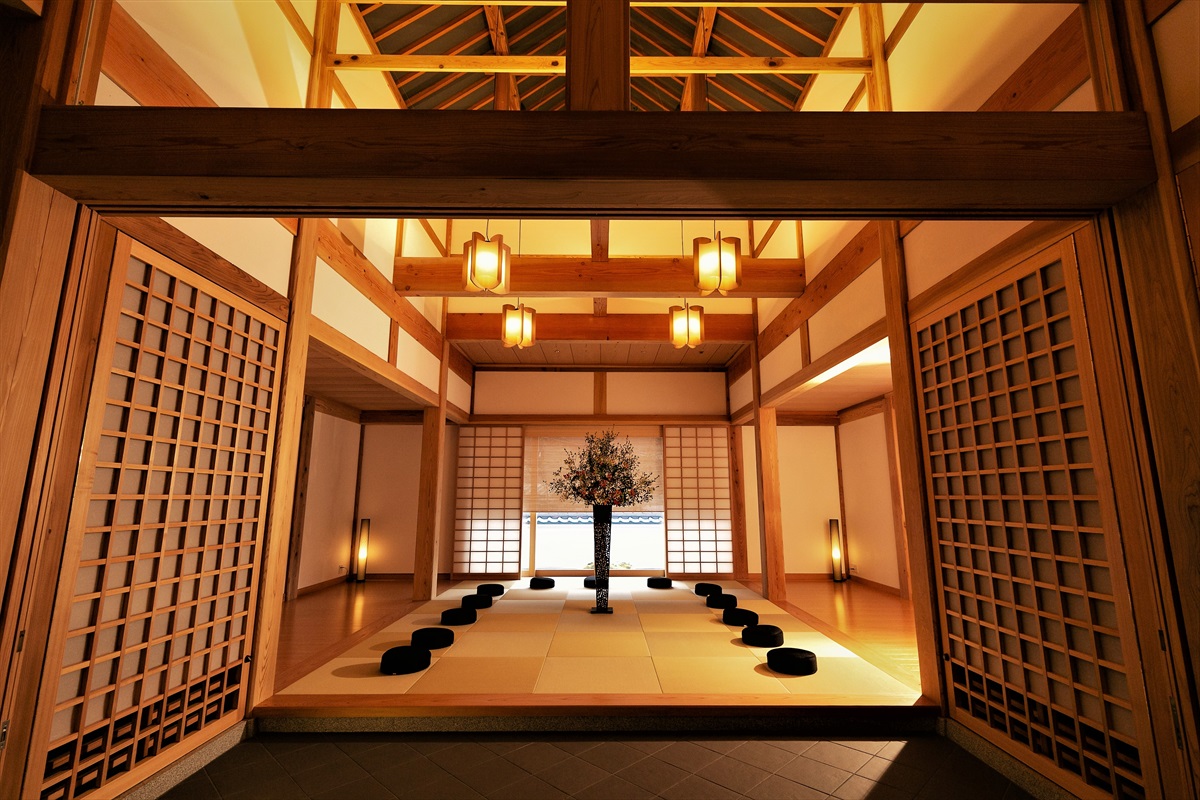
永平寺 親禅の宿 柏樹関
A modern Zen inn at the gate of Eiheiji, with 18 cedar-built rooms, evening zazen and access to the temple's pre-dawn morning service.
from $195 /per night

羽黒山参籠所 斎館
The only Edo-era shukubo still standing on the Haguro-san summit, run by Dewa Sanzan Jinja, with Michelin-listed mountain-herb shojin ryori.
from $75 /per night
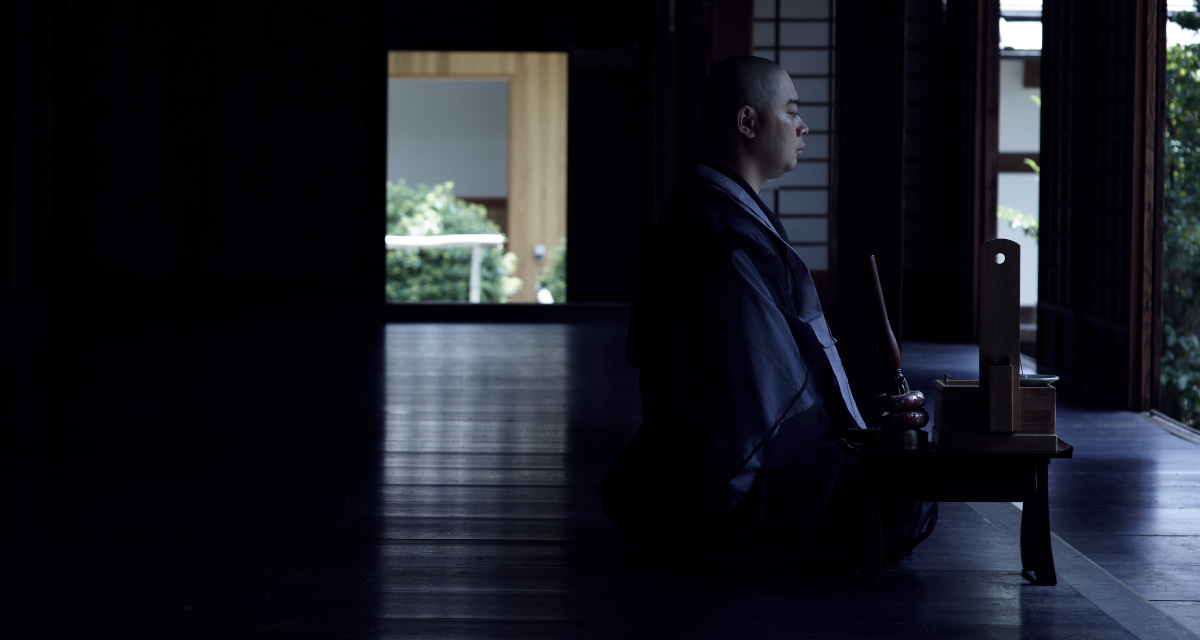
春光院
Kyoto's most internationally renowned Zen shukubo, offering English-led meditation classes and modern en-suite rooms inside a 1590 Myoshin-ji sub-temple.
from $60 /per night
Explore Destinations

