
|
|
|
|
|
|
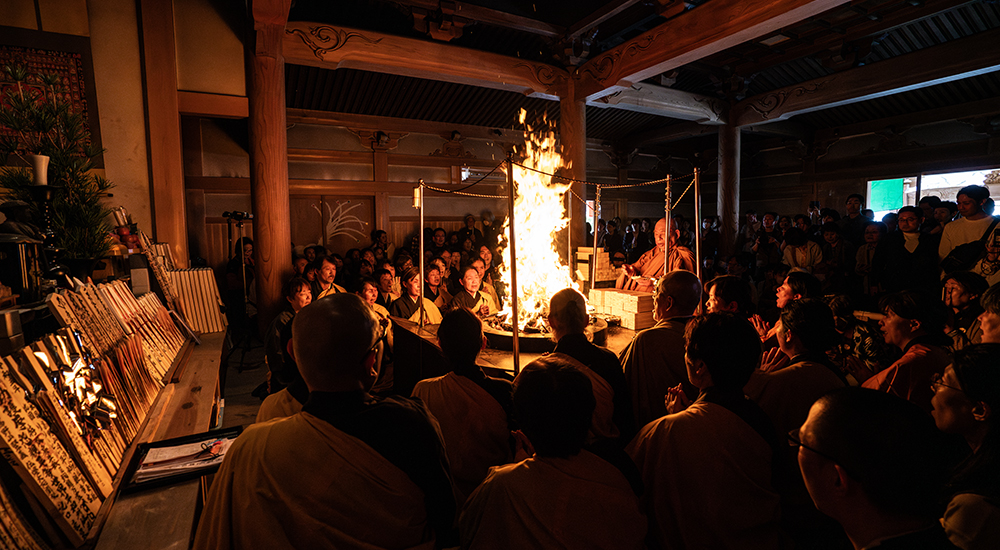 Photo: Shojoshin-in Koyasan (shojoshinin.jp)
The honest answer to the question every foreign traveller asks before booking a winter temple stay in Japan — is shukubo cold? — is yes, most of the time. Traditional wooden temples were built with paper sliding screens, single-glazed windows, raised wooden floors and no central heating. A 12th-century main hall on Koyasan in February is not warmer than a 12th-century main hall on Koyasan in February has any reason to be. If you are looking for the same room temperature as a Hilton in Tokyo, you should not book a shukubo between December and March.
That said: the cold is not a bug, and it is not uniform. Some shukubo have proper modern heating, some have an onsen big enough to reheat you in twenty minutes, and some lean into the cold as part of an ascetic season the temple has been observing for eight hundred years. This guide separates the three categories, names the temples that fall into each, and tells you what to bring so that the morning walk to the 5:30 service is something you remember rather than something you survive.
Here is the temperature reality, with concrete numbers rather than handwaving. On the Koyasan plateau, January overnight lows run -5°C to -2°C. The interior of a traditional unheated shukubo room — paper screens, raised wood floor, sliding fusuma doors — typically holds 5°C to 10°C overnight even with a kerosene stove or wall-mounted aircon running until 22:00. Once the heating is switched off (and most older shukubo do switch it off when they lock the front gate at 21:00), the room drifts toward the outdoor temperature over the course of the night. By 5:30 morning service, the interior temperature inside a traditional building is often 2°C to 7°C.
The futons, however, are dense. Most Koyasan shukubo provide a double-layer kakebuton (top quilt) plus a wool moufu blanket plus a thick shikibuton (underquilt). Inside that stack, your body heat builds a 24°C to 26°C envelope within fifteen minutes. The cold is not really felt until you get out of the futon, walk a wood-floored corridor in slippers, and step into an unheated main hall to sit for forty minutes. That window — 5:15 to 6:30 — is the only part of a winter shukubo stay most guests find genuinely uncomfortable, and it is exactly where a few hundred yen of pre-bought hand warmers makes the difference between hardship and ritual.
Newer or renovated shukubo are a different category. Buildings rebuilt after about 2000 typically have central heating, double-glazed windows, and minimum overnight temperatures of 15°C to 18°C. Hakujukan in Eiheiji (opened 2019) holds 20°C to 22°C by default; Fukuchi-in's main wing, rebuilt with concrete-and-wood hybrid construction, holds a comfortable temperature throughout the night. These are priced accordingly, but for guests who do not want to layer thermal underwear over pyjamas, the premium is the correct choice. Broader temple-stay prep is at /blog/shukubo-first-time-guide.

Once you accept that winter shukubo is not one thing, it becomes much easier to choose. There are three categories, defined by how the temple has solved (or chosen not to solve) the heating problem. Each category has its own price band, its own atmosphere, and its own ideal guest. Choosing the wrong category for your tolerance is the single most common winter-shukubo booking mistake.
These are the cheapest and most authentic shukubo — buildings substantially unchanged since the late Edo or early Meiji period, heated by a single wall-mounted aircon or, more atmospherically, by a kotatsu in the centre of the room. In a 6-tatami winter room with a kotatsu running, your lower half stays at about 30°C while your upper half breathes the same chilly mountain air as the corridor outside. Most foreign guests are surprised by how comfortable this is once they understand the mechanics — the design is genuinely good, just not what a Western traveller expects.
Sekisho-in on Koyasan is the cleanest example of this category. Many rooms still use the kotatsu-and-futon configuration, pricing runs ¥12,000 to ¥18,000 per night with two meals, and the building texture is pre-modern Japan rather than a sympathetic restoration of it. Shojoshin-in falls into the same bracket — proximity to Okunoin's snow-lit lantern path is its main asset, with rooms warm enough under the futon but cold enough in the corridor that you will want slippers heavier than the ones supplied. Both are right for guests who actively want the traditional cold-weather texture, not just an old building with a thermostat.
The strongest winter shukubo move is to book a temple with a real onsen on site. The mechanics are simple: come back from a cold day, soak in 41°C mineral water for fifteen minutes, reach your futon already at internal core temperature 38°C. The futon stack does the rest. A temple with a working bath is a fundamentally different winter experience from one without — not because the room heating is different, but because the reset between outdoor cold and indoor sleep is solved in a way modern central heating cannot replicate. Full breakdown of which temples have certified onsen vs cypress baths at /blog/shukubo-with-onsen.
Fukuchi-in is the only proper onsen shukubo on Mt. Koya itself, with a covered rotenburo open to the mountain air. In winter, sitting in the outdoor bath with snow falling on the cedar screen overhead is the most cited image of Koyasan shukubo and the reason Fukuchi-in books out three to four months ahead for January–February weekends. Saikan on Mt. Haguro has no true onsen but a deep cypress bath fed by Dewa Sanzan mountain water — combined with the preserved Edo-era atmosphere and Michelin-listed mountain-herb shojin ryori, it is the cleanest winter pairing in Tohoku. ¥18,000 to ¥30,000 per night with two meals.
The third category solves winter the way a contemporary ryokan does: central heating, insulated walls, and a guest room that holds 20°C to 22°C from check-in to checkout regardless of outdoor temperature. The headline property is Hakujukan in Eiheiji — opened 2019 as the modern hospitality face of Soto Zen's headquarters, designed by Kengo Kuma's team, built specifically to give international guests an Eiheiji experience without the unheated 13th-century corridors. The Zen content is still there (evening zazen, morning service, shojin ryori supervised by the Eiheiji tenzo) but the building is engineered for comfort. Pricing runs ¥30,000 to ¥55,000 per night — roughly 4-star ryokan territory.
For travellers who want temple-stay content but cannot tolerate the cold-corridor texture of the older properties, Category 3 is the correct answer. The trade-off is that you are buying the spiritual content as a programme rather than living inside the building that produces it — a meaningful distinction for guests who have already done a winter at Sekisho-in and want to extend their range, less meaningful for first-time guests who have nothing to compare it against. The longer comparison of these two operating models is at /blog/koyasan-vs-eiheiji and /blog/buddhist-sect-comparison.
Koyasan in snow is one of the most photographed Japanese winter scenes and one of the few that delivers on the photograph when you arrive. The plateau at 800m sits consistently in snow zone between mid-January and mid-February, with average annual snowfall in Koyacho of about 80cm cumulative and individual storms occasionally dropping 30cm in 24 hours. The dominant image — stone lanterns half-buried in fresh snow along the Okunoin pilgrim path, cedar trunks dark against white ground, condensation rising off your breath under the lantern light — is the standard reason foreign travellers book Koyasan in January, and why the major shukubo fill earlier in winter than in autumn.
The single most distinctive winter Koyasan moment is the morning Goma fire ritual at Eko-in performed in a hall whose paper screens admit grey snow-light. The Goma — a Shingon esoteric ceremony where the officiating priest burns prayer sticks in a central altar fire while chanting mantras — is striking at any time of year, but in February the temperature gradient between the burning offerings and the screened-paper exterior gives the whole hall an unusual visual depth. The chanting carries differently in cold air; the smoke holds its shape longer. Our standalone explanation of how the ceremony works is at /blog/goma-fire-ceremony-guide.
Okunoin at night in fresh snow is the second non-negotiable winter Koyasan experience. The lantern-lit two-kilometre pilgrim path to Kobo Daishi's mausoleum is open 24 hours, and the Eko-in night tour (¥3,000, English-guided, 19:00 departure, 90 minutes) is one of the few winter activities designed for foreign visitors. Route, history and photography etiquette at /blog/okunoin-night-tour-guide. In snow, the lantern light bounces twice — off the snow surface and off the cedar canopy — and the visual register is closer to a Hayao Miyazaki frame than to standard travel photography.
Pre-dawn morning service decides whether you remember winter Koyasan fondly or as an endurance test. The 6:00 service means leaving your futon at 5:15, walking a wood-floored corridor in slippers, sitting on a zabuton cushion in the main hall for thirty to forty-five minutes. Outdoor temperature at that hour in January is -3°C to -5°C; main hall interior is usually 3°C to 7°C unheated. Wool socks over silk liners, thermal long underwear, a hand warmer in each pocket, gloves you can keep on during the seated portion — four items, all available at the Koyasan-foot convenience store for under ¥3,000, that decide whether the morning is tolerable.
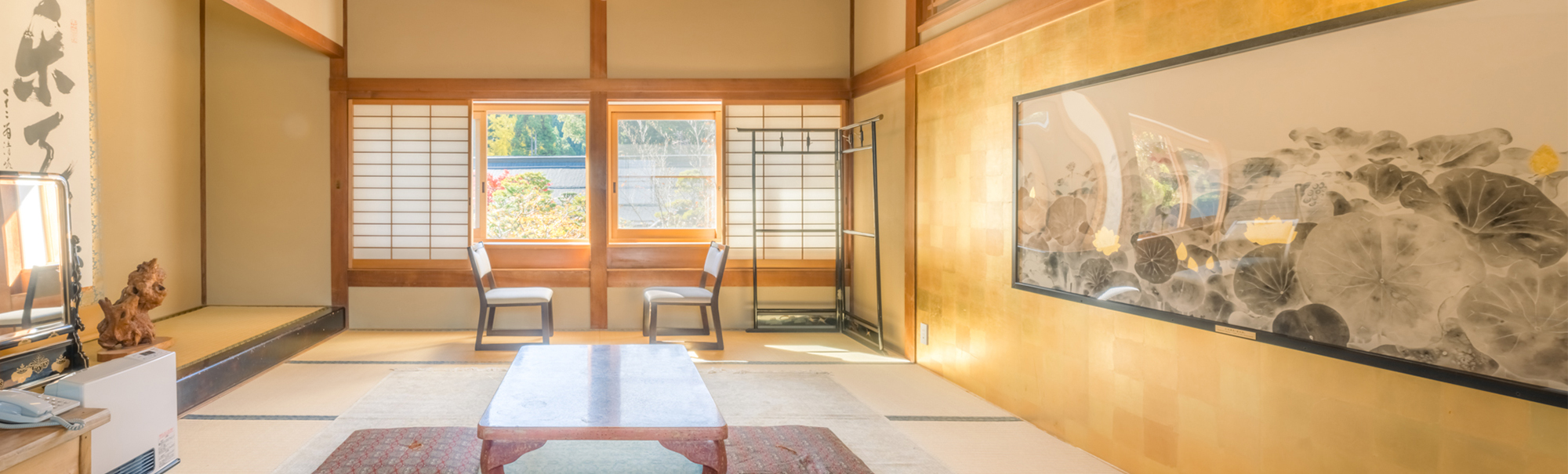

Eiheiji — the headquarters of Soto Zen in Fukui Prefecture, founded by Dogen in 1244 — runs a midwinter ascetic season called kangyō (寒行), literally 'cold practice'. For the resident monk trainees, this means an intensified schedule between roughly the second week of January and mid-February: more zazen, more outdoor walking sutra-chanting through the temple grounds in robes, takuhatsu (alms rounds) in the surrounding village even when snow is on the ground. The historical premise is that the discipline of practice in the coldest weeks of the year is itself the practice — the same body-as-furnace logic that produces the famous photograph of bare-headed monks reciting sutras in falling snow.
For overnight guests at Eiheiji Sanro — the temple's own pilgrim lodging inside the main precinct — winter visits do not include the full monk schedule but do include exposure to it. Guests witness the monks' morning service from a designated section of the main hall, walk the snow-cleared kairo passageways connecting the seven main buildings, and join a guided abbreviated zazen in a heated hall. The full kangyō practice is not open to lay guests for safety reasons — exposure to that cold for an unaccustomed body is genuinely dangerous — but the modified version is the closest thing in Japan to participating in midwinter monastic training as a guest.
If your tolerance for cold is low, the right pairing is one night at Eiheiji Sanro (for the precinct exposure and the morning service) followed by one night at Hakujukan (for the heated room, the Kengo Kuma-designed bath, and the formal kaiseki-style shojin ryori). The two are operated by related entities and a five-minute walk apart, so the transfer is trivial. Hakujukan also runs evening 'Zen Concierge' programmes — guided introduction to zazen posture, basic shojin ryori etiquette, and the historical context of Dogen's teaching — that work well as a primer either before or after the Eiheiji Sanro night.
Practical access matters more in winter than in any other season. Eiheiji is roughly 30 minutes by bus from Fukui Station, and the road up to the temple complex is one of the first to suffer from snow accumulation when storms move through the Sea of Japan coast. Train delays on the Hokuriku line into Fukui in January and February are not unusual — figure 20 to 45 minutes of buffer on any same-day connection, and treat anything tighter than that as a coin flip. The temple itself does not close for snow, but the bus from Fukui Station can be replaced by taxi on heavy days at roughly ¥6,500 one-way.
Mt. Haguro in Yamagata Prefecture is the only one of the three sacred Dewa Sanzan peaks officially open year-round, and the Tōge pilgrim village at its base receives genuinely heavy snow — 250cm to 350cm annual accumulation at the upper village, with single storms occasionally dropping 80cm in one night. Winter here is fundamentally different from the other three regions in this guide: essentially no foreign tourists, and the 2,446 stone steps of the summit approach are sometimes closed, sometimes passable, never recommended without trekking poles and snow grips. The only practical access is the JR bus from Tsuruoka Station to the Haguro summit, which runs through the entire winter.
Saikan on the Haguro summit is the strongest winter shukubo in the region — the only Edo-era shukubo still standing inside the summit precinct, with the building texture and the wood-burning iroriba (sunken hearth) of pre-modern Tohoku still in working use. Cuisine is the Michelin Green Guide-listed mountain-herb shojin ryori, served on lacquerware with a view onto the snow-buried Sanjin Gosaiden shrine. Pricing runs ¥11,000 to ¥17,000 per night with two meals. Heating is by kerosene stove plus the iroriba; rooms hold 18°C to 20°C during waking hours and 12°C to 15°C overnight — cold for a Western traveller used to central heating, comfortable once you understand the building is designed to be lived in by people wearing wool.
What Haguro buys you in winter that the other regions cannot match is silence. Visitor counts in February are roughly 5% of October peak. The 600-year-old cedar avenue between the summit shrine and Saikan, in two metres of snow with no other footprints, is one of the few authentically empty Japanese sacred-site experiences left. The other two Dewa Sanzan peaks — Mt. Gassan and Mt. Yudono — are closed by snow until late spring, and the Yudono temples including Churen-ji (home to one of Yamagata's preserved sokushinbutsu mummified monks) run reduced winter schedules. For most foreign guests, a one-night base at Saikan plus a guided car day with Tsuruoka City tourism is the right configuration.
Mt. Hiei outside Kyoto is the mildest of the four winter mountain temple regions, but mild here is relative. The summit sits at 848m and receives meaningful snow on roughly 15 to 25 days per winter, with individual accumulations of 10cm to 30cm. The headline building — Enryakuji's Komponchudo, the cypress-roofed Tendai main hall founded in 788 and now a National Treasure — looks fundamentally different under a fresh dusting of snow than in summer. The roof angles read sharply against the white, and the surrounding cedar forest produces a softened acoustic environment that the same precinct does not have in any other season.
Enryakuji Kaikan, the official temple-run lodging on the summit, is the only practical overnight base on the mountain in winter. The building is modern (rebuilt in the 1990s), heated to 18°C to 22°C throughout, and runs a winter kaiseki-style shojin ryori menu leaning heavily on hot pot, root vegetables and koyadofu. Pricing runs ¥15,000 to ¥25,000 per night with two meals. Morning service is at the Komponchudo at 6:30, with a 7-minute walk from the kaikan in whatever weather is happening. For a guest who wants the Kyoto cultural register with mountain-temple cold but not the Koyasan altitude or Eiheiji isolation, Hieizan is the right answer.
Access is the other significant advantage. The Sakamoto cable car from the Kyoto side runs year-round, with a 45-minute trip from central Kyoto by train plus cable car to the summit. Compared to the 3-hour transfer to Koyasan or the 4-hour transfer to Eiheiji, Hieizan can be folded into a Kyoto-based trip as a single overnight without major itinerary disruption. For travellers who want a winter shukubo experience but only have one free night, this is the easiest move on the board. Full sequencing for a Kyoto winter base is covered at /blog/kyoto-temple-stay-guide.
Shojin ryori — Buddhist vegetarian temple cuisine — is calibrated seasonally, and the winter menu is meaningfully different from spring or autumn. The main shift is toward hot dishes: a clear vegetable nimono simmered at the table over a small flame, hot pot featuring napa cabbage and shiitake and the temple's house-made tofu, grilled koyadofu (the freeze-dried tofu invented on Mt. Koya for winter preservation, which rehydrates with extraordinary umami when simmered in dashi made from kombu and shiitake), and warm vinegar-pickled root vegetables instead of the cold sunomono of summer. The full grammar of shojin ryori across the year is mapped at /blog/shojin-ryori-guide, with vegan-strict adjustments at /blog/vegan-temple-stays-japan.
The single ingredient most associated with Koyasan winter is koyadofu, also written kōya-dōfu (高野豆腐). Historically created when monks left soft tofu out overnight in midwinter and discovered the freeze-thaw process produced a stable, protein-dense, long-storing ingredient, it became the canonical Koyasan winter protein and is now manufactured industrially across Japan — but the version served at Koyasan shukubo in January, simmered in shiitake-kombu dashi until each piece holds the broth like a sponge, is the original and the best. If you only try one shukubo dish in winter, this is the one to look for on the menu.
Warm sake is the other winter addition. Many shukubo serve junmai or honjozo sake heated to nuru-kan (40°C) or atsu-kan (50°C) in a small ceramic tokkuri, paired with the tempura course or hot pot. Some Koyasan shukubo also offer hot ginger sake — warmed with grated fresh ginger and a touch of honey — at no extra charge in January and February. Eko-in and Fukuchi-in both have this on request. When charged, ¥800 to ¥1,500 per tokkuri.

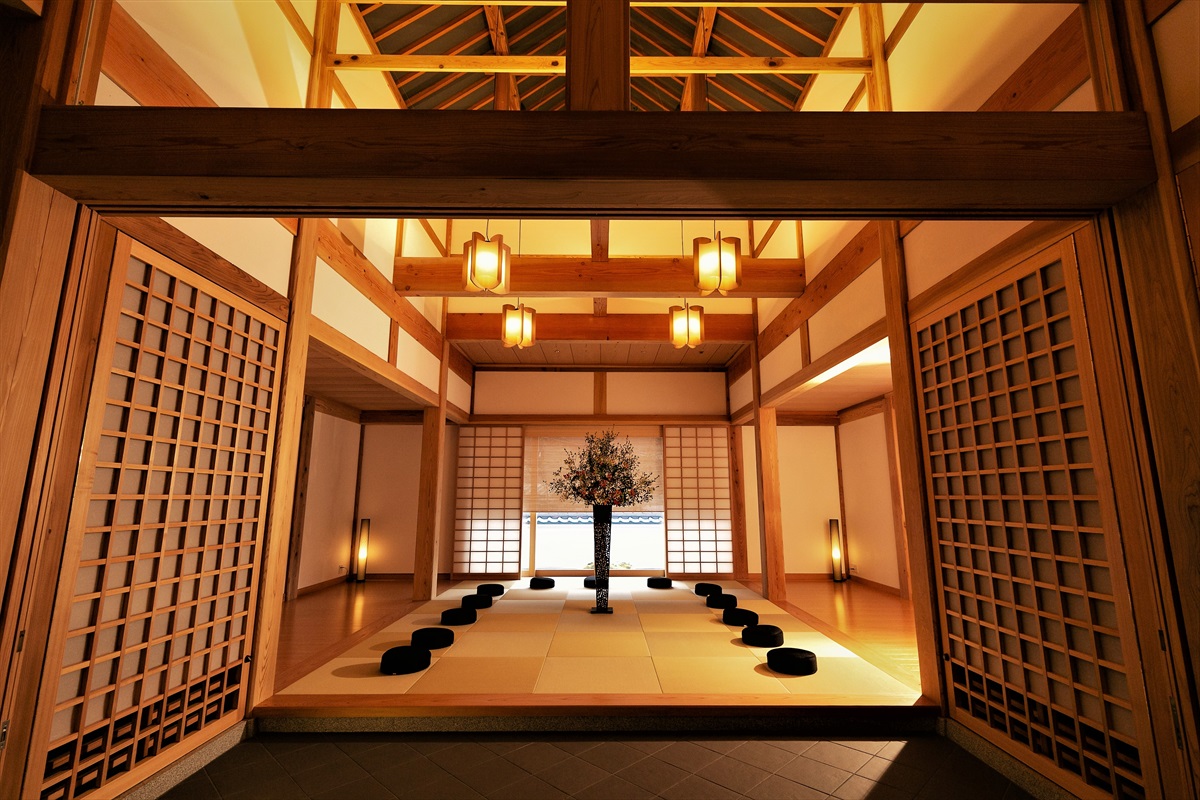
Consolidated heating reality, as approximate ranges. Outdoor January overnight lows: Koyasan -5°C to -2°C, Eiheiji -3°C to 0°C, Haguro summit -8°C to -3°C, Hieizan summit -4°C to -1°C. Indoor temperature in an unheated traditional room at 5:30 morning service: typically 5°C to 10°C. In a heated traditional room (kerosene stove or aircon running until 22:00, then off): 15°C to 20°C at bedtime, 8°C to 12°C at wake-up. In a modern central-heated shukubo (Hakujukan, Enryakuji Kaikan modern wing, Fukuchi-in main wing): 18°C to 22°C constant, 24 hours per day.
Futon weight matters more in winter than any other season, and Japanese temple shukubo are excellent at this. The standard winter stack is: one shikibuton underquilt (~4kg), one heavy kakebuton overquilt (~3kg cotton or polyester batting), one mōfu wool blanket (~1.5kg) layered between the body and the kakebuton, and a small buckwheat-husk sobakawa pillow. Inside this stack, your body envelope stabilises at 24°C to 28°C within fifteen minutes regardless of room temperature. The temperature differential when you get out of the futon is the only genuine winter shukubo challenge — see the packing section below.
Kotatsu mechanics: a low wooden table with an electric heating element on the underside, draped in a heavy quilt (kotatsu-buton) that hangs to the floor on all four sides. Sit on a cushion with your legs under the table; trapped warm air inside the quilt skirt creates a 28°C–32°C envelope around your lower body. Upper body stays at room temperature, so wear layers above the waist. The combination of warm lower body and cool upper body is first encountered as strange by Western guests but turns out to be one of the most pleasant ways to spend a cold winter evening — and is why the kotatsu has been central to Japanese winter domestic life for four centuries.
The packing list for winter shukubo is meaningfully different from autumn or spring. Our broader temple-stay wardrobe guidance is at /blog/what-to-wear-shukubo; the winter-specific additions follow. First and most important: a long thermal base layer (top and bottom), preferably merino wool or a heavy synthetic. This goes on under your pyjamas at bedtime and stays on for the 5:30 morning walk to service. Cotton sleeping clothes are inadequate for an unheated Koyasan room in January; thermal base layer plus the supplied yukata over the top is the right configuration.
Second: wool socks (two pairs) plus a thin silk liner sock underneath. The supplied temple slippers are thin plastic-soled indoor slippers, and the corridors between your room and the bath, dining hall and main hall are often unheated. If you are cold-prone, pack thicker indoor slippers or down-filled hut booties. Third: disposable hand warmers (kairo, 使い捨てカイロ), ¥80 to ¥200 each at any Japanese convenience store or pharmacy. These are adhesive 8-hour heat packs. For a two-night Koyasan winter stay, eight to ten kairo is right — two per morning service, two for the evening Okunoin walk, two spares. Buy them at the convenience store at the base of the cable car; the shukubo will not provide them.
Fourth: a thin pair of inner gloves and a heavier pair of outer gloves. Inner gloves are usually permitted during the seated morning service (remove for incense offering); outer gloves are for the pre-service walk. Touchscreen-compatible inner gloves matter — checking the cable car timetable at -3°C with bare hands is unpleasant. Fifth: a small thermos. The shukubo will not provide hot drinks outside meal times, and hot tea carried to morning service is a small luxury that significantly improves the experience. A ¥1,500 Zojirushi mug-sized thermos from any Bic Camera or station kiosk is standard kit.
Tip
The Koyasan cable car base convenience store stocks every winter consumable you might need — kairo hand warmers, wool socks, thermal underwear, umbrellas, snow grips. Buy what you forgot here before going up the mountain. There is no equivalent shop at the top.
Staying at a shukubo for Shōgatsu (December 31 into January 3) is the most under-publicised premium shukubo experience available to foreign travellers. The headline event is Joya-no-Kane (除夜の鐘), the 108-strike ringing of the temple bell at midnight on December 31. The number 108 corresponds to the bonnō, the worldly desires Buddhist teaching identifies as the source of suffering; each strike is intended to release one. At larger temples (including Eko-in and several other Koyasan shukubo), overnight guests are typically permitted to ring one of the bells themselves, with the line forming around 23:30. This is one of the few sacred Japanese rituals where active participation is offered to outside visitors as a matter of course.
Hatsumōde (初詣) — the first temple visit of the new year — runs January 1 to 3, and shukubo guests have a significant advantage: already inside the precinct before the day-visitor surge. Major Koyasan halls including Konpon Daito and Kongobuji see day-tripper queues of 90 minutes or longer on January 1 around 10:00; a shukubo guest walking to the same hall at 7:00 has no queue at all. The atmosphere of a major temple precinct in the first hours of the new year, snow on the ground and the smell of fresh pine kadomatsu at every gate, is unlike any other moment in the Japanese calendar.
Shukubo cuisine on January 1 typically includes osechi-ryori — the layered lacquerware boxes of preserved seasonal foods historically eaten across the first three days of the new year so that household cooks could rest — adapted to a shojin (no meat, no fish, no alliums for strict Shingon temples) ruleset. Black soybeans (kuromame, for diligence in the year ahead), kombu rolls (kobumaki, a pun on yorokobu, to rejoice), kintoki sweet potato (for financial prosperity), and ozoni soup with mochi rice cake are the canonical components. The presentation is more elaborate than any other meal of the shukubo year; on the morning of January 1 specifically, the dining experience alone is worth the booking.
Winter shukubo demand is shaped by three factors: New Year, weekend snow tourism, and the kangyō / Setsubun calendar in February. The single biggest surge is December 28 to January 5, which encompasses the late-December Joya-no-Kane preparation and the January 1 to 3 Hatsumōde window. Major Koyasan shukubo (Fukuchi-in, Eko-in, Shojoshin-in) for these dates should be booked 6 to 8 months ahead — and even then, single-occupancy rooms often sell out before twin-occupancy rooms. Pricing in this window runs 20% to 35% above standard winter rates.
The two clearest sweet spots are mid-December (December 10 to 25) and early February (February 5 to 20). Mid-December gives you genuine winter cold without the New Year surge — by mid-month, snow is reliably on the ground in Koyasan and Eiheiji, but foreign tourist numbers are at their absolute annual low, and major shukubo can sometimes be booked four to six weeks out at standard winter rates. Early February is the cheapest snow window of the entire winter calendar, with Setsubun (February 3) and the surrounding kangyō discipline season producing some of the most visually striking temple imagery of the year and almost no foreign competition for rooms.
Late January (January 20 to February 3) is the photographic peak — heaviest reliable snow on Koyasan and Haguro, sharpest light, lowest visitor counts after the New Year crowd has cleared. It is also the coldest week. Booking lead time for the major Koyasan shukubo in this window is three to four months for weekend nights and two to three months for weeknights. Eiheiji Sanro and Hakujukan have shorter lead times — typically four to eight weeks — because the Eiheiji visitor base is more domestic and more weekday-flexible. The full mechanics of how shukubo booking works across all seasons are at /blog/how-to-book-shukubo.
Tip
Avoid December 28 to January 5 unless you are specifically booking for Joya-no-Kane and osechi. The next-best alternative is mid-December: real snow, no surge pricing, and rooms typically still available four weeks ahead.
Each region has its own transport vulnerability in winter, and understanding which is which is the difference between arriving at 16:00 ready for dinner and arriving at 21:30 after the kitchen has closed. Koyasan: the Nankai Koya line from Osaka Namba is generally reliable in winter, but the cable car from Gokurakubashi to the plateau occasionally suspends for 30 to 90 minutes during heavy snow loading — check Nankai's winter operations page the morning of departure. Eiheiji: the Hokuriku Shinkansen to Fukui is robust, but the bus from Fukui Station to Eiheiji village can run 20 to 40 minutes late on snow days. Build a 90-minute buffer.
Dewa Sanzan: JR bus from Tsuruoka Station to Mt. Haguro summit runs year-round on a reduced winter timetable (about five departures per day vs ten in summer). Missing one means a 90-minute wait in an unheated bus stop — aim for the second-to-last service so rail delays still leave a fallback. Hieizan: the Sakamoto cable car runs reliably year-round; only the connecting urban trains from central Kyoto are vulnerable to snow. The Hieizan transfer is the most resilient of the four — 60 minutes of buffer is adequate.
Snow-day taxi pricing, in case the public transit fails: Osaka Namba to Koyasan by taxi is roughly ¥35,000 one-way and 2 hours 30 minutes in good weather. Fukui Station to Eiheiji by taxi is roughly ¥6,500 one-way and 30 minutes. Tsuruoka Station to Mt. Haguro summit by taxi is roughly ¥7,000 one-way and 40 minutes. Sakamoto to Enryakuji Kaikan is roughly ¥4,500 by taxi and 25 minutes. Taxis are dispatched even in heavy snow within the regional service zones; the longer-distance cross-prefecture options (Osaka to Koyasan especially) need to be booked by phone an hour or two ahead in genuinely heavy weather.
For pure heating performance, Hakujukan in Eiheiji is the best modern shukubo in the country — central heating to 20°C to 22°C constant, double-glazed windows, insulated walls. Among the more traditional properties, the renovated main wing of Fukuchi-in on Koyasan is the strongest, with thermostat-controlled aircon in every room and double-pane windows in the post-2010 buildings. Enryakuji Kaikan on Mt. Hiei is also reliably heated. Smaller traditional Koyasan shukubo (Sekisho-in, Shojoshin-in, several other Okunoin-side properties) hold heat less well and are the right choice for guests who want the texture rather than the comfort.
Not the full monk version, no. Full kangyō includes outdoor sutra chanting in subzero temperatures in light robes and is genuinely dangerous for the unconditioned body — Eiheiji does not permit lay guests to attempt it for liability and safety reasons. What is open to overnight guests at Eiheiji Sanro is observation of the monks' morning service from a designated guest area, walking the snow-cleared kairo corridors connecting the seven main halls, and joining an abbreviated guided zazen in a heated hall. This is the closest experience available to lay guests anywhere in Japan, and for most travellers it is more than enough exposure to monastic discipline.
Koyasan has Koyacho Hospital (one clinic, limited evening hours; nearest 24-hour ER is in Hashimoto, 1 hour by cable car and train). Eiheiji village has no hospital; nearest is Fukui Saiseikai, 30 minutes by car. Mt. Haguro summit has no medical services in winter; nearest is in Tsuruoka City, 40 minutes by road. Hieizan summit is similarly served from the Otsu lowlands. For anything more serious than mild GI trouble or a cold, descend to the nearest city before seeking treatment. Temple staff in all four regions can call a hospital taxi at any hour. Travel insurance is non-negotiable for any winter mountain temple visit.
Civil twilight in Koyasan in late January is roughly 6:35; full sunrise 7:05; the golden hour on snow-covered lanterns runs 7:00 to 7:45. Morning service is 6:00 to 6:30 at most shukubo, so the photographically best window starts as you exit the service. If you can stay outdoors with your camera through 7:45, you get the best snow-light shots of the trip. Same arithmetic on Mt. Hiei (golden hour 6:50 to 7:30) and Eiheiji (7:10 to 7:55). On Mt. Haguro the cedar canopy filters the morning light unevenly, and the best light is often the gentler glow around 8:30.
Depends on the child and the temple. The cold is real, and the early bedtime / early rise can be hard for kids under about eight. A modern heated property like Hakujukan or the main wing of Fukuchi-in works for families with kids of any age willing to be quiet in a temple setting; a traditional kotatsu-room shukubo in January suits school-age kids with prior camping or cold-weather travel exposure. Solo women travellers should also see /blog/solo-female-shukubo. The full family breakdown is at /blog/family-shukubo-japan. Etiquette expectations are at /blog/shukubo-etiquette.
Winter is the most demanding and the most rewarding of the three seasons. Spring shukubo (cherry blossom, /blog/shukubo-spring-cherry-blossom) is the easiest to enjoy and the hardest to book. Autumn shukubo (koyo, /blog/shukubo-autumn-foliage) is the visual peak but increasingly crowded. Winter is the quietest, the cheapest outside New Year, the most physically demanding, and the season where the religious content is closest to what the monks themselves are doing in the same week. For a second or third shukubo trip, winter is the right answer. Quiet meditative add-ons like sutra copying are covered at /blog/shakyo-shabutsu-experience.
Tip
Pack thermal long underwear (top and bottom), two pairs of wool socks plus silk liner socks, and eight to ten disposable hand warmers (kairo) for any two-night winter Koyasan or Eiheiji stay.
Tip
Book Fukuchi-in or Eko-in three to four months ahead for January and February weekends. Mid-December and early February are the best-value winter windows.
Tip
Avoid December 28 to January 5 unless you specifically want Joya-no-Kane and Hatsumōde. Lead times for this window are six to eight months.
Tip
For maximum heating with full Zen content, pair one night at Eiheiji Sanro (traditional) with one night at Hakujukan (modern, 20°C–22°C constant).
Tip
Always build a 60- to 90-minute transport buffer in winter. Snow delays on the Hokuriku line into Fukui and on the Koyasan cable car are routine, not exceptional.
Winter shukubo is not the season most foreign travellers reach for first, and that is why it works. The cold is honest, the crowds are gone, the Goma fire reads differently against a paper screen in February than in June, the snow on Okunoin's lanterns at 6:30 is something most Koyasan photographs cannot quite prepare you for, and the iroriba hearth at Saikan is still, in 2026, used the way it was used in the 1700s. None of this requires you to suffer — modern heated shukubo solve the temperature problem completely; traditional shukubo solve it with kotatsu and futon and a different relationship to indoor temperature than Western buildings have trained us to expect.
Choose the category that fits your tolerance, book the right week, pack the four winter items that actually matter, and the trade-off becomes clear: a winter shukubo gives you the temples as the monks have always known them, which is to say in the cold, in the snow, at five-thirty in the morning, with the smell of cedar smoke and incense in air that has not been heated by anything other than human bodies and a small altar fire. The four regions in this guide each offer their own version of that experience. The decision is which one to start with.
Ready to book?
Browse our curated collection of authentic Buddhist temple stays across Japan. Filter by region, sect, and experience.
Start ExploringRecommended Temples for This Guide
福智院
The only Koyasan shukubo with a natural hot spring, three Mirei Shigemori gardens, and refined shojin ryori.
from $175 /per night
赤松院
A 1,100-year-old Koyasan shukubo with a 1,500-tsubo garden, the closest temple lodging to Okunoin cemetery.
from $95 /per night
大本山永平寺 参籠(吉祥閣)
A one-night Zen retreat inside the head temple of Soto Zen Buddhism, with pre-dawn zazen, choka service, and shojin ryori.
from $55 /per night
永平寺 親禅の宿 柏樹関
A modern Zen inn at the gate of Eiheiji, with 18 cedar-built rooms, evening zazen and access to the temple's pre-dawn morning service.
from $195 /per night
羽黒山参籠所 斎館
The only Edo-era shukubo still standing on the Haguro-san summit, run by Dewa Sanzan Jinja, with Michelin-listed mountain-herb shojin ryori.
from $75 /per night

