
|
|
|
|
|
|
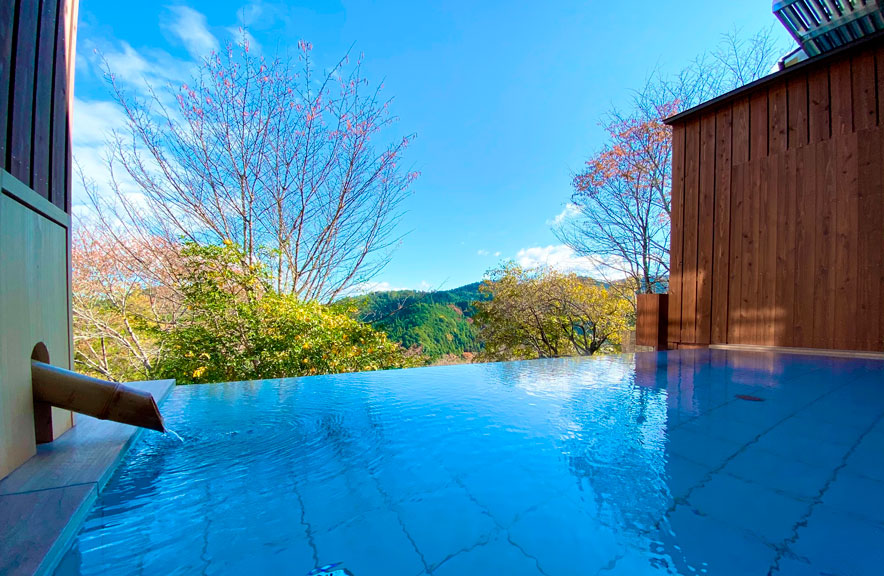
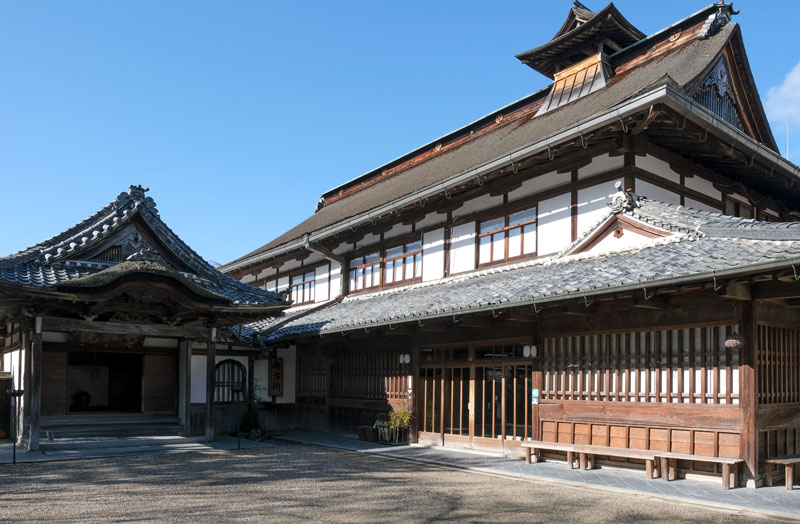
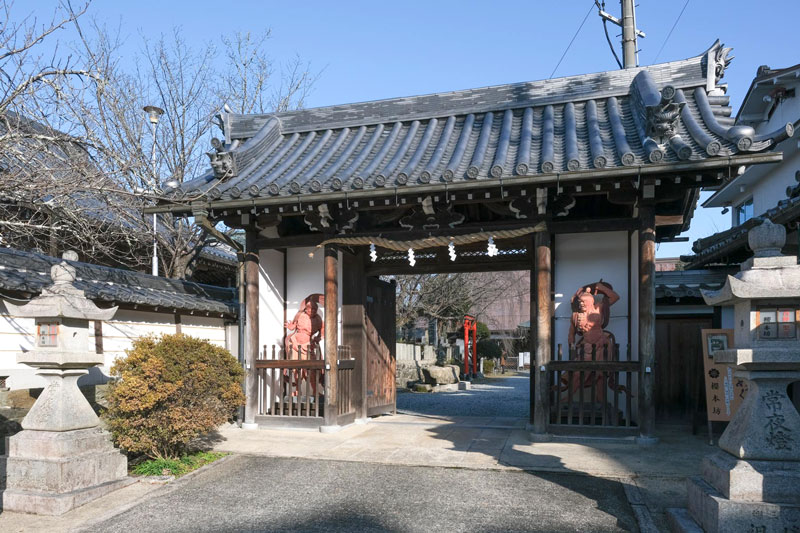 Photo: Sakuramotobo (yoshinoyama-kankou.com)
Yoshino is two mountains layered on top of each other. The first is the cherry blossom mountain — roughly 30,000 trees planted across a single south-facing ridge over thirteen centuries, the original mass-sakura site in Japan and the model that every later hanami park is descended from. The second is Shugendō country: an older, harder, less photogenic mountain religion that has been training ascetics on these slopes since the 7th century, with its central deity (Zaō Gongen) carved into a hall that is the second-largest wooden building in the country after Tōdaiji. Day-trippers see the first mountain. Overnight guests see both.
Five working shukubo still take guests on Yoshino-yama. Two — Sakuramotobo and Tonan-in — were founded by direct disciples of En no Gyōja, the 7th-century yamabushi who created Shugendō. One (Kizoin) runs the only youth hostel inside the UNESCO World Heritage zone. One (Chikurin-in Gunpoen) houses a garden redesigned by Sen no Rikyū for Toyotomi Hideyoshi's 1594 cherry-blossom party. One (Yoshino-so Yukawaya) stands five minutes from the National Treasure Zaō-dō, with an infinity rotenburo looking out over slopes pilgrims have climbed since the 600s. This guide maps all five — what each does best, when to book, and why staying overnight here is a fundamentally different experience from Kōyasan or Kyoto.
Most foreign visitors meet Yoshino as a sakura day-trip from Osaka or Kyoto: 1h45 on the Kintetsu Yoshino Line from Abenobashi, a quick ropeway up the slope, two hours of photography around the middle bloom belt, then back down for an early dinner. That works fine for catching the trees in peak week, and it is what 90% of inbound travellers do. It also misses essentially everything that makes Yoshino unlike any other mountain in Japan.
The mountain is a 1,350-year-old religious landscape that happens to be covered in cherry trees because pilgrims and emperors kept planting them as votive offerings to a Shugendō deity who declared the species sacred. The temples on the slope are working monasteries, several still leading 5-day ridge-line ascetic traverses. The cherry trees themselves cluster into four named elevation belts whose staggered bloom timing exists because that is where successive generations of pilgrims chose to dedicate them.
Staying overnight dissolves the day-trip frame. You walk the upper belts at first light. You sit through the 6 AM morning service inside a hall whose principal image is En no Gyōja himself. You eat dinner built around Yoshino kuzu (arrowroot starch — the local specialty), wild mountain vegetables, and Yoshino cedar. Price for one night with two meals runs from 12,000 yen at the budget end (Kizoin) to 50,000+ yen at the high end (Chikurin-in with a private rotenburo). And this works year-round — the sakura is famous, but autumn koyo, winter snow, summer green and the temple festival calendar are all reasons to come outside cherry week.
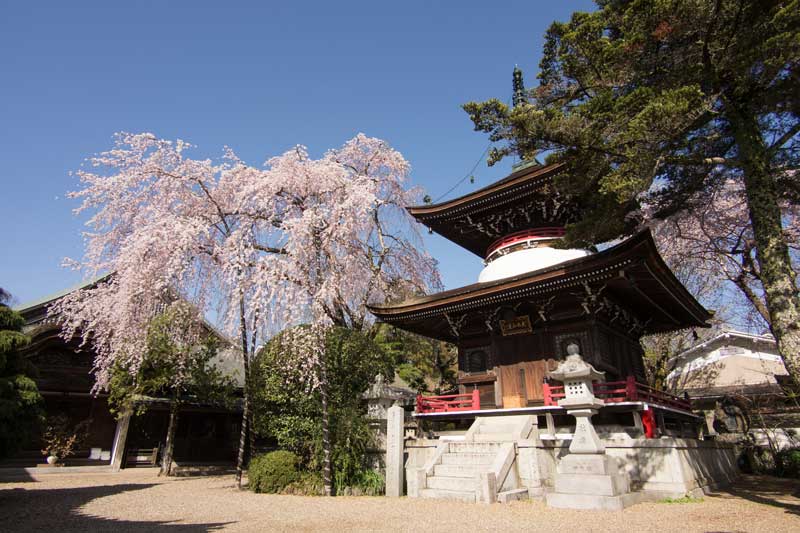
Kinpusenji (金峯山寺) is the head temple of Kinpusen Shugen Honshū and the historical headquarters of Yoshino-Ōmine Shugendō. To understand why every shukubo on this mountain orbits this one temple, you need a one-paragraph version of who En no Gyōja was and what Shugendō actually is.
En no Gyōja (役行者, 'En the Ascetic') was a late 7th-century practitioner from the Kazuraki region of present-day Nara. Tradition holds that during a long retreat on Mt. Kinpusen he received a vision of a tripartite deity — Shaka Nyorai, Senju Kannon and Miroku (the historical, compassionate and future Buddhas) — fused into a single wrathful figure with raised right hand and stamping foot. This is Zaō Gongen (蔵王権現), the central deity of Shugendō. He does not exist in Indian or Chinese Buddhism. He is the only major Buddha-class deity the Japanese mountain tradition produced entirely on its own, and Yoshino-Ōmine is his birthplace.
Shugendō itself is a syncretic mountain religion that fuses Mahāyāna Buddhism (especially Esoteric Shingon and Tendai lineages — the same Shingon esoteric tradition practised at Eko-in on Kōyasan, and the Tendai mountain-practice lineage preserved at Enryakuji Kaikan on Mt. Hiei), pre-Buddhist Shintō kami worship, Daoist mountain-immortal lore, and Japanese folk animism into a single practice oriented around physical ascesis in the mountains. Its practitioners are called yamabushi (山伏, 'those who lie in the mountains') and historically wore the distinctive horagai conch trumpet, kesa stole and tokin black hat you still see at major Kinpusenji rituals. Where Zen sits and Shingon performs ritual, Shugendō walks ridges, fasts in caves, and chants under waterfalls. See /blog/buddhist-sect-comparison for how this tradition fits alongside the better-known Japanese schools.
The architectural payoff is the Zaō-dō (蔵王堂) — Kinpusenji's main hall. Built in its current form in 1592, it enshrines three towering Zaō Gongen statues (past, present and future Buddhas in their Zaō form), each roughly seven metres tall, lacquered indigo with red flame haloes. The building is a National Treasure and at roughly 34 m tall × 36 m wide × 37 m deep is the second-largest wooden structure in Japan, behind only Tōdaiji's Daibutsu-den. Twice a year the statues are unveiled for public viewing (gokaichō / special opening). Booking a shukubo overnight around an opening is one of the more under-appreciated planning moves on the mountain.
Three of the five shukubo on this list — Sakuramotobo, Kizoin and Tonan-in — are formally tatchū within the Kinpusenji lineage. The other two (Chikurin-in and Yukawaya) are non-monastic in day-to-day operation but historically attached to Kinpusenji as guest lodging and gate-front inns. Any of the five places you inside the Shugendō ecosystem in a way no Kyoto Zen or Kōyasan Shingon temple can replicate.
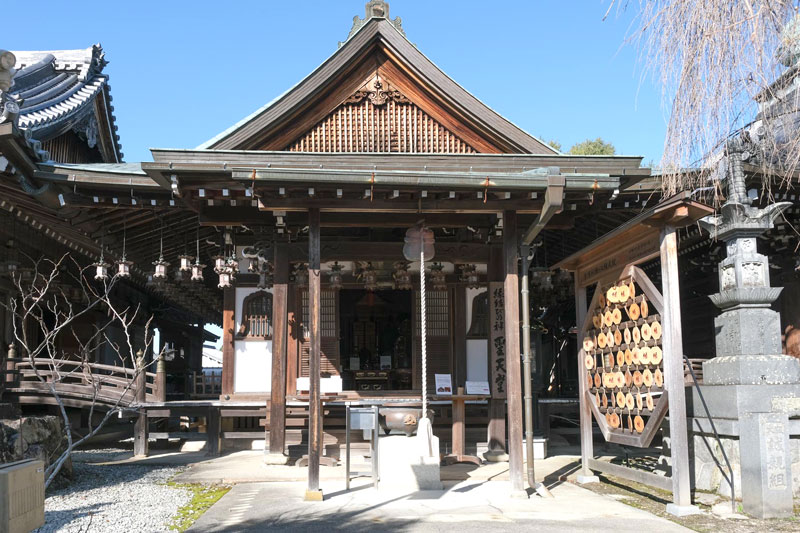
Yoshino's 30,000 cherry trees are not scattered randomly. They cluster into four named elevation belts that bloom in sequence over about ten days — lower first, inner last. Understanding this geography separates a successful sakura trip from a frustrated one.
Shimo-senbon (下千本, 'lower thousand') sits at 350 m around the ropeway upper station and the lower temple district. First to bloom (early April), easiest to reach — most day-trippers see this belt and nothing else. The Kinpusenji Niōmon falls here. Bloom peak: April 2–8.
Naka-senbon (中千本, 'middle thousand') sits around 500 m in the densest temple district. Sakuramotobo, Chikurin-in and Tonan-in cluster here, alongside the main bus drop-off and shopping street. The famous overlook above Yoshimizu Shrine faces directly out over the lower belt — meaning you can see Shimo-senbon at peak while standing among Naka-senbon trees that bloom three to four days later. Bloom peak: April 6–13.
Kami-senbon (上千本, 'upper thousand') sits at 600 m along the upper ridge. The Hanayagura observatory gives the panoramic view that appears on most Yoshino postcards — the entire lower mountain rolling down in waves of pink. A 30–40 minute walk uphill from Naka-senbon. Bloom peak: April 10–17. Kizoin's location near here makes it the natural base for guests who want the upper belt at dawn.
Oku-senbon (奥千本, 'deep thousand') sits at 700 m at the upper terminus of the mountain road, around Kinpu-jinja shrine and the Saigyō-an hermitage — where the 12th-century poet-monk Saigyō Hōshi wrote his hermit poems. Trees bloom last and crowds thin sharpest. Bloom peak: April 14–22. From here the Ōmine Okugake-michi pilgrimage trail continues south toward Sanjō-ga-take and eventually Kumano.
Tip
The single most useful sakura-week planning fact for Yoshino: because the four belts bloom in sequence, you can typically see active peak somewhere on the mountain for nearly two weeks. Targeting Naka-senbon dates (April 6–13) gives the highest probability of catching multiple belts at peak simultaneously. Targeting Oku-senbon dates (April 14–22) gives you the quietest crowds.
Why does overnight unlock belts that day-trippers miss? Two reasons. First, day-trips pivot around the last train (around 21:00 from Yoshino Station), so most visitors are walking back downhill from 15:00 and miss golden-hour light entirely. Staying overnight lets you reach Kami- or Oku-senbon at sunset with no time pressure. Second, the morning window from 5:30 to 8:00 — before the first ropeway brings up the day crowds — is when the upper belts are quietest and the soft pre-dawn light hits the bloom. Both windows are essentially impossible from a city hotel, and they are why the shukubo here consistently book out four to six months ahead for the first three weeks of April.
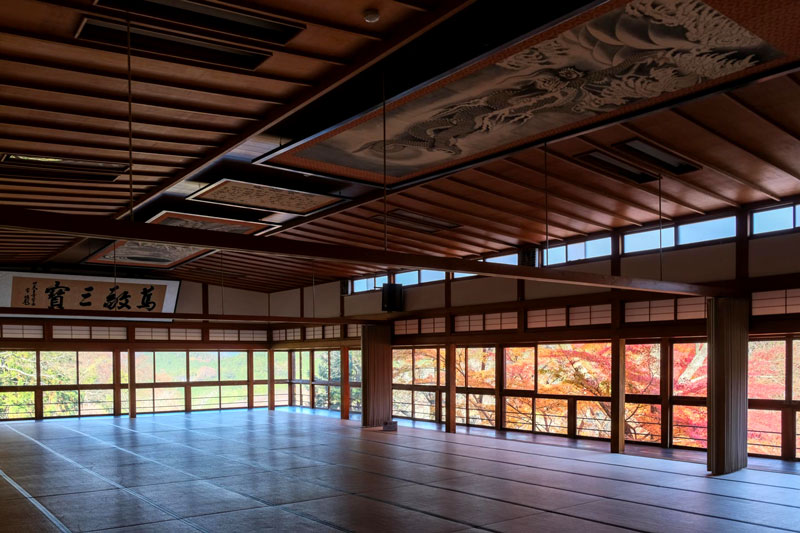
Five active shukubo currently take guests on Yoshino-yama. They differ sharply in character, price, and what they do best. Here is how to choose between them.
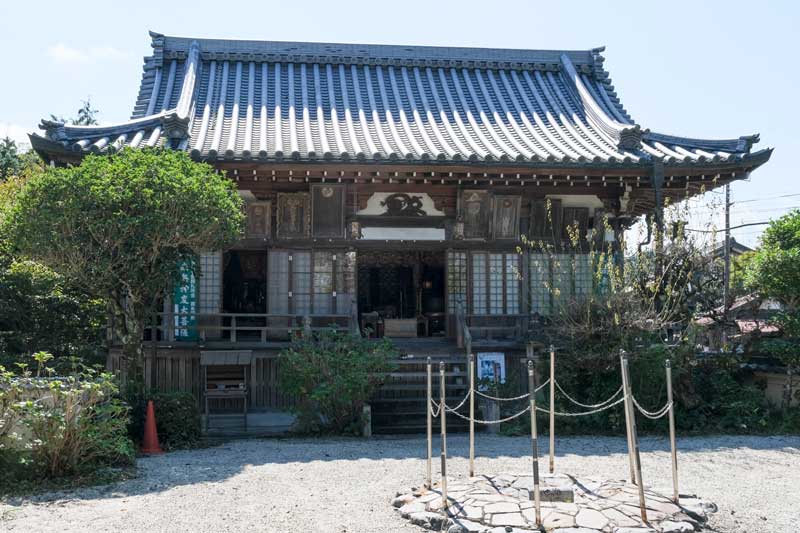
Sakuramotobo is the 'Cherry Origin Temple' — founded in the late 7th century by Kakujo Sōzu, the senior disciple of En no Gyōja, on the spot where the future Emperor Tenmu dreamed of a cherry tree in full bloom. The temple was later registered as the imperial vow temple of Tenmu and Empress Jitō. Today it is a Bekkaku Honzan of Honzan Shugenshū and one of the five Daimine-san Goji-in guardian temples of Mt. Ōmine — still leading major Shugendō programs including the 5-day Ōmine Okugake-dō traverse.
The hondō houses a Kamakura-period statue of Jinben Daibosatsu (the posthumous title of En no Gyōja), an Asuka-Hakuhō Shaka Nyorai said to be Emperor Tenmu's personal Buddha, and a Heian-period Jizō Bosatsu — three National Important Cultural Properties under one roof. The grounds contain 200+ of the temple's own sakura plus access into the surrounding Naka-senbon belt.
The shukubo operates as a 'shinjin shukubo' — small-scale lodging strictly for sincere practitioners, limited to three groups per day during cherry season. One night with two meals (the temple's special seasonal shōjin ryōri) runs from 12,000 yen. Voluntary morning seated chanting and zazen are included; shakyō / shabutsu cost 2,000 yen extra. See /blog/shakyo-shabutsu-experience for what these sutra-copying practices actually involve. Booking is by phone only (0746-32-5011, Japanese). Position: middle of Naka-senbon, two minutes' walk from the main shopping street. Price tier: budget-mid.
Kizoin is the only temple on Yoshino-yama that operates both a traditional shukubo and a Japan Youth Hostels member lodging under one roof. Founded around 840 by the Tendai master Chishō Daishi Enchin during his first ascent of Mt. Ōmine, it is a sub-temple of Kinpusenji and one of the five Daimine-san Goji-in. The principal images are En no Gyōja, Zaō Gongen and Fudō Myō-ō — the standard Shugendō triad. The front garden bears a poem stele of the Edo-period Confucian scholar Kumazawa Banzan, who hid here while under suspicion in the 1651 Yui Shōsetsu affair.
Two operational notes matter. First, the Mt. Ōmine Sanrō-sho (the shukubo proper) operates from 3 May to 23 September each year, aligning with the traditional Mt. Ōmine climbing season for Shugendō pilgrims — not during cherry week. Second, the youth-hostel wing operates year-round on a more budget-traveller schedule (private rooms or shared dormitories, simple meals). Together this makes Kizoin the cheapest way to spend a night inside the UNESCO sacred zone — roughly 50–75 USD per person.
Reservations and questions: Sanrō-sho 0747-68-9187, head office 0746-32-3014 (Japanese only). Position: near Kami-senbon (upper belt). Price tier: budget. Best for: budget pilgrims, summer Ōmine climbers, anyone who specifically wants the upper-belt dawn walk and is willing to forgo private bathroom and English service.
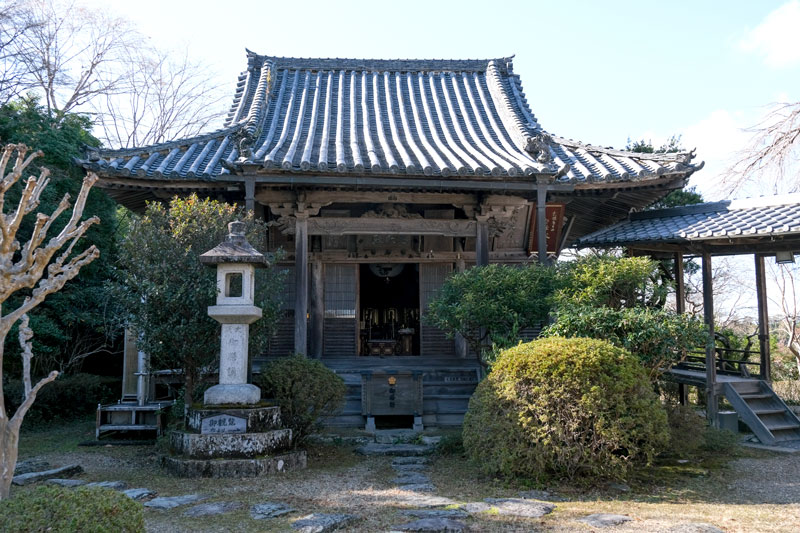
Tonan-in is a Bekkaku Honzan of Kinpusen Shugen Honshū, founded in the late 7th century by En no Gyōja himself. In Japanese sacred geography, when a great mountain temple is established a smaller temple is built to the southeast (tatsumi 巽) to guard it. Tonan-in is the tatsumi temple for the Kinpusenji Zaō-dō, which sits just to its northwest. The name itself literally means 'southeast cloister'.
Two pieces of pilgrim-lodging history give Tonan-in its particular weight. Retired Emperor Shirakawa stayed here on his 1092 imperial pilgrimage to Mt. Kinpusen — making this one of the few shukubo in Japan with documented imperial guest history going back to the late 11th century. And in 1684, Matsuo Bashō lodged here while travelling on what would become the Nozarashi Kikō journey; several verses in that collection were written during his stay. Both facts are recorded on stone markers on the grounds.
The compound consists of a hondō, a small two-storey tahōtō pagoda (relocated here in 1937 from a former Hachiman shrine in Wakayama), the kuri (priests' kitchen), and a kyakuden. It houses Kamakura-period seated statues of Dainichi Nyorai, Bishamonten and Fudō Myō-ō; the Dainichi is a Nara Prefectural Cultural Property. The single weeping cherry in front of the tahōtō is one of the most photographed spring scenes on the mountain.
The shukubo continues to host Ōmine Shugendō practitioners and ordinary travellers, with simple shōjin-style cuisine and morning service at 06:00. Sake is served with dinner (unusually for a working Shugendō shukubo). Price tier: budget-mid, roughly 60–95 USD. Reservations: 0746-32-3005 (Japanese only). Position: middle of Naka-senbon, eleven minutes' walk from the ropeway upper station. Best for: literary pilgrims, photographers, anyone who wants the longest unbroken shukubo history on the mountain.
Chikurin-in is the highest-grade lodging on the mountain — a 41-room ryokan-style shukubo built around Gunpoen, a one-hectare garden laid out in the late Muromachi period and redesigned by tea master Sen no Rikyū when Toyotomi Hideyoshi held his celebrated cherry-blossom party at Yoshino in 1594. The garden is counted as one of the Three Great Gardens of Yamato and is a National Place of Scenic Beauty. Tradition dates the temple itself to Prince Shōtoku in the late 6th century, making it one of the oldest sub-temples of Kinpusenji.
Operationally, Chikurin-in functions more like a high-grade ryokan than a traditional shukubo. There is no morning service, no zazen, no shakyō programme. The kitchen serves a kaiseki dinner (with the signature 'Rikyū-nabe' hot pot) rather than precept-strict shōjin ryōri, and the 41 rooms include options with private rotenburo. Wi-Fi, credit cards, and a large bath looking onto the garden are standard. Pricing: 110–380 USD per person depending on room class and dinner course. The /blog/shukubo-with-onsen guide covers the broader comfort-tier shukubo category this temple fits into.
Booking: through the official site or major Japanese OTAs; cherry-week rates lift sharply and the inn books out 4–6 months ahead for the second week of April. Position: middle of Naka-senbon, 20 minutes' walk from the ropeway upper station. Best for: travellers who want the shukubo address and historical context without giving up the comforts of a 4-star ryokan, repeat visitors who have done budget-monastic shukubo before, and groups with mixed-budget travellers (see /blog/family-shukubo-japan for the family-stay playbook).
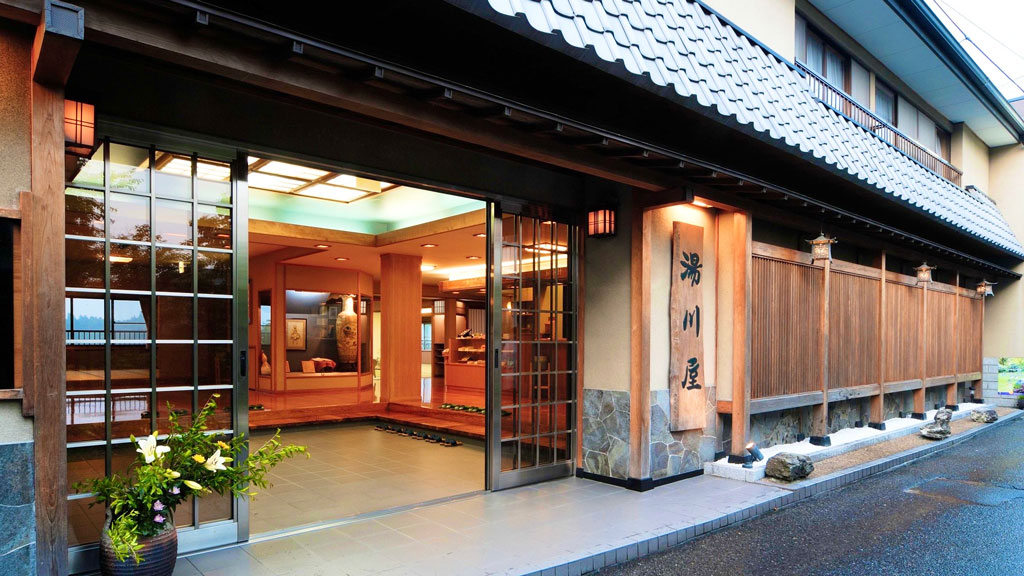
Yukawaya is the mongen-yado — the gate-front inn — of the Kinpusenji Zaō-dō, a role it has filled for roughly 300 years. The Zaō-dō is five minutes' walk from the front door, closer than any other lodging on the mountain. The inn's wooden architecture was built using local Yoshino cedar in the regional Yoshino-zukuri style, and the inn safeguards Japan's oldest dated En no Gyōja statue — a wooden image with an inscription dated 1286 (Kōan 9). It also appears in two Edo-period travel diaries.
The bath suite is the modern selling point. 'Saigyō no Yu' is fed by an artificial radium spring and includes Nara Prefecture's first infinity-edge open-air bath, sweeping out over the cherry-blossom slopes. Selected rooms have their own private rotenburo. The signature dinner is 'Saigyō Gozen' — a mountain kaiseki built around the inn's trademark 'Saigyō Nabe', a hot pot using Yoshino kuzu as the base, paired with river fish and seasonal mountain vegetables. Fourteen rooms, 70-guest capacity. Wi-Fi, credit cards, free parking for 20 cars (cherry-season restrictions apply).
Pricing: 130–450 USD per person depending on room class. Reservations: 0746-32-3004 or through the official online booking system, Japanese only. Position: 15 minutes' walk from the ropeway, 5 minutes from the Zaō-dō. Best for: travellers whose primary interest is the Zaō-dō itself (especially around the spring and autumn special openings) and guests who want the infinity-rotenburo view.
The single most repeated planning mistake is treating Yoshino as a one-week destination. The cherry blossom is genuinely spectacular, but it is also the period when prices peak, every shukubo books out months ahead, and the buses and ropeway run at queueing capacity. The other 48 weeks are markedly cheaper, dramatically quieter, and in several cases more atmospheric than peak sakura week.
Autumn (mid-October to late November) is the strongest case. Yoshino's koyo is not as nationally famous as the sakura — precisely the point. You walk the upper belts without crowds, the cedar-and-maple mix gives a deeper colour palette than the pink monoculture of April, and the mid-November Zaō Gongen special opening typically falls during peak koyo week. Shukubo rates drop 30–40% versus April. Naka-senbon peak koyo: November 10–20. See /blog/shukubo-autumn-foliage for cross-region planning and /blog/goma-fire-ceremony-guide for the goma ritual.
Winter (December to early March) is the contemplative season. The mountain takes snow lightly but consistently above 500 m, the Zaō-dō at sunrise in February is one of the most atmospheric scenes on the mountain, and there is essentially no foreign tourism. The major Shugendō event in this window is the preparation for Tōdaiji Omizutori in Nara — Yoshino-Ōmine yamabushi traditionally participate in cutting the giant pine torches used in the March Nigatsudō ceremony.
Summer (June to September) is the Ōmine climbing season, when Kizoin's Sanrō-sho operates in its primary function and the mountain fills with yamabushi rather than tourists. Green leaves replace the pink, days are long enough for proper ridge walks, and upper-belt temperatures sit 5–7°C cooler than the Osaka or Nara plain. The big festival is the 7 July Renge-e (Lotus Ceremony) at Kinpusenji. Bookings are easy; rates are at their annual low.
Yoshino food is a regional cuisine, not generic shōjin ryōri. Three local specialties define it and appear in different proportions at all five shukubo.
Yoshino kuzu (吉野葛) is arrowroot starch from the kudzu vine, harvested in this valley since at least the Heian period. The high-grade Yoshino-honkuzu is processed by repeated cold-water rinsing over weeks and is markedly more refined than mass-produced potato-starch substitutes. You will encounter it as kuzukiri (translucent noodles served chilled with brown-sugar syrup), kuzu-mochi (chewy squares dusted with kinako), kuzu-an thickening on hot vegetable dishes, and at Yukawaya as the broth base for the trademark Saigyō Nabe. A small jar of loose powder runs 1,500–3,000 yen at any temple-front shop.
Sansai (山菜 mountain vegetables) drive the seasonal menu. Spring brings warabi (bracken fern), takenoko (bamboo shoot), fukinotō (butterbur sprout), and the pale-pink salted cherry leaf used to wrap sakura-mochi. Summer brings river vegetables and early myōga. Autumn brings matsutake (in a good year), shimeji, and chestnut. Winter brings preserved sansai and Yoshino-grown ginger pickles.
Yoshino-sugi cedar and Yoshino-hinoki cypress are the third local product, used in the architecture and bath houses. The baths at most Yoshino lodgings are clad in local hinoki, which gives off a distinctive citrus-and-resin scent when wet. Yoshino cedar has been logged in commercial volumes since the 14th century and is one of Japan's three premier construction timbers — the Zaō-dō itself contains Yoshino-sugi beams of remarkable scale. The full guide to shōjin ryōri across the Japanese tradition lives at /blog/shojin-ryori-guide; the vegan cross-region playbook is at /blog/vegan-temple-stays-japan.
Tip
Three of the five shukubo (Sakuramotobo, Kizoin, Tonan-in) serve shōjin or shōjin-style food. Two (Chikurin-in, Yukawaya) serve mountain kaiseki that includes river fish and game. If you specifically want a precept-compliant vegan menu, communicate it in writing at booking and again at check-in.
The Ōmine Okugake-michi (大峯奥駈道) is the 80–100 km Shugendō pilgrimage trail that runs from Yoshino south along the spine of the Kii Mountains to the three grand shrines of Kumano (Hongū, Hayatama, Nachi). It is one of the two UNESCO World Heritage pilgrimage routes in the Kii range. Walked traditionally as an 8-day yamabushi training course, it crosses the sacred peaks of Sanjō-ga-take (the women-prohibited mountain where the central Ōmine training cave sits), Misen, Hakkyō-ga-take and several others, with overnight stops in mountain huts and shrines.
Few foreign travellers walk the full route — the terrain is demanding, Sanjō-ga-take remains closed to women under traditional Shugendō rules, and the yamabushi training programs require formal application through Kinpusenji. But two soft entry points are accessible from a shukubo base. First, the section from Oku-senbon south to Kinpu-jinja and the Saigyō-an hermitage is a 3–4 hour out-and-back day walk on the Okugake-michi itself, well-marked and forgiving. Second, the Mt. Ōmine 1-day ascent training organised by Sakuramotobo each climbing season is the most accessible way to experience formal Shugendō practice; it requires advance Japanese-language application but takes ordinary participants who are physically fit.
Even if you do not walk it, the Okugake-michi explains Kinpusenji's orientation. The Zaō-dō faces a ritual line connecting conceptually to Kumano Hongū some 80 km south, and the trail is the physical embodiment of that line. The Zaō Hall pass system that lets pilgrims accumulate seals at successive checkpoints is a Shugendō version of the Shikoku 88-temple system. None of this is visible on a sakura day-trip.
If you are coming during cherry week, book 6 to 9 months ahead. The five shukubo here have small room counts: Sakuramotobo limits to 3 groups per day; Tonan-in and Kizoin are small; Yukawaya has 14 rooms; only Chikurin-in's 41 rooms gives any inventory depth. By late October the second week of April is typically gone at the headline temples, and by January everything in the first three weeks of April is fully booked. Cross-regional sakura playbook: /blog/shukubo-spring-cherry-blossom. For language and solo-traveller planning: /blog/english-friendly-shukubo and /blog/solo-female-shukubo.
Booking channels: direct phone in Japanese is the only channel for Sakuramotobo, Kizoin and Tonan-in. If you do not speak Japanese, use a Japanese friend, a hotel concierge, or a booking service to call on your behalf. Chikurin-in and Yukawaya accept online bookings through their official sites and through major Japanese OTAs. The deeper playbook on how to navigate booking lives at /blog/how-to-book-shukubo, and the first-timer's overview is at /blog/shukubo-first-time-guide.
Crowds: peak sakura week brings tens of thousands of day-trippers and the ropeway is the bottleneck. Queues at the lower station can run 90–120 minutes between 10:00 and 14:00 on a peak weekend. The countermeasure is to use the alternative road buses from Yoshino Station (which terminate at Naka-senbon, by-passing the ropeway entirely) or to arrive on the first ropeway of the day. Overnight guests deal with the ropeway / bus only once each direction.
Train access during peak: Kintetsu runs supplementary 'Sakura Liner' express trains; reserved seats sell out 1–2 weeks in advance for weekend peak. The major risk for day-trippers is the last train from Yoshino Station (around 21:00–22:00). Overnight guests bypass this entirely. On payment: the three Shugendō shukubo are cash-on-departure; Chikurin-in and Yukawaya accept credit cards. The /blog/shukubo-etiquette guide covers the broader behavioural cross-cuts.
Tip
If you have to book late for cherry week and the four headline temples are full, try Kizoin's youth-hostel wing — it operates outside the formal Sanrō-sho season and often retains availability when the more famous temples are gone. Rooms are simpler and meals are basic, but the address is identical and the dawn walk to the upper belt is unchanged.
Outside cherry week and the autumn koyo peak, Yoshino is operationally easy. Bookings can be made 2–4 weeks in advance even at Chikurin-in and Yukawaya, and the smaller Shugendō shukubo are reliably available 1–2 weeks out. Rates drop substantially: Yukawaya's standard room runs around 130–180 USD off-season versus 250–450 USD in cherry week; Chikurin-in's mid-range room runs 130–180 USD versus 250–350 USD. The ropeway and buses run on normal schedules. Trains run on standard timetables. Restaurants keep shorter hours from December to early March, but the temples and shukubo operate year-round.
One operational nuance: the Mt. Ōmine ascent and the Okugake-michi sections south of Oku-senbon are seasonally restricted. The traditional opening of Mt. Ōmine runs from 3 May to 23 September; outside this window, the high-mountain trails are closed for snow and weather safety. If your interest is specifically the Shugendō pilgrimage trails rather than the cherry blossom, target a May–September stay at Kizoin or Sakuramotobo when the formal climbing programs run.
From Osaka: Kintetsu Yoshino Line from Osaka Abenobashi (connected to the Tennōji JR / subway hub). Limited Express takes 1h15–1h30 with a 520 yen reserved-seat surcharge; standard rapid express takes 1h45 with no surcharge. Trains run hourly, every 30 minutes during cherry week. One-way: 1,100 yen standard / 1,600 yen Limited Express. From Kyoto: Kintetsu Kyoto Line to Kashiharajingū-mae (~50 min), transfer to the Yoshino Line, on to Yoshino Station (~50 min). Total: about 1h45 with one transfer, roughly 1,200 yen.
From Yoshino Station up the mountain: two options. The Yoshinoyama Ropeway runs to the lower edge of Shimo-senbon (3 minutes, 600 yen round-trip). It is the fast, scenic option but bottlenecks badly in cherry week. The alternative is the Yoshino-cho community bus, which runs from Yoshino Station up the road to Naka-senbon (20 minutes, 400–500 yen). The bus is slower but reliable and reaches the temple district directly. From Yoshinoyama Station to most shukubo is a 10–20 minute uphill walk. Driving is technically possible but during cherry week the upper mountain is subject to traffic restrictions; outside cherry week it is the most flexible option.
All three regions offer temple stays but emphasise different aspects of the broader Buddhist landscape. The right choice depends on what you actually want from the trip.
Kōyasan is the Shingon Esoteric Buddhism headquarters founded by Kūkai in 816, the most foreign-friendly shukubo destination in Japan (52 temples take guests, most with at least one English-speaker), and the home of the Goma fire ceremony and the Okunoin cemetery night walk. Shingon mountain temples elsewhere in Japan — including Takaosan Yakuo-in outside Tokyo, which also carries a Shugendō-inflected mountain-worship tradition — share this esoteric lineage but feel markedly different from Yoshino's Kinpusenji axis. Strengths: scale of English service, density of shukubo, the Okunoin atmosphere. Weaknesses: it can feel processed in peak weeks, sakura comes late, and the dominant ritual flavour is Shingon Esoteric. See /blog/best-koyasan-temple-stays for the deep cut, and /blog/okunoin-night-tour-guide for the cemetery walk.
Kyoto offers shukubo in the city itself and in the surrounding hills. The Kyoto strength is the Zen tradition — Rinzai and Sōtō meditation, kare-sansui rock garden contemplation, formal English meditation instruction. The weakness is that 'shukubo' in Kyoto often means 'temple-grounds hotel' rather than a working monastic lodging. See /blog/kyoto-temple-stay-guide for which Kyoto temples actually qualify.
Yoshino is where you go for Shugendō. It is also the only place where you sleep inside a UNESCO World Heritage cherry-blossom landscape that was deliberately planted over 1,300 years as a religious offering — neither Kōyasan nor Kyoto can replicate that. The trade-off: English service is essentially zero, the five shukubo are small and book out hard in cherry week, and the infrastructure is markedly less developed. If you want comfort and ease, choose Kōyasan. If you want a working Zen practice, choose a Kyoto temple. If you want the mountain religion that nobody told you existed, choose Yoshino. The practical Kōyasan-vs-Eiheiji-vs-Hieizan playbook is at /blog/koyasan-vs-eiheiji.
A two-region itinerary works well: pair Yoshino (2 nights, Naka-senbon dates in early-mid April) with Kōyasan (2 nights, mid-late April for the altitude-delayed bloom). The two mountains are roughly 2.5 hours apart by train via Hashimoto, and the timing layers naturally because Kōyasan's 800 m altitude pushes its bloom roughly two weeks behind Yoshino. Highest probability of catching peak bloom regardless of how the year's weather pushes the curve.
Tip
In an average year: Shimo-senbon (lower) April 2–8, Naka-senbon (middle) April 6–13, Kami-senbon (upper) April 10–17, Oku-senbon (deep) April 14–22. The JMA bloom forecast updates weekly from late February and can move by up to 10 days from issue to actual. Targeting Naka-senbon dates gives the highest chance of catching multiple belts at peak; targeting Oku-senbon gives the quietest crowds. Yoshino Town publishes a daily bloom map at yoshinoyama-sakura.jp during the season.
Tip
Cherry week (first three weeks of April): 6 to 9 months ahead, especially for Sakuramotobo, Chikurin-in and Yukawaya. By late October the second week of April is typically gone at the headline temples. Autumn koyo peak (early to mid November): 6 to 8 weeks ahead, especially around the Zaō Gongen special opening dates. All other periods: 2 to 4 weeks is usually fine, and 1 week works for the budget-tier shukubo. Outside cherry week, walk-up booking is occasionally possible at Kizoin's youth hostel wing.
Tip
April mornings on the upper belts run 3–7°C even when Osaka is 18°C; pack a thermal layer regardless of city forecasts. Shōjin-ryōri-serving shukubo expect modest dress (no bare shoulders) for the morning service; quiet socks for the corridors. Walking shoes that handle wet stone steps are mandatory — the temple district is built on a steep slope with old paving. See /blog/what-to-wear-shukubo for the broader dress-code playbook; the Yoshino-specific add-on is a packable umbrella (mountain weather shifts inside an afternoon) and a small flashlight for the evening walk back to your shukubo (street lighting thins above Naka-senbon).
Tip
Call ahead. Cherry-week and autumn-festival check-in windows are strict (most shukubo close their gates by 18:00 and expect you in your room before dinner service starts around 18:30). If you are coming up on the late ropeway after a delayed train, ring the temple directly from Yoshino Station to confirm your dinner can be held. Sakuramotobo and Tonan-in in particular do not have night reception — they will lock the gate if you do not arrive in the booked window without prior notice. Yukawaya and Chikurin-in are operationally more flexible.
Tip
The Kinpusenji main hall opens to the public daily at 08:30 and the temple's own morning ritual happens before that. The Zaō Gongen special openings (gokaichō, typically a week each in spring and autumn) require a separate entrance fee (1,600 yen) and run from approximately 08:30 to 16:00 on the published dates — anyone can attend, no shukubo booking required. Your shukubo morning service (06:00 at Sakuramotobo, Tonan-in, Kizoin) is conducted within the shukubo's own hondō, separately from Kinpusenji's program. Yukawaya and Chikurin-in do not run morning services. Check Kinpusenji's official site for current gokaichō dates before booking.
The thing that surprises most first-time Yoshino guests is how little the mountain has been packaged for foreign visitors compared to Kōyasan or Kyoto. The five shukubo on this list have small room counts, mostly Japanese-only phone booking, cash-on-departure, and almost no English-language web presence. The pay-off for navigating that friction is an experience that does not exist anywhere else in Japan: a working 1,300-year-old mountain religion, a cherry-blossom landscape of genuinely religious scale, and a National Treasure hall housing three of the only Buddhist deity statues the Japanese tradition produced entirely on its own.
Pick your shukubo by what you actually want. Sakuramotobo for the strongest Shugendō lineage and the cherry-origin story. Kizoin for budget and a base for the upper belt. Tonan-in for the longest unbroken lodging history on the mountain (Emperor Shirakawa, Bashō, and a thousand years of pilgrims between them). Chikurin-in for a Sen no Rikyū garden and a high-grade ryokan experience. Yukawaya for the Zaō-dō at five minutes' walk and the infinity bath. All five sit inside the same UNESCO World Heritage zone, and all five take guests outside cherry week at half the price. For pre-trip dress preparation see /blog/what-to-wear-shukubo.
If you take only one piece of practical advice from this article, take this: do not let cherry week be the only week you consider. The mountain that became Japan's original mass-sakura site did so because pilgrims kept planting trees as religious offerings — meaning the religion came first, and the religion is still there in every other week of the year, quieter and cheaper and more available. The 6 AM morning service at Sakuramotobo with snow falling against the Zaō-dō. The afternoon walk through Oku-senbon in November when the maples are deep red and the day-trippers have gone home. The infinity bath at Yukawaya in summer, looking out over a green slope that will turn pink five months later. The cherry-week trip is the first trip. The off-season trips are the trips you go back for.
Ready to book?
Browse our curated collection of authentic Buddhist temple stays across Japan. Filter by region, sect, and experience.
Start ExploringRecommended Temples for This Guide
井光山 五臺寺 櫻本坊
A Shugendo training-hall shukubo on UNESCO-listed Yoshino-yama, founded by an Emperor Tenmu vow and home to three Important Cultural Property Buddhas.
from $80 /per night
護法山 喜蔵院
A Honzan Shugen-shu sub-temple of Kinpusen-ji and one of Mt. Omine's five guardian temples — the only Yoshino temple that runs both a shukubo and a youth hostel.
from $50 /per night
大峯山 東南院
A 1,300-year-old shukubo founded by En no Gyoja southeast of Kinpusen-ji, with a famous tahoto pagoda and weeping cherry. Used by Retired Emperor Shirakawa and Matsuo Basho.
from $60 /per night
竹林院 群芳園
Yoshino-yama's most prestigious shukubo-ryokan, founded by Prince Shotoku and centered on Gunpoen — a Sen no Rikyu garden listed among the Three Great Gardens of Yamato.
from $110 /per night
吉野荘 湯川屋
A 300-year-old gate-front ryokan to Kinpusen-ji Zao-do, the closest lodging to the National Treasure hall, with Nara's first infinity open-air bath.
from $130 /per night
Explore Destinations

