
|
|
|
|
|
|
 Photo: Unsplash
Réserver un shukubo (logement monastique) n'est presque jamais aussi simple que d'ouvrir une application hôtelière et de sélectionner quelques dates. Beaucoup des hébergements monastiques les plus authentiques du Japon sont de petits sous-temples tenus en famille qui n'apparaissent pas du tout sur les grandes plateformes internationales. Certains prennent encore leurs réservations principalement par téléphone ou par fax. D'autres figurent sur Klook ou Booking.com, mais seulement pour une fraction de leurs chambres disponibles. Résultat : les voyageurs qui traitent les shukubo comme des hôtels ordinaires passent souvent à côté des meilleurs, ou paient le double dans les quelques temples fortement commercialisés.
Ce guide passe en revue les canaux qui fonctionnent réellement pour les voyageurs étrangers, indique dans quel cas chacun est l'outil approprié, et explique comment programmer votre réservation pour éviter les périodes de saturation. L'approche est pragmatique : où chercher en premier, où chercher ensuite, et que faire lorsqu'un temple n'a aucune présence en ligne.
Le problème de fond est une question d'échelle. Un shukubo typique de Koyasan compte 20 à 40 chambres ; de nombreux temples plus petits en proposent 8 à 15. Ils fonctionnent grâce au travail des moines résidents et d'une poignée d'employés, et ils ont historiquement géré leurs réservations comme ils le font depuis des décennies : appels téléphoniques, confirmations par fax et relations directes avec les agences de voyage. L'adoption de logiciels modernes de gestion de canaux est récente, partielle et inégale d'un temple à l'autre.
Cela signifie qu'un même temple peut afficher des disponibilités sur Klook, être complet sur Booking.com, et avoir encore des chambres libres si vous appelez directement, simplement parce que le moine n'a pas encore synchronisé les réservations du jour. Pour les voyageurs prêts à utiliser plus d'un canal, c'est une bonne nouvelle. Pour ceux qui ne consultent qu'une seule application, les temples les plus authentiques semblent souvent perpétuellement complets.

Il n'existe pas de canal universellement meilleur : le bon choix dépend du temple, de la région et de la flexibilité de vos dates. Voici les cinq plateformes qui comptent, classées approximativement selon leur utilité pour un voyageur international qui réserve pour la première fois.
Klook est devenue la plateforme la plus accessible aux étrangers pour réserver un shukubo sur Koyasan (mont Koya) en particulier. L'interface est disponible en anglais (et dans plusieurs autres langues), la confirmation est généralement instantanée, et le catalogue inclut les principaux temples accueillants pour les anglophones comme Eko-in, Fukuchi-in, Rengejo-in et plusieurs autres. Les tarifs sont globalement compétitifs par rapport aux prix directs, et le service client est réactif en cas de problème.
Le bémol est géographique : la couverture shukubo de Klook est très concentrée sur Koyasan. Hors du mont Koya, l'offre s'amenuise rapidement. Pour Eiheiji, Hieizan ou les temples urbains de Kyoto, Klook n'est généralement pas le bon outil. Pour une première nuit à Koyasan, c'est en revanche le point de départ le plus simple.
Booking.com et Expedia ont régulièrement ajouté des shukubo à leur catalogue au cours de la dernière décennie, mais principalement les temples les plus grands et les plus proches d'un hôtel : ceux qui disposent de salles de bain privatives, de sources thermales sur place et d'une réception dédiée. À Koyasan, cela concerne par exemple Fukuchi-in (qui possède son propre onsen) et Hakujukan (un hébergement monastique plus contemporain sur la montagne), bien représentés. Les petits sous-temples traditionnels, eux, sont souvent absents.
Utilisez ces plateformes lorsque vous souhaitez retrouver des outils de réservation familiers, lorsque vous avez besoin d'une confirmation unique pour l'ensemble de votre voyage, ou lorsque le temple précis que vous avez choisi se trouve référencé. Lisez attentivement la description de la chambre : de nombreux shukubo sur Booking.com précisent explicitement que la prière matinale (asagongyo) est incluse, que les repas sont en shojin ryori (cuisine bouddhique végétarienne) et que le bain est commun (sento). Ne sautez pas ces détails.
Nous avons conçu templestay-japan.com comme un agrégateur exclusivement consacré aux shukubo, avec des fiches détaillées en anglais pour chaque temple, y compris ceux qui n'apparaissent pas sur les grandes plateformes. Lorsqu'un temple dispose d'un inventaire en ligne, nous renvoyons directement vers sa page de réservation sur la plateforme qui le propose. Lorsque le temple n'accepte que les réservations directes, nous renvoyons vers son propre site ou vous fournissons les coordonnées nécessaires.
Utilisez le site pour préparer votre recherche avant de réserver ailleurs : filtrez par région, par école bouddhique, par accueil anglophone, par disponibilité d'options vegan, par présence d'un onsen et d'autres critères pratiques. Tournez-vous ensuite vers le canal — Klook, Booking.com ou le site direct du temple — qui offre le meilleur tarif et la chambre souhaitée.

Beaucoup de shukubo établis gèrent leur propre page de réservation, parfois en anglais, parfois uniquement en japonais. Eko-in, Fukuchi-in et Rengejo-in à Koyasan disposent tous d'un formulaire de réservation en anglais. La réservation directe offre un double avantage : vous obtenez généralement le meilleur tarif (pas de commission de plateforme) et vous pouvez communiquer en détail vos restrictions alimentaires, préférences de chambre et horaires d'arrivée avant de confirmer.
L'inconvénient, c'est la friction. Les formulaires peuvent être lents, les confirmations peuvent prendre 24 à 72 heures au lieu d'être instantanées, et le paiement n'est parfois encaissé qu'à l'arrivée, en espèces. Si vos dates sont flexibles et que vous réservez plus de six semaines à l'avance, la voie directe est excellente. S'il vous faut une confirmation immédiate ce soir pour un séjour la semaine prochaine, passez par Klook ou Booking.com.
L'Association des shukubo de Koyasan (高野山宿坊協会) est l'organisme local officiel qui représente collectivement les temples du mont Koya. Elle exploite un service de réservation centralisé qui peut vous placer dans l'un des shukubo coopérants si vous n'avez pas de préférence marquée. Le site en anglais est fonctionnel, et pour les voyageurs qui souhaitent simplement « un shukubo à Koyasan » sans comparer les différences entre une trentaine de temples, c'est une option légitime.
Ne vous attendez pas au même accompagnement que sur Klook. L'Association fonctionne davantage comme un répartiteur centralisé que comme une plateforme de réservation soignée : vous soumettez une demande, elle vous attribue un temple selon les disponibilités, puis vous confirmez. Si vous tenez à choisir précisément le temple où vous logez (et il existe de bonnes raisons à cela, les différences sont réelles), réservez directement auprès du temple ou via Klook.
Tip
Pour Koyasan en particulier, une approche raisonnable consiste à faire vos recherches sur templestay-japan.com, à présélectionner 2 ou 3 temples, puis à vérifier d'abord les disponibilités sur Klook. Si votre premier choix est complet sur Klook mais propose un formulaire en ligne, essayez la réservation directe avant de vous rabattre sur un second choix.
La demande pour les shukubo est très saisonnière. Pendant la majeure partie de l'année — disons de janvier à mi-mars, en juin et en septembre — vous pouvez réserver un temple de Koyasan deux à quatre semaines à l'avance et trouver des disponibilités partout, sauf dans les temples les plus célèbres. Hors de Koyasan, à Eiheiji ou dans les plus petits temples de Kyoto, les délais sont encore plus courts.
Les hautes saisons sont une tout autre histoire. La saison des cerisiers en fleurs (de fin mars à la première semaine d'avril) est extrêmement concurrentielle à Koyasan, et plus encore à Kyoto : réservez trois à six mois à l'avance. La Golden Week (de fin avril à début mai, principale série de jours fériés du printemps japonais) affiche complet presque partout. Obon, la semaine commémorative bouddhique de mi-août, est la période la plus difficile pour réserver : de nombreux temples accueillent alors les familles de leurs paroissiens et ne conservent que très peu de chambres pour les touristes. Les couleurs d'automne (de mi-octobre à mi-novembre) constituent le second pic, et Koyasan en particulier affiche complet dès début septembre pour cette fenêtre.
Tip
Si vos dates de voyage tombent en haute saison et que votre temple favori apparaît complet partout, écrivez directement au temple. Il arrive qu'ils gardent quelques chambres en réserve, hors plateformes tierces, et qu'ils puissent vous trouver une place.
Les règles d'annulation des shukubo sont généralement plus strictes que celles des grandes chaînes hôtelières internationales. La raison est structurelle : les repas sont préparés à partir d'ingrédients de saison soigneusement commandés, et une absence représente un véritable gaspillage de nourriture déjà payée par le temple. Échelle typique : annulation gratuite jusqu'à sept jours avant le séjour ; 30 à 50 % de frais entre sept et trois jours ; 100 % de frais dans les 48 heures précédant l'arrivée.
Les petits temples sont parfois plus stricts, avec des frais d'annulation qui démarrent dès deux semaines à l'avance. Lisez la politique de la plateforme par laquelle vous réservez : elle varie d'un temple à l'autre, même sur un canal identique. Une assurance voyage couvrant l'annulation est un complément judicieux d'une réservation shukubo non remboursable, en particulier pendant la saison des typhons (d'août à début octobre).
Sur Klook, Booking.com et Expedia, vous paierez en règle générale par carte bancaire au moment de la réservation ou à l'arrivée (check-in), conformément aux usages habituels de ces plateformes. La situation est plus contrastée dans les petits shukubo réservés en direct. Beaucoup préfèrent encore les espèces à l'arrivée, en yens japonais, réglés à l'entrée du temple lors de l'arrivée ou du départ (check-out). L'acceptation de la carte bancaire s'est rapidement généralisée depuis 2020, mais elle reste loin d'être universelle.
Si vous réservez en direct un petit temple, posez explicitement la question : acceptez-vous la carte bancaire à l'arrivée, ou préférez-vous les espèces ? Retirez à l'aéroport ou dans un distributeur Japan Post Bank (qui acceptent de manière fiable les cartes étrangères) suffisamment de yens pour couvrir le tarif de la chambre, plus 10 à 20 % pour les extras : encens à la boutique du temple, offrande de saisen, ou don symbolique lors de la prière matinale.
Tip
Emportez plus d'espèces que vous ne pensez en avoir besoin. Le coût combiné d'un shukubo isolé, des offrandes après le séjour et du petit restaurant familial uniquement en espèces pour le déjeuner peut rapidement dépasser ce que les cartes étrangères peuvent couvrir confortablement aux petits distributeurs de montagne.

Une réservation de shukubo comprend par défaut le dîner et le petit-déjeuner (demi-pension), et ces deux repas sont, par tradition, du shojin ryori (cuisine bouddhique végétarienne). Cela convient à la plupart des voyageurs, mais quelques catégories de clients ont intérêt à communiquer leurs besoins de manière proactive, par écrit, au moment de la réservation.
Vegan strict : le shojin ryori est généralement presque vegan, mais pas toujours. Certains temples préparent un dashi à base de flocons de bonite (poisson), et quelques-uns intègrent de l'œuf dans les accompagnements. Si vous tenez à une cuisine 100 % vegan, précisez-le explicitement. Allergies : les allergies aux fruits à coque, au sésame, au soja et au gluten doivent toutes être signalées ; le temple a besoin d'un préavis pour pouvoir substituer les ingrédients. Halal : très peu de shukubo peuvent garantir une préparation entièrement halal, mais la plupart accepteront d'adapter les repas pour éviter les assaisonnements à base d'alcool si vous le demandez. Mobilité réduite : les escaliers sont fréquents, les futons posés au sol sont la norme — si vous avez besoin d'un lit occidental ou d'un accès en fauteuil roulant, demandez-le avant de réserver ; certains temples peuvent s'adapter, beaucoup non.
Il est également utile de mentionner : votre heure d'arrivée (surtout si vous arrivez après 17h00), votre créneau de bain préféré s'il existe des plages horaires séparées par genre, et le fait que vous souhaitez assister à la prière matinale (asagongyo) — la réponse est oui pour presque tout le monde, mais le temple apprécie d'être informé.
Les plateformes en ligne envoient une confirmation instantanée ou sous 24 heures par e-mail. Pour les réservations directes, vous recevrez peut-être un formulaire de confirmation en japonais à signer et à renvoyer : lisez-le attentivement ou passez-le dans un outil de traduction avant de répondre. La confirmation comprend généralement le tarif de la chambre, l'acompte éventuel, les consignes d'arrivée et le numéro de téléphone du temple pour les changements de dernière minute.
Enregistrez le numéro de téléphone du temple sur votre appareil de voyage. Si vous êtes en retard, un bref appel ou un message via la messagerie de la plateforme vaut bien mieux qu'une arrivée silencieuse une heure après la fermeture du portail. De nombreux shukubo comptent au moins une personne parlant un anglais de base ; et même dans le cas contraire, un simple « Je suis [nom], réservation [date], arrivée avec 30 minutes de retard » fera passer le message.
S'il s'agit de votre premier shukubo, voici un plan simple qui fonctionne pour la plupart des voyageurs. Choisissez Koyasan comme destination. Fixez vos dates avec au moins huit semaines de marge, et évitez Obon et le pic des cerisiers en fleurs, sauf si vous pouvez réserver trois mois à l'avance. Ouvrez Klook, cherchez « Koyasan temple stay » et comparez deux ou trois temples accueillants pour les anglophones : Eko-in pour la cérémonie du feu Goma, Fukuchi-in pour le bain dans un onsen, Rengejo-in pour l'atmosphère la plus traditionnelle. Réservez celui qui correspond à vos priorités. Imprimez ou enregistrez la confirmation. Le reste du voyage — les billets de train, le Nankai Limited Express depuis Osaka, la correspondance en funiculaire — pourra se régler plus près de la date.
Une fois votre premier shukubo réalisé, les suivants seront plus faciles. Dès votre deuxième séjour, vous saurez si vous préférez une expérience plus austère (Eiheiji), une base urbaine (les petits temples de Kyoto) ou une montagne plus silencieuse (Hieizan). Pour l'instant, réservez une nuit dans un temple habitué aux premiers voyageurs étrangers, et laissez le temple s'occuper du reste.
Ready to book?
Browse our curated collection of authentic Buddhist temple stays across Japan. Filter by region, sect, and experience.
Commencer l'explorationTemples recommandés pour ce guide
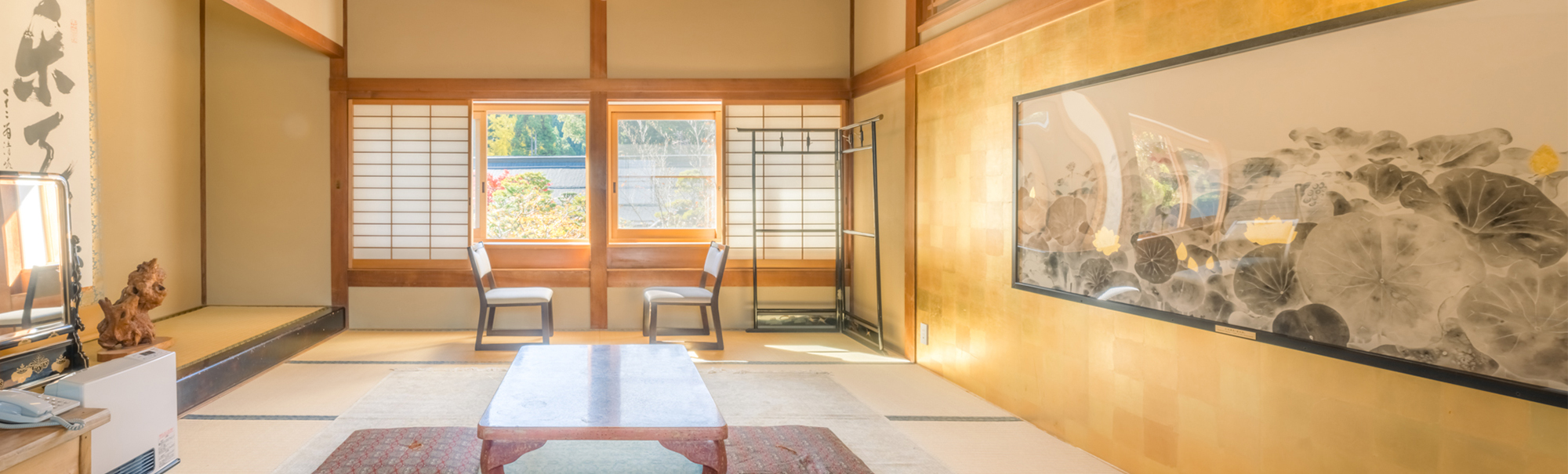
恵光院
Shukubo emblématique de Koyasan, Eko-in propose une cérémonie du feu Goma guidée en anglais, la méditation Ajikan et des visites nocturnes d'Okunoin.
à partir de $130 /par nuit

福智院
Seul shukubo de Koyasan doté d'une source thermale naturelle, avec trois jardins signés Mirei Shigemori et un shojin ryori raffiné.
à partir de $175 /par nuit
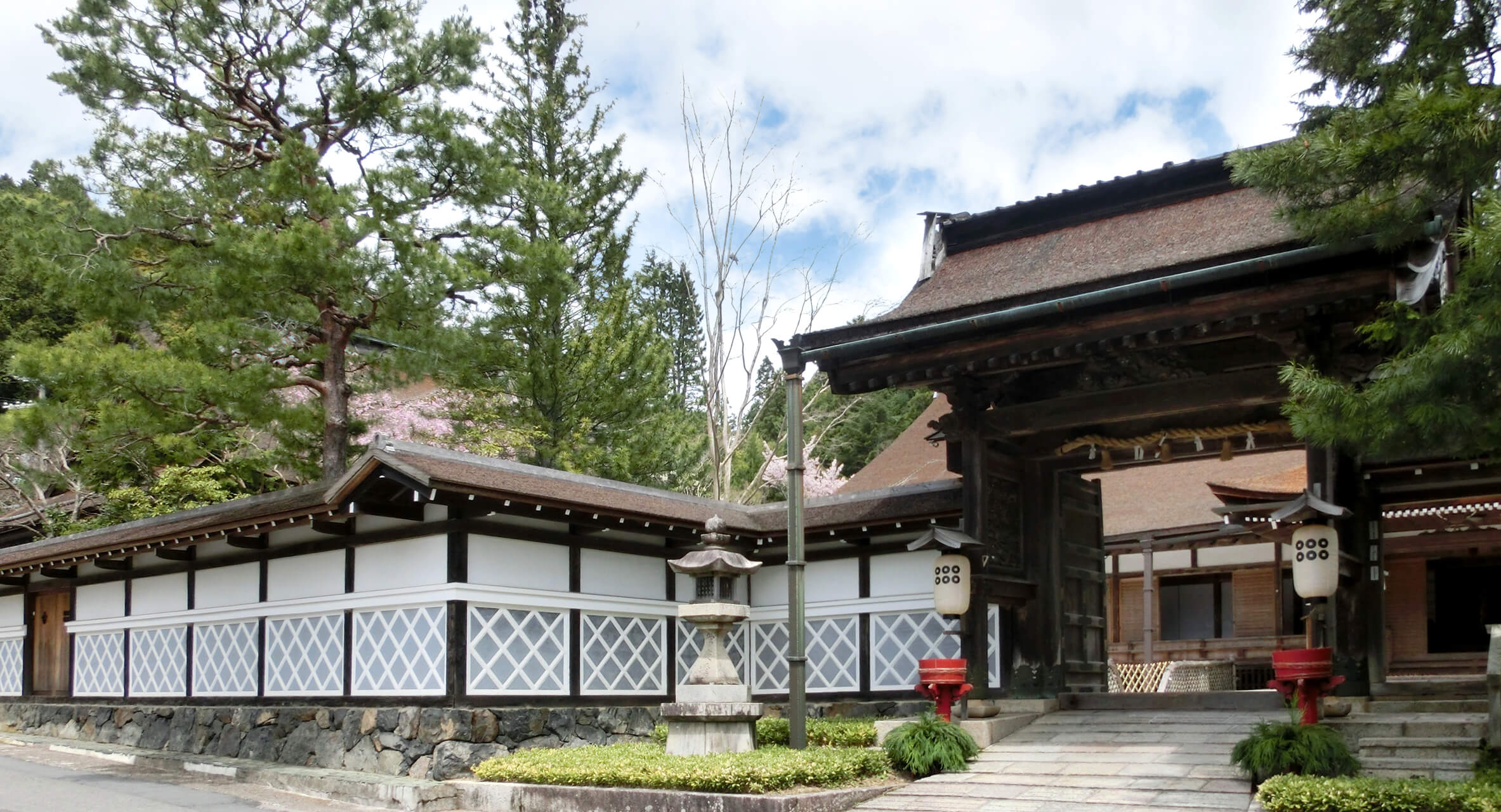
蓮華定院
Shukubo bodaiji de la famille Sanada sur le mont Koya : moines anglophones, seulement 13 chambres et un fort héritage de l'époque des samouraïs.
à partir de $230 /par nuit
Explore Destinations

