|
|
|
|
|
|
A temple stay can be one of two completely different experiences. It can be austere — a bare tatami room, a thin futon, a 5:30 alarm for morning prayers, and a shared bath down a cold corridor. Or it can be sublime — a renovated suite with a private cypress bath steaming beside a garden window, a multi-course vegetarian dinner plated with the precision of a Kyoto restaurant, and a monk personally walking you to the pre-dawn service. Both are real. Both happen under temple roofs in Japan. This guide is about the second kind: the small, refined, often misunderstood world of the luxury shukubo (temple lodging).
Before we go further, an honest warning that runs against the usual travel-blog grain: luxury shukubo is a tiny niche. The overwhelming majority of Japan’s temple lodgings are humble by design and conviction. Simplicity is not a budget compromise at most temples — it is the point. So this article does two things at once. It tells you exactly which temples genuinely deliver an elevated, high-comfort stay, with real prices. And it stays honest about what you are actually buying, because the most expensive shukubo in Japan is still, fundamentally, a working monastery.
On paper, yes. Buddhist monastic life is built on renunciation. The shukubo tradition grew out of the need to house pilgrims who had walked for days to reach a sacred mountain — and for most of its history, a place on the temple floor and a bowl of vegetable broth was the entire offering. The aesthetic of wabi (refined poverty) and the ascetic discipline of a monk’s daily schedule are not obstacles to the experience; they are the experience. A traveler who arrives expecting hotel service and is irritated by the early curfew, the shared bath, and the kneeling has, in a real sense, misunderstood what they booked.
And yet "luxury shukubo" is not pure marketing fiction. Two forces have created a genuine premium tier. The first is preservation economics: maintaining 800-year-old halls, National Treasure pagodas, and historic gardens is ruinously expensive, and a handful of temples have responded by renovating a small number of rooms to a very high standard and charging accordingly. The second is a new category of purpose-built Zen lodging — most famously Hakujukan at Eiheiji — developed specifically to give comfort-conscious travelers a softer doorway into monastic practice. The result is a narrow band of stays that are, by any reasonable definition, luxurious. The trick is recognizing them, because the word "luxury" gets sprayed across listings far more often than it is earned.
It also helps to be precise about what the contradiction actually resolves into. A monk’s vow of simplicity binds the monk, not the guest. Temples have housed travelers, pilgrims, and patrons of every station for over a thousand years, and the historical record is full of emperors, regents, and warlords who lodged in considerable comfort while the resident clergy lived plainly a few rooms away. The renovated suite at a premium shukubo is, in that light, less a betrayal of the tradition than a continuation of an old one: the temple offers the visitor refinement and keeps austerity for itself. What you should not expect is for that refinement to suspend the monastic schedule. The curfew, the early service, the absence of a minibar and a late checkout — these stay, because they belong to the monks, not to you.
Tip
A useful test: ask whether the premium buys you privacy and craft, or just a nicer brochure. A genuine luxury shukubo gives you a private bath, a small number of suites, and dinner prepared at restaurant standard. A merely "nice" shukubo gives you a slightly larger tatami room and the same shared facilities as everyone else. The price gap between the two can be smaller than you think.
Strip away the marketing and the high-end tier comes down to five concrete features. You rarely get all five in one temple — even the best premium shukubo usually nails three or four — so it helps to know which ones matter most to you before you book.
First, private bathing. The single biggest dividing line in the shukubo world is whether you share the communal bath with every other guest or soak in your own. A private hinoki cypress bath in your room, or a genuine onsen (natural hot spring) on the temple grounds, is the clearest marker of the premium tier. It is also the rarest: only a tiny handful of temples in all of Japan offer in-room private baths, and only one shukubo on Mt. Koya has its own hot spring at all.
Second, elevated shojin ryori (Buddhist vegetarian cuisine). Every shukubo serves it, but the gap between a competent temple dinner and a transcendent one is enormous. At the top end, shojin ryori approaches the artistry of kaiseki (Japan’s multi-course haute cuisine) — seasonal mountain vegetables, house-made sesame tofu, and dishes plated with deliberate, painterly restraint. Koyasan’s freeze-dried koya-dofu and fresh goma-dofu (sesame tofu) reach their highest expression at the temples that take their kitchens most seriously.
Third, design and architecture. This can mean a thoughtful contemporary renovation — sliding screens, indirect lighting, designer furniture set against centuries-old joinery — or it can mean purpose-built modern architecture using temple-grown cedar. Fourth, the garden. A handful of shukubo own gardens of genuine art-historical importance, including modernist masterpieces by the landscape architect Mirei Shigemori, and a room that opens directly onto one of them is its own kind of luxury. Fifth, service: small guest counts, English-fluent hosts, and the kind of attentive, unhurried care that a 4-suite temple can offer and a 60-room operation simply cannot.
A word on what luxury does not mean here, because the mismatch is the single biggest source of disappointed reviews. It does not mean a 24-hour front desk, room service, a spa, or the freedom to come and go at midnight. It does not mean a buffet breakfast or a coffee machine in the room. The premium shukubo can give you a magnificent private bath and a dinner worth the airfare, but it will still send you to bed behind a 21:00 curfew and wake you for a service before the sun. If those constraints read as charm, the high-end tier will delight you. If they read as inconvenience, no amount of money spent on a temple room will fix the underlying mismatch — and you would genuinely be happier in a fine ryokan or a city hotel.
These are the temples that genuinely earn the luxury label, ranked roughly by how completely they deliver the five features above. Prices are per person per night and, unless noted, include the standard shukubo package of dinner and breakfast. Rates move with season and room type; treat them as the verified bands they are, not fixed quotes.
If you want the one-line version before the detail: choose Ichijo-in for a true private suite and a private cypress bath; Hakujukan for modern designer architecture and the smoothest English experience; Rengejo-in for boutique scale and bilingual hosts; Fukuchi-in for the only real hot spring on Mt. Koya plus museum-grade gardens; and Henjoson-in for a spectacular cypress bathhouse at a fraction of the suite-grade price. Three are on Koyasan, one is at Eiheiji, and they split cleanly between ancient-temple grandeur and contemporary comfort.
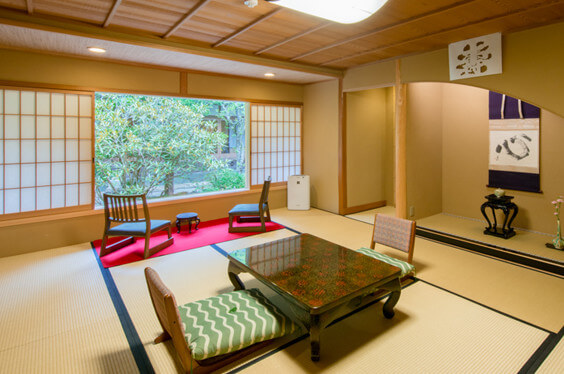
If one temple defines the top of the category, it is Ichijo-in. A Bekkaku-honzan (specially-ranked head temple) of Koyasan Shingon Buddhism with origins in the early Heian period and more than 1,100 years of continuous history, Ichijo-in did something almost unheard of on Mt. Koya: in January 2023 it gutted and rebuilt its two-story main building, reducing ten ordinary guest rooms to just four exceptionally spacious suites. Each suite has its own bedroom, its own private hinoki cypress bath, large windows framing the garden, and table seating rather than the floor-only arrangement of a traditional temple room. A private in-room bath in a working Koyasan temple is genuinely rare — this is as close to a true ryokan-grade experience as the shukubo world gets.
Why does the in-room bath matter so much? Because the communal bath is the one part of the standard shukubo experience that comfort-focused travelers most often struggle with — the fixed bathing windows, the shared space, the etiquette to learn. Removing that single friction point changes the texture of the whole stay. You arrive, you soak in your own cypress tub with the garden darkening outside, and the rest of the evening unfolds at your own pace until the curfew. It is the difference between feeling like a guest at an institution and feeling like a guest in a home that happens to be a thousand years old.
The kitchen matches the rooms. Ichijo-in is widely regarded as serving some of the finest shojin ryori on the entire mountain — a serious claim in a town where every one of the fifty-odd temples cooks Buddhist vegetarian cuisine — built around seasonal mountain ingredients and prepared at a level that bears comparison to formal kaiseki. Sutra copying and Ajikan meditation can be arranged, and the morning service in the main hall is open to all guests. The temple sits within walking distance of both Kongobu-ji and the Danjo Garan, placing you inside the UNESCO World Heritage core. Rates run approximately USD 280 to 800 per person per night depending on suite and season. If money is not the deciding factor and you want the single best night a shukubo can offer, this is the answer.
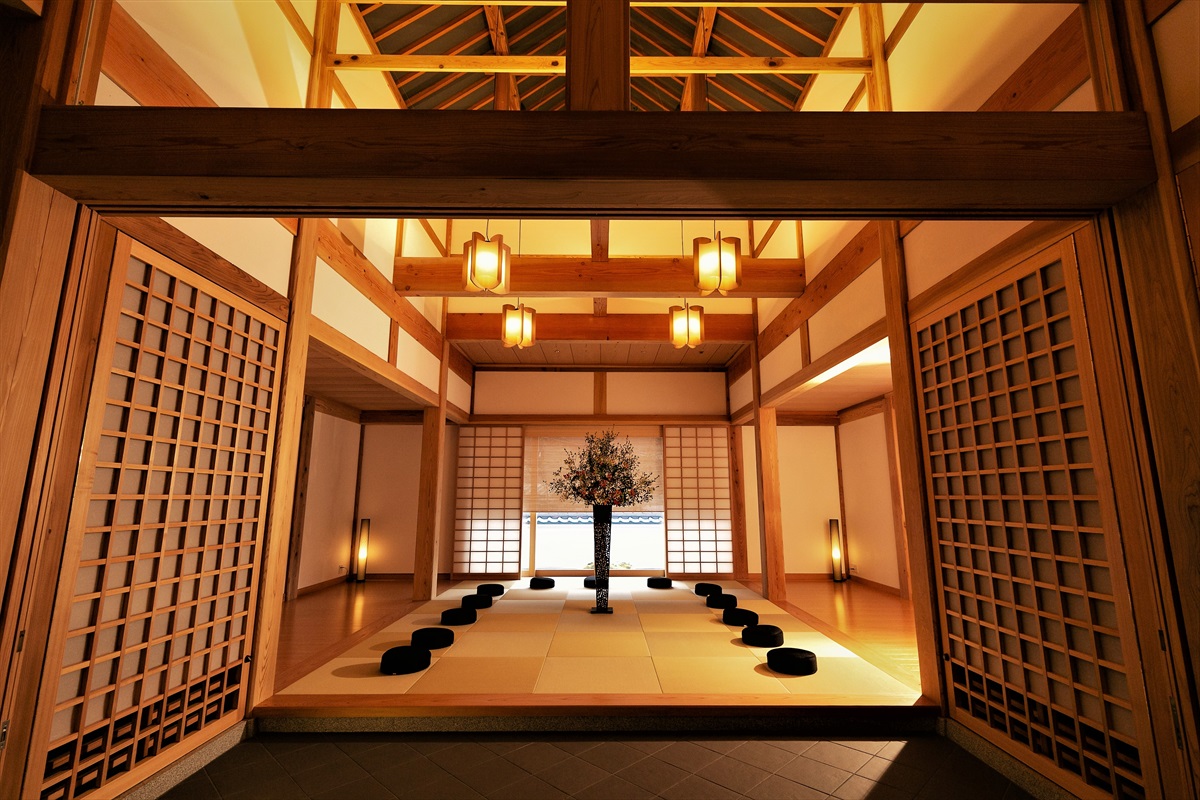
Hakujukan is the clearest example of the second route to luxury: not an ancient temple renovated, but a purpose-built modern lodging created to be a "gateway to Zen." Opened in July 2019 at the entrance to the Eiheiji approach, it was developed jointly by Daihonzan Eiheiji, Fukui Prefecture, and the town of Eiheiji specifically to give general guests — including international visitors who might find the full monastic experience daunting — a comfortable, contemporary doorway into Soto Zen practice. The Michelin Guide Hokuriku awarded it a two-pavilion rating in its 2021 special edition.
The building is the draw. Its 18 Japanese and Japanese-Western rooms run over 40 square meters and are constructed from Eiheiji cedar harvested on temple grounds, as are the bathing facilities — a quietly luxurious detail you can smell on arrival. Staff certified as "Zen Concierges" by Eiheiji lead evening zazen at the inn from 15:30 and accompany willing guests to the pre-dawn choka morning service inside the great temple itself the next morning, which is the part most visitors remember for years. Dinner at the in-house restaurant Suisen is a shojin ryori-inspired course supervised by Eiheiji’s tenzo (kitchen master). Rates run roughly USD 195 to 320 per person per night. Note that Hakujukan is an inn at the gate rather than a sub-temple you sleep inside — a meaningful distinction we return to below — but for design, comfort, and a genuine bridge into Zen, nothing else in Japan does quite what it does. (For how a Soto Zen mountain like Eiheiji compares with Shingon Koyasan as a whole, see /blog/koyasan-vs-eiheiji.)
Tip
Hakujukan and Eiheiji are a package, not a substitute for each other. Book Hakujukan for the comfortable bed and the cedar bath, then commit to the 3:50–4:00 AM wake-up for the choka service inside Eiheiji. Skipping the pre-dawn service to sleep in is the most common regret guests report — the comfort is lovely, but the temple is the reason you came.
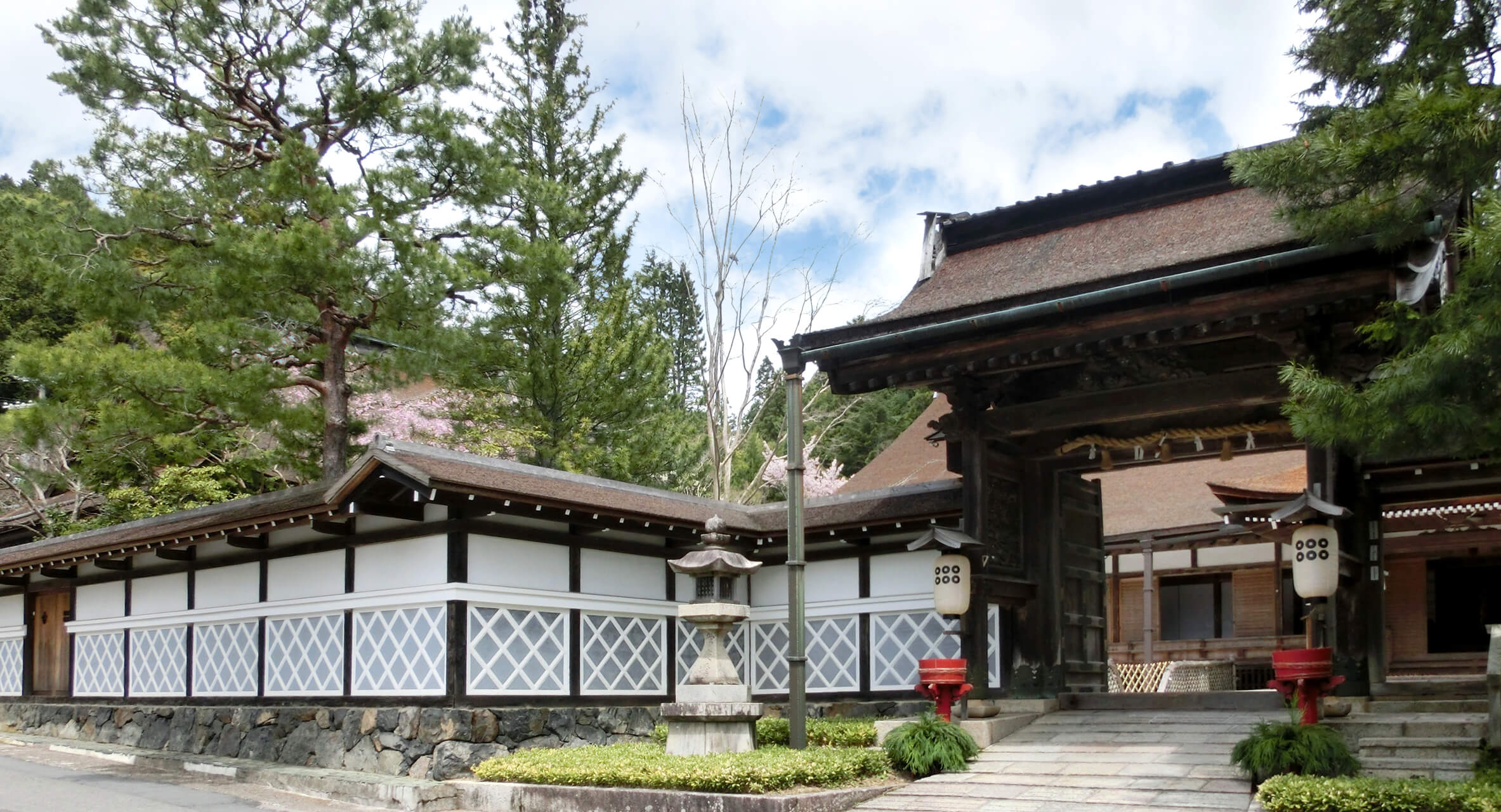
Where Ichijo-in wins on rooms and Hakujukan on architecture, Rengejo-in wins on service and intimacy. Founded in the early Kamakura period and famous as the memorial temple of the Sanada samurai clan — the warlord Sanada Yukimura was exiled here after the Battle of Sekigahara in 1600 — it has only 13 thoughtfully appointed rooms, including suites and family rooms. The hexagonal Sanada crest appears throughout the compound, and the garden views from the better rooms are among the most composed on the mountain.
The reason discerning travelers single it out is the staff. The small team here is fluent in English in a way most Koyasan reception desks simply are not, which transforms the experience for first-time visitors who want to understand what they are seeing rather than nod politely through it. The morning service starts at 6:00, followed by a vegan-capable shojin ryori breakfast, and the temple is a five-minute walk from the cable-car bus stop, making arrival painless with luggage. There is no private bath here — bathing is communal — so Rengejo-in lands a notch below Ichijo-in on raw amenity. But for a polished, personal, English-comfortable premium stay, it is hard to beat. Rates run approximately USD 230 to 480 per person per night.
Rengejo-in is also the entry that best illustrates a subtle point about value in this category: service can be worth more than square footage. A traveler who has never knelt for a Buddhist service, never eaten a fourteen-dish vegetarian dinner, and never navigated temple etiquette will get far more out of a hosted, explained, bilingual stay than out of a larger but bewildering room where nobody can answer their questions. If it is your first temple stay and you want it to be both comfortable and genuinely understood, the case for Rengejo-in over a flashier but more impersonal option is strong.
Fukuchi-in occupies a unique position on Mt. Koya: it is the only shukubo on the mountain with its own natural alkaline hot spring. After a day on the cedar paths of Okunoin, you can sink into an indoor cypress bath or step out to an open-air rotenburo as the temperature drops on the 800-meter plateau — an experience no other Koyasan temple can offer. The bath alone puts Fukuchi-in on any luxury shortlist, even though its pricing tier sits a touch below the suite-grade temples above.
The second showpiece is the gardens: three karesansui and pond gardens by the modernist landscape architect Mirei Shigemori (1896–1975), considered among his late-career masterpieces and effectively museum-grade. The temple is large by Koyasan standards at 60 rooms, with a 6:00 AM morning service open to all guests and a deep menu of practices including sutra copying, Buddha tracing, and Ajikan meditation. The trade-off for the onsen and the gardens is scale — this is not an intimate boutique stay, and the bathing is communal rather than private. Rates run approximately USD 175 to 390 per person per night. Choose Fukuchi-in if a real hot spring and a significant garden matter more to you than a small guest count.
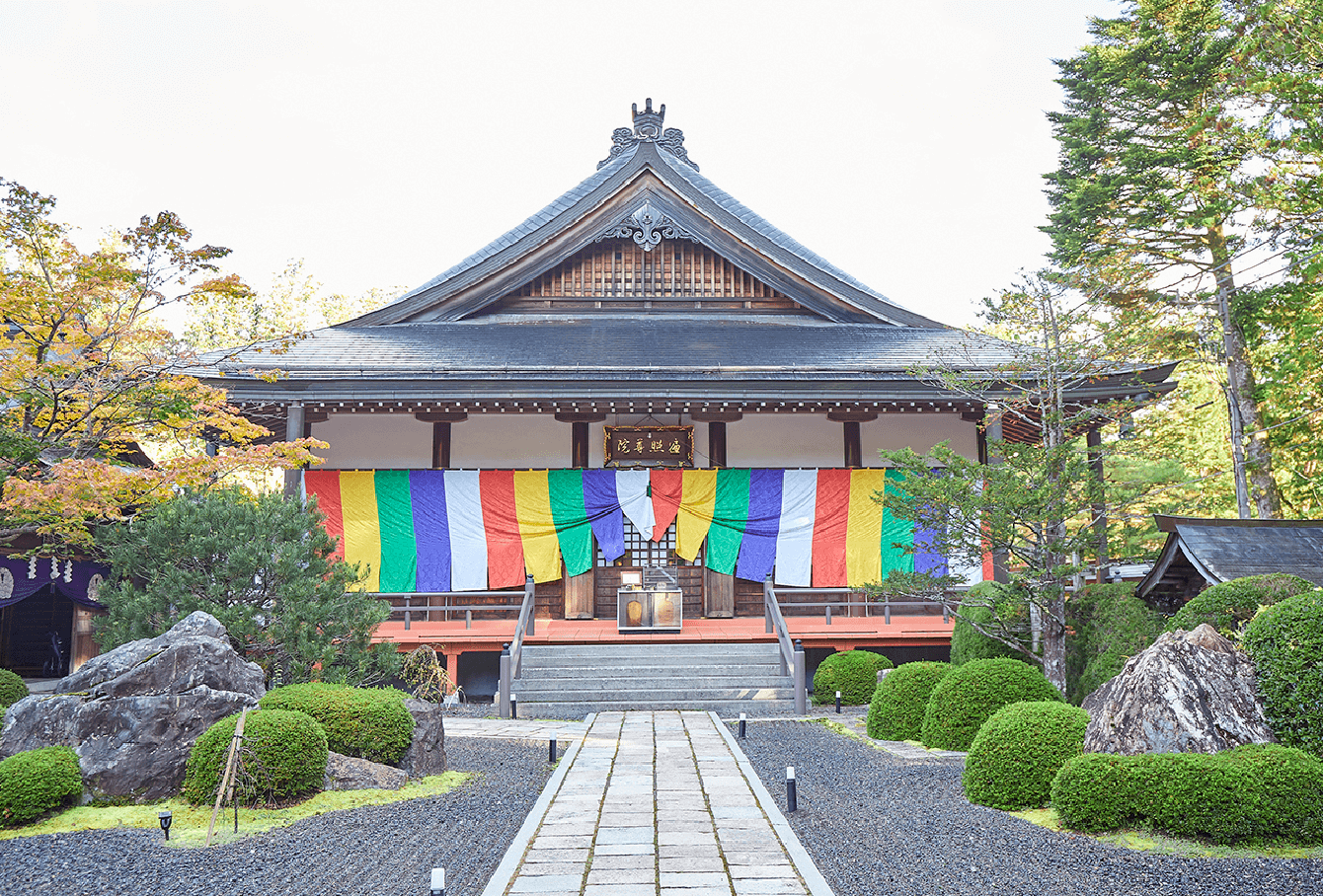
Henjoson-in is the entry on this list that proves you do not have to spend USD 500 a night to bathe well. Standing on Henjo-ga-oka, the hillside where Kobo Daishi is said to have trained during the founding of Mt. Koya, the temple is best known for an unusually grand communal bathhouse: Japanese hinoki cypress on the lower floor and rare Koya-maki cypress on the upper floor, large enough for up to 50 bathers yet kept in a calm, low-lit temple atmosphere. It is not a private bath, but as a sensory experience it rivals far more expensive stays.
The temple has 33 traditional rooms, vegan-capable shojin ryori, and a wide range of practices — Ajikan meditation, sutra copying, Buddha tracing, the Osunafumi sand-stepping pilgrimage, and a guided temple walk — with the Garan complex and the Konpon Daito pagoda just a few minutes away. At approximately USD 95 to 220 per person per night, Henjoson-in is not luxury in the suite sense. But for travelers who define luxury as a beautiful bath and an unhurried evening rather than a private one, it is the smartest money on this entire list.
At the premium tier, what you do can matter as much as where you sleep. The standard shukubo program — group morning service, communal dinner, a self-guided walk — is wonderful, but several temples and operators now arrange elevated, often private versions of the core experiences for guests willing to pay for them. These are worth asking about when you book, because they are rarely advertised on the basic reservation page.
A private goma (fire ceremony) is the headline add-on at Shingon temples. Instead of sitting at the back of a crowded hall, you arrange a dedicated ritual in which a monk burns wooden prayer sticks carved with your own intentions, chanting Sanskrit mantras a few feet from you as the flames rise. Done privately at dawn in an otherwise empty hall, it is a genuinely different order of experience from the group version. A private tea ceremony — matcha whisked and served in a historic tea room, sometimes one favored by a famous patron — is another increasingly common premium offering, particularly at temples with notable gardens.
Then there is the garden itself. At a temple like Fukuchi-in or one of the Mirei Shigemori sites, arranging a private early-morning meditation seated before a closed garden — before the day guests arrive, with the gravel still raked from the night before — turns a sightseeing stop into something closer to a personal retreat. Sutra copying (shakyo) on premium paper with a guided explanation, or a one-on-one introduction to Ajikan meditation, round out the menu. None of this is necessary to enjoy a temple stay. But if you are paying for the high-end tier, the experiences are where the deepest value often hides.
Dining deserves its own line in the add-on column, because the luxury kitchens are increasingly willing to elevate the standard dinner on request. At the better temples you can ask about a more elaborate multi-course menu, a sake or tea pairing, or — where the room allows — a private dining setup rather than a shared hall. Koyasan’s signature ingredients reward this attention: fresh goma-dofu with the silken texture of custard, koya-dofu rehydrated and simmered until it carries broth like a sponge, seasonal mountain vegetables, and house-pickled accompaniments. A dinner like this, eaten slowly in a quiet room after a soak in your own bath, is the moment most luxury-shukubo guests cite when they say the premium was worth it.
One caution about the add-on economy: do not over-program the night. The deepest pleasure of a temple stay is the unstructured time — the hour with nothing scheduled, the slow walk through the compound at dusk, the silence after the bath. It is genuinely possible to buy so many private experiences that you crowd out the very stillness you came for. Pick one signature add-on — a private goma, a tea ceremony, a dawn garden meditation — and leave the rest of the evening empty on purpose.
Tip
Email the temple directly to request private experiences, and do it well in advance — these arrangements depend on a monk’s availability and cannot be conjured at check-in. Many temples are happy to accommodate but never list the option online. A polite enquiry two to three months ahead, ideally in simple English or with a Japanese-speaking helper, is usually all it takes.
Honestly, it depends entirely on what you want from the night. Here is the case against: a standard shukubo at USD 100 to 150 per person already gives you the full essential experience — the morning service, the shojin ryori, the silence, the dawn walk. The temple, the history, and the spiritual atmosphere are exactly the same whether you sleep in a USD 120 room or a USD 600 suite. If your goal is to experience monastic Japan, the budget option is not a lesser version of the same thing; it is arguably the more authentic one.
It is also worth naming the things money cannot buy here, because they are exactly the things people travel to a temple for. No suite, however beautiful, makes the morning service more profound; the chanting sounds the same from a luxury room and a budget one. No private bath deepens the hush of Okunoin at dawn or adds a single year to the age of the cedar trees. The spiritual core of the experience is, almost defiantly, free of charge. What the premium buys is comfort around that core — and whether comfort around an experience is worth doubling or tripling the price is a genuinely personal question that no guide can answer for you.
The case for the premium tier rests on three honest pleasures. First, privacy: if the thought of a shared bath and a thin futon would keep you up worrying rather than resting, a private cypress bath and a real bed at Ichijo-in or a designer room at Hakujukan removes the friction and lets you actually absorb the place. Second, cuisine: at the top temples, shojin ryori crosses from "interesting" into "extraordinary," and for a food-focused traveler that meal alone can justify the gap. Third, the special occasion: a milestone trip, a honeymoon, or a once-in-a-lifetime visit is exactly the situation where the extra USD 200 buys a memory rather than just a room.
Our practical recommendation: if you are doing several temple nights, splurge on one and keep the rest simple. A single luxury night at Ichijo-in or Hakujukan, bracketed by humbler stays elsewhere on Mt. Koya or beyond, gives you the full emotional range of the shukubo world — the austere and the sublime — without pretending that either one is the whole story. For the wider field of temples to bracket your splurge with, our deep-dive on the best Koyasan temple stays compares the mountain’s fifty-odd shukubo: see /blog/best-koyasan-temple-stays.
High-end shukubo behave differently from ordinary ones at the booking stage. Capacity is the core issue: Ichijo-in has four suites, Rengejo-in thirteen rooms, Hakujukan eighteen. When the entire inventory is that small, peak dates vanish months ahead. For cherry blossom (early-to-mid April), Golden Week (late April), and autumn color (late October to mid-November), reserve four to six months in advance for the premium temples — and longer if you need a specific suite or the in-room private bath at Ichijo-in.
There is also a quieter reason to book the premium tier early that has nothing to do with availability: the suite-grade rooms and the private experiences are often the first thing a temple sells out of and the last thing it advertises. A four-suite temple cannot afford to leave its best rooms empty, so they go to the guests who ask first and most clearly. Vague enquiries get vague answers; a specific request — these dates, this suite, the private bath, a dawn goma if possible — gets you onto the right list. Treat the booking less like a hotel transaction and more like arranging to be a guest, because that is closer to what it actually is.
Channel matters too. The modern, internationally-minded properties — Hakujukan above all — book smoothly in English through their own sites and the major platforms. The historic temples are more mixed: some take English reservations directly or through booking platforms, while others still prefer phone or email and may respond more slowly in English. For the suite-grade rooms and any private add-on experience, booking directly with the temple by email is usually best, because the special rooms and rituals are often not exposed on third-party platforms at all. Always confirm in writing whether your rate includes both dinner and breakfast, whether single occupancy carries a supplement (many shukubo price per person), and what the curfew and morning-service times are — the premium does not exempt you from a 21:00 curfew or a pre-dawn wake-up.
What is the most luxurious shukubo in Japan? By the strict measure of private in-room amenity, Ichijo-in on Mt. Koya is the standout: its January 2023 renovation reduced the temple to just four suites, each with a private hinoki cypress bath and garden views, with rates running approximately USD 280 to 800 per person per night and shojin ryori regarded as among the best on the mountain. For modern designer comfort rather than ancient grandeur, Hakujukan at Eiheiji (roughly USD 195 to 320) is the other strong contender. "Most luxurious" depends on whether you value historic prestige or contemporary polish.
Which shukubo have private onsen or private baths? True private bathing is rare. Ichijo-in is the clearest case, with a private hinoki cypress bath in each of its four suites. For a genuine natural hot spring, Fukuchi-in is the only temple on Mt. Koya with its own onsen, though its baths are communal rather than private. If your priority is an exceptional cypress bath at a lower price, Henjoson-in’s large hinoki-and-koya-maki bathhouse (around USD 95 to 220) is a strong value choice, though again communal. For the full list of temples with hot-spring and cypress baths, see /blog/shukubo-with-onsen.
Is a luxury shukubo worth the price? It is worth it for travelers who want privacy, exceptional cuisine, or a special-occasion stay — and less essential for those whose main goal is the spiritual and historical experience, which is identical at every price level. A reasonable strategy on a multi-night trip is to splurge on one premium night and keep the others simple. Expect to pay roughly USD 200 to 800 per person at the top tier versus USD 100 to 150 for a standard shukubo.
How do I book the premium rooms? Reserve four to six months ahead for peak seasons, since the best temples have only a handful of suites. For suite-grade rooms and private experiences such as a dedicated goma fire ceremony or tea ceremony, email the temple directly — these are frequently not listed on third-party booking platforms. Confirm in writing that your rate includes dinner and breakfast, and ask about any single-occupancy supplement.
What is the difference between a luxury shukubo and a ryokan? A ryokan is a secular traditional inn focused entirely on hospitality, comfort, cuisine, and often onsen, with no religious obligation attached. A shukubo — even a luxurious one — is a working temple where you are a guest of the monks: you can join the morning service, the food is shojin ryori vegetarian cuisine, and a curfew and early start are part of the deal. A luxury shukubo borrows ryokan-grade comfort but keeps the monastic frame. Our comparison of shukubo versus ryokan versus hotel breaks down exactly how the three differ: see /blog/shukubo-vs-ryokan-vs-hotel.
In the end, the luxury shukubo occupies a genuinely strange and lovely middle ground — a place where designer joinery and a private cypress bath sit a few meters from a hall that has held the same dawn liturgy for eight centuries. It is not for everyone, and it is not the most authentic way to experience monastic Japan. But for one carefully chosen night, the combination of deep comfort and deep tradition is something no ordinary hotel, and no ordinary temple, can quite replicate. Whether you book the four suites at Ichijo-in, the cedar architecture of Hakujukan, or simply the great cypress bath at Henjoson-in, the trick is to spend where it counts and let the silence do the rest.
Ready to book?
Browse our curated collection of authentic Buddhist temple stays across Japan. Filter by region, sect, and experience.
宿坊を探すこの記事に登場する寺院
一乗院
2023年リニューアルした高野山別格本山の宿坊。庭園を望む4室のスイートはすべて檜風呂付き。定評ある精進料理で人気。
料金 $280 //泊
永平寺 親禅の宿 柏樹関
永平寺公認の禅コンシェルジュが常駐する門前の親禅の宿。永平寺杉で建てられた18室と、永平寺典座監修の精進料理。
料金 $195 //泊
蓮華定院
真田家の菩提寺として知られる小規模宿坊。13室のみの落ち着いた佇まいで英語対応も万全。
料金 $230 //泊

福智院
高野山唯一の天然温泉と重森三玲作の三つの庭園を持つ宿坊。御本尊は愛染明王。
料金 $175 //泊
遍照尊院
弘法大師ゆかりの「遍照ヶ岡」に建つ高野山宿坊。檜の大浴場と阿字観瞑想が魅力。
料金 $95 //泊
Explore Destinations