|
|
|
|
|
|
It is the oldest continuous walking pilgrimage in Japan: roughly 1,200 kilometers, 88 official temples, and about 1,200 years of footsteps. The Shikoku pilgrimage — the *ohenro* — circles the entire coast of Japan’s fourth-largest island in a single enormous loop, threading through four prefectures and over mountain passes that have not changed much since the monks first walked them. Walk it on foot and it takes most people 40 to 50 days. Drive it and you can finish in ten. But the number that matters most to anyone planning the trip is not the kilometers or the temples. It is the question that comes up every single afternoon, somewhere around the seventh hour of walking: where do I sleep tonight?
This guide answers that question. The Ohenro has its own dedicated lodging ecosystem — temple *shukubo*, pilgrim-friendly *minshuku*, free charity lodgings called *zenkonyado*, and bare-bones temple shelters called *tsuyado* — that exists almost nowhere else in Japan at this scale. Understanding how that ecosystem works is the difference between a pilgrimage that flows and one that strands you, footsore and out of daylight, in a town with no rooms. We will cover what the Shikoku pilgrimage actually is, where pilgrims sleep, how to walk it (versus bus or car), the famous lodging temples, the deep connection to Koyasan, the gear and etiquette, and the best season to go. Notes below reflect conditions as of May 2026.
The Shikoku 88-temple pilgrimage is a circuit of 88 official temples (plus 20 unofficial *bangai* temples) associated with Kobo Daishi — the posthumous title of *Kobo Daishi*, born Kukai in 774, the monk who founded Shingon esoteric Buddhism in Japan. Kukai was born on Shikoku, trained in the island’s mountains and caves as a young ascetic, and is the spiritual center around whom the entire pilgrimage is built. The temples are numbered 1 through 88, beginning at Ryozen-ji in Tokushima and running clockwise around the island through Kochi, Ehime, and Kagawa before closing the loop. The numbering is a route convention, not a strict order — but the great majority of pilgrims walk it clockwise, in sequence, because the infrastructure and signage are built that way.
A pilgrim walking the route is called a *henro*. You will see them everywhere on Shikoku: white-clad figures with conical straw hats and wooden staffs, moving along highway shoulders and mountain trails alike. The white clothing is not costume. The *hakui* (white pilgrim jacket) traditionally signified that the pilgrim was prepared to die on the road — historically the ohenro was dangerous, and the white garment doubled as a burial shroud. Today the symbolism is gentler, but the white still marks the henro as someone set apart, traveling for reasons beyond tourism. Pilgrims travel either alone or in small groups, and the central conceit of the practice is *dogyo ninin* — “two traveling together” — the belief that Kobo Daishi walks beside every pilgrim, always. The phrase is written on the staff and the hat.
The cultural element that surprises first-time pilgrims most is *osettai*: the tradition of local Shikoku residents giving gifts to henro along the way. A farmer presses a bag of tangerines into your hands. A shop owner refuses payment for your coffee. A stranger in a car pulls over to offer a ride, or a 100-yen coin, or a rice ball. *Osettai* is not charity in the Western sense — it is a religious act. By giving to a pilgrim, the giver is making an offering to Kobo Daishi himself and earning merit, because the pilgrim is understood to be traveling with the Daishi at their side. The correct response is to accept graciously, never refuse, and give the giver one of your *osamefuda* (name slips) in return. The accumulated weight of these small kindnesses, day after day, is what most long-distance walkers describe as the thing that changed them — not the temples, but the people of Shikoku.
It takes most foreign pilgrims a few days to stop resisting osettai. The instinct to refuse, to insist on paying, to feel that one has not earned the kindness, runs deep in visitors from cultures where unsolicited generosity is treated with suspicion. But refusing osettai is a small rudeness: it denies the giver the merit they were trying to earn, and it misunderstands the relationship. The gift is not really to you. You are simply the vessel through which the giver reaches Kobo Daishi. Once a walker internalizes this, the daily flow of fruit, drinks, small coins, and conversations stops feeling like a series of debts and starts feeling like what it is — a living, 1,200-year-old social fabric in which the whole island quietly supports anyone willing to walk it. Pilgrims keep a small supply of osamefuda specifically so they always have one to hand over in thanks; the slip carries your name and a wish, and the giver may keep it as a charm or place it on a home altar.
The ohenro shares a family resemblance with Japan’s other great walking route, the [Kumano Kodo](/blog/kumano-kodo-shukubo-viator-guide), but the two are structurally different. Kumano is a network of trails converging on three grand shrines in one mountain region; the ohenro is a closed loop of 88 specific Shingon temples ringing an entire island. Kumano can be walked in segments over a few days; the full ohenro is a six-to-seven-week commitment for a foot pilgrim. What they share is the underlying premise — that the walking itself, not arrival, is the practice — and the white-clad pilgrim tradition that marks both routes.
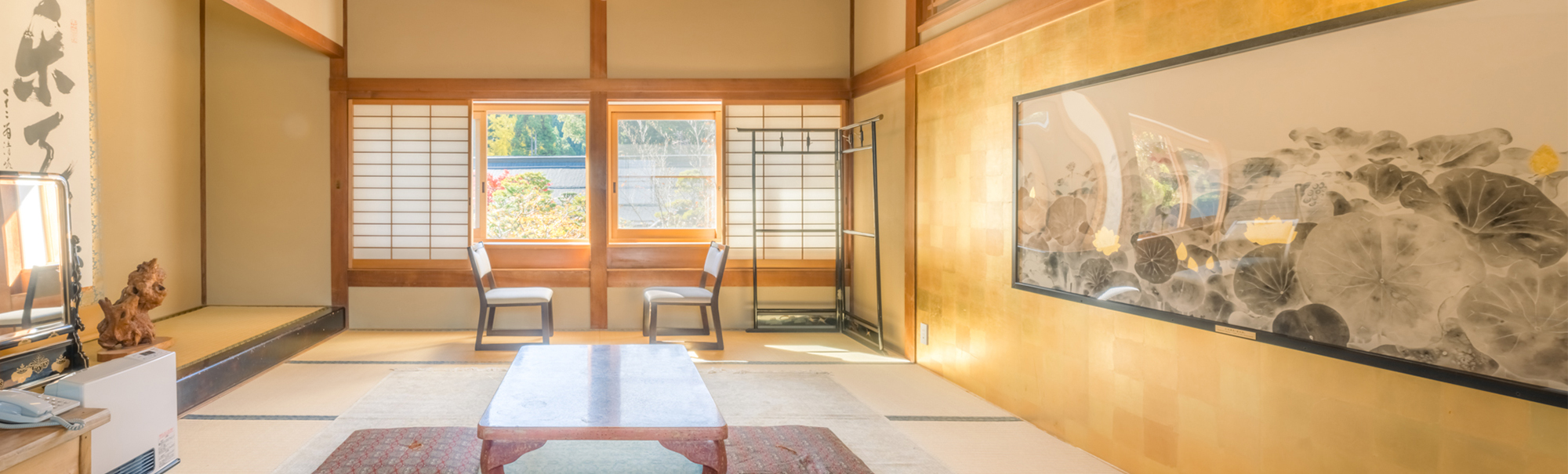
Lodging on the ohenro comes in four broad categories, and knowing the difference is essential to planning. The most atmospheric option is the temple *shukubo* — overnight lodging at the pilgrimage temples themselves. Roughly 30 of the 88 temples operate some form of shukubo, though the number open to walk-in pilgrims fluctuates year to year and several require advance reservation. A temple shukubo night typically includes a futon in a tatami room, a *shojin ryori* vegetarian dinner, a shared bath, and — the real reason to stay — the invitation to join the temple’s morning service, the *asagongyo*, chanting in the main hall at dawn before you set out for the next temple.
The workhorse of ohenro lodging, however, is the pilgrim *minshuku* — family-run guesthouses, many of which have served henro for generations and are positioned precisely at the spots where a day’s walk naturally ends. A henro minshuku is tuned to the pilgrim: dinner is hearty rather than refined (you have walked 30 kilometers and need calories, not delicacy), the host knows the trail conditions ahead, breakfast is early, and they will pack you a lunch or fill your water bottles without being asked. Many keep a wall of *osamefuda* left by past guests. A night with two meals runs roughly 6,500 to 8,500 yen per person — the price band most walking pilgrims budget around.
Below the minshuku tier sit two budget options unique to the pilgrimage. *Zenkonyado* are free or near-free lodgings offered by individuals or communities as a form of *osettai* — a spare room, a converted shed, a small hut maintained by a local who wants to support pilgrims. They range from comfortable to extremely rustic, are not formally bookable, and operate on trust and gratitude; leaving a small donation and an osamefuda is expected. *Tsuyado* are even more basic: a free shelter, often a roofed space or unused building at or near a temple, where a pilgrim can lay out a sleeping bag for the night. No meals, sometimes no heating, occasionally no walls in the full sense — but free, and a genuine part of the ascetic tradition. Walking pilgrims on tight budgets weave zenkonyado and tsuyado between minshuku nights.
A practical word on each tier. Temple shukubo are the most variable: some temples that historically lodged pilgrims have stopped, others accept only groups, and a few require booking through a pilgrimage association rather than directly. Do not build your itinerary assuming you can shukubo every night — treat each one as a sought-after bonus and confirm it is operating before you count on it. Minshuku are the most dependable and the most worth your money on a walking trip; the good ones near the harder mountain temples are institutions, run by families who have fed and dried out wet pilgrims for fifty years, and a recommendation from your current host is worth more than any online review. Zenkonyado require the most cultural sensitivity: they exist because individuals choose to give, so the unwritten rules — arrive in the evening not the afternoon, keep the space cleaner than you found it, never treat it as an entitlement — matter enormously to whether these lodgings survive for the next pilgrim. Tsuyado suit only self-sufficient walkers carrying a sleeping bag and the temperament for genuine roughing it; in cold months they are not realistic for most travelers.
In practice, most modern walking pilgrims build their nights primarily around minshuku and business hotels in the larger towns, sprinkle in temple shukubo where the timing and the temple align, and treat zenkonyado and tsuyado as occasional budget or experiential nights rather than the backbone. Bus-tour and car pilgrims, by contrast, lean on business hotels and the occasional temple shukubo as an arranged highlight. If a true monastic temple-stay is the experience you most want from the trip, the cleanest way to guarantee it is to pair the pilgrimage with a Koyasan shukubo at the start or finish — more on that below — because Koyasan’s [temple stays](/blog/best-koyasan-temple-stays) are far more reliably bookable in English than the variable shukubo scattered along the Shikoku loop.
Tip
Book ahead, especially in spring and autumn. Many henro minshuku have fewer than ten rooms and fill quickly in peak season, and the gaps between lodgings on remote stretches (notably the long coastal sections of Kochi) can be 20+ kilometers — arriving without a reservation can mean an unplanned night out. A common rhythm is to call ahead one or two days using the lodging your current host recommends; Shikoku innkeepers know each other and will phone the next stop for you if your Japanese is limited.
There is no single correct way to do the ohenro, and Kobo Daishi is said to walk with the bus pilgrim as readily as the foot pilgrim. The walking pilgrimage — *aruki henro* — is the traditional and most demanding form: the full loop on foot covers around 1,200 kilometers and takes most people 40 to 50 days, averaging 25 to 30 kilometers a day with rest days built in. It is a serious physical undertaking with significant mountain climbs (the temples on high ridges, like the notorious approach to temple 12 Shosan-ji, are punishing), but it is also the only way to receive the full weight of the landscape and the osettai that defines the experience. Foot pilgrims are also the ones who most rely on the minshuku-and-shukubo lodging network described above.
The bus pilgrimage is by far the most common form among Japanese pilgrims today. Organized tours, often run by temples or pilgrimage associations, complete the 88 temples over roughly 10 to 12 days across several separate trips, led by a *sendatsu* (a certified pilgrimage guide who has completed the route multiple times). The sendatsu leads the chanting at each temple, handles logistics, and teaches etiquette — invaluable for a first-timer. Bus pilgrims usually sleep in business hotels and the occasional temple shukubo arranged by the tour. The car pilgrimage is the fastest: with your own vehicle the full circuit is doable in 8 to 11 days, stopping at temple parking lots and choosing lodging freely. It sacrifices the meditative pace and most of the osettai (drivers are simply less visible as pilgrims) but is the realistic option for travelers with limited time.
For international visitors with two or three weeks, a popular hybrid is to walk a representative section on foot — for example the temples of Tokushima (1 through 23, the “awakening” prefecture) or a single prefecture’s worth — rather than attempting the full loop. This delivers the genuine walking experience, the minshuku nights, and the osettai, without requiring the full seven-week leave from ordinary life. There is no rule that you must complete all 88 in one go; many pilgrims, Japanese and foreign alike, walk the route in installments over several years, a practice called *kugiri-uchi* (section pilgrimage).
The four prefectures of Shikoku are traditionally understood as four stages of spiritual progress, and choosing which to walk shapes the experience. Tokushima, temples 1 to 23, is the dojo of *hosshin* — awakening the resolve to seek enlightenment. Its temples are close together and largely on flat ground, making it the gentlest introduction and the most popular section for first-timers. Kochi, temples 24 to 39, is the dojo of *shugyo* — ascetic discipline. It is the longest and loneliest stretch, with vast distances between temples along the Pacific coast, and it tests a walker’s endurance more than any other prefecture. Ehime, temples 40 to 65, is the dojo of *bodai* — enlightenment, a varied stretch of mountain and city that includes Matsuyama and Dogo Onsen. Kagawa, temples 66 to 88, is the dojo of *nehan* — nirvana, the final, comparatively easy run home to the closing temple, Okubo-ji. A pilgrim short on time who wants the full emotional arc in miniature often walks Tokushima for the beginning and saves Kagawa for the sense of completion.
A handful of the 88 temples are landmarks in the pilgrimage’s lodging tradition. The journey begins at Ryozen-ji, temple 1, in Tokushima Prefecture near the Bando area — the conventional starting gate where pilgrims buy their gear, receive their first stamp, and set their intention. While Ryozen-ji itself is more a launching point than a lodging hub, the cluster of temples 1 through 5 sits close together on flat ground, making the first day gentle and the surrounding minshuku among the most foreigner-accustomed on the entire route. It is the best place to find a host used to walking pilgrims who do not speak Japanese.
The single most significant lodging temple is Zentsu-ji, temple 75, in Kagawa Prefecture — the birthplace of Kobo Daishi himself. *Zentsu-ji* is one of the head temples of the Shingon school and an enormous, active monastic complex built on the grounds where Kukai was born, with a five-story pagoda and a famous pitch-black underground passage (*kaidan-meguri*) that pilgrims walk in total darkness with one hand on the wall, following a painted mandala they cannot see. Zentsu-ji operates a substantial shukubo (the Ido-en lodging) capable of hosting large groups, with shojin ryori dinner and morning service, and for many pilgrims a night here — sleeping on the very ground where the founder was born — is the spiritual high point of the entire circuit.
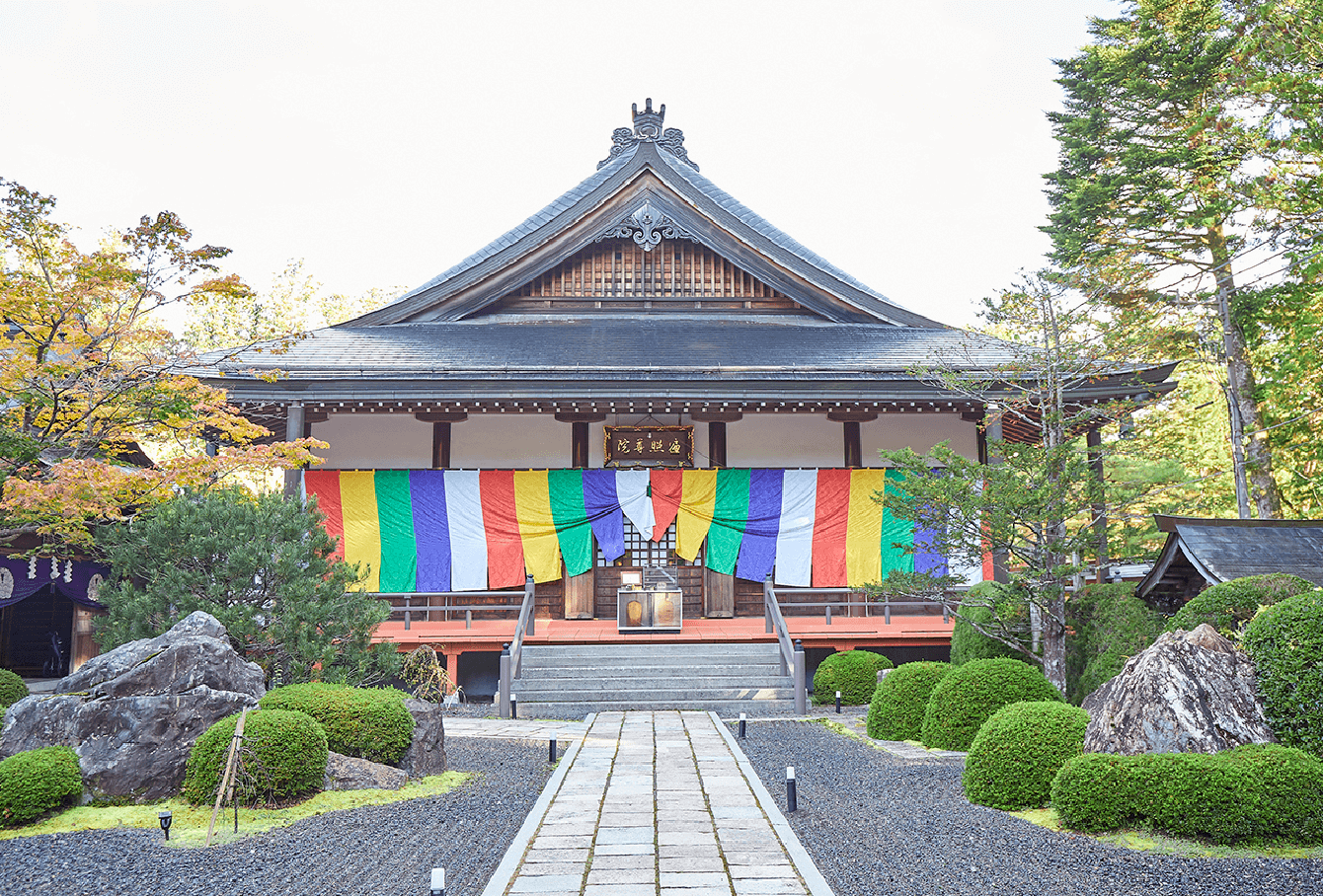
Other notable lodging temples include Ishite-ji, temple 51, in Matsuyama (Ehime) — one of the most architecturally striking temples on the route, a designated National Treasure gate, located conveniently near the famous Dogo Onsen, so pilgrims often pair the temple visit with a soak in Japan’s oldest hot spring rather than relying on the temple itself for lodging. Temple 21, Tairyu-ji, sits atop a mountain reached by ropeway or a hard climb and offers a shukubo prized for its remoteness and dawn silence. Several temples in the mountainous Kochi stretch maintain shukubo specifically because the next lodging is too far to reach before dark. The pattern is consistent: temple shukubo tend to exist precisely where the geography makes them necessary, which is part of why pilgrims treasure them.
The temples that punish are as memorable to pilgrims as the ones that lodge them, and they shape the lodging strategy of the whole region. Three in particular are known to every walker as the *henro korogashi* — the “places where pilgrims fall down.” Temple 12, Shosan-ji, is the first great test, an exhausting mountain climb early in Tokushima that breaks many a soft city walker on day two or three; pilgrims often stay in a minshuku at the foot the night before so they tackle the ascent fresh at dawn. Temple 20, Kakurin-ji, and temple 21, Tairyu-ji, form a brutal back-to-back pair of mountain temples. Temple 60, Yokomine-ji in Ehime, is the steepest of all. Around each of these the lodging clusters at the base rather than the summit, which is exactly why knowing the geography in advance — and reserving the base minshuku before the hard day — separates a manageable pilgrimage from a miserable one.
The ohenro does not truly begin or end on Shikoku. By long tradition it begins and ends at Koyasan — Mt. Koya in Wakayama, the headquarters of Shingon Buddhism and the site of *Okunoin*, the mausoleum where Kobo Daishi is believed to rest in eternal meditation, not dead but waiting. A proper pilgrimage starts with a visit to Okunoin to ask Kobo Daishi’s blessing for the journey ahead, and concludes with a return to Okunoin to report the pilgrimage complete and give thanks. This frames the entire 1,200-kilometer loop as a round trip to and from the founder’s side, with Shikoku as the long middle of the journey.
For travelers, this tradition is also intensely practical. Koyasan has around 50 active *shukubo* that are genuinely set up for foreign guests, with English-language reservation systems, reliable shojin ryori, and morning services open to lay visitors — a level of accessibility that the scattered, variable shukubo of Shikoku cannot match. Beginning or ending your trip with two nights on Koyasan gives you the monastic temple-stay experience in its most reliable form, bookends the pilgrimage exactly as tradition prescribes, and lets you stand at Okunoin before the lanterns of the mausoleum hall. Many international pilgrims fly into Kansai, spend two nights on Koyasan, then take the ferry or bridge across to Shikoku to begin walking — and reverse the process to finish. If you want to understand what a refined temple lodging night actually involves before you go, the [Koyasan temple stays guide](/blog/best-koyasan-temple-stays) and the [first-time shukubo guide](/blog/shukubo-first-time-guide) cover the practicalities in depth.
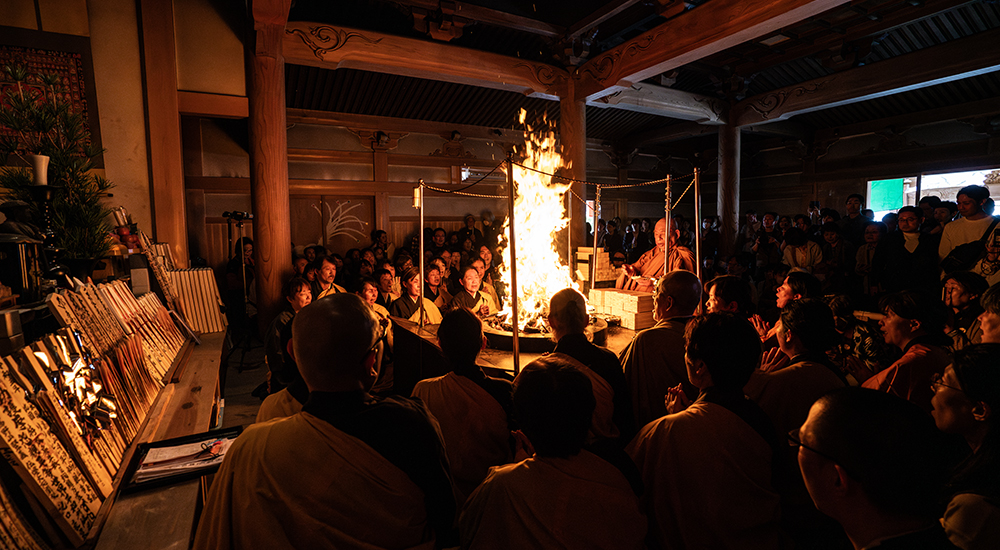
Koyasan is also where many pilgrims attend a *Goma* fire ceremony — the dramatic Shingon esoteric rite in which prayers written on wooden tablets are consigned to a roaring altar fire. Several Koyasan shukubo perform it for guests, and witnessing one is a fitting esoteric counterpoint to the quieter chanting you will hear at temples around Shikoku. Our [Goma fire ceremony guide](/blog/goma-fire-ceremony-guide) explains what is happening and how to participate respectfully.
The visual signature of the henro is a set of traditional gear, each piece carrying meaning, most of it available at Ryozen-ji or any pilgrimage shop on day one. The *hakui* is the white pilgrim jacket or vest, worn over your own clothes; it marks you as a pilgrim and historically served as a burial garment. The *sugegasa* is the conical woven straw hat, inscribed with a verse and the *dogyo ninin* phrase, which keeps off sun and rain and is, by custom, never removed even inside temple gates. The most important piece is the *kongozue* — the wooden walking staff that embodies Kobo Daishi himself. Because the staff is the Daishi, pilgrims treat it with reverence: at each lodging the staff is washed and rested in the place of honor before the pilgrim attends to their own needs, never used to point at things, and never tapped on bridges (Kobo Daishi is said to sleep beneath them).
At each of the 88 temples the ritual sequence is the same. Bow at the gate. Purify hands and mouth at the water basin. Ring the bell once (never on the way out — it is considered unlucky). At both the main hall (*hondo*) and the Daishi hall (*daishido*), offer a candle and incense, deposit an *osamefuda* — a paper name slip carrying your name, address, and a wish — into the box, make a small monetary offering, and chant the Heart Sutra or at least the *Hannya Shingyo* opening if you know it. Then proceed to the temple office to have your *nokyocho* (pilgrimage stamp book) inscribed with the temple’s calligraphy and red seal — the physical record of your journey, and for many pilgrims the most treasured object they bring home. The *osamefuda* are also what you hand to anyone who gives you *osettai*, closing the circle of the gift.
A small note on the osamefuda that pilgrims appreciate knowing in advance: the slips are color-coded by how many times the bearer has completed the pilgrimage. White is for everyone on their first through fourth circuits, which is to say nearly all foreign pilgrims. Green marks five or more, red ten or more, silver twenty-five, gold fifty, and brocade a hundred or more — a pilgrim who has walked the full loop a hundred times. Receiving a colored fuda as osettai from a veteran is treasured, and some pilgrims hunt for the rare brocade slips left at temples as good-luck charms. You will only ever need white, but understanding the system explains a great deal of the quiet hierarchy you will sense among the pilgrims you meet on the road and at the lodgings each night.
Tip
You do not need to buy the full traditional kit, but at minimum get the nokyocho stamp book (the record of your pilgrimage), a set of osamefuda name slips (you will give these away constantly), and good broken-in trail shoes if walking. The white hakui vest is inexpensive, makes you instantly recognizable as a pilgrim — which is what triggers osettai and the goodwill of drivers and innkeepers — and is the single highest-value item for the money. Carry cash: many minshuku, zenkonyado, and temple offices do not take cards.
The ohenro is walkable year-round, but two windows are clearly best: spring, roughly late March through May, and autumn, roughly October through late November. Spring brings mild temperatures, cherry blossom at several temples, and the comfortable walking conditions that make 25-kilometer days sustainable. Autumn brings cool, dry air and foliage on the mountain temple approaches. These are also the busiest seasons, so lodging — especially the limited temple shukubo and small minshuku — must be booked further ahead, and the trail and bus tours are at their fullest.
Summer on Shikoku, June through September, is genuinely hard: the rainy season in June soaks the trails, July and August bring dangerous heat and humidity that has caused heatstroke deaths among walking pilgrims, and the typhoon season peaks in late summer. Walkers who go in summer start before dawn, rest through the hottest hours, and carry far more water. Winter, December through February, is quieter and the lowland sections remain walkable, but the high mountain temple approaches can ice over and many seasonal minshuku close. For a first walking attempt, aim for April-May or October-November and book your first week of lodging before you arrive.
One scheduling detail worth planning around: the temple offices that inscribe your nokyocho stamp book keep limited hours, typically 7:00 AM to 5:00 PM, and they close firmly. A pilgrim who reaches a temple at 5:15 PM has completed the visit spiritually but cannot receive the stamp until the next morning, which can throw off a tight walking schedule. This is another reason the pre-dawn start favored in summer pays off year-round — it gives you margin to reach the day’s final temple with time to spare, attend to the rituals unhurried, and still arrive at your lodging before the early henro dinner hour. Plan each day backward from the closing time of the last temple you intend to stamp, not forward from when you wake, and the rhythm of the pilgrimage settles into place.
Tip
Q: Do I have to be Buddhist to walk the ohenro? A: No. The Shikoku pilgrimage is open to anyone of any faith or none. Most foreign pilgrims, and a great many Japanese ones, walk for reasons that are personal, reflective, or simply a love of long-distance walking rather than strictly religious. What is expected is ordinary respect — performing the temple rituals sincerely, treating the staff and gear with care, and accepting osettai graciously. No conversion, baptism, or affiliation is required or expected at any point. Many pilgrims find that the meaning arrives through the doing, not through belief held in advance; the chanting, the daily walking, and the kindness of strangers do their work regardless of where you started.
Tip
Q: Do I have to walk all 88 temples? A: No. There is no rule requiring completion in one trip or in order. Many pilgrims walk the route in sections over several years (kugiri-uchi), and many international visitors walk a single representative prefecture — Tokushima’s temples 1 through 23 are the most popular introduction. Bus and car pilgrims complete all 88 over multiple shorter trips. Doing one prefecture on foot is a complete and respected experience in itself.
Tip
Q: Where do pilgrims actually sleep? A: Four main options. Temple shukubo (lodging at roughly 30 of the temples, with vegetarian dinner and morning service) are the most atmospheric. Pilgrim minshuku (family guesthouses positioned at natural day’s-end points, two meals, around 6,500–8,500 yen) are the everyday backbone. Zenkonyado (free or donation-based charity lodgings offered as osettai) and tsuyado (free bare-bones temple shelters) round out the budget end. Most walkers mix minshuku with the occasional shukubo and business hotel.
Tip
Q: How much does a night cost? A: A pilgrim minshuku with dinner and breakfast runs roughly 6,500 to 8,500 yen per person. Temple shukubo are similar, often 6,000 to 9,000 yen with shojin ryori and morning service. Business hotels in larger towns run 5,000 to 9,000 yen room-only. Zenkonyado and tsuyado are free or donation-based — leave a small offering and an osamefuda. Budget roughly 8,000 to 10,000 yen per day all-in (lodging, meals, offerings, stamps) for a walking pilgrimage; carry cash.
Tip
Q: How does the pilgrimage connect to Koyasan? A: By tradition the ohenro begins and ends at Okunoin on Koyasan, Kobo Daishi’s mausoleum — you ask his blessing before walking Shikoku and report your completion afterward. Practically, Koyasan’s ~50 English-friendly shukubo make it the most reliable place to get a true monastic temple-stay, so many international pilgrims spend two nights there at the start or finish. It is an easy add-on from Kansai before crossing to Shikoku.
However you walk it — the full 1,200 kilometers over seven weeks, a single prefecture on foot, or the whole loop by bus with a sendatsu leading the chants — the ohenro rewards the same things: patience, an open hand for the osettai that will find you, and a willingness to let the walking itself be the point. Sleep in the temple shukubo when the timing aligns, in the family minshuku that have hosted pilgrims for generations on the ordinary nights, and at least once in a free zenkonyado to feel the weight of a stranger’s kindness. Begin and end at Kobo Daishi’s side on [Koyasan](/blog/best-koyasan-temple-stays), and walk the middle knowing the old phrase on your staff is literally true: you are never walking alone. The road has been there 1,200 years. It is still walking pilgrims home.
Ready to book?
Browse our curated collection of authentic Buddhist temple stays across Japan. Filter by region, sect, and experience.
宿坊を探すExplore Destinations