
|
|
|
|
|
|
 Photo: Unsplash
Booking a shukubo is rarely as simple as opening a hotel app and tapping a few dates. Many of Japan’s most authentic temple lodgings are small family-run sub-temples that aren’t listed on the big international booking platforms at all. Some still take reservations primarily by phone or fax. Others appear on Klook or Booking.com but only for a fraction of their available rooms. The result is that travellers who treat shukubo like normal hotels often miss the best ones — or pay double the rate at the few that are heavily marketed.
This guide walks through the channels that actually work for foreign travellers, when each one is the right tool, and how to time your booking to avoid sell-out periods. The approach is practical: where to look first, where to look second, and what to do when a temple has no online presence at all.
The fundamental issue is scale. A typical Koyasan shukubo has 20 to 40 rooms; many smaller temples have 8 to 15. They run on the labour of the resident priests and a handful of staff, and they’ve historically managed bookings the same way they have for decades — phone calls, fax confirmations, and direct relationships with travel agents. Adopting modern channel-management software is recent, partial, and inconsistent across temples.
That means the same temple may show inventory on Klook, sell out on Booking.com, and still have rooms available if you call directly — because the priest hasn’t synced today’s bookings yet. For travellers willing to use more than one channel, this works in your favour. For those who only check one app, the most authentic temples often appear permanently full.

There is no single best channel — the right one depends on which temple, which region, and how flexible your dates are. Here are the five platforms that matter, ranked roughly by how useful each is for a first-time international booker.
Klook has become the most foreigner-friendly platform for booking shukubo on Mt. Koya specifically. The interface is in English (and several other languages), confirmation is usually instant, and the listings include the major English-friendly temples like Eko-in, Fukuchi-in, Rengejo-in, and several others. Prices are generally competitive with direct rates, and customer support is responsive when something goes wrong.
The catch is geographic: Klook’s shukubo coverage is heavily concentrated on Koyasan. Outside Mt. Koya, the inventory thins out fast. For Eiheiji, Hieizan, or city temples in Kyoto, Klook usually isn’t the right tool. For a first-timer’s Koyasan night, it’s typically the easiest starting point.
Booking.com and Expedia have steadily added shukubo listings over the past decade, but mostly for the bigger, more hotel-like temples — places with private bathrooms, on-site hot springs, and dedicated reception staff. On Koyasan, that means temples like Fukuchi-in (which has its own onsen) and Hakujukan (a more contemporary temple lodging on the mountain) are well represented. Smaller traditional sub-temples often aren’t.
Use these platforms when you want familiar booking tools, when you need a single confirmation alongside the rest of your trip, or when the specific temple you’ve chosen happens to be listed. Check the room description carefully: many shukubo on Booking.com explicitly note that the morning service is included, that meals are shojin ryori vegetarian, and that the bath is shared. Don’t skip those details.
We built templestay-japan.com as an aggregator focused exclusively on shukubo, with detailed English-language profiles for each temple — including ones that don’t list on the big platforms. Where a temple has online inventory, we link directly to its booking page on the platform that has it. Where the temple only takes direct bookings, we link to the temple’s own site or provide the contact information you need.
Use the site to research before you book elsewhere: filter by region, sect, English-friendliness, vegan availability, onsen, and other practical filters. Then go to whichever channel — Klook, Booking.com, the temple’s direct site — gives the best rate and the right room.

Many established shukubo run their own reservation pages, sometimes in English, sometimes Japanese-only. Eko-in, Fukuchi-in, and Rengejo-in on Koyasan all maintain English booking forms. The advantage of direct booking is twofold: you usually get the best rate (no platform commission), and you can communicate dietary restrictions, room preferences, and arrival times in detail before you confirm.
The disadvantage is friction. Forms can be slow, confirmations may take 24–72 hours rather than instant, and payment is sometimes only collected on arrival in cash. If your dates are flexible and you’re booking 6+ weeks ahead, direct is excellent. If you need instant confirmation tonight for a stay next week, use Klook or Booking.com.
The Koyasan Shukubo Association (高野山宿坊協会) is the official local body that represents the temples on Mt. Koya collectively. They operate a central reservation service that can place you at one of the cooperating shukubo if you don’t have a strong preference. The English-language site is functional, and for travellers who simply want “a shukubo on Koyasan” without weighing the differences between thirty-something temples, it’s a legitimate option.
Don’t expect the same hand-holding as Klook. The Association acts more like a centralised dispatcher than a polished booking platform — you submit a request, they assign you to a temple based on availability, and you confirm. For travellers who want full control over which specific temple they’re staying at (and there are good reasons to want that — the differences are real), book the temple directly or via Klook.
Tip
For Koyasan specifically, a sensible approach is: research on templestay-japan.com, shortlist 2-3 temples, then check Klook first for availability. If your top choice is sold out on Klook but has online forms, try direct booking before settling for second choice.
Shukubo demand is sharply seasonal. For most of the year — say, January through mid-March, June, and September — you can book a Koyasan temple two to four weeks ahead and find availability at all but the most famous temples. Outside Koyasan, in places like Eiheiji or smaller Kyoto temples, lead times are even shorter.
The high seasons are different. Cherry blossom season (late March through the first week of April) is intensely competitive on Koyasan and especially in Kyoto; book three to six months ahead. Golden Week (late April to early May, the major Japanese spring holiday cluster) sells out almost everywhere. Obon, the Buddhist memorial week in mid-August, is the single hardest time to book — many temples receive parishioners’ families during Obon and have very limited rooms for tourists. Autumn foliage (mid-October through mid-November) is the second peak, and Koyasan in particular fills up by early September for that window.
Tip
If your travel dates are during peak season and your top-choice temple shows sold out everywhere, write directly to the temple. They sometimes hold rooms back from third-party platforms and may be able to fit you in.
Cancellation rules at shukubo tend to be stricter than at international hotel chains. The reason is structural: meals are prepared from scratch from carefully ordered seasonal ingredients, and a no-show represents real waste of food the temple has already paid for. A typical scale: free cancellation up to seven days before the stay; 30–50% charge between seven and three days; 100% charge inside 48 hours.
Smaller temples are sometimes stricter, with cancellation fees starting from two weeks out. Read the policy on whichever platform you book through — it varies temple-to-temple even on the same channel. Travel insurance with trip-cancellation cover is a sensible companion to a non-refundable shukubo booking, especially during typhoon season (August–early October).
On Klook, Booking.com, and Expedia, you’ll generally pay by credit card at the time of booking or check-in, in line with normal platform conventions. The picture is more mixed at smaller shukubo booked directly. Many still prefer cash on arrival, in Japanese yen, paid at the front entrance during check-in or check-out. Credit card acceptance has spread rapidly since 2020 but is not universal.
If you’re booking a small temple directly, ask explicitly: Do you accept credit cards on arrival, or do you prefer cash? Withdraw enough yen at the airport or a Japan Post Bank ATM (these reliably accept foreign cards) to cover the room rate plus 10–20% for incidentals like the temple-shop incense, a saisen offering, or a tip-style donation at the morning service.
Tip
Bring more cash than you think you need. The combined cost of a remote shukubo, post-stay temple offerings, and the local cash-only family restaurant for lunch can quickly outpace what foreign cards conveniently cover at smaller mountain ATMs.

A shukubo booking includes dinner and breakfast as the default, and both meals are shojin ryori vegetarian by tradition. That covers most travellers, but a few categories of guests should communicate proactively at booking time, in writing.
Strict vegan: shojin ryori is usually nearly vegan but not always. Some temples serve dashi made from bonito flakes (fish), and a few include egg in side dishes. If you need fully vegan, say so explicitly. Allergies: nut, sesame, soy, and gluten allergies should all be communicated; the temple needs notice to substitute. Halal: very few shukubo can guarantee fully halal preparation, but most will adjust meals to avoid alcohol-based seasonings if asked. Mobility limits: stairs are common, futons on the floor are normal — if you need a Western-style bed or wheelchair access, ask before you book; some temples can accommodate, many cannot.
Also helpful to mention: arrival time (especially if you’ll arrive after 17:00), preferred bath slot if there are gender-segregated time windows, and whether you’d like to attend the morning service (the answer is yes for almost everyone, but the temple appreciates knowing).
Online platforms send instant or 24-hour confirmation by email. For direct bookings, you may get a Japanese-language confirmation form to sign and return — read it carefully or run it through a translator before replying. The confirmation usually includes the room rate, deposit (if any), arrival instructions, and the temple’s phone number for last-minute changes.
Save the temple’s phone number on your travel device. If you’re running late, a brief call or a message via the platform’s messaging feature is far better than silently arriving an hour after the front gate has closed. Many shukubo have someone who speaks at least basic English; even if not, a simple “I am [name], booking [date], arriving 30 minutes late” gets the message across.
If this is your first shukubo, here is a clean plan that works for most travellers. Pick Koyasan as your destination. Choose your dates with at least eight weeks of lead time, and avoid Obon and the cherry-blossom peak unless you can book three months out. Open Klook, search “Koyasan temple stay,” and compare two or three of the English-friendly temples — Eko-in for the Goma fire ceremony, Fukuchi-in for an onsen bath, Rengejo-in for the most traditional atmosphere. Book the one that matches your priorities. Print or save the confirmation. The rest of the trip — train tickets, the Nankai Limited Express from Osaka, the cable-car connection — can be sorted closer to the date.
Once you’ve done one shukubo, the next ones are easier. By your second visit, you’ll know whether you want a more austere experience (Eiheiji), a city base (Shunkoin and other Kyoto temples), or a quieter mountain (Hieizan). For now, get one night booked at a temple that’s used to first-time foreign guests — and let the temple do the rest.
Ready to book?
Browse our curated collection of authentic Buddhist temple stays across Japan. Filter by region, sect, and experience.
Start ExploringRecommended Temples for This Guide
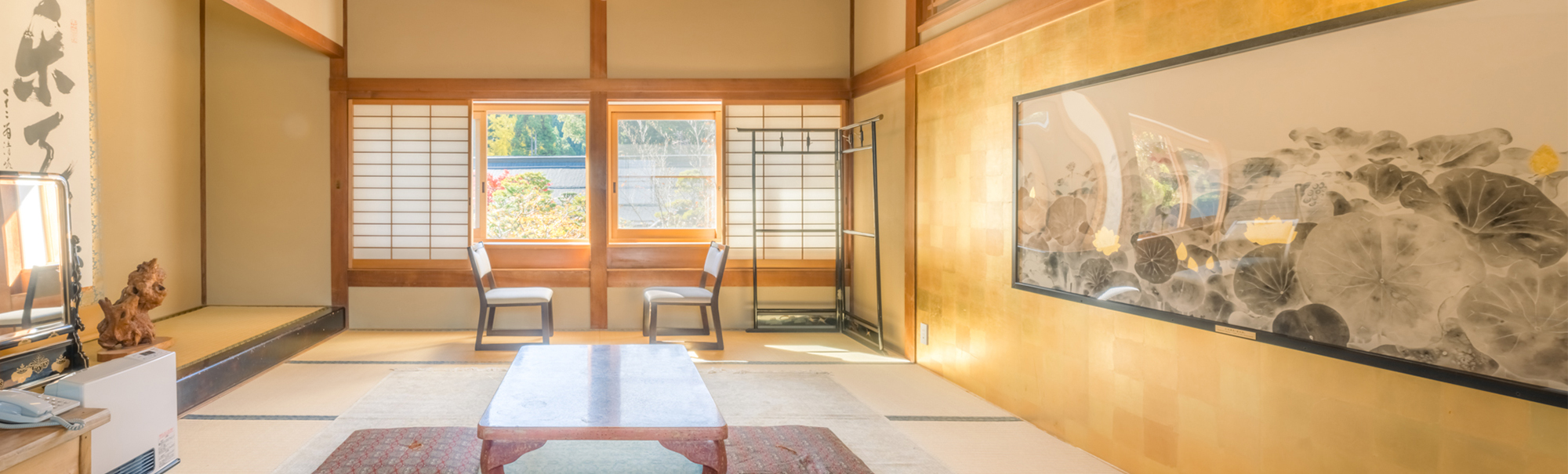
恵光院
A flagship Koyasan shukubo with English-guided Goma fire ceremony, Ajikan meditation, and nightly Okunoin tours.
from $130 /per night

福智院
The only Koyasan shukubo with a natural hot spring, three Mirei Shigemori gardens, and refined shojin ryori.
from $175 /per night
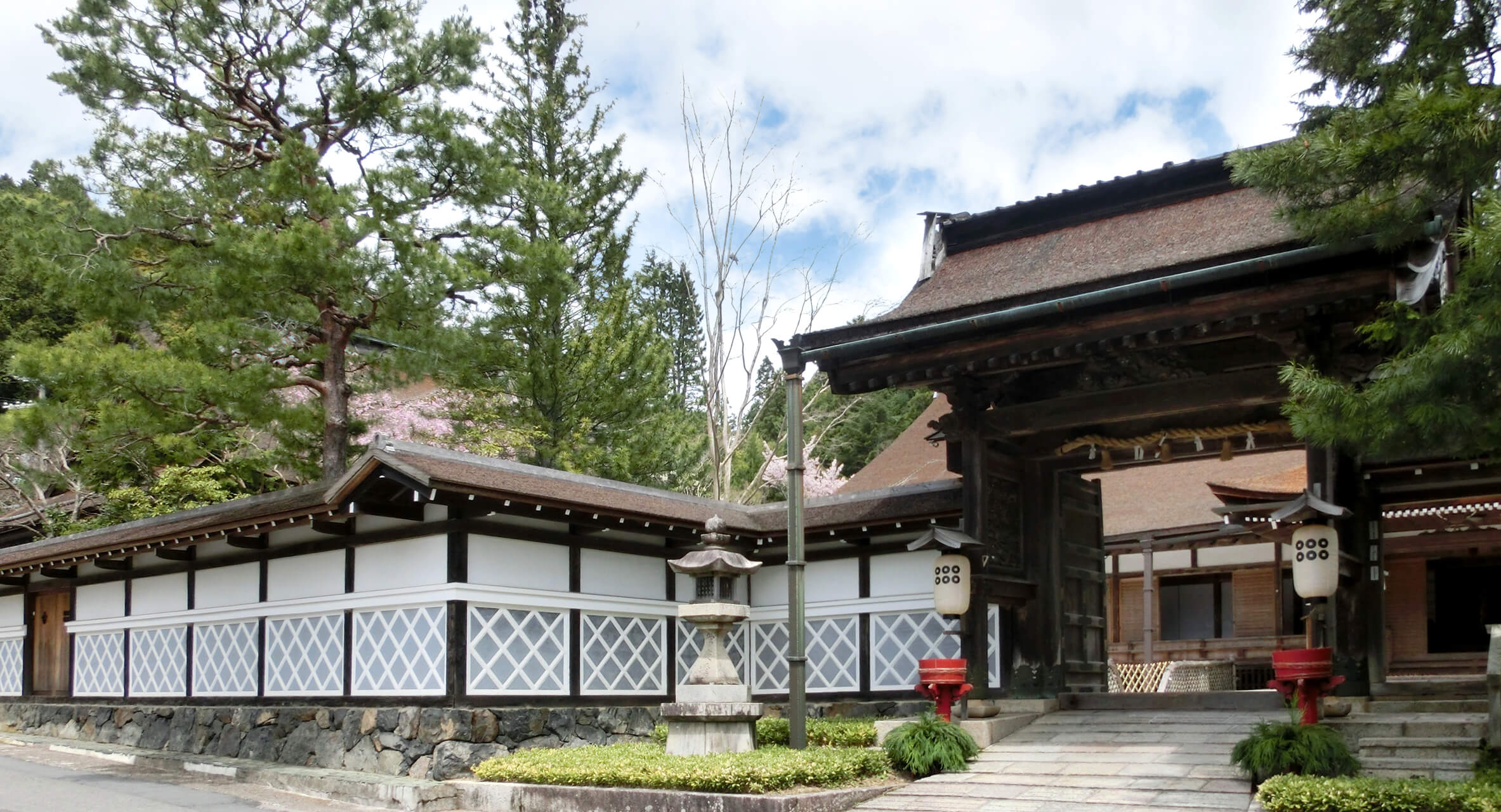
蓮華定院
A Sanada-family bodaiji shukubo on Mt. Koya with English-speaking monks, just 13 rooms, and a strong samurai-era heritage.
from $230 /per night
Explore Destinations

