
|
|
|
|
|
|
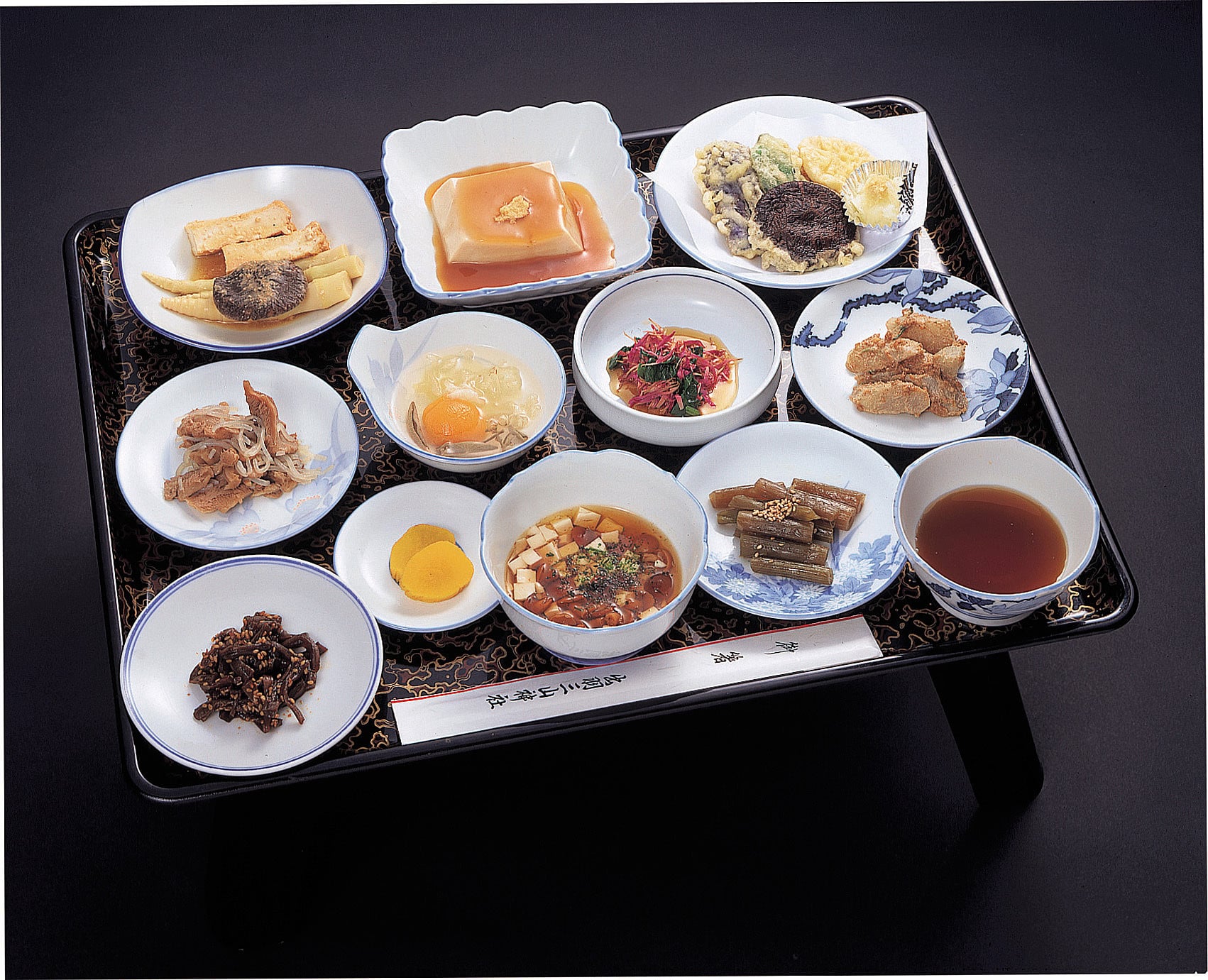
 Photo: Saikan (dewasanzan.jp)
Of all the temple-stay landscapes in Japan, Dewa Sanzan is the one most travelers have never heard of and the one most likely to leave a mark. The three sacred mountains of Yamagata — Haguro, Gassan, and Yudono — have been walked as a single pilgrimage for more than 1,400 years, longer than Koyasan has existed. The tradition that animates them is not mainstream Buddhism but Shugendō, the syncretic mountain-asceticism that married esoteric Buddhism, Shintō, and pre-Buddhist nature worship into a practice of walking, fasting, and chanting in the high cedar forests. The 12 active shukubo at the foot of these mountains are still run, in many cases, by yamabushi families who can trace their lineage back hundreds of years. None of this is reconstructed for tourists. It just continued.
Dewa Sanzan is a Shugendō destination, not a temple tour in the Kyoto sense. Shugendō (修験道, "the way of training and testing") is a specifically Japanese tradition founded in the 7th century and historically attributed to En no Gyōja. Its practitioners — yamabushi (山伏), literally "those who lie down in the mountains" — treat the mountains themselves as the body of the deity. Practice is not seated meditation in a hall; it is walking thousands of steps, standing under freezing waterfalls, blowing the conch-shell horagai, and chanting the Heart Sutra while climbing. It was nearly extinguished by the Meiji-era separation of Buddhism and Shintō in 1868, but Dewa Sanzan is one of a handful of places where the lineage survived intact and is still being transmitted.
The three-mountain pilgrimage maps the cycle of human life. Mt. Haguro represents the present world (現在の世). Mt. Gassan represents the past, the world of the dead (過去の世). Mt. Yudono represents the future and rebirth (未来の世). To walk all three in sequence — Haguro first, then Gassan, then Yudono — is to die symbolically and be reborn. This is why the trip is called sankan sandō (三関三渡), the "three gates and three crossings." It is also why pilgrims, even today, wear white shiroshōzoku robes resembling the clothing of the dead. You are not visiting three temples. You are being put through a structured ritual that has been running for 1,400 years.

For travelers who have already stayed at Koyasan or Eiheiji, the difference is immediate. Koyasan is Shingon esoteric Buddhism wrapped in genuine hospitality — refined, photogenic, ritual-rich, easy to access. Eiheiji is Soto Zen at its most disciplined — silent meals, 3:30 AM wake-ups, formal monastic schedule. Dewa Sanzan is neither. It is older, rougher, and closer to the ground. The shukubo here are not sub-temples of a large head temple; they are independent lodgings run by hereditary yamabushi households, many in the village of Tōge at the base of Mt. Haguro. Dinner often includes mountain vegetables foraged by your host that morning. Morning service is led by a person who, the previous week, may have been blowing a conch-shell horn on a mountain ridge at dawn. If Koyasan and Eiheiji are the polished face of Japanese Buddhist hospitality, Dewa Sanzan is the version that smells like cedar smoke.
Mt. Haguro (羽黒山, 414 m) is the lowest of the three and the only one accessible year-round. Its summit holds the Sanjin Gōsaiden — a vast thatched hall, one of the largest thatched roofs in Japan, that enshrines the deities of all three mountains under a single roof. For pilgrims who cannot make the full circuit (Gassan and Yudono are buried in snow for half the year), worship at Sanjin Gōsaiden counts as worship of all three. In the Shugendō reading, Haguro is the mountain of the present world — the threshold where ordinary life and the sacred meet. It is also where every Dewa Sanzan pilgrimage begins.
Mt. Gassan (月山, 1,984 m) is the highest of the three and the most physically demanding. Gassan-jinja sits near the summit and is dedicated to Tsukuyomi-no-Mikoto, the moon deity. The mountain is the realm of the dead, the past, the world we have already left. It is open only from July 1 to mid-September; the rest of the year the summit is under heavy snow. Trekkers reach Gassan-jinja Honguu via a chairlift partway up and then a 3- to 4-hour hike across alpine wetlands famous for late-summer wildflowers. Most overnight shukubo guests visit Gassan as a long day-hike from Haguro, not from a separate lodging.
Mt. Yudono (湯殿山, 1,500 m) is the holy of holies. There is no main hall, no statue, no chanted name of the deity. The object of worship is a large, naturally hot reddish-brown boulder over which sacred water flows — a geothermal spring formed over millennia. Pilgrims must remove shoes and socks to approach barefoot. Photography is forbidden, and pilgrims are traditionally bound not to speak of what they see there. Yudono is the mountain of the future and of rebirth. It is open roughly from late April or early May through early November depending on snow.
Tip
You cannot photograph or describe the interior of Yudono-san Honguu. This is not signage politeness — it is a 1,000-year-old vow that visitors are expected to honor. Plan to leave the camera in your bag before you reach the gate.
If Koyasan has Okunoin and Eiheiji has the Hatto, Dewa Sanzan has the stone staircase. Cut into the side of Mt. Haguro and lined with thousand-year-old cryptomeria cedars, the path climbs 2,446 stone steps from the Zuishinmon gate at the base to the summit hall at the top. The full ascent takes most pilgrims one to one and a half hours at an unhurried pace. Along the way you pass the National Treasure five-story pagoda — built without a single nail in the early Heian period, restored in the 14th century, and standing alone in the forest like a ghost — plus 33 hidden carvings of objects (a sake gourd, a tortoise, a lotus) along the steps. The local folk belief is that anyone who finds all 33 is granted a wish.
The staircase is the experience. Many guests staying in Tōge village (the shukubo cluster at the foot) climb the full path in the morning, reach Saikan and Sanjin Gōsaiden by noon, descend, and bathe before dinner. Saikan, the largest shukubo and the only one located at the summit, allows you to skip the descent and stay overnight on top of the mountain — which is the recommended option if you want to see the morning service at Sanjin Gōsaiden without a 5:30 AM bus from below. The trail is open year-round but heavy snow from January through March makes the upper half impassable on foot; in deep winter, only the lower stretch to the pagoda is realistic.
There is also a paved road that loops around to a parking lot near the summit, served by a bus from Tsuruoka Station and from Tōge village. Climbing the stairs is the traditional pilgrimage, but if your knees object, the bus is not considered cheating. Yamabushi distinguish between shugyō (formal practice) and ordinary visiting. A bus is fine for ordinary visiting.
Yamabushi are the practitioners of Shugendō. Historically they were the local healers, mediators, and spiritual specialists of rural Japan; the Dewa Sanzan area alone supported several hundred yamabushi families at its peak in the Edo period. They wore distinctive checked tokin caps, white robes, and carried staffs and conch-shell horns. They walked the mountains in structured retreats called nyūbu (入峰, "entering the peak") that could last from a few days to ninety. The training was not metaphor. It included extended fasting, ablutions under cold waterfalls, mountain hikes in the dark with only chanting to keep rhythm, and being lowered head-first off a cliff by ankle ropes — the famous Haguro "hanging over the cliff" ritual, which still exists.
Several Dewa Sanzan shukubo, including Daishin-bō and Tamon-kan, offer formal yamabushi training experiences (山伏修行体験) for outside participants. The serious courses run 2 to 4 days and include genuine elements of the practice: a pre-dawn waterfall ablution, a long mountain hike in white robes, communal Heart Sutra chanting at dusk, and the surrender of phones, watches, and reading material on arrival. Shorter half-day "yamabushi-lite" tastings are also available through the Toge village shukubo association. Foreign-language participants should write in advance; the experiences are conducted in Japanese but many shukubo can accommodate guests with patience and a translator app.
Tip
The full yamabushi training (Akinomine, late August through early September) is closed to the general public — it is the formal initiation for new yamabushi. The shorter introductory programs available to travelers are separate and run on demand throughout summer. Book at least one month ahead, especially for July–October dates.
There are twelve active shukubo across Dewa Sanzan: ten at Mt. Haguro and two at Mt. Yudono. Mt. Gassan has no shukubo of its own; the mountain is too high and too seasonal. Of the ten Haguro shukubo, nine cluster in the small village of Tōge at the foot of the stone staircase, and one (Saikan) sits at the summit beside Sanjin Gōsaiden itself. The two Yudono shukubo, Dainichi-bō and Churen-ji, are in the village of Ōami at the base of Mt. Yudono — both are home to a sokushinbutsu self-mummified monk, a tradition unique to this region.
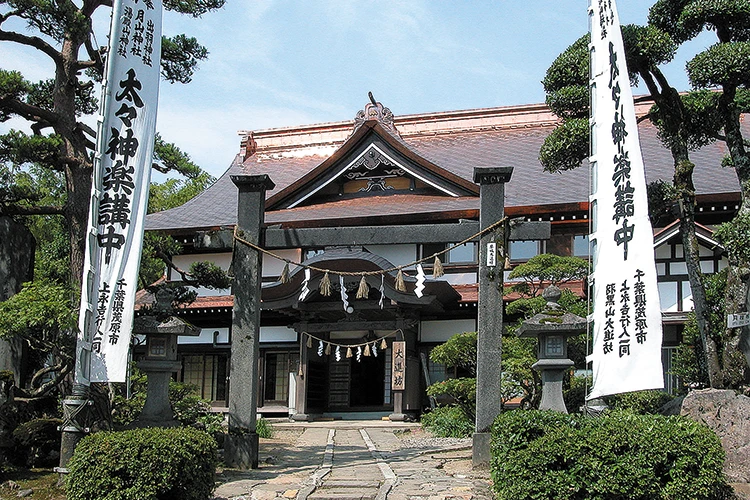
Saikan (斎館) is the flagship. Located on the summit plateau of Mt. Haguro beside the great thatched hall, it was originally the residence of the head priest of Hagurosan Shōzen-in and dates in its current form to a mid-Edo rebuilding. It is the largest shukubo in the region, has the most refined shōjin ryōri kitchen, and was the only Dewa Sanzan shukubo to be listed in the Michelin Guide Yamagata 2018 special edition (one pavilion). Staying at Saikan means waking up steps from the morning service and watching dawn break over the cedar forest from the summit deck. Reservations book out months ahead for autumn foliage.
Daishin-bō (大進坊) is the most foreigner-friendly of the village shukubo. The current head is a 23rd-generation yamabushi who has actively built English-speaking programs and runs the most well-known yamabushi training tastings in Tōge. The shukubo's modern wing added in the 2010s has Western beds for guests who cannot manage futon, and the bath is one of the largest in the village. Daishin-bō also operates the most-visited shōjin ryōri lunch program for day visitors.
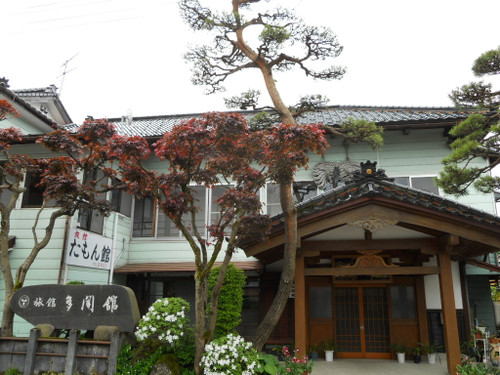
Tamon-kan (多聞館) is a smaller, family-run shukubo with a strong reputation for mushroom cuisine — the matsutake and maitake dinners in autumn are some of the most sought-after seats in the village. The 17th-generation host is known for taking guests on personal walks through the cedar forest before dinner and explaining the local Shugendō calendar in detail. English is limited but warmth is unlimited. Tamon-kan also offers structured yamabushi training and is one of the easier shukubo to book on short notice in shoulder season.
Kanbayashi Shōkin (神林勝金) is a renovated former samurai-merchant residence that opened as a shukubo-inn in 2019 after a careful restoration of the original Edo-period beams. It blurs the line between shukubo and inn, with private modern bathrooms in each room, a fireplace lounge, and a curated shōjin ryōri menu that incorporates more contemporary plating than the older houses. For travelers who want the Dewa Sanzan spiritual context but cannot adapt to shared bath and futon, Kanbayashi Shōkin is the soft entry point.
Sankō-in, Miyata-bō, Daishō-bō, Sanada Enmei-in, Miyashita-bō, and Hagurosan Shōzen-in are the remaining six Tōge shukubo. Each is a hereditary yamabushi household with capacity for roughly 10 to 30 guests. Daishō-bō has a particularly strong reputation for the depth of its morning Shugendō service and is sometimes considered the most ritualistic of the village shukubo. Hagurosan Shōzen-in (正善院) is the parent temple of the entire Haguro lineage and runs the Kōganden hall in the village. Sankō-in, Miyata-bō, and Miyashita-bō are smaller and quieter and are often easier to book in peak season. All are listed and bookable through the Tōge Shukubo Association.
The cuisine at Dewa Sanzan shukubo is its own dialect of shōjin ryōri. Where Koyasan emphasizes refined sesame tofu, fu (wheat gluten), and koya-dōfu — the freeze-dried tofu invented on that mountain — Dewa Sanzan plates lean heavily on the local sansai (mountain vegetables): warabi fern shoots, kogomi fiddleheads, udo, fuki, butterbur stalk, mizu, sansho buds, and a half-dozen kinds of wild mushroom in autumn. The rice is local Tsuya-hime or Haenuki koshihikari from the Shōnai plain immediately below. Tofu comes from the village tofu-maker who has supplied the shukubo for generations. Pickles are made in-house. The shukubo at Saikan and Daishin-bō and the others all serve their own slight variant.
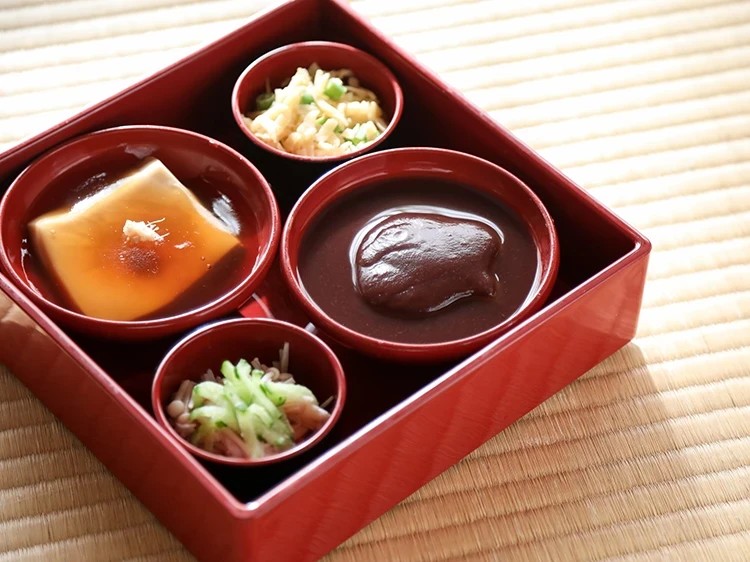
A typical Dewa Sanzan dinner is six to nine small dishes presented on a single lacquer tray: a clear vegetable broth, two or three nimono (simmered vegetable dishes), a tempura plate of sansai battered in light flour, a goma-dōfu (sesame tofu) cube, a pickle assortment, miso soup, rice, and a fruit or wagashi for dessert. There is no fish, no meat, no onion, garlic, leek, or scallion — the five forbidden alliums of traditional Buddhist kitchens. Sake is not technically allowed under monastic rule but is generally not refused for paying guests; ask the host. Breakfast is simpler — rice, miso, pickles, tofu, a small simmered dish — and is served before the morning service.
The seasonal swing is dramatic. Spring (April–June) is the peak of sansai. Summer (July–August) brings cold tofu and chilled wheat noodles. Autumn (September–October) is mushroom season and arguably the best three weeks of the entire shukubo calendar. Winter (December–March) shifts toward preserved foods — kiriboshi-daikon, dried kōya-dōfu, salt-cured vegetables — and is the quietest, cheapest, and in some ways most intimate time to visit, though many village shukubo close from January to mid-March.
A small but important detail: the host who serves your dinner is, in most village shukubo, the same person who leads the morning service the next day, and in many cases the same person who walked the mountain ridge in white robes a fortnight earlier on a yamabushi training week. The kitchen, the altar, and the trail are run by one continuous lineage. This is not the case at most Koyasan shukubo, where kitchen, reception, and chanting are typically handled by different staff. The single-household scale at Dewa Sanzan is part of why the experience reads as more personal — and, sometimes, more demanding — than the larger mountain destinations. If a host has 15 guests in a night, they cook for 15 and they chant for 15.
The two shukubo of Mt. Yudono — Churen-ji and Dainichi-bō — are the most famous, and most carefully observed, sokushinbutsu temples in Japan. Sokushinbutsu (即身仏) refers to monks who, through years of progressively severe asceticism, mummified their own bodies before death in order to remain in this world as living buddhas, intervening on behalf of the suffering. The practice required eating only nuts, seeds, bark, and pine needles for a thousand days, then drinking lacquer tea (which poisoned the body and discouraged maggots) for the next thousand, and finally being sealed in a stone chamber while still alive, breathing through a single bamboo tube. When the bell the monk rang each day stopped sounding, the chamber was sealed permanently. After 1,000 days, it was reopened. If the body had mummified naturally, the monk was enshrined as a buddha. If not, they were buried with the highest honor.
Of roughly 24 known sokushinbutsu in Japan, the majority are in Yamagata and several survive in Dewa Sanzan-affiliated temples. Churen-ji enshrines Tetsumonkai Shōnin, who completed sokushinbutsu in 1829 — the most photographed and most studied of the surviving cases. Dainichi-bō enshrines Shinnyokai Shōnin, who completed the practice in 1783 and is held in particular reverence by the local community. Both are displayed in glass cases in their respective main halls and may be viewed by all visitors during temple hours. There is no separate fee for shukubo guests staying overnight, and the temples ask only that you visit with respect.
Tip
Sokushinbutsu are not a tourist curiosity. They are enshrined buddhas, and the surrounding community considers them living teachers. The appropriate posture is the one you would adopt before any major Buddhist statue: a small bow on entering and leaving, no flash photography, no eating or drinking in the hall, and quiet voices. Read about [shukubo etiquette](/en/blog/shukubo-etiquette) before you go.

Staying overnight at either Yudono shukubo lets you join the early-morning service in front of the sokushinbutsu — which is, by most accounts, the moment that explains the rest. The chanting is slower and lower than at Haguro. The room is warmer. The buddha sits behind glass at the front, dressed in fresh robes that the temple changes on a schedule. The point is not horror or fascination but continuity: the body is treated as the same teacher it was 200 years ago, in the same room, with the same liturgy. Whatever you came expecting, this is not a museum.
A note on context: sokushinbutsu was practiced in this region, and almost only this region, for a specific historical reason. Late Edo-period Yamagata was hit hard by famine, particularly the Tenmei famine of the 1780s. Local Shingon and Tendai monks affiliated with the Mt. Yudono lineage took the vow of self-mummification as a sacrificial act on behalf of starving villagers — Shinnyokai Shōnin at Dainichi-bō is the canonical example. The practice was banned in 1879 during the Meiji rationalization of religion. The handful of completed sokushinbutsu that survive are therefore not relics of a long-dead extreme but specific people with names and biographies, most of whom died within the last 250 years. The shukubo families at Churen-ji and Dainichi-bō still tell their stories during the morning service. Sitting through one is the best way to understand what the practice actually was — and was not.
Haguro is the only one of the three mountains open year-round, which makes Tōge village the practical base. Late April through early November is the high season; foliage peaks roughly October 20 through November 5 and books out fastest. May–June is the green-cedar season, cool and wet, and is the favorite of repeat visitors. July and August are when both Gassan (open July 1) and Yudono (open from late April/early May depending on snowmelt) are accessible, making the full three-mountain pilgrimage possible. The mountain festival Hassaku-sai at the start of September is the major Shugendō event of the year and books out a year in advance for the village shukubo.
Winter — December through March — is a different proposition. Tōge village receives multi-meter snowfall. Several shukubo close entirely from January through mid-March; Saikan at the summit closes from December 30 to mid-March. The ones that stay open through winter (Daishin-bō, Kanbayashi Shōkin, Tamon-kan, and a few others) offer one of the quietest and most atmospheric shukubo experiences in Japan, but you should expect snowshoes for any walking outside the village and a curtailed morning service. The five-story pagoda half-buried in snow is the iconic winter image and worth the trip for photographers alone.
Dewa Sanzan is in northern Yamagata Prefecture, on the Japan Sea side of Honshu. From Tokyo, the standard route is the Joetsu Shinkansen from Tokyo Station to Niigata (about 1h 40m), then the Inaho limited express along the coast to Tsuruoka (about 2 hours), totaling roughly 4 hours door-to-door including transfers. The alternative is the Yamagata Shinkansen to Shinjō and a regional train transfer, which is also about 4 hours but less scenic. From Tsuruoka Station, the Shōnai Kōtsū bus to Haguro Center (the village of Tōge at the base of Mt. Haguro) runs roughly every hour and takes about 45 minutes; from Haguro Center to Mt. Haguro summit by bus is a further 15 minutes. Most shukubo will offer a free pickup from Haguro Center bus stop if you arrange in advance.
By air, Shōnai Airport is 30 minutes by bus from Tsuruoka and is served by 4 daily flights from Tokyo Haneda (about 1 hour flight time). This is the fastest route from Tokyo but is roughly twice the cost of the shinkansen. Renting a car at Shōnai Airport or Tsuruoka Station is a serious option for travelers who want to combine Dewa Sanzan with Gassan, Yudono, and the Shōnai coast in 3 days; the mountain roads to Yudono in particular are awkward to reach by bus.
Booking shukubo at Dewa Sanzan is more analog than Koyasan or Kyoto. Saikan is bookable through the Hagurosan office (phone, fax, or web form). The Tōge village shukubo can be booked individually through each temple's website, through the Tōge Shukubo Association, or through Shōnai-area tour agencies. Several shukubo are now listed on major OTAs (Booking, Rakuten Travel) but the rates are usually identical to direct booking and direct booking is preferred locally. Most shukubo will require a Japanese phone number for confirmation; if you do not have one, a polite email a few weeks ahead in simple English usually works.
For travelers who can spend three nights, the canonical Dewa Sanzan first-timer itinerary is the following. Day 1: shinkansen from Tokyo to Tsuruoka in the morning, bus to Tōge village by mid-afternoon, check into a village shukubo (Daishin-bō, Tamon-kan, or Kanbayashi Shōkin are good first choices), walk the lower stone staircase to the five-story pagoda in the late afternoon golden hour, and return for dinner and bath. Morning service before breakfast.
Day 2: climb the full 2,446-step staircase to the summit in the morning (start before 8:00 to avoid heat in summer or crowds in autumn), worship at Sanjin Gōsaiden, eat lunch at Saikan if you have a reservation, and either descend in the afternoon or — if you have planned ahead — check into Saikan for a second night on the summit and a sunrise service the next morning. If it is July through September and you are reasonably fit, allocate Day 2 to Mt. Gassan instead: bus to the Gassan 8th Station chairlift, hike to Gassan-jinja Honguu summit (3–4 hours round-trip from the chairlift top), descend, and return to Tōge.
Day 3: car or chartered taxi to Mt. Yudono and either Churen-ji or Dainichi-bō for a sokushinbutsu visit and, if you booked ahead, an overnight stay. The visit to Yudono-san Honguu itself — the sacred boulder — is a short uphill walk from the parking area, and requires removing shoes at the gate. Plan to spend at least an hour at each Yudono temple. Bus or car back to Tsuruoka in the afternoon, shinkansen to Tokyo. Travelers with only two days can compress this by skipping Gassan and treating Day 2 as a combined Haguro-summit and Yudono day; this requires a rental car.
Tip
Pack what you would pack for [any shukubo](/en/blog/what-to-wear-shukubo) — modest clothing for the morning service, slip-on shoes, a small towel, and quiet evening wear — plus serious walking shoes for the staircase, layers for the summit (which is 10°C colder than the village), and rain shell. The cedars catch and hold mist; sudden showers are routine.
For travelers building a multi-stop Buddhist itinerary, the comparison matters. Koyasan, founded in 819 by Kūkai, is the headquarters of Shingon Buddhism and offers around 52 shukubo that take overnight guests. The experience is highly polished: English-fluent reception at many temples, structured morning fire ceremonies (goma) most famously at Eko-in, a 1,200-year-old cemetery (Okunoin) walked at night, and shōjin ryōri served in private dining rooms or guest tatami rooms. Eiheiji, founded in 1244 by Dōgen Zenji, is the head temple of Sōtō Zen and offers essentially one main lodging program (Sanro, inside the temple) and one upmarket gateway inn (Hakujukan at the front gate). The discipline at Eiheiji Sanro is the deepest of the three — 3:30 AM wake-up, silent oryoki meals, formal monastic schedule — and the price is famously low (around 8,000 yen for two meals).
Dewa Sanzan sits between and beside both. Founded according to tradition in 593 by Prince Hachiko (Nōjo Taishi), the three mountains predate both Kōyasan and Eiheiji by centuries. The tradition is Shugendō rather than pure Shingon or Zen — travelers curious about other surviving Shugendō lineages may also consider Takaosan Yakuo-in near Tokyo — which means the practice center of gravity is the mountain itself, not a hall or a meditation cushion. The lodgings are smaller and more familial than Koyasan and less institutional than Eiheiji. Prices typically run 11,000–18,000 yen per person with two meals at the village shukubo, slightly above Eiheiji Sanro and below mid-range Koyasan. English support is limited at most village shukubo but gradually improving at the larger ones (Daishin-bō, Kanbayashi Shōkin, Saikan). If you have done Koyasan and Eiheiji and want a third stop that adds something neither covers, this is it. If you can only do one temple stay in Japan, Koyasan is the safer first choice and Dewa Sanzan is the better second.
Tip
Q: Is Dewa Sanzan suitable for a first-time shukubo guest? A: Yes, with caveats. Read the [first-time shukubo guide](/en/blog/shukubo-first-time-guide) first. The shukubo themselves are warm and welcoming, but English support is more limited than at Koyasan and the surrounding pilgrimage is more physically demanding. If this is your first temple stay anywhere in Japan, Daishin-bō or Kanbayashi Shōkin are the gentlest entry points. If it is your first stay at any Japanese inn, Koyasan is the easier introduction and Dewa Sanzan should be your second trip.
Tip
Q: Do I need to climb the stairs or can I take the bus? A: The bus is fine. The stone staircase is the traditional pilgrim route and the iconic Dewa Sanzan experience, but yamabushi themselves distinguish between formal practice (shugyō) and ordinary worship. Climbing the stairs once, slowly, in walking shoes, is the recommended middle path: most travelers manage it in 75–90 minutes including stops. If you have knee trouble, take the bus up and walk only the upper short loop near the summit hall.
Tip
Q: Can I see all three mountains in a single trip? A: Only from July 1 to mid-September, when all three are open. Outside that window, Gassan is closed by snow and the trip becomes Haguro + Yudono, which is still meaningful and which most modern pilgrims accept. Tradition does not require all three to be done on a single visit; many local families complete the three-mountain pilgrimage over several years.
Tip
Q: How does the shōjin ryōri here compare to Koyasan? A: More wild, more seasonal, less elegant. Koyasan kitchens have evolved a high cuisine over 1,200 years. Dewa Sanzan kitchens evolved alongside yamabushi who lived off what the mountain produced that week. The result is plates that change more dramatically by month and that lean on foraged sansai, mushrooms, and Shōnai-plain rice. Compare directly by reading the full [shōjin ryōri guide](/en/blog/shojin-ryori-guide).
Tip
Q: Can I do shakyō or shabutsu at Dewa Sanzan? A: Yes, at several shukubo on request — Saikan, Daishin-bō, and Hagurosan Shōzen-in offer [sutra-copying or Buddha-tracing sessions](/en/blog/shakyo-shabutsu-experience) typically in the evening after dinner. Sessions run about 45 minutes and cost between 1,500 and 3,000 yen depending on the temple. Materials and instruction are provided. Reserve at check-in or when you book.
If you have already made the Koyasan and Eiheiji trips, Dewa Sanzan is the obvious next chapter. It fills in a part of Japanese religious history — the Shugendō mountain tradition, the syncretism that the Meiji separation tried to dismantle, the role of the yamabushi as village specialist — that the more famous monastic destinations cannot. If you have not yet made those trips, Dewa Sanzan is harder than Koyasan and more accessible than Eiheiji's Sanro program: it is a working pilgrimage landscape that has not been turned into a tour, run by families who are still doing the thing they describe. There are not many destinations in Japan you can say that about. The 12 shukubo are the way in.
Whichever shukubo you choose, the unifying experience is the same: a host who has lived this practice for decades, a cedar-shaded village that has not materially changed since the 17th century, a meal of vegetables that were foraged within walking distance, a morning service at first light, and the option — never the requirement — to climb 2,446 steps in white robes if that is what you came for. Read the Buddhist sect comparison before you go if you want context on how Shugendō fits into the larger picture of Japanese Buddhism. Then book a night at Saikan, Daishin-bō, or Dainichi-bō, and start with one mountain. The other two will still be there.
Ready to book?
Browse our curated collection of authentic Buddhist temple stays across Japan. Filter by region, sect, and experience.
Start ExploringRecommended Temples for This Guide
羽黒山参籠所 斎館
The only Edo-era shukubo still standing on the Haguro-san summit, run by Dewa Sanzan Jinja, with Michelin-listed mountain-herb shojin ryori.
from $75 /per night
宿坊 大進坊
A yamabushi-run Toge shukubo with handmade shojin ryori, in-house goma fire prayers, and full English-friendly services.
from $95 /per night
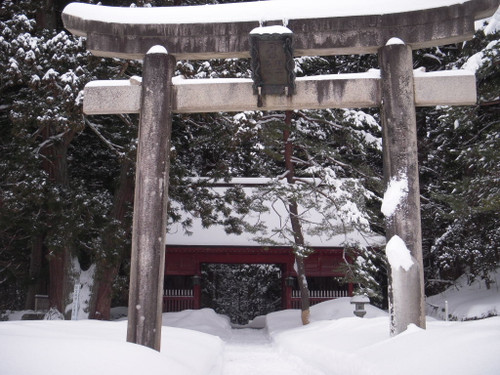
出羽三山 多聞館
300-year-old Toge shukubo built from Haguro sacred cedar, famous for sesame-tofu ankake and mountain-herb shojin ryori.
from $90 /per night
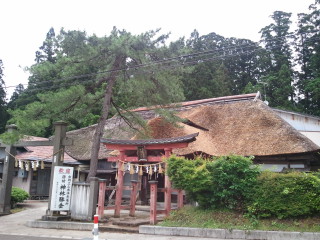
宿坊 神林勝金
A rare thatched-roof Touge shukubo at the very foot of the Haguro-san stone steps and the National Treasure Five-Story Pagoda.
from $95 /per night
湯殿山総本寺 瀧水寺金剛院 大日坊
The Shingon head temple of Yudonosan, founded by Kukai in 807, enshrining the Shinnyokai Shonin sokushinbutsu (living Buddha) and a National ICP Shaka Nyorai.
from $75 /per night
Explore Destinations

