
|
|
|
|
|
|
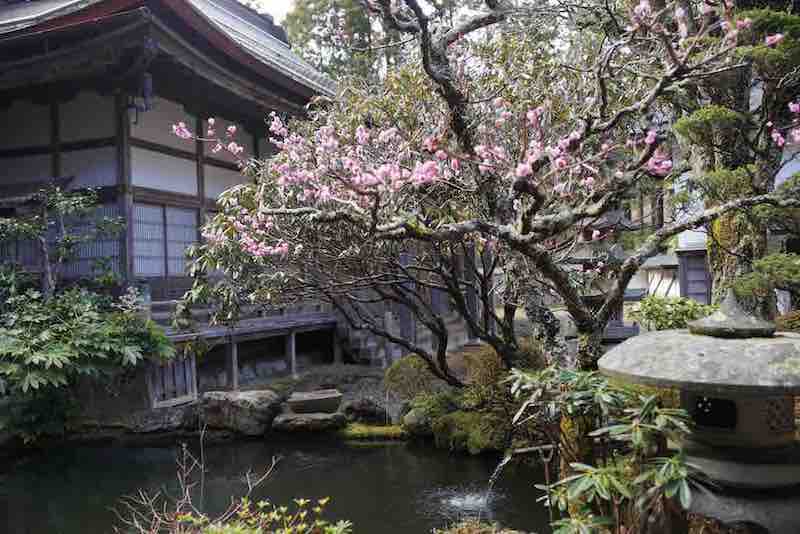
 Photo: Fukuchi-in Koyasan (fukuchiin.com)
Koyo (紅葉) — Japan’s autumn foliage — and shukubo (Buddhist temple lodging) form one of the country’s most underrated travel pairings. For roughly three weeks each year, between mid-October and mid-November, the maples lining temple gardens and pilgrimage paths turn through scarlet, vermilion and gold. Stay overnight at a temple in that window and the foliage frames every part of the experience: the gate you walk through at check-in, the garden you look at over breakfast, the path you take to the morning service before sunrise.
The autumn window is also more forgiving than cherry season. Sakura peak lasts about ten days at any given location; koyo peak runs closer to three weeks. That extra time gives travellers a wider booking window, more flexibility around weather setbacks, and more chances to time a trip across two regions. This article maps the eight shukubo that maximise the foliage payoff, ranks them by koyo density, and shows how to sequence Koyasan, Hieizan and Kyoto into one autumn itinerary.
Cherry blossoms get most of the foreign attention, but for temple travel specifically, autumn often wins on three counts: duration, crowding and visual register. Sakura peak at a single location is about ten days, and the truly photogenic full-bloom window is closer to five. Koyo, by contrast, rolls through a region over roughly three weeks, with peak colour holding for ten to fourteen days at most temple gardens. That triples the planning margin.
Crowding is the second factor. Sakura season overlaps with school spring breaks across East Asia and with the start of Japan’s own fiscal and academic year, so domestic and foreign demand stack on the same two weeks. Autumn pulls fewer Western tourists because the peak falls in early-to-mid November, after most Western school terms have started and outside the major US Thanksgiving window. The result is that even celebrated koyo temples are quieter on a Tuesday in early November than on a Saturday in early April.
The third factor is aesthetic. Cherry blossoms are pale pink against pale-grey temple stone — a soft, almost watercolour pairing. Red maple against dark cypress wood, weathered roof tiles and raked gravel is the palette traditional Japanese architecture was designed for. The contrast is sharper, the colours read at a distance, and photographs from inside a temple garden in November tend to print and post better than the same garden in April.
Koyo moves north to south and high to low. The Japan Meteorological Agency and several private weather services publish weekly forecasts from late September onwards, updated as the cold fronts arrive. For 2026, the working timeline for the regions covered by this guide looks roughly as follows.
Hokkaido peaks late September to early October — outside the scope of this article but worth noting if you want to chase colour from north to south. Hieizan and northern Kyoto run from late October into mid November. Koyasan, perched on an 800-metre plateau, peaks earlier than Kyoto downtown: late October to mid November, with the strongest colour usually between November 1 and November 15. Kyoto downtown peaks mid November to early December. Eiheiji in Fukui, with its lower altitude and Sea-of-Japan microclimate, peaks mid to late November.
The single most useful insight: altitude shifts timing. Hieizan and Koyasan run about two weeks ahead of Kyoto downtown despite being a one-to-two hour transfer away. That offset is the basis for the smartest autumn itineraries, which pair a mountain temple stay in early November with a Kyoto base in mid-to-late November so a single trip catches two peaks instead of one.
A second timing nuance worth understanding: peak does not arrive everywhere on a single weekend. Within Kyoto itself, the temples on the eastern hills (Eikando, Nanzenji, Kiyomizu-dera) typically peak a few days earlier than the temples on the western edge (Tenryu-ji, Adashino, the bamboo grove perimeter). Within Koyasan, the south-facing slopes of Okunoin colour ahead of the north-facing temple courtyards. None of these differences exceed about a week, but for a traveller building a tight itinerary they explain why the same date can produce different photos at temples that look adjacent on a map.
Weather year-on-year also matters. A warm October pushes peak about a week late across most of the country; an early cold front pulls it forward by a similar margin. The 2023 season ran roughly a week behind historical averages because of an unusually warm September. The 2024 season tracked close to the long-term mean. The takeaway for 2026 planners is to lock in a booking on the historical median date, then track the JMA forecast from late September and only consider rescheduling if the forecast shifts by more than five days.
The ranking below weights three things: the density and quality of maple within the temple grounds themselves, the way the architecture frames that foliage, and the surrounding walking environment a guest will pass through during a typical stay. All eight are working temples that accept overnight guests, and all are bookable in English either directly or via the major shukubo channels.
Fukuchi-in’s main asset is a set of Shigemori Mirei modernist gardens that frame momiji against rock and pond in a composition you will not see at a more traditional temple. The maples here are positioned as a deliberate part of the design — a dry stream of rocks runs under low maple branches, and the colour reads against the grey gravel and the dark pond water in a way ordinary garden temples cannot match. Fukuchi-in is also the only Koyasan shukubo with an in-house onsen, which makes it a strong late-afternoon recovery base after a long day of foliage walking. Peak colour is usually early to mid November.
Rooms here run larger than the Koyasan average, and a portion of the inventory has private en-suite bathrooms — a meaningful comfort upgrade for travellers who find shared bathing rhythms hard after a long day of walking. The dinner shojin ryori uses Wakayama mountain produce that shifts visibly with the season: kabocha, mushrooms, persimmon and chestnut all appear on the autumn menu in ways they do not in spring. Combined with the onsen and the gardens, this is the highest-comfort koyo shukubo on the mountain and consequently the first to fill in peak weeks.
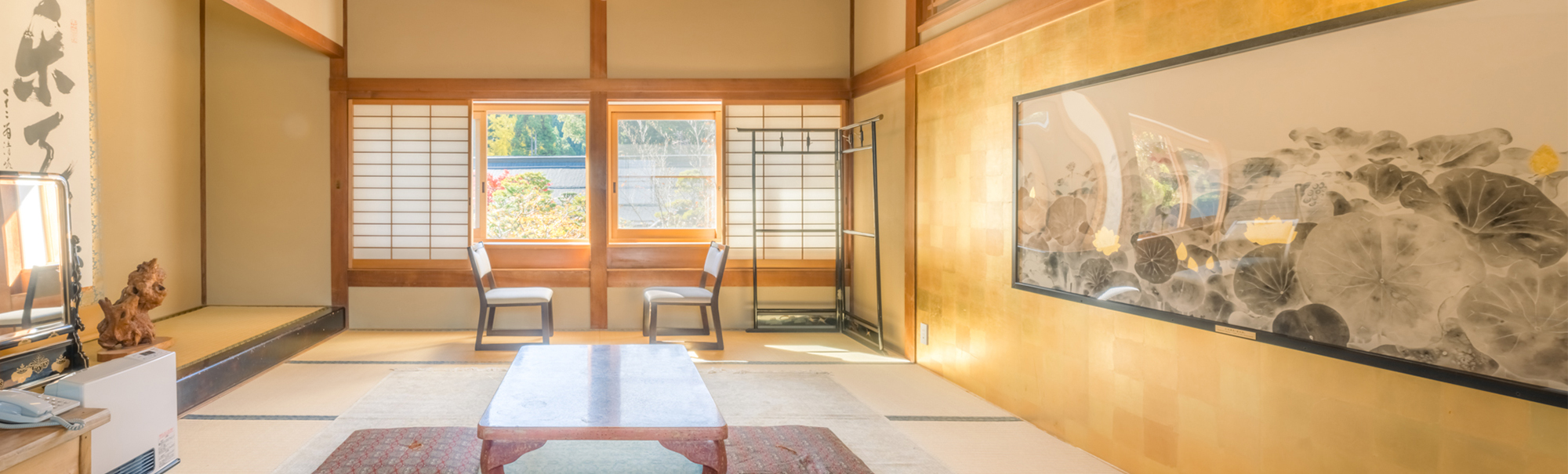
Saizen-in has three Shigemori Mirei gardens, designed between 1951 and 1953 and registered as National Registered Monuments. The integration of momiji with the rock-streambed dry garden is one of the cleanest examples on Mt. Koya of how a 20th-century modernist designer worked with seasonal flora. Fewer foreign guests stay here than at Fukuchi-in, which means the gardens are quieter at the golden-hour viewing window. Combined with Fukuchi-in, a two-temple stay puts six Shigemori Mirei gardens within a 600-metre walk.
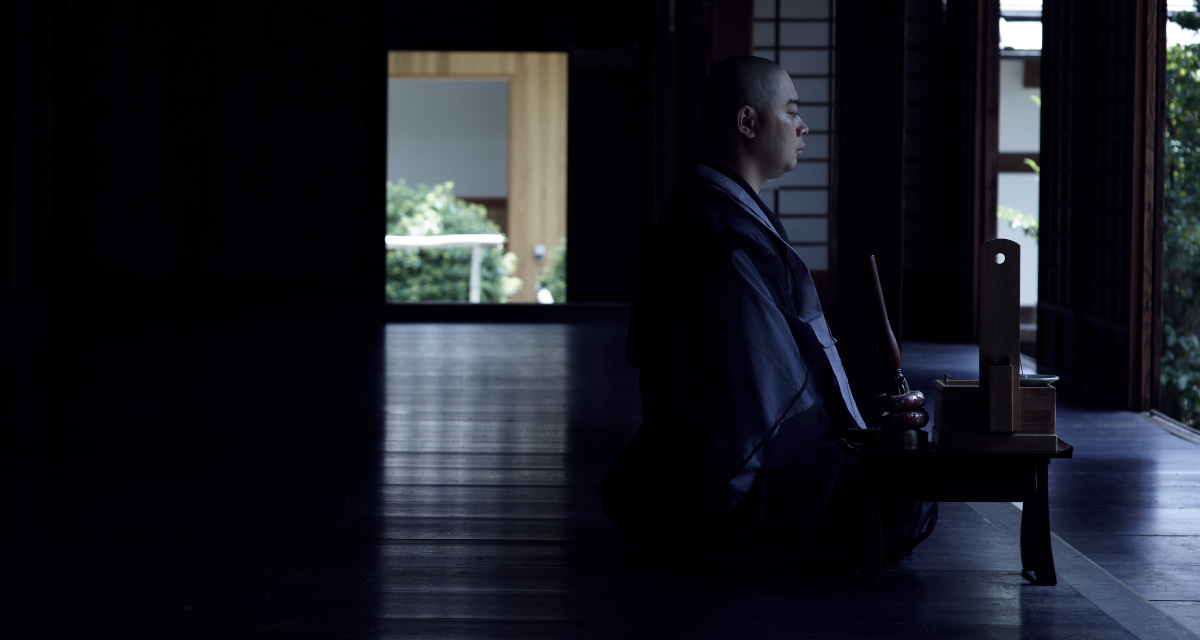
Eko-in is the flagship English-friendly shukubo on Koyasan, and in autumn it adds a particular asset: a large maple in the front courtyard that, in early November, glows scarlet against the temple’s wooden facade. The headline experience is the morning Goma fire ritual, with English explanation, performed in a hall whose paper screens admit the soft red light of the foliage outside. The combination of fire ritual and foliage-lit hall is the most photographed shukubo moment in Wakayama Prefecture and the one most likely to convert a curious traveller into a return guest.
Eko-in also runs the most accessible meditation programs on Koyasan — Ajikan visualization in the afternoon, and a guided night tour of Okunoin cemetery that, in November, passes under maple as well as cedar canopy. Booking is online in English with a real-time availability calendar, which makes it the easiest first shukubo for travellers without Japanese. The trade-off is that Eko-in is also the most internationally visited shukubo on the mountain, so the morning Goma can run 30 guests deep in peak weeks rather than the more intimate 8–12 you find at smaller temples.
Shojoshin-in sits at the entrance to Okunoin, Koyasan’s vast forest cemetery, and the short walk from the temple gate to the start of the cemetery path turns into a maple corridor in early November. Guests who book Shojoshin-in are typically there for proximity to Okunoin, and autumn rewards that decision: the same lantern-lit night walk that defines the temple in other seasons gains a foliage canopy. Morning service here is more traditional and less explained in English than Eko-in, which suits guests who want quieter ritual.
Founded in 1211, Kongo Sanmai-in holds more than 11 Important Cultural Properties and one of Koyasan’s National Treasures: a tahoto pagoda whose two-storey form is among the oldest surviving in Japan. In autumn, maple branches frame the pagoda directly, producing one of the most cited historic-Japan compositions on the mountain. Shukubo facilities here are simpler than at Fukuchi-in, but the cultural depth — and the National Treasure framed by maple — make it a serious choice for travellers who want history alongside the foliage.
The temple was founded by Hojo Masako, the politically formidable widow of the first Kamakura shogun, in memory of her late husband Minamoto no Yoritomo. That backstory matters because the building stock and the cultural property inventory reflect repeated patronage from successive military elites across eight centuries. Walking the grounds in early November, with maple dropping leaves onto an 800-year-old pagoda platform, is a more historically dense experience than the standard Koyasan shukubo offers — and the visitor numbers stay manageable because the temple does not market internationally the way Eko-in does.
Shunkoin is a Rinzai Zen sub-temple in the Myoshinji complex in northwest Kyoto. It runs the most internationally-known English meditation programs in the city and accepts overnight guests in a small set of rooms. The inner-courtyard koyo here is quiet rather than spectacular — a few mature maples in a contained garden — but the timing is the point: Shunkoin peaks in Kyoto’s later window, mid-to-late November, when the Koyasan colour is already past. For travellers extending an autumn trip into late November, Shunkoin is the most accessible Zen shukubo base in Kyoto.
Enryakuji Kaikan is the lodging arm of Enryakuji, the headquarters of Tendai Buddhism on Mt. Hiei outside Kyoto. The complex is UNESCO World Heritage and surrounded by an old-growth cypress and broadleaf forest that turns through orange and red in early November. Peak here arrives roughly two weeks ahead of Kyoto downtown because of the elevation, and the foliage is at a forest scale rather than a single-garden scale — you walk through it on the paths between Enryakuji’s halls. A one-night stay here can be sequenced cleanly with a Kyoto base for the later peak.
Tenryu-ji Matsuoka is a sub-temple of Tenryu-ji, the headline koyo destination of Arashiyama on Kyoto’s western edge. It offers shukubo-style accommodation adjacent to one of Kyoto’s most photographed momiji gardens, with peak colour mid-to-late November. Guests benefit from early morning access to Tenryu-ji’s main garden before the day-trip crowds arrive — a meaningful advantage at a temple that draws over a million visitors per year in autumn. As with Shunkoin, the timing fits Kyoto’s later peak rather than Koyasan’s earlier one.
Tenryu-ji itself is a UNESCO World Heritage site and the head temple of the Tenryu branch of Rinzai Zen. The Sogenchi pond garden, attributed to the 14th-century Zen master Muso Soseki, was designed to borrow the maple-covered Arashiyama hills as a backdrop — meaning the garden was effectively engineered for autumn colour 700 years before the JMA started forecasting it. Staying at the Matsuoka sub-temple puts a guest on the inside of the gate at sunrise, when the garden is photographable without the daytime crowd that dominates every other window.
The reason Koyasan punches above its weight in autumn is altitude. The temple plateau sits at about 800 metres, which puts it in a colder microclimate than the Kansai lowlands. Foliage there peaks roughly two weeks ahead of Kyoto downtown, which means a traveller arriving in early November will find Koyasan at full colour while Kyoto is still mostly green. The reverse holds in late November: Kyoto downtown peaks just as Koyasan’s leaves start to fall.
This is the inverse of the standard sakura insurance play. With cherry blossoms, travellers chase a south-to-north wave with Kyoto as the centre date; with koyo, the move is to combine a high-altitude mountain base with a lowland city base in one trip and let the elevation buy you a second peak. Koyasan + Kyoto across a single November week catches both. Koyasan + Hieizan in the same week catches two mountain peaks within a couple of days of each other if you are willing to transit.
Kyoto downtown peaks mid November to early December — significantly later than most foreign travellers expect. The most-photographed koyo temples in the city — Eikando, Kiyomizu-dera, Tofuku-ji, Tenryu-ji — are typically at peak around November 20 to 30, and the famous evening illumination programs (yoake or "light-up") run through early December. Travellers who book a Kyoto-only trip in early November frequently arrive to find the city still mostly green, then leave before the actual peak. That is the single most common autumn-trip mistake.
The shukubo to base from for this window are Shunkoin in northwest Kyoto and Tenryu-ji Matsuoka in Arashiyama. Both put a guest inside the late-November peak with morning access to nearby koyo temples before the day-trip crowds arrive. A 4-day Kyoto base in the last ten days of November will see far more colour than a 4-day base in the first week of the month — and bookings for the late window are typically still open four weeks out, where Koyasan’s early November is often full three months ahead.
Within Kyoto itself the practical sequencing for a four-day late-November base is: Tofuku-ji and Sennyu-ji on day one (southeast); Eikando, Nanzenji and the Philosopher’s Path on day two (east); Tenryu-ji, Jojakkoji and the Arashiyama maple corridor on day three (west); a buffer day on day four for either a return to the best temple of the previous three or a half-day at one of the lesser-known koyo spots such as Ruriko-in or Sanzen-in in Ohara. Each of these clusters is roughly a half-day on foot, and trying to combine more than two clusters in a single day in late November is defeated by both daylight and crowds.
Shigemori Mirei (1896–1975) is the 20th century’s most important Japanese garden designer. He designed six gardens on Mt. Koya: three at Fukuchi-in, three at Saizen-in, plus additional commissions at Yochi-in and Honkoin. The work is modernist in composition — sharp diagonal rock arrangements, abstract dry streambeds, deliberate negative space — but uses traditional plant materials including, critically, maple.
In autumn, the red of the momiji reads against the grey of the rocks and the moss-green of the surrounds in a way that is hard to find anywhere else in Japan. Most Shigemori gardens are at temples not normally open to overnight guests; on Koyasan, two of his major sites are inside working shukubo. A two-night stay split between Fukuchi-in and Saizen-in gives a single traveller access to all six of his Mt. Koya gardens during peak foliage. For a garden-focused autumn trip, that itinerary alone justifies a Koyasan booking.
Shigemori’s design philosophy treated the garden as a single composition viewed from a specific seated position inside the temple — usually a tatami viewing room with sliding screens open onto the garden. That means the highest-value moment is not walking the garden but sitting in front of it with morning tea. Shukubo guests are uniquely placed to do exactly that, before the morning service and again after breakfast. Day-trippers from Osaka, who arrive after the 09:00 cable car, miss both of those windows entirely.
Autumn is the second most-booked shukubo period after cherry season — but, as noted, the window is wider, which spreads the demand. Major Koyasan shukubo (Fukuchi-in, Eko-in, Saizen-in, Shojoshin-in) should be booked three to four months ahead for the late-October-to-mid-November peak. Kongo Sanmai-in is slightly easier and can sometimes be booked six weeks out. Kyoto Rinzai shukubo such as Shunkoin and Tenryu-ji Matsuoka are typically bookable two to three months ahead for the late-November window.
Channels matter for autumn pricing. Direct booking via the temple’s own website is usually the best rate and gives the temple the highest margin — important if you care about temple economics. Stay22 covers most major shukubo via aggregated inventory. Trip.com is the strongest channel for Chinese-language travellers, especially the zh-tw audience, and often has Koyasan rooms still showing when the temple’s own form says full. Klook handles experience add-ons (meditation classes, guided night walks) better than rooms.
Pricing in autumn runs roughly 10–20% above the temple’s low-season rate. Expect ¥18,000–¥30,000 per person per night including dinner and breakfast at the major Koyasan shukubo (Fukuchi-in, Eko-in), ¥12,000–¥20,000 at smaller temples (Saizen-in, Shojoshin-in, Kongo Sanmai-in), and ¥10,000–¥18,000 at the Kyoto Rinzai shukubo. Single-occupancy supplements are real and can add 30–50% to the per-person rate. Twin and family rooms exist at the larger shukubo but are limited to a handful of rooms per temple, which means they fill first in peak weeks.
Tip
Most temples enforce a 14-day strict cancellation policy in peak koyo. Once you are inside that window the deposit is non-refundable. Lock in the booking when you are confident of the dates, not earlier.
Three working itineraries, calibrated to actual 2026 timing forecasts:
Two nights at Fukuchi-in plus a full day for the Okunoin maple walk and Kongo Sanmai-in for the National Treasure pagoda viewing. Spend a half-day moving through the six Shigemori Mirei gardens at Fukuchi-in and Saizen-in. This is the most concentrated koyo experience in Japan if you only have three days, and the altitude means you will see full peak even when Kyoto is still green.
Two nights on Koyasan for the early peak (Fukuchi-in or Eko-in), then the Nankai train down to Osaka and onward to Kyoto. Two nights at Shunkoin or Tenryu-ji Matsuoka, with day trips to Eikando and Tofuku-ji for evening illuminations as those temples start to colour. This itinerary deliberately uses the altitude offset to catch two peaks in one trip and is the highest-return option for a foreign traveller with one week to spend.
One night at Enryakuji Kaikan on Mt. Hiei, with a half-day for the foliage walks between the UNESCO halls on the mountain summit. Descend to Kyoto for three nights at a city shukubo or hotel base, timed for Tofuku-ji and Eikando peaks in the second half of November. This itinerary is calmer than the Koyasan-Kyoto sequence and works well for travellers who prefer Tendai temples and a quieter mountain night.
Several major koyo temples run evening illuminations — lighting the foliage from below after dark for a one-to-two-hour viewing window. Eko-in offers a guided evening walk into Okunoin in November, with the lantern-lit cemetery path doubled by the maple canopy overhead. Tenryu-ji runs a formal illumination of its main garden during peak. Eikando in Kyoto runs one of the most ticketed evening koyo events in Japan.
A practical note: most Koyasan shukubo close their gates around 21:00. If you plan to attend an evening event, book it before you check in, not after — and confirm with the temple front desk that you will return late so they do not lock you out. At larger shukubo this is routine; at smaller temples it requires explicit warning.
The single biggest packing mistake is underestimating Koyasan’s cold. Night temperatures on the plateau run 0–5°C in early November and can drop to -3°C in late November. The 5:30 a.m. walk to morning service happens before sunrise. The main halls are unheated and the floors are wood or tatami; you sit on a cushion in your socks for 30–45 minutes.
Long thermal underwear plus wool socks make the morning service tolerable and the dawn walk genuinely enjoyable. October and November in Wakayama see about 30% rainy days — lower than April but still high enough that an umbrella is mandatory. A weather-sealed camera helps if the budget allows. Evening illumination visits frequently run past gate-close time at the temple; a small flashlight (or a phone with a good torch) makes the walk back to the shukubo easier on unlit mountain paths.
A second packing note specific to autumn: disposable hand warmers (kairo) sold in any Japanese convenience store for ¥100–¥200 each make a meaningful difference for the pre-dawn morning service. Slip one into each glove and one into the back pocket of your jacket and the cold drops from a problem to a non-issue within ten minutes. The temple will not provide these. The convenience store at the foot of the Koyasan cable car stocks them from late October onwards; pick up four or five on the way up the mountain and you will use all of them across a two-night stay.
Tip
Pack a thin pair of indoor socks separate from the wool outdoor socks. You will be removing shoes constantly — entrance, dining hall, main hall — and clean indoor socks are the most reliable way to stay warm without tracking wet leaves onto tatami.
Temple grounds in peak koyo are full of photographers. A few working rules that will keep you on the right side of temple staff:
Tripods are generally fine on outdoor temple grounds outside prayer hours but explicitly forbidden during the 5:30–7:30 morning service. Drones are prohibited on all UNESCO World Heritage sites, which includes Enryakuji, Koyasan’s temple core, and most of central Kyoto. Always ask before photographing inside main halls; many temples allow it with no flash, but the rule varies temple by temple and is enforced. The best light in early November is the golden hour from about 16:00 to 17:00 on Koyasan, where the sun sets around 17:00 and the angled light hits the maples through gaps in the cypress canopy.
Within roughly ±3 days for any specific temple, year over year. The Japan Meteorological Agency publishes weekly koyo forecasts from late September, and several private weather services (Weathernews, Tenki.jp) refine the forecast as cold fronts arrive. Booking three to four months out, you should target the centre of the historical peak window rather than a specific calendar date.
Yes — but skipping the overnight stay means missing the two best moments. The first is dawn light hitting the foliage from a low angle, which only the overnight guest sees before the day visitors arrive. The second is the 6 a.m. Goma fire ceremony in a foliage-lit hall at Eko-in or a Tendai morning service at Enryakuji. Day-trip foliage viewing is fine; the combined ritual + foliage experience is the actual point of the shukubo + koyo pairing.
Yes, if you are already at the temple. Tenryu-ji and Eikando run the most established evening programs and frequently require reservations. The lit foliage is a different image from the daytime one — the colour reads more deeply, and the wooden architecture behind the maples becomes the dominant background. Reservations for the Kyoto evening events typically close one to two weeks ahead during peak.
The straightforward answer is two separate trips: late March or early April for sakura, early November for koyo. The same shukubo work for both seasons, and most travellers find that one focused seasonal trip is more satisfying than two compressed half-trips trying to bridge the months between.
Larger shukubo such as Fukuchi-in and Enryakuji Kaikan have at least some accommodations — ground-floor rooms, accessible bathing facilities, and partial elevator access. Smaller temples (Saizen-in, Shojoshin-in, smaller Kongo Sanmai-in rooms) generally do not. The Koyasan plateau itself involves long walks on uneven stone paths, so even with an accessible shukubo room, mobility limitations will shape the experience. Contact the temple directly with specific needs before booking.
Microclimate. Koyasan is inland mountain at 800 metres; Eiheiji is on the Sea of Japan side of central Honshu at lower altitude. The Sea of Japan weather pattern delays the autumn cold front compared to Wakayama’s inland mountain, and Eiheiji’s lower elevation reduces the altitude advantage that Koyasan enjoys. The result is that Eiheiji peaks mid-to-late November, roughly aligned with Kyoto downtown rather than with Koyasan.
Visually yes. The foliage-lit hall at Eko-in in early November, with the priest burning prayer sticks in the central altar fire while red maple light filters through the paper screens, is the most cinematic version of the Goma. The ritual itself is identical to the rest of the year; the autumn light is what changes.
Tip
Book three to four months ahead for Koyasan early-November dates and two to three months ahead for Kyoto late-November dates.
Tip
Check the Japan Meteorological Agency koyo forecast weekly from late September and adjust travel dates ±3 days if your booking allows.
Tip
Pack thermal layers and wool socks for sub-zero pre-dawn mornings even in early November. Unheated main halls magnify the cold.
Tip
Build Koyasan and Kyoto into the same trip to use the altitude offset — two peaks in one week instead of one.
Tip
Reserve evening illumination tickets at least one to two weeks ahead; the Tenryu-ji and Eikando programs sell out fastest.
Koyo and shukubo together are arguably the highest version of Japanese seasonal travel. The window is wider than sakura, the visual register is more compatible with temple architecture, and the season is matched to a religious tradition that has spent more than a thousand years contemplating impermanence. The eight temples mapped above span a four-week peak rolling roughly south through Japan, from Hieizan and Koyasan in late October and early November to Kyoto downtown in late November.
Plan once, time it carefully, and the result is a trip that almost no other form of travel in Japan can match: red maple framing 1,200-year-old wooden halls at dawn, the smell of incense in cold mountain air, and the rhythm of a temple day that exists entirely outside the modern travel timetable. For most travellers, the cherry blossom season gets the headline. The koyo + shukubo combination, with its longer window, lower crowds and tighter visual fit with traditional architecture, often delivers the deeper trip — and at temples that have been preparing for the same season for the better part of a thousand years.
Ready to book?
Browse our curated collection of authentic Buddhist temple stays across Japan. Filter by region, sect, and experience.
Start ExploringRecommended Temples for This Guide
福智院
The only Koyasan shukubo with a natural hot spring, three Mirei Shigemori gardens, and refined shojin ryori.
from $175 /per night
西禅院
A bekkaku-honzan Koyasan shukubo with three Mirei Shigemori gardens, only 15 guest rooms, and ties to Shinran Shonin.
from $150 /per night
恵光院
A flagship Koyasan shukubo with English-guided Goma fire ceremony, Ajikan meditation, and nightly Okunoin tours.
from $130 /per night
春光院
Kyoto's most internationally renowned Zen shukubo, offering English-led meditation classes and modern en-suite rooms inside a 1590 Myoshin-ji sub-temple.
from $60 /per night

延暦寺会館
The only shukubo on Mt. Hiei, located inside UNESCO-listed Enryaku-ji with a 6:30 morning service in the National Treasure Konponchudo and panoramic Lake Biwa views.
from $130 /per night
Explore Destinations

