
|
|
|
|
|
|
A historic Koyasan shukubo built by Hojo Masako in 1211, home to a National Treasure Tahoto pagoda and over a dozen Important Cultural Properties.
Erected in 1223 by the noble lady Hojo Masako, this two-story Tahoto is Japan's second oldest after Ishiyama-dera. It was designated a National Treasure in 1900 and is part of the UNESCO World Heritage Sacred Sites of the Kii Mountain Range.
Commissioned in 1211 by Hojo Masako, the "Nun Shogun," to pray for the souls of her husband Minamoto no Yoritomo and her son Sanetomo. The temple preserves over a dozen Important Cultural Properties.
Set just off the main street of Koyasan in a quiet wooded compound, Kongo-Sanmai-in offers shojin ryori dinners, morning service in the historic main hall, and tatami-room lodging within a living National Treasure precinct.
Nearest Station
Koyasan Station (cable car)
From Kansai Airport (KIX)
1. JR Haruka Express → Kyoto Station ~75 min
2. Local train/taxi → Koyasan Station (cable car) ~10 min
From Tokyo
1. Tokaido Shinkansen → Kyoto Station ~2h 15m
2. Local transit → Koyasan Station (cable car) ~10 min
From Osaka
1. JR Special Rapid → Kyoto Station ~30 min
or Hankyu Railway → Kawaramachi ~45 min
Tip: Purchase an IC card (ICOCA or Suica) at any station for easy tap-and-go on buses and trains.
💡 Save with a Japan Rail Pass
Covers unlimited Shinkansen + local JR trains
12 questions about Kongo-Sanmai-in
Erected in 1223 by the noble lady Hojo Masako, this two-story Tahoto is Japan's second oldest after Ishiyama-dera. It was designated a National Treasure in 1900 and is part of the UNESCO World Heritage Sacred Sites of the Kii Mountain Range.
Commissioned in 1211 by Hojo Masako, the "Nun Shogun," to pray for the souls of her husband Minamoto no Yoritomo and her son Sanetomo. The temple preserves over a dozen Important Cultural Properties.
Set just off the main street of Koyasan in a quiet wooded compound, Kongo-Sanmai-in offers shojin ryori dinners, morning service in the historic main hall, and tatami-room lodging within a living National Treasure precinct.
12 questions about Kongo-Sanmai-in
More in Koyasan
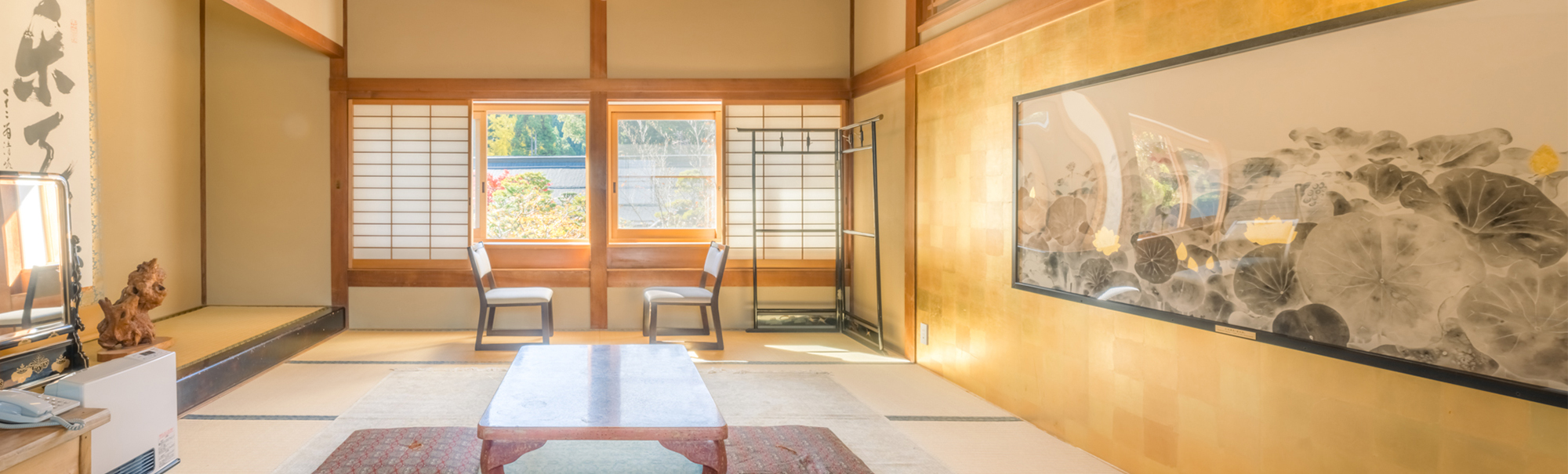
恵光院
A flagship Koyasan shukubo with English-guided Goma fire ceremony, Ajikan meditation, and nightly Okunoin tours.
from $130/night

福智院
The only Koyasan shukubo with a natural hot spring, three Mirei Shigemori gardens, and refined shojin ryori.
from $175/night
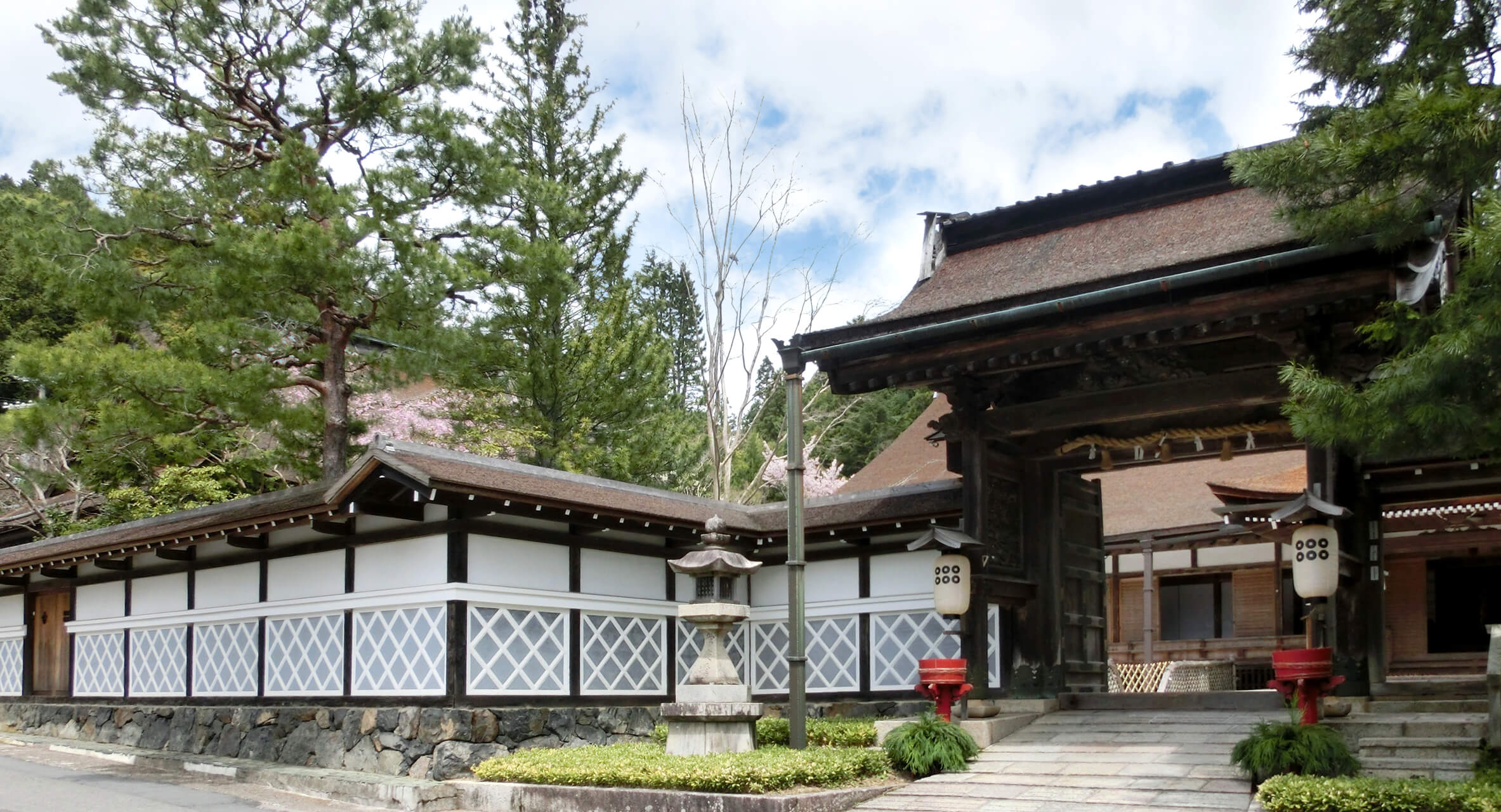
蓮華定院
A Sanada-family bodaiji shukubo on Mt. Koya with English-speaking monks, just 13 rooms, and a strong samurai-era heritage.
from $230/night