|
|
|
|
|
|
If you stand at the summit of Mt. Hiei on a clear morning and look east, Lake Biwa fills the valley below like a sheet of beaten silver. Look west and the rooftops of Kyoto run to the horizon, hazed in the smoke of a thousand kitchens. Between those two views, in a cedar forest that has been continuously inhabited by monks since the year 788, sits Enryaku-ji — not a single temple but a sprawling monastic complex of roughly a hundred and fifty buildings spread across three precincts. This is the head temple of Tendai Buddhism, a UNESCO World Heritage site, and, by general agreement among Japanese historians, the single most important location in the entire history of Japanese Buddhism. Almost every major school that followed was founded by a monk who first trained here. They call Mt. Hiei the Mother Mountain — *Nihon Bukkyo no haha-yama*, the mother mountain of Japanese Buddhism — and the name is not poetic exaggeration. It is close to literal.
And yet Mt. Hiei is one of the most overlooked temple-stay destinations in Japan. Travelers pour into Koyasan and queue for a night at Eiheiji, but the mountain that produced the founders of both those traditions sits forty minutes from central Kyoto and is, on most days, nearly empty of foreign visitors. You can sleep on the mountain in a *shukubo* (temple lodging) run by Enryaku-ji itself, attend a pre-dawn Tendai service in a hall where the same liturgy has been chanted for over twelve hundred years, and walk forest paths once trodden by the most influential religious figures Japan has ever produced. This is the guide to doing exactly that — what staying here is actually like, the extraordinary story of the marathon monks, and how to fit it into a Kyoto trip without it feeling like a detour.
To understand why this mountain matters, start with the man who climbed it. In 788, a young monk named Saicho — later given the posthumous title Dengyo Daishi — built a small hermitage near the summit and carved a statue of the healing Buddha Yakushi Nyorai by lamplight. He was disillusioned with the worldly, politically entangled Buddhism of the old capital at Nara, and he wanted a clean mountain on which to practice something purer. That hermitage became the Konpon Chudo, the central hall of Enryaku-ji, and Saicho went on to travel to Tang-dynasty China, return with the teachings of the Tiantai school, and establish Tendai Buddhism as a comprehensive, integrating tradition — one that held meditation, esoteric ritual, monastic discipline, and the universalist message of the Lotus Sutra in a single embrace.
What makes Tendai pivotal is precisely that comprehensiveness. Because Enryaku-ji taught a little of everything, it became the great university of medieval Japanese Buddhism — the place an ambitious young monk went to receive a complete education before, in many cases, breaking away to found something of his own. The list of those who trained on Mt. Hiei reads like the entire founding cast of Japanese religion. Honen, who founded Pure Land Buddhism (Jodo-shu), studied here. Shinran, his disciple who founded the True Pure Land school (Jodo Shinshu) that is now Japan's largest Buddhist denomination, trained here for twenty years. Dogen, who would bring Soto Zen back from China and found Eiheiji, began as a Tendai monk here. Eisai, who introduced Rinzai Zen, trained here. Nichiren, whose chanting of the Lotus Sutra title founded the school that bears his name, studied here. Five of the most consequential figures in Japanese religious history all passed through these same forests.
That is the sense in which Mt. Hiei is the Mother Mountain. Koyasan is the cradle of Shingon and Eiheiji the seat of Soto Zen, but each is essentially one tradition expressed at its source. Mt. Hiei is the trunk from which a whole forest of Japanese Buddhism branched. Stand in the Konpon Chudo and you are standing at the root of Pure Land devotion, Zen meditation, and Nichiren chanting alike — three movements that between them account for the overwhelming majority of practicing Buddhists in Japan today. We compare the founding sources of the major sects in our [Buddhist sect comparison guide](/blog/buddhist-sect-comparison); Mt. Hiei is where several of those threads begin.
It helps to understand what kind of Buddhism Tendai actually is, because it differs from the traditions most travelers arrive already knowing. Tendai is not a single narrow practice but a deliberately integrated system. At its doctrinal center sits the Lotus Sutra, which Tendai reads as the Buddha's ultimate teaching and as the basis for a radical claim: that all beings, without exception, possess Buddha-nature and can attain enlightenment. Around that core, Tendai gathered the full toolkit of medieval Buddhism — esoteric ritual inherited from the same Chinese sources as Shingon, precept-based monastic discipline, scholastic study, and several distinct streams of meditation. A monk training here did not specialize early. He was expected to master a little of everything, which is precisely why so many of his successors had the breadth to leave and found their own focused schools.
Enryaku-ji was inscribed as a UNESCO World Heritage site in 1994, as part of the "Historic Monuments of Ancient Kyoto," alongside Kiyomizu-dera, Kinkaku-ji, and the other great temples of the old capital. But its history was not always serene. In 1571 the warlord Oda Nobunaga, who saw the warrior-monks of Mt. Hiei as a political and military threat, burned the entire complex to the ground and slaughtered thousands. Almost everything you see today was rebuilt afterward, the Konpon Chudo restored under the Tokugawa shogunate in 1642. The mountain has been razed and resurrected, and the unbroken thread is not the buildings but the practice — the liturgy, the lineage, and a single unextinguished flame we will return to shortly.
The main lodging on the mountain is the Enryaku-ji Kaikan, a temple-run guesthouse perched near the Tozu (East Pagoda) precinct with a long view east over Lake Biwa. It is the right base for almost every traveler. Unlike the austere monastic lodging at Eiheiji, the Kaikan is comfortable and welcoming — closer in feel to a mountain ryokan than to a barracks — while still being run by the temple and woven into the rhythm of monastic life. Rooms are tatami-floored with futon bedding, there is a large communal bath (a *daiyokujo*) with a sweeping lake view that is the single most memorable feature of the building, and the dining room serves *shojin ryori*, the Buddhist vegetarian cuisine prepared without meat, fish, or pungent vegetables.
A standard overnight stay follows the familiar shukubo pattern: one night with dinner and breakfast included. Check-in is in the afternoon, typically from around 15:00, and you are expected to arrive in time for the early dinner. The shojin ryori here leans seasonal and restrained — sesame tofu, simmered mountain vegetables, tempura of wild greens, pickles, miso soup, and rice — the kind of meal that looks modest and turns out to be quietly precise. Portions are generous enough that nobody leaves hungry, a common worry among first-time guests who imagine monastic food as deprivation. It is not. It is vegetables treated with the seriousness most restaurants reserve for meat.
Tip
The Enryaku-ji Kaikan is a mountain-top building and the temperature drops sharply after sunset, even in summer. The lake-view bath is wonderful precisely because the air outside is cold. Pack a warm layer for the evening and early morning regardless of season — the summit can be ten degrees cooler than central Kyoto.
The reason to stay overnight rather than visit on a day trip is the morning. Day visitors arrive after the cable cars start running, which means they miss the thing that makes a shukubo stay worth the effort: the pre-dawn service. Guests at the Kaikan are invited to join the morning practice (*otsutome*) in the Konpon Chudo, the central hall, while the mountain is still dark and the day-trippers are an hour from the valley below. You sit in the cold half-light as Tendai monks chant the liturgy, the sutras rolling in a deep collective register, and gradually the great hall fills with the gray of dawn. There is no requirement to understand a word of it. The point is to be present in a room where this exact sequence of sounds has been performed, more or less unchanged, since before the Norman Conquest of England.
Some stays also offer hands-on Tendai practice: *shakyo* (sutra copying), in which you trace or brush the characters of a short sutra with ink, and seated meditation in the Tendai style. Tendai meditation is worth a word here, because it differs from the Zen *zazen* most travelers have heard of. Where Zen sits facing a wall in silence, the Tendai tradition includes a practice called *shikan* — "stopping and seeing" — that balances calming the mind with insight, and historically a famously demanding regimen of constant walking-and-chanting meditation. If you have only ever encountered Japanese meditation through the Zen lens, our [zazen experience guide](/blog/zazen-experience-japan) explains that side; Tendai practice is a broader, older, more ritually layered cousin.
Tip
Confirm in advance exactly which morning activities your booking includes. The pre-dawn service at the Konpon Chudo is the core experience and is generally open to overnight guests, but sutra copying and guided meditation can depend on the season, the day, and how many monks are available. Ask when you reserve rather than assuming.
A practical word on rhythm, because the day on the mountain runs earlier than most travelers expect. Dinner at the Kaikan is served early, often around 17:30 to 18:00, and the building grows quiet not long after — there is no nightlife on a mountain summit, and the next morning starts before dawn. This is the natural shape of a shukubo and it is part of the point: an evening with no screens worth looking at and a forced early night resets the body for the morning service in a way that an ordinary hotel does not. Bring something to read, accept the early bedtime rather than fighting it, and you will find the dawn far easier to meet than you feared.
No account of Mt. Hiei is complete without the *kaihogyo*, the most extreme ascetic practice in living Japanese Buddhism and one of the most demanding feats of human endurance anywhere. The word means, roughly, "circling the mountain in practice," and it refers to a regimen in which a Tendai monk walks the trails of Mt. Hiei, stopping to pray at hundreds of designated sites along the way, for a cumulative total that — if completed in full — adds up to the kaihogyo thousand-day challenge: the *sennichi kaihogyo*, the thousand-day mountain pilgrimage.
The scale of it is hard to grasp until you see the numbers laid out. The thousand days are spread across seven years. In each of the first three years the monk walks roughly thirty kilometers a day for a hundred consecutive days. In years four and five, a hundred days each again, still thirty kilometers daily. Then the practice escalates. In the sixth year the daily distance jumps to about sixty kilometers for a hundred days. In the seventh year it reaches roughly eighty-four kilometers a day — twice a marathon — for a hundred days, much of it through the night, the monk pausing at each of hundreds of stations to chant. The walking is done in straw sandals and white robes, in all weather, on mountain trails, for hours that begin around one or two in the morning. By the end the monk has covered a distance roughly equivalent to walking around the Earth.
The hardest part is not even the walking. Partway through, around the seven-hundred-day mark, the monk undertakes the *doiri* — a nine-day fast in which he neither eats, drinks, sleeps, nor lies down, sitting in a hall reciting a mantra over a hundred thousand times while attendants watch to make sure he does not die. Historically the doiri ran longer and was understood to bring the practitioner to the literal edge of death; the ordeal is meant to dissolve the self so completely that what walks the mountain afterward is no longer an ordinary man. There is a detail that conveys the seriousness better than any statistic: a monk who begins the thousand-day pilgrimage carries a short rope and a knife. The vow is absolute. If he cannot complete the practice, he is bound by tradition to take his own life. The implements are not symbolic. They are carried.
Because of that vow, the number who have completed the full thousand days is astonishingly small. In the roughly four-and-a-half centuries since detailed records begin, fewer than fifty monks are recorded as having finished the sennichi kaihogyo. A monk who completes it becomes a *daigyoman ajari* — a "saintly master of the highest practice" — and historically would be received in audience by the Emperor. These are not figures from a remote past. The practice is ongoing. Living monks have completed it in recent decades, and one or another monk is somewhere in the multi-year cycle on the mountain even now. The kaihogyo is the reason Mt. Hiei is sometimes described, only half in metaphor, as a mountain that still manufactures saints.
Tip
Do not come to Mt. Hiei expecting to see a marathon monk. The practice happens largely in the small hours, on remote trails, and is not a spectacle staged for visitors. A handful of monks are mid-pilgrimage in any given year and the odds of crossing paths with one on a tourist itinerary are very low. Treat any encounter as extraordinary good fortune, not an entry on a schedule.
Why does the tradition value this? The Tendai answer is that the kaihogyo is not athletic at all — it is a vehicle for the doctrine that all things possess Buddha-nature and that enlightenment can be realized in this very body. Walking the mountain, bowing to every stream and stone and shrine along the route, is a way of treating the entire landscape as sacred and of grinding the ordinary ego down through sheer relentless practice until something else can be seen. Whether or not one accepts the metaphysics, the human fact remains: on this mountain, people still subject themselves to one of the most severe disciplines ever devised, for reasons that have nothing to do with anything you can buy. Knowing that as you walk the same trails between the temple halls changes the quality of the walk.
Enryaku-ji is not a single building you tick off in twenty minutes; it is three distinct precincts spread across the mountain, connected by forest paths and a shuttle bus, and seeing all three is a half-day of pleasant walking. The three areas are the Todo (East Pagoda) zone, the Saito (West Pagoda) zone, and the Yokawa zone, each with its own character and its own historical significance. Plan for at least three to four hours if you want to see all three properly, or concentrate on the Todo if your time is short.
The Todo (East Pagoda) area is the spiritual heart and the place to begin. This is where Saicho first built his hermitage, and it contains the Konpon Chudo, the central hall and a designated National Treasure. The hall is large, dim, and unusually atmospheric: the floor of the worship area is raised above a sunken inner sanctuary, so that the principal images sit at the eye level of a standing visitor and the whole space feels as though it descends into the mountain. In front of the central altar burn three oil lamps known as the "inextinguishable Dharma lights" (*fumetsu no hoto*) — flames said to have been kept continuously alight since Saicho lit them more than twelve hundred years ago. They survived even Nobunaga's burning because flame had been carried to a branch temple beforehand and brought back to relight them. To stand before a fire that has not gone out in twelve centuries is the quiet climax of any visit.
The Saito (West Pagoda) area, a short walk or shuttle ride from the Todo, is quieter and more forested, and many visitors find it the most beautiful of the three. Its centerpiece is the Shaka-do, the oldest surviving building in the entire complex, relocated here from a temple in Otsu after Nobunaga's destruction. The walk between the Todo and Saito passes beneath towering cedars and is itself part of the kaihogyo route; you are literally walking a fragment of the marathon monks' course. The Ninai-do, a pair of identical halls connected by a corridor, is associated with a legendary strongman monk who is said to have carried both on a pole across his shoulders. The Saito rewards slowing down.
The Yokawa area is the most remote, a further bus ride to the north, and consequently the least visited. Its striking red Yokawa Chudo seems to float on stilts over the hillside. This is where Shinran is said to have undergone the crisis of doubt that eventually led him down the mountain to Honen and the Pure Land path, and where Genshin wrote the text that shaped Japanese visions of paradise and hell. If you have a full day and want the contemplative far end of the mountain with almost nobody around, Yokawa is worth the extra travel; if you have a single morning, it is the precinct to skip without guilt.
Mt. Hiei straddles the border between Kyoto and Shiga prefectures, and you can approach it from either side, each with its own cable car. The classic and most scenic route is from the Shiga side, via the lakeside town of Sakamoto in Otsu. From Kyoto, take the JR Kosei Line or the Keihan Ishiyama-Sakamoto Line to Sakamoto (around fifteen to twenty minutes), then ride the Sakamoto Cable Car — Japan's longest funicular at over two kilometers — up through the forest to a station near the Todo precinct. Sakamoto itself is worth a little time before you ascend: it is a historic temple town of beautiful stone walls (the *anozumi* masonry) built by the same guild of stonemasons over centuries, and the lower temple Hiyoshi Taisha is a fine warm-up.
From the Kyoto side, the route runs via the Eizan Cable Car and Ropeway from Yase, reachable on the Eizan Electric Railway from Demachiyanagi in northeast Kyoto. There is also a direct Hieizan Driveway and a seasonal bus network that connects Kyoto, the summit, and the various precincts. For most travelers staying overnight, the simplest plan is to reach Sakamoto by train, take the cable car up in the afternoon, and have the Enryaku-ji Kaikan handle the rest. Confirm cable car operating hours when you book — they do not run late, and an overnight guest who misses the last ascent has a problem.
Tip
Check the last cable car departure for the day you arrive, especially in winter when services finish earlier and the schedule thins out. If you are arriving in the late afternoon for an overnight stay, build in a comfortable buffer — missing the final car can mean a long, expensive taxi up the Driveway or no way up at all.
Mt. Hiei's greatest practical advantage over Koyasan and Eiheiji is proximity. Koyasan is a ninety-minute haul south of Osaka; Eiheiji is two and a half hours from Kyoto into the mountains of Fukui. Mt. Hiei is on Kyoto's doorstep — the summit is reachable in well under an hour from the city center. This means you can fold an overnight temple stay into a Kyoto itinerary without sacrificing a travel day. The natural rhythm is to spend your Kyoto days on the great city temples, then take a late-afternoon train to Sakamoto, ascend for a night on the mountain, attend the dawn service, and be back down in the city by late morning for the rest of your trip.
The contrast is part of the appeal. Kyoto's temples are magnificent but heavily visited; a single night on Mt. Hiei resets the register entirely — cold air, near-silence, a working mountain monastery rather than a sightseeing queue. If you want a fuller picture of temple lodging within the city itself before or after your mountain night, our [Kyoto temple stay guide](/blog/kyoto-temple-stay-guide) covers the in-city options, which lean toward modernized temple guesthouses rather than the full monastic experience. For travelers weighing the bigger sect-headquarters stays against each other, our [Koyasan vs Eiheiji comparison](/blog/koyasan-vs-eiheiji) sets out the trade-offs; Mt. Hiei sits in a category of its own as the older parent of both.
If you are building a multi-stop Buddhist itinerary, a compelling sequence is Mt. Hiei first, then Koyasan or Eiheiji second. Start at the Mother Mountain, where Pure Land, Zen, and Nichiren Buddhism all branched from a single trunk, and then descend into one of the daughter traditions at its own headquarters. Experienced in that order, the family tree of Japanese Buddhism stops being an abstraction and becomes a route you have physically walked.
Mt. Hiei is a high mountain and the season shapes the experience more than at lower temples. Autumn, roughly from late October through November, is the prizewinner: the maples across the three precincts turn, the forest paths between the Todo and Saito become tunnels of red and gold, and the cool clear air makes the long view over Lake Biwa especially sharp. It is also the busiest window, and overnight lodging fills earliest, so book well ahead if you are targeting the foliage.
Late spring through early summer (May into June) is the quieter sweet spot — fresh green on the cedars, comfortable walking temperatures, and far thinner crowds than autumn. Midsummer is humid in the Kyoto basin below but noticeably cooler on the summit, which makes a night on the mountain a genuine relief from the city heat. Winter is the connoisseur's season: the mountain takes real snow, the complex is hushed and nearly empty, the lake-view bath is at its most dramatic against the cold, and the dawn service in an unheated hall feels closer to the discipline the monks actually live. The trade-off is reduced transport — cable cars run shorter hours and some routes thin out — so winter rewards the prepared and punishes the casual.
Yes. You do not need to be Buddhist, and you do not need any prior practice or introduction. The Enryaku-ji Kaikan is a temple-run shukubo that accepts general overnight guests, including international travelers, on the standard one-night-with-two-meals basis. You stay in a tatami room, eat shojin ryori, use the communal bath, and are invited to join the pre-dawn service — but participation in the practice is welcomed, not enforced. As at any working temple, the courtesies matter: remove your shoes where indicated, keep quiet in the halls, and treat the morning service as worship rather than a photo opportunity. Within those bounds, you are genuinely welcome.
Honestly, less than at Koyasan. Mt. Hiei sees far fewer foreign visitors than the big-name temple-stay destinations, and English support at the Kaikan is more limited than at the English-fluent shukubo of Koyasan or the bilingual concierge at Eiheiji's Hakujukan. You can manage a stay with basic Japanese phrases, a translation app, and patience, and the staff are accustomed to helping guests through the essentials. But do not expect English-led tours or detailed English explanation of the liturgy. If you want polished English handling, booking through an experience platform or a guide who covers Mt. Hiei is worth considering. The flip side of the thin English support is the thin crowds — part of why the mountain still feels like a discovery.
Almost certainly not, and you should not plan around it. Only a small number of monks are mid-pilgrimage in any given year, the walking happens largely between roughly one and dawn on remote trails, and it is a religious practice, not a performance staged for visitors. There is no schedule to consult and no viewing area. What you can do is walk the same forest paths the monks use — the route between the Todo and Saito precincts is part of the course — and visit the halls associated with the practice. Understanding the kaihogyo deepens the walk enormously even though you will see only the trail, not the monk on it. If you ever do cross paths with one, treat it as rare luck.
As a day trip, yes — and it is one of the best half-day escapes from the city, easily reached and far less crowded than the central temples. You can ride the cable car up, see the Todo and Saito precincts, stand before the inextinguishable Dharma lights in the Konpon Chudo, walk the cedar paths, and be back in Kyoto by evening. But the day trip misses the single best thing about Mt. Hiei, which is the pre-dawn service in an empty hall before the cable cars bring the day-trippers up. If your interest is sightseeing, a day trip is plenty. If your interest is the temple-stay experience itself — the dark, the cold, the chanting, the morning that belongs only to overnight guests — then the overnight is the whole point and the day trip is a different, lesser thing.
It is manageable but requires planning. Mt. Hiei takes real snow, and in deep winter the cable cars and ropeways run reduced hours, with some services and the seasonal Driveway buses thinning out or pausing entirely. The mountain does not close, and the Enryaku-ji Kaikan operates year-round, but you must check current transport schedules before you go and allow a generous time buffer to reach the summit before the last ascent. Dress for genuine cold — the halls are unheated and the summit can sit well below freezing. The reward for the extra care is the quietest, most atmospheric version of the mountain there is: snow on the cedars, an almost empty complex, and a dawn service that feels stripped to its essentials.
Mt. Hiei does not announce itself the way Koyasan and Eiheiji do. It has no town of fifty shukubo, no celebrated night cemetery, no 3:30 wake-up legend that travelers trade like a badge. What it has is older and quieter: the root system of Japanese Buddhism, a fire that has burned for twelve hundred years, forest trails still walked by monks attempting the most severe discipline their tradition knows, and a temple-run lodge forty minutes from one of the world's great cities where you can sleep, eat the food the monks eat, and sit through the dawn liturgy in the hall where it all began.
For the traveler who has done the famous mountains, or who wants to understand where the famous mountains came from, a night on Mt. Hiei is among the most rewarding things you can do in Buddhist Japan. Take the cable car up in the afternoon, let the lake-view bath thaw the day out of you, eat your shojin ryori as the summit goes cold and dark, and set an alarm for the morning service. When the chanting starts in the half-light of the Konpon Chudo, with the inextinguishable lamps burning at the altar, you will understand why they call it the Mother Mountain — not as a slogan, but as a simple description of where you are sitting.
Ready to book?
Browse our curated collection of authentic Buddhist temple stays across Japan. Filter by region, sect, and experience.
宿坊を探すこの記事に登場する寺院

延暦寺会館
世界遺産・比叡山延暦寺の境内に宿泊できる唯一の宿坊。国宝・根本中堂での朝勤行と琵琶湖を望む眺望が魅力。
料金 $130 //泊
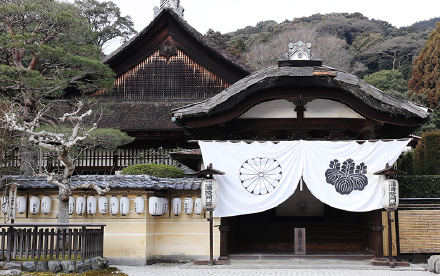
圓満院門跡 三密殿
三井寺に隣接する1000年の歴史を持つ皇室ゆかりの門跡宿坊。重要文化財「宸殿」と国指定名勝庭園、6種の文化体験が魅力。
料金 $95 //泊
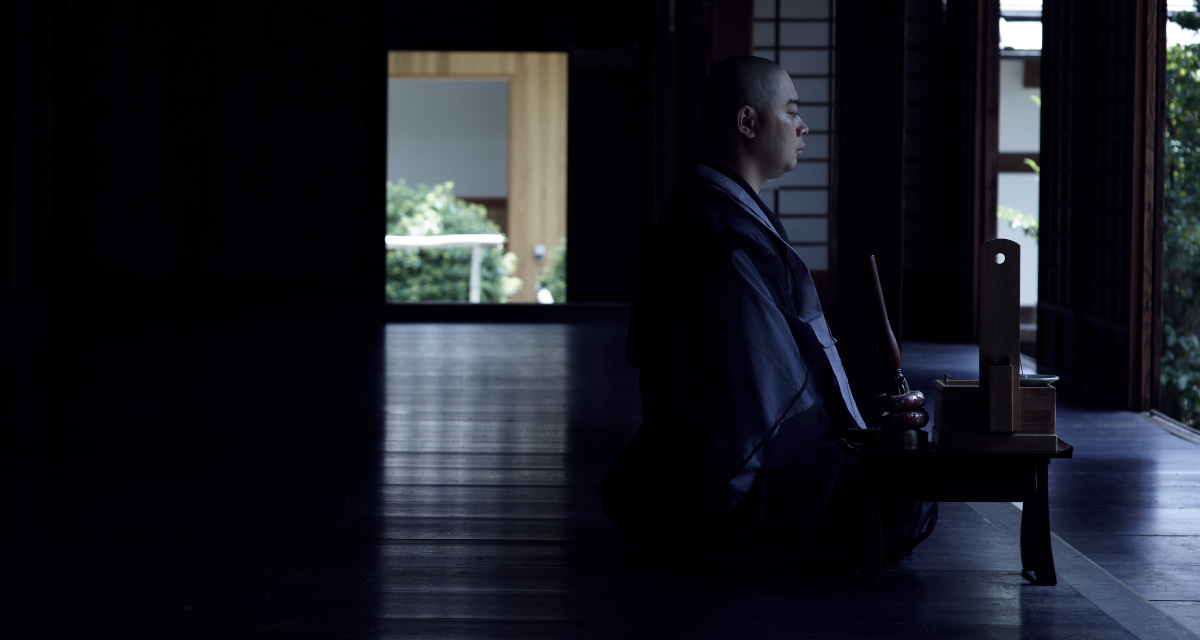
春光院
英語による禅瞑想クラスで世界的に知られる妙心寺塔頭。1590年創建、個室8室の宿坊。
料金 $60 //泊
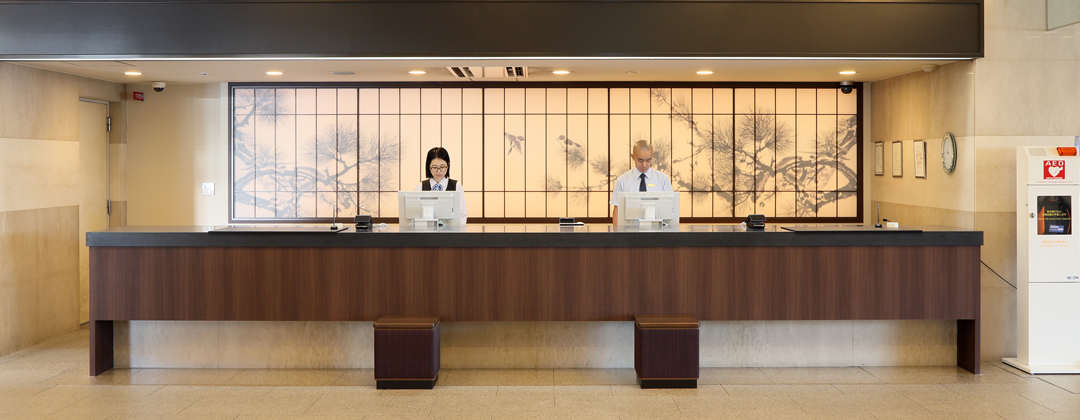
花園会館
JR花園駅近くの妙心寺直営宿坊。66室のホテル品質客室、坐禅プログラムへのアクセスも便利。
料金 $90 //泊
Explore Destinations