
|
|
|
|
|
|
 Photo by Dane Wetton on Unsplash
Here is a retreat that has been running, more or less without interruption, for about 1,200 years. It starts before dawn. The food is entirely plant-based and has been since the precepts were written down. The evenings end at nine. There are no screens in the room, the building is wrapped in cedar forest, and the day is built around meditation. Nobody designed this as wellness. It is a shukubo — a Japanese Buddhist temple lodging — and it was built in the ninth century to house pilgrims. But strip it down to its parts and you are looking at the exact stack a modern wellness brand would charge $5,000 a week to recreate: meditation, clean plant food, early sleep, no devices, forest.
This guide is for the reader who books yoga retreats, who has a meditation streak going on an app, who reads the ingredient list. You are the audience the wellness industry was built for, and you have probably noticed that most of what it sells is a hotel with a singing bowl at check-in. A shukubo is the opposite proposition: a working religious institution that happens, by the accident of how it has always operated, to deliver the things a retreat promises — without a brand, without a wellness consultant, and at roughly a third of the price. The honest catch, which we will get to, is that it is not a yoga studio. But it is a wellness retreat in the truest structural sense, and for some travellers it is a better one.
We will be honest throughout, because the worst outcome is a yoga teacher arriving at a 1,200-year-old monastery expecting a heated vinyasa class and a smoothie bar. That is not what this is. What it is, and where the genuine yoga programmes do exist, is the subject of the rest of this piece.
Take the marketing copy off a luxury wellness retreat and list what it actually offers. Daily meditation. Plant-forward, additive-free food. A digital detox. Early nights and early mornings to reset the circadian rhythm. A natural setting away from the city. Quiet. Those six things, in some combination, are the entire value proposition of an industry that turns over tens of billions of dollars a year. A shukubo provides all six as a side effect of being a functioning Buddhist temple. It did not add them; they were never not there.
The first pillar is meditation. Every shukubo runs a pre-dawn morning service — chanting, often a fire ceremony, sometimes seated meditation — and most offer an additional guided session in the evening. This is not a wellness "mindfulness moment." It is the liturgical core of the temple, the thing the building exists to do, and you are invited to sit inside it. The practice has not been softened for guests because it cannot be; the monks have to do it anyway.
The second pillar is the food. Shojin ryori — Buddhist temple cuisine — is plant-based by religious precept, not by trend. No meat, no fish, no dairy, and none of the five pungent vegetables (garlic, onion, leek, chive, scallion) that are believed to overstimulate. What is left is a seasonal, low-inflammation, whole-food diet that a nutritionist would design and a wellness retreat would headline. It has been the monastic diet for fourteen centuries. We will come back to it.
The third and fourth pillars are sleep and rhythm. A shukubo runs on a fixed early schedule: dinner around 17:30 to 18:00, curfew around 21:00, lights low, morning service at 05:30 or 06:00. If you have ever paid a sleep coach to tell you to eat earlier, dim the lights at night, and wake at a consistent hour, the shukubo simply imposes it. After two nights, most guests report the deepest sleep they have had in months — not because the futon is luxurious (it is firm) but because the entire day is engineered, accidentally, around the circadian rhythm.
The fifth pillar is the absence of screens, and the sixth is the forest. Traditional shukubo rooms have no television and weak Wi-Fi, which makes the digital detox structural rather than aspirational — we cover this in full in the dedicated digital detox at a shukubo guide. And most of the great temple-lodging destinations sit inside forest: Koyasan is a plateau of cedar at 800 metres, Eiheiji is buried in the Fukui mountains, and the Kyoto temples enclose private gardens. Forest bathing — shinrin-yoku — is not an add-on here. It is the walk to dinner.
There is a seventh thing that the wellness brochures cannot bottle and the shukubo gives away for free: a sense of scale. You are a guest, briefly, in an institution that has outlasted famines, wars, fires, and the rise and fall of every empire that has touched Japan. The cedar avenue you walk to dinner was planted by people who have been dead for centuries. The chant you hear at dawn has been sung in that hall every morning for longer than your country may have existed. Wellness, at bottom, is partly a matter of perspective — of stepping out of the small, urgent loop of your own week — and nothing resets that loop faster than standing inside a thing that measures its life in centuries while you measure yours in notifications. No retreat consultant can manufacture this. It is simply what an old, living temple feels like, and it does quiet work on the mind that the meditation and the food cannot do on their own.

Let us be direct, because this is the question that brought many readers here. Yoga is not a traditional part of a Japanese Buddhist temple stay. It is an Indian physical discipline; Japanese Buddhism arrived from India by way of China and Korea more than a thousand years ago, but it brought the meditative and philosophical lineage, not the asana practice. A traditional shukubo will offer you chanting, seated meditation, sutra copying, and a fire ceremony. It will not, by default, offer you a sun salutation. Anyone who tells you the morning service is "basically yoga" is selling something.
That said, the honest picture is more interesting than a flat no. Two things are true at once. First, the contemplative spine of a temple stay overlaps heavily with what draws people to yoga in the first place — breath, posture, stillness, attention to the body, a deliberate slowing down. The shukubo gives you the inner half of yoga without the asana. Second, and more concretely, yoga is genuinely emerging as a programmed offering at a small but growing number of temples and temple-adjacent venues, particularly in places used to international guests.
On Koyasan, temple-stay culture has become professional enough that yoga and meditation workshops, morning yoga sessions, and "temple yoga" events appear seasonally, run either by visiting instructors using a temple hall or by temples partnering with wellness operators. These are not centuries-old traditions; they are recent, deliberate experiments in offering Western wellness travellers something familiar inside a sacred space. They come and go, so you book them as a dated event rather than assuming any given temple has a standing class.
In Kyoto, the pattern is similar but broader, because the city has a deep ecosystem of yoga studios and a long history of hosting foreign practitioners. Several Kyoto temples open their halls or gardens for yoga retreats and workshops, sometimes pairing a morning zazen (seated Zen meditation) session led by a monk with a yoga session led by a separate teacher — the temple supplies the room, the silence, and the meditation; an outside instructor supplies the asana. This pairing is, frankly, the most honest and the most rewarding format: you get authentic Zen from the people who actually do it, and yoga from someone qualified to teach it, rather than a fuzzy hybrid that does neither well.
Tip
How to find actual temple yoga: search for dated retreats and workshops, not standing temple classes. Look for phrases like "yoga retreat Koyasan," "temple yoga Kyoto," or "zazen and yoga retreat," and book the specific event. When you contact a temple directly, ask precisely: "Do you offer yoga, or do you offer zazen meditation?" The answer is almost always the latter — and that is not a downgrade, it is the real thing. If a yoga practice is non-negotiable for you, base a multi-night stay near a temple and combine its meditation programme with a separate yoga studio nearby.
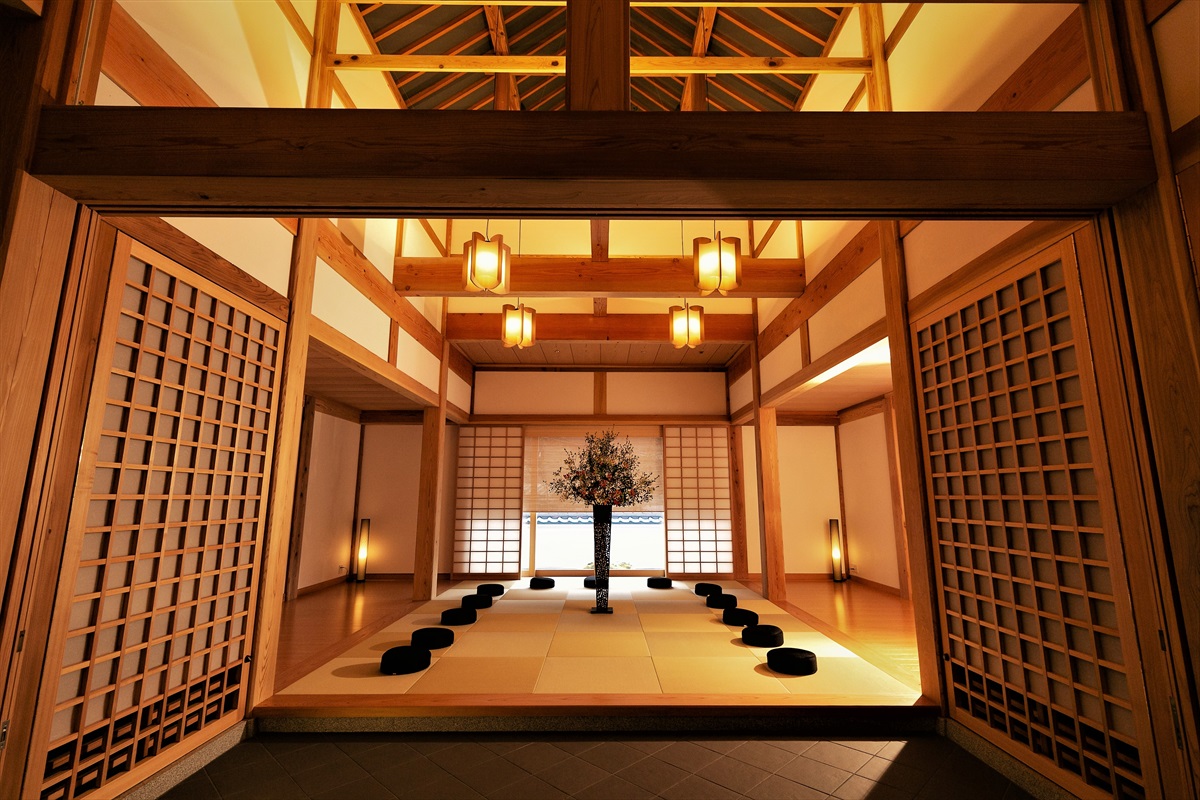
The reasonable expectation, then, is this. Treat the temple as the source of meditation, food, sleep, and forest — the things it does natively and superbly. Treat yoga as either a bonus you book as a specific dated event, or as something you bring with you and practise quietly on the tatami in your own room before the morning bell. A yoga teacher will tell you that a firm tatami floor at 05:15, with the temple silent and the cedar air coming through the screen, is one of the better places they have ever rolled out a mat. You do not need a studio for that. You need the room, and the room is the point.
What makes a shukubo work as a reset is not any single element but the way the four core elements stack and reinforce each other across a day. Wellness retreats sell these à la carte and rarely integrate them. The temple integrates them by default, because they are not features — they are simply what the day is made of.
Meditation anchors the day at both ends. The morning service at 05:30 or 06:00 starts you in stillness before the mind has spun up; the optional evening session — often ajikan, a Shingon visualisation meditation on the Sanskrit syllable "A," offered at several Koyasan temples including Eko-in — closes the day the same way. You are not meditating once and calling it wellness. You are bracketing every waking period in it. By day two this changes the texture of the hours in between.
Food sets the metabolic baseline. Two shojin ryori meals a day means no processed food, no late eating, no alcohol-heavy dinners (though most temples will quietly offer sake if asked), and a steady stream of plant protein, fermented foods, and seasonal vegetables. Your blood sugar stops spiking. Your digestion settles. This is not a juice cleanse that leaves you ravenous; it is a complete, satisfying diet that happens to be exactly what the wellness world keeps rediscovering.
Sleep does the repair. Eating at 17:30 and lying down by 21:30 gives the body the long overnight fast and the early, dark, quiet sleep window that every sleep researcher recommends and almost nobody achieves on holiday. The forest air is cool, the room is silent enough to hear the beams settle, and there is no screen to keep you up. Guests routinely sleep nine hours without trying.
Nature regulates the nervous system. Between the bracketed meditations, the clean meals, and the deep sleep sits the forest. Walk the cedar avenue to Okunoin on Koyasan, the river path at Eiheiji, or a moss garden in Kyoto, and the parasympathetic nervous system does what the studies on shinrin-yoku describe — lower cortisol, slower pulse, the felt sense of the shoulders dropping. Stacked on top of the other three, the effect compounds. This is the mechanism. There is no proprietary blend.
The compounding is the part worth dwelling on, because it is exactly what a fragmented wellness weekend cannot deliver. A spa day gives you the bath without the meditation. A meditation app gives you the sitting without the food. A vegan restaurant gives you the meal without the silence. Each one is a single pillar standing alone, and a single pillar holds up very little. The shukubo stacks all four on the same day, every day, in a sequence that has been refined over a millennium of monastic practice, and the result is greater than the sum: the meditation lands better because you slept; you sleep better because you ate early and walked the forest; the food tastes more because you ate it in silence and attention; the silence is deeper because there is no screen to break it. By the third morning, guests describe a specific, hard-to-fake calm — not the performed serenity of a retreat photoshoot, but the genuine downshift of a system that has finally been left alone long enough to recalibrate.
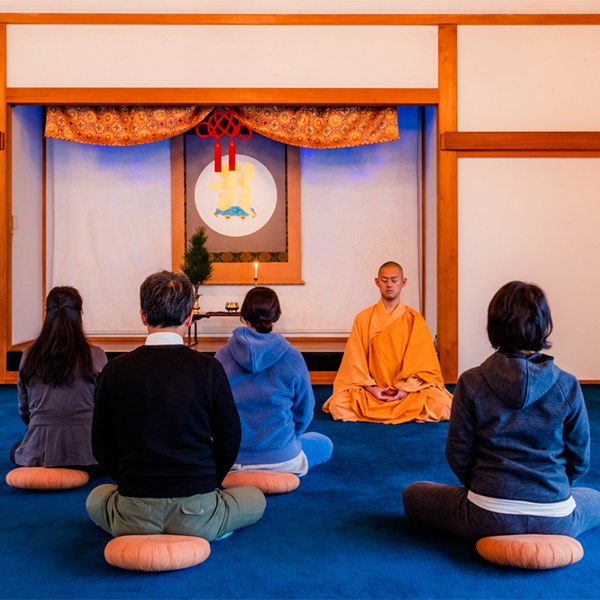
Not every shukubo is equally suited to a wellness traveller, and the differences matter. The picks below are chosen for some combination of English access, a strong meditation programme, genuinely good plant-based food, and a setting that supports the reset. They span a wide price range, and none of them charge wellness-retreat prices.
Eko-in, Koyasan is the default recommendation for a first wellness-minded temple stay, and for good reason. It runs an English-guided morning Goma fire ceremony, an evening ajikan meditation session conducted in English, an optional night tour of the Okunoin cemetery forest, and full vegan-on-request shojin ryori served in your room. English-speaking staff handle the whole experience, the meditation is legible to a newcomer, and the price sits in the mid tier rather than the premium one. If you want the complete stack — meditation, plant food, forest, detox — assembled and explained in a language you understand, start here.
Fukuchi-in, Koyasan is the choice when you want the wellness reset to include hot-spring bathing. It is one of the few Koyasan temples with a genuine onsen, which adds a recovery and circulation element the others lack — a soak after the forest walk and before the early night does real work for tired muscles and a tired mind. Fukuchi-in also offers ajikan meditation, a morning service, and vegan-friendly shojin ryori, with rooms and food at the more refined, premium-leaning end. For a yoga traveller in particular, the onsen-after-practice combination is hard to beat.
Henjoson-in, Koyasan is the value pick that does not feel like one. It carries the same Shingon meditation programme as its pricier neighbours — morning service, an ajikan-style meditation session, vegan-available shojin ryori — at a gentler price point, with a quiet, more local-feeling atmosphere. The morning service is not English-guided, so you experience it as it is rather than as a translation, which some guests prefer. If you want the authentic rhythm without the headline price, this is the reset on a budget.
Shunkoin, Kyoto is the pick for travellers who want actual seated Zen, in English, with a teacher accustomed to international guests. Inside the Myoshin-ji complex, this Rinzai temple runs full zazen meditation classes and temple tours conducted entirely in English — the morning meditation session has hosted thousands of foreign visitors. Note the honest trade-off: Shunkoin does not serve shojin ryori, so the food pillar is not part of the stay here. You come for the meditation instruction and the city base, and you handle plant-based meals at Kyoto's many vegan-friendly restaurants. For the meditation core of the wellness stack, in English, in a city you can also explore, it is the strongest option.
Hakujukan, Eiheiji is the premium, contemporary end of the spectrum. A modern Zen lodge attached to the great Soto Zen training monastery of Eiheiji, it offers guided zazen, a cypress bath, vegan-friendly shojin ryori, and a polished "Soul of Zen" programme built for first-time foreign practitioners — reliable in-room Wi-Fi included, which makes it the soft-landing exception rather than the hard-detox rule. If your idea of a wellness retreat includes design, comfort, and a contemporary aesthetic alongside authentic Zen, and your budget extends to luxury-ryokan territory, Hakujukan is the reset with the edges sanded smooth.
A note on choosing: the Koyasan temples (Eko-in, Fukuchi-in, Henjoson-in) deliver the full four-pillar stack — meditation, food, sleep, forest — most completely, because the mountain itself is the setting. The Kyoto and Eiheiji picks lean toward meditation depth and comfort respectively. For a pure wellness reset, Koyasan is the safest base; for meditation instruction in English, add or substitute Shunkoin. The zazen experience guide compares the meditation side of these temples in detail.
If you came for the food angle, here is the thing the menus do not advertise: shojin ryori is, by any modern definition, an exemplary wellness diet, and it got that way 1,400 years before the word "wellness" existed. It is fully plant-based — no meat, no fish, no dairy, no eggs — which makes it naturally vegan in its classic form, though you should still confirm at booking because some temples add bonito or egg in places. It excludes the five pungent vegetables, it relies on whole and fermented ingredients, and it is built entirely around the season.
On the tray you will find tofu in several forms, including koyadofu — the freeze-dried tofu Koyasan monks invented in the mountain winters — alongside simmered vegetables, pickles, miso soup, sesame, mountain greens, seaweed, and rice. The protein is complete and plant-derived. The fat is low and unsaturated. There is nothing fried into oblivion and nothing processed. A nutritionist designing an anti-inflammatory diet would land somewhere very close to this tray, and they would charge you for the privilege.
But the deeper wellness element is not the macronutrients; it is how you are meant to eat it. Shojin ryori is mindful eating in its original form. The meal is served in many small dishes, each with a place and an order, eaten slowly, often in silence, with attention paid to gratitude before the first bite. There is no phone at the table because the tray fills it and the room is quiet. You taste each thing. You finish, by tradition, every grain of rice. The practice of eating, not just the food, is the wellness intervention — and it transfers home in a way a juice cleanse never does. For a full dish-by-dish walk through a Koyasan tray, see the shojin ryori guide.
Tip
Booking note for plant-based travellers: shojin ryori is plant-based in principle, but request vegan explicitly at the time of booking, in writing, with at least a few days' notice. Eko-in, Fukuchi-in, and Henjoson-in all offer vegan-on-request shojin ryori; Hakujukan is vegan-friendly. Flag any other allergies (soy is unavoidable, so a soy allergy is a genuine problem here) and any gluten needs separately. Temples are gracious about this but they cook in advance, so same-day requests are hard.
A single night at a shukubo is a beautiful experience but not, honestly, a retreat — it is a sampler. The reset effect that wellness travellers are actually chasing needs at least two consecutive nights, and three or four is where it settles into the body. Here is how to assemble a real one without an operator and without retreat-package pricing.
The core is two to three nights at one temple. Book consecutive nights at a single Koyasan shukubo — Eko-in or Fukuchi-in for the full-service version, Henjoson-in for the budget version. Two consecutive nights means two morning services, two evening meditations, four shojin ryori meals, and a full middle day with no transit, which is when the reset actually installs. Resist the urge to temple-hop; the value is in repetition, not variety.
Layer your own practice onto the temple's schedule. This is where you build the wellness stack the temple does not hand you. Rise with the morning bell and do twenty minutes of yoga or stretching on the tatami in your room before the service. Walk the forest deliberately in the free afternoon hours as a moving meditation. Take the bath slowly. Read on paper in the evening. The temple supplies the frame — the early mornings, the meditation, the food, the silence — and you fill it with the body practice it leaves to you.
Add a dated yoga or meditation workshop if one is running. Before you fix dates, check whether a yoga retreat or temple-yoga workshop is scheduled on Koyasan or in Kyoto during your window, and slot your stay around it. This is the only reliable way to get genuine instructed yoga inside a temple setting, since it is event-based rather than standing.
For a Kyoto-based retreat, combine a meditation temple with a yoga studio. If your reset has to include real yoga classes, base yourself for a couple of nights at or near Shunkoin, take its English zazen in the morning, and book a nearby Kyoto yoga studio in the day. You lose some of the immersive quiet of Koyasan but gain a city full of plant-based restaurants and yoga teachers — a softer, more flexible retreat for someone not ready to go fully off-grid.
If this is your first temple stay, read the shukubo first-time guide before you book — it covers check-in timing, what to pack, the etiquette, and how the day actually runs, so you arrive knowing the rhythm rather than learning it on the fly and losing the first evening to confusion.

For most wellness travellers, the unplanned headline of a temple stay turns out to be the digital detox. You did not book it for that — you booked it for the meditation and the food — but the absence of screens is the thing that makes the rest of the stack actually land. A wellness retreat that lets you scroll between sessions is not really resetting your nervous system; it is interrupting the reset every twenty minutes. The shukubo removes that by structure, not by willpower.
The mechanism is simple and physical. Traditional rooms have no television. The Wi-Fi router lives in the lobby and barely reaches the rooms through thick wood and clay walls. The curfew kills the evening scroll because there is nothing to scroll about and nowhere lit to do it. The 05:30 service kills the morning scroll because you are in the hall before you have lifted the phone. The meals kill the eating-while-watching habit because the tray fills the table. By the second evening most guests have genuinely stopped reaching for the device — which, for the chronically online wellness traveller, is the actual reset they were paying for elsewhere and not getting.
If the digital detox is your primary goal, two structural things help. Choose a traditional temple over a modernised one — Hakujukan's in-room Wi-Fi, lovely as it is, dilutes the detox, whereas Eko-in or Henjoson-in does not. And tell your people before you go: a single message at check-in, a temple landline for genuine emergencies, and an auto-responder naming the temple and the country. We lay out the full mechanics, including the honest hard parts, in the dedicated digital detox at a shukubo guide.
Tip
Is there actual yoga at a temple stay? Not by default. Yoga is not a traditional part of Japanese Buddhist practice — a shukubo offers meditation, chanting, and sutra copying, not asana. However, instructed yoga does appear as dated workshops and retreats on Koyasan and in Kyoto, run by visiting teachers using temple halls, and you can book those as specific events. The reliable approach is to treat the temple as your source of meditation, food, sleep, and forest, and either book a separate dated yoga event or practise on your own mat on the tatami before the morning bell.
Tip
Is the food really vegan? Shojin ryori is plant-based by Buddhist precept — no meat, no fish — so it is vegan in its classic form, but it is not guaranteed: some temples occasionally include egg, dashi, or bonito. Always request vegan explicitly in writing at booking, with a few days' notice. Eko-in, Fukuchi-in, and Henjoson-in all offer vegan-on-request shojin ryori, and Hakujukan is vegan-friendly. Note that soy is everywhere in this cuisine, so a soy allergy is a real constraint to flag early.
Tip
How does the Wi-Fi and digital detox work? Traditional shukubo have a single lobby router that barely reaches the rooms, no in-room TVs, a 21:00 curfew, and a pre-dawn service — which together make for a hard digital detox without any effort on your part. If staying connected matters to you, choose a modernised lodging like Hakujukan in Eiheiji, which has reliable in-room Wi-Fi. If the detox is the point, choose a traditional Koyasan temple and tell your contacts you will be off-grid.
Tip
How many nights do I need for a real reset? At least two consecutive nights at one temple, and three or four if you can. One night is a sampler — you experience the format but the reset does not install. Two nights gives you two morning services, two evening meditations, four shojin ryori meals, and an uninterrupted middle day with no transit, which is when the nervous system actually downshifts. Book consecutive nights at a single temple rather than hopping; the value is in repetition.
Tip
What fitness level do I need? None in particular. Seated meditation requires you to sit still — on a cushion, a low bench, or a chair if your knees need it; most temples accommodate chairs. There is no physical demand beyond walking the grounds and sitting on the floor for meals, both of which you can modify. If you intend to add your own yoga practice or book a workshop, that is on you to scale to your level. The temple itself asks for stillness and attention, not flexibility or stamina.
The wellness industry sells the assembly. It hires the meditation teacher, sources the plant-based chef, designs the schedule, picks the forest, and confiscates the phones, then charges you for having put it all in one place. The quiet joke of the Japanese shukubo is that the assembly already exists, has existed for over a thousand years, and was never assembled for you at all. The monks were always going to rise at five, sit in the hall, eat from the tray, and walk under the cedars. You are simply allowed to step inside the day they were going to have anyway.
So set your expectations honestly and you will not be disappointed. You are not booking a yoga retreat — for that, bring your own mat or book a dated workshop. You are booking the deepest, oldest, and best-integrated version of the meditation-food-sleep-nature stack that the wellness world keeps trying to reinvent. The food is plant-based and exquisite. The meditation is real because the people leading it actually live by it. The sleep is the best you will get all year. The phone goes quiet on its own.
For a first wellness-minded stay, the practical recommendation is two consecutive nights at Eko-in on Koyasan — English meditation, vegan shojin ryori, the forest of Okunoin, and a hard digital detox bundled in. Add a hot-spring soak by choosing Fukuchi-in instead, go gentler on budget with Henjoson-in, base in Kyoto for English Zen at Shunkoin, or step up to the modern comfort of Hakujukan at Eiheiji. Pick one, book two nights, request the vegan tray, and bring a mat. The retreat has been ready for twelve hundred years. All you have to do is enter it.
Ready to book?
Browse our curated collection of authentic Buddhist temple stays across Japan. Filter by region, sect, and experience.
Start ExploringRecommended Temples for This Guide
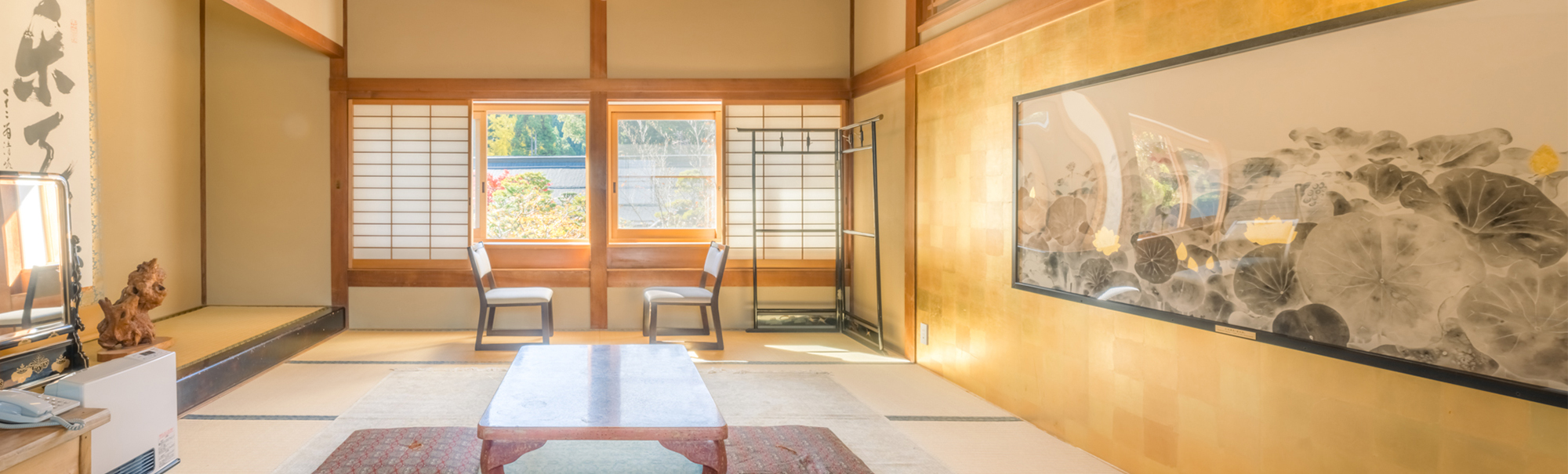
恵光院
A flagship Koyasan shukubo with English-guided Goma fire ceremony, Ajikan meditation, and nightly Okunoin tours.
from $130 /per night
福智院
The only Koyasan shukubo with a natural hot spring, three Mirei Shigemori gardens, and refined shojin ryori.
from $175 /per night
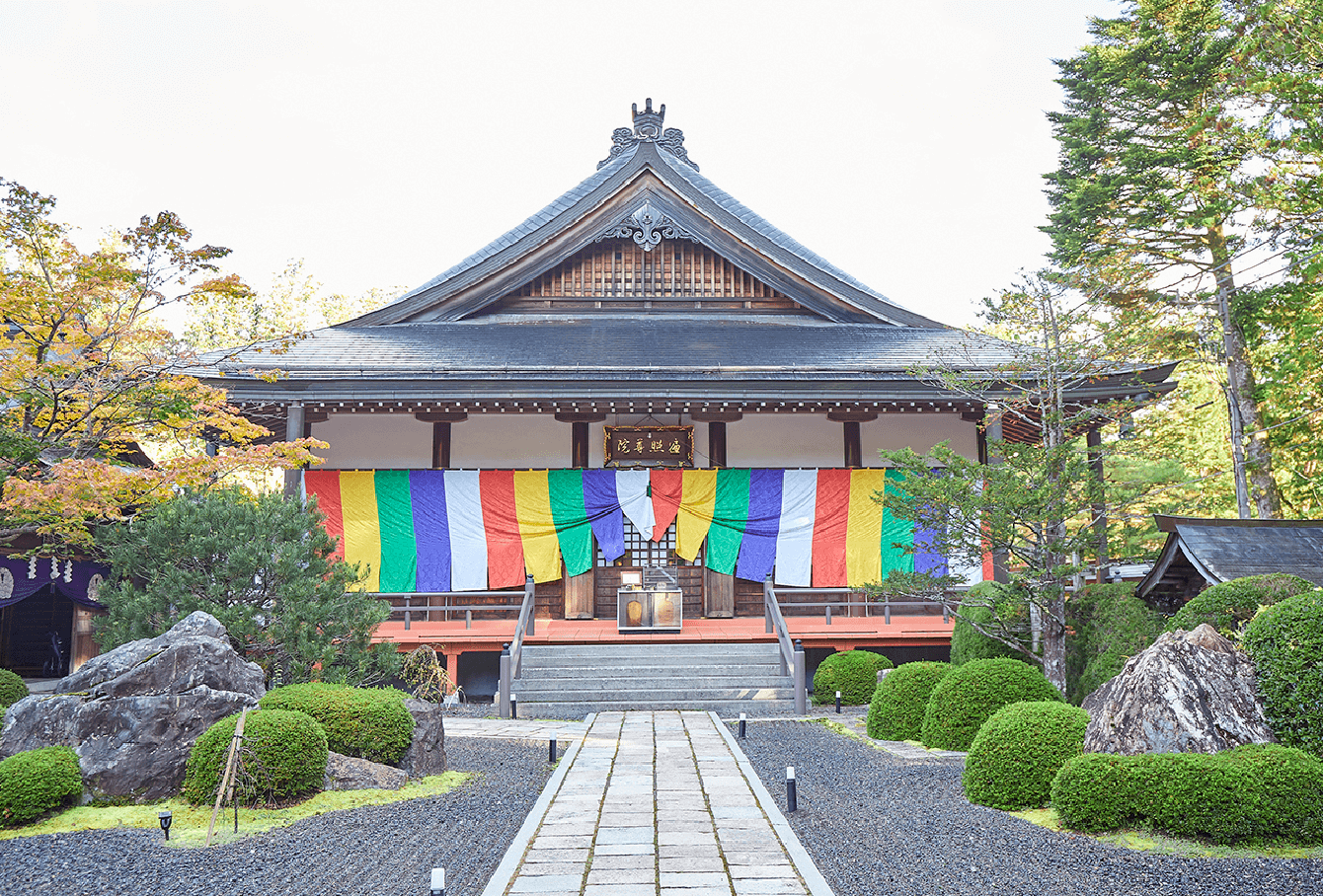
遍照尊院
A Koyasan shukubo built on the hill where Kobo Daishi practiced asceticism, with a large cypress bath and Ajikan meditation.
from $95 /per night
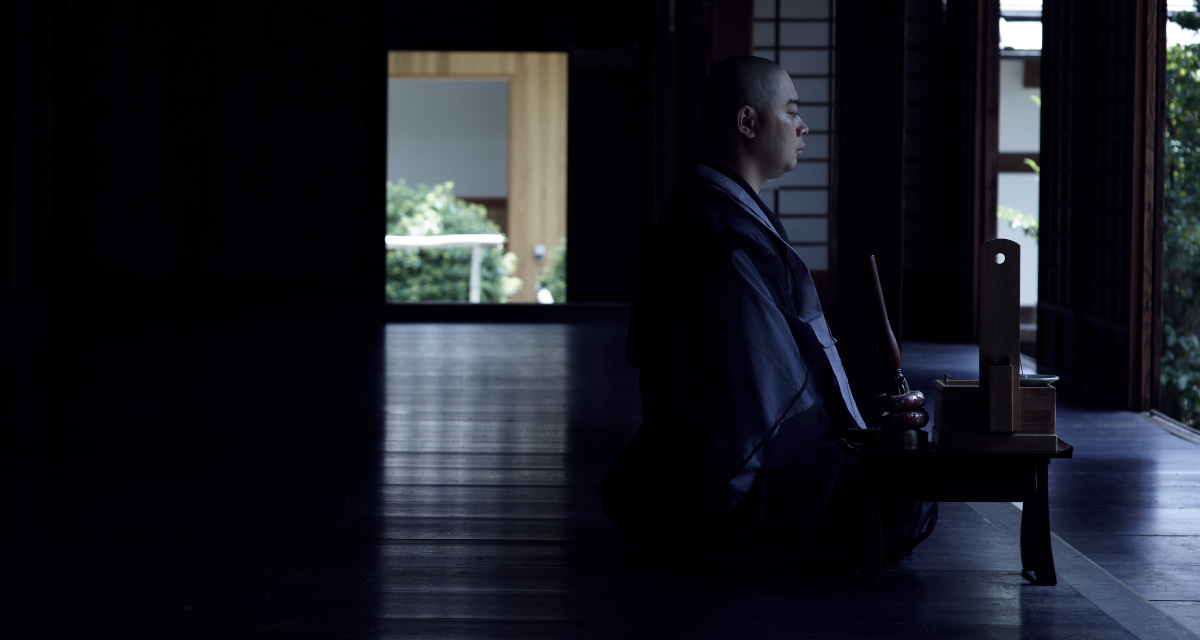
春光院
Kyoto's most internationally renowned Zen shukubo, offering English-led meditation classes and modern en-suite rooms inside a 1590 Myoshin-ji sub-temple.
from $60 /per night
永平寺 親禅の宿 柏樹関
A modern Zen inn at the gate of Eiheiji, with 18 cedar-built rooms, evening zazen and access to the temple's pre-dawn morning service.
from $195 /per night
Explore Destinations

