|
|
|
|
|
|
The honest starting point for anyone planning a summer trip to Japan is this: at sea level, between mid-June and the end of August, the country is hot and humid in a way that surprises most first-time visitors. Tokyo and Kyoto routinely sit at 34–37°C with humidity above 70%, and the cities barely cool down at night. If your image of a Japanese summer holiday is comfortable temple-garden strolls in the afternoon sun, the reality at street level will not match it. This is the single most under-communicated fact about visiting Japan in July and August.
But there is a move that almost no foreign traveller makes, and it changes everything: go up. A shukubo — Buddhist temple lodging — on a mountain plateau is a fundamentally different climate from the lowland city an hour below. *Shukubo* are concentrated in exactly the places that escape the heat: Koyasan at 800 metres, Hieizan at 848 metres, the Dewa Sanzan peaks in northern Tohoku. Standing at the gate of a Koyasan temple in early August, looking down at the cedar forest with a jacket on while Osaka bakes at 36°C, is one of the most pleasant and least obvious experiences in Japanese summer travel.
This guide is the summer companion to our autumn and winter season articles. It is honest about the heat and the rainy season rather than pretending Japanese summer is uniformly idyllic, and it focuses on the specific reason a summer shukubo works: altitude buys you a cooler, greener, quieter version of the same temples that fill up in foliage season. It also covers the two summer festivals — *Obon* and the Manto-e lantern offering at Okunoin — that make July and August arguably the most atmospheric months to stay overnight at a temple, despite the heat at the bottom of the mountain.
The case for a summer temple stay rests on three things the lowland cities cannot offer. The first is temperature. Air cools by roughly 0.6°C for every 100 metres of elevation, so an 800-metre plateau like Koyasan runs about 5°C cooler than the valley floor before you even account for the dense cedar forest that shades the whole settlement. In practice, a 35°C Osaka afternoon translates to a 26–28°C Koyasan afternoon, and the August overnight low on the plateau drops to a genuinely comfortable 18–20°C. You sleep under a light quilt with the window open. That alone is worth the cable car ride.
It is worth dwelling on how unusual that comfort is in the Japanese summer context. The lowland cities suffer most not from the daytime peak but from the nights: Tokyo and Osaka regularly record nettaiya (tropical nights) where the temperature never drops below 25°C, so the body never gets a chance to recover, and sleep is fitful even with air conditioning. The mountain plateaus break that cycle entirely. An 18°C night at Koyasan is the kind of sleeping temperature that the lowlands do not see until late September. For a traveller spending two weeks in a Japanese summer, even one or two genuinely cool nights at a mountain shukubo function as a physical reset that makes the rest of the trip more bearable.
The second is the greenery. The same maples that draw the crowds for koyo season are, in summer, a deep saturated green — the *aomomiji* (green maple) that Japanese aesthetics prize almost as highly as the autumn red. Moss gardens, which look tired and dry in winter, are at their lushest and most vivid in the humidity of July. Temple ponds are full, the cedar canopy is dense, and the dry-landscape gardens read against a backdrop of brilliant green rather than the bare branches of the cold months. For a garden-focused traveller, summer is an underrated visual season precisely because everyone else is chasing autumn red.
The third is the festivals. Summer is the season of the dead in the Japanese Buddhist calendar — Obon, in mid-August, is when ancestral spirits are believed to return home — and temples observe it with lantern offerings, memorial rites and fire ceremonies that simply do not happen at any other time of year. The Manto-e lantern festival at Koyasan’s Okunoin cemetery, with tens of thousands of candles lining the two-kilometre pilgrim path on the warm night of August 13, is the single most spectacular thing a shukubo guest can witness in summer, and the kind of experience that justifies the season on its own.
Japan’s summer does not begin with sunshine. From roughly early June to mid-July, most of the country sits under *tsuyu* (梅雨), the plum rains — a stationary weather front that parks over the archipelago and produces weeks of grey skies, high humidity and frequent rain. The rainy season moves north over its run: it reaches Kyoto and Koyasan around June 7–10 and lifts around July 18–20; it arrives in Tohoku, including Dewa Sanzan, about a week later and lingers slightly longer. Hokkaido, uniquely, has effectively no rainy season at all.
Here is the honest trade-off. Tsuyu means you will get rained on, sometimes for whole days, and the humidity is high even when it is not actively raining. Mountain paths are slick, photography is constrained, and the long views down from Koyasan or Hieizan are often lost in cloud. If your trip is built around clear skies and panoramic vistas, June is the wrong month. There is no point pretending otherwise.
But for a temple stay specifically, rain is far less of a problem than it is for general sightseeing — and it brings real advantages. Rain on a cedar forest, mist drifting between temple roofs, the sound of water running off the eaves during morning service, moss gardens glowing an electric green in the wet: these are not consolation prizes, they are some of the most atmospheric conditions a temple can offer. A shukubo day is mostly spent indoors and under cover anyway — checking in, dinner, the morning service, the bath — so the rain interrupts far less than it would a city itinerary. And the crowds thin dramatically. June is the quietest month of the entire warm half of the year at Koyasan, and rooms that are impossible to book in autumn are often available a few weeks out.
Tip
Pack a compact umbrella and quick-dry layers for a June stay, not a rain jacket alone — Japanese summer rain is warm and heavy, and a breathable umbrella keeps you far more comfortable than a sweaty waterproof shell in 80% humidity.
Once tsuyu lifts around July 20, Japan enters true peak summer: bright, intensely hot, and humid. This is when the altitude advantage of a mountain shukubo matters most. While Kyoto sits at 36°C and barely drops below 28°C overnight, Koyasan’s plateau holds daytime highs of 26–29°C and overnight lows of 18–20°C. Hieizan, perched above Kyoto, runs a few degrees cooler than the city it overlooks. The Dewa Sanzan peaks in Yamagata are cooler still. Climbing to a temple in late July or August is the most reliable air-conditioning in Japan, and it is free.
The practical rhythm that makes peak summer work is to split your day by altitude. Do the lowland sightseeing — the famous Kyoto or Nara temples, the city walks — in the cool of early morning, ideally before 10:00, when the day-trip crowds and the worst heat have not yet arrived. Then ride up to the mountain for the brutal middle of the day, when the lowlands hit their 35–37°C peak and the plateau holds a manageable high twenties. This is the inverse of how most travellers structure a summer trip, and it is the difference between a holiday that exhausts you and one that leaves you genuinely rested. The shukubo check-in window of 15:00–17:00 fits this rhythm perfectly: you arrive at the cool just as the heat below is at its worst.
Peak summer is also the season of Obon (お盆), the Buddhist festival of the returning dead, observed across most of Japan from August 13 to 16. The belief is that the spirits of ancestors return to their family homes for these few days, guided by lanterns and welcoming fires (*mukaebi*) on the 13th and sent back by farewell fires (*okuribi*) on the 16th. For temples, Obon is the busiest ritual period of the summer: memorial services run continuously, families visit graves, and the great fire and lantern ceremonies take place. A shukubo guest during Obon is not a spectator at a tourist event but a guest inside a living religious observance — a meaningfully different experience from a normal summer night.
The headline summer event at a shukubo is the *Manto-e* (万灯会), the 'ten-thousand-lantern offering' held at Koyasan’s Okunoin on the night of August 13. As Obon opens, the two-kilometre pilgrim path through the cemetery to Kobo Daishi’s mausoleum is lined with tens of thousands of candle lanterns, their flames doubling against the dark cedar trunks and the moss-covered gravestones. Monks chant, families place offerings, and the warm summer night air holds the smell of candle wax and incense. Eko-in, which sits within easy walking distance of Okunoin and runs the standard English-guided night tour of the cemetery, is the natural base for witnessing it — the regular night walk takes on an entirely different character when the whole path is lit. The route and etiquette of that walk are covered at /blog/okunoin-night-tour-guide.
There is a second, related observance that summer guests will encounter: *segaki* (施餓鬼), literally 'feeding the hungry ghosts'. This is a Buddhist memorial rite, performed at many temples during the Obon period, in which food and prayers are offered to the gaki — wandering spirits with no living descendants to care for them, and, by extension, to all suffering beings. It is one of the more quietly moving rituals of the temple year: the logic is compassion extended even to the forgotten dead. If you stay at a working temple during mid-August, the morning service may well include a segaki component, and the priest can usually explain it in simple terms if you ask.
Not every shukubo is a summer escape — a temple in central Kyoto or Nara will be just as hot as the city around it. The ones that work are the highland temples, where elevation and forest cover do the cooling. The six destinations below are the strongest summer options, ranked loosely by how much the altitude and atmosphere reward a July or August stay.
Koyasan is the first and most complete answer. The whole plateau sits at 800 metres inside a basin ringed by eight peaks, blanketed in old-growth cedar, and the temperature drop is immediate the moment the cable car crests the ridge. Among the roughly fifty active shukubo, Eko-in is the easiest summer base for an English-speaking traveller — online booking, the guided Okunoin night tour that becomes extraordinary during Manto-e, and a morning Goma fire ceremony explained in English. Our full ranking of the mountain’s temples is at /blog/best-koyasan-temple-stays.
Fukuchi-in is the comfort pick on Koyasan and the strongest choice for travellers who want to take the edge off summer heat entirely. It is the only shukubo on Mt. Koya with its own onsen, and its main wing — rebuilt with modern hybrid construction — is properly air-conditioned, which matters on the rare genuinely warm Koyasan afternoon. The Shigemori Mirei modernist gardens that frame red maple in autumn are a deep, vivid green in summer, and the in-house bath is as welcome after a humid June walk as it is in the snow of January.
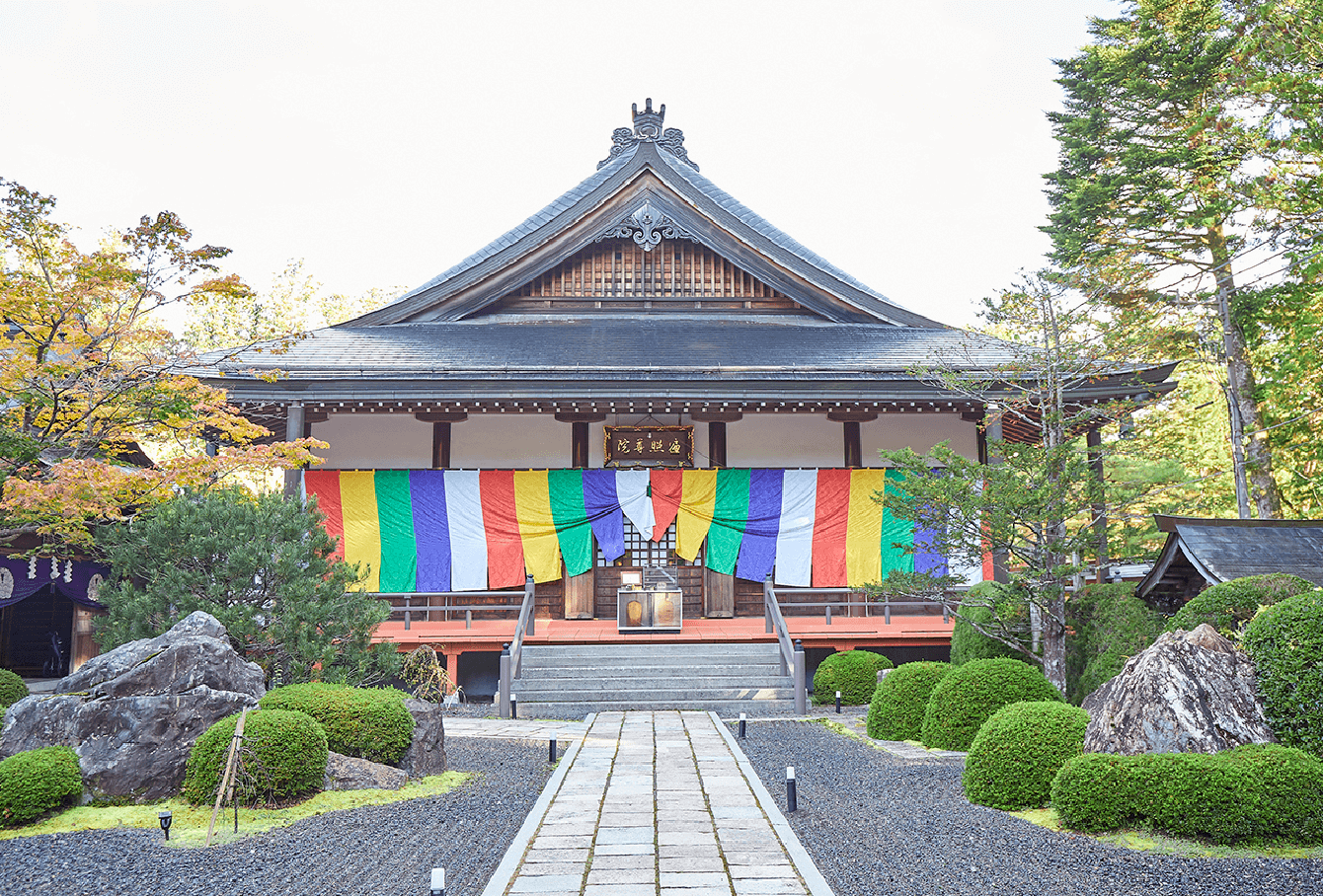
Henjoson-in is a quieter Koyasan option for guests who want the plateau’s cool air without the volume of the larger international shukubo. It sits within the temple core, accepts overnight guests, and offers the traditional shukubo rhythm — *shojin ryori* dinner, morning service, garden — in a more intimate setting. In summer, when Koyasan is at its least crowded outside the Obon week, a smaller temple like this delivers the quietest version of the mountain. The summer shojin ryori here, as at most Koyasan temples, leans into the season: chilled goma-dofu (sesame tofu), cold sunomono of vinegared summer vegetables, and the famous koyadofu served lighter and cooler than its winter hot-pot form. Eating a cool vegetarian dinner at 18°C while the city below sweats through the night is one of the small, specific pleasures of a summer stay.
Enryakuji Kaikan on Hieizan is the most accessible cool-mountain shukubo from a city base. Mt. Hiei rises to 848 metres directly above Kyoto, and the official temple-run lodging on the summit is reachable in under an hour from central Kyoto by train and cable car. The complex is the UNESCO-listed headquarters of Tendai Buddhism, surrounded by old-growth cypress and broadleaf forest that is dense and green in summer. The kaikan is modern and air-conditioned, the morning service is at the National Treasure Komponchudo, and for a traveller who wants to fold one cool mountain night into an otherwise Kyoto-based summer trip, this is the single easiest move on the board.
Saikan on Mt. Haguro is the summer escape for travellers willing to go further north. It is the only Edo-era shukubo still standing inside the Dewa Sanzan summit precinct, set among a 600-year-old cedar avenue in northern Yamagata, where the summer climate is cooler and fresher than anywhere in Kansai. Summer is the one season when all three Dewa Sanzan peaks are accessible — Mt. Gassan and Mt. Yudono, snowbound the rest of the year, open from July to September — making this the window for the full Shugendo pilgrimage of rebirth across the three mountains. Saikan’s Michelin Green Guide-listed mountain-herb shojin ryori is at its most varied in summer, when the surrounding slopes are full of edible wild plants.
Finally, for a traveller chasing genuine cool, the higher Dewa Sanzan peaks deserve a mention beyond the Haguro base. Mt. Gassan reaches 1,984 metres and holds snowfields into July; the air at altitude there is properly cold even in August. This is pilgrimage terrain rather than a comfortable overnight base — most guests stay at Saikan on Haguro and make a guided day trip up Gassan and to Yudono — but it is the coolest sacred ground covered in this guide, and a reminder of how far the altitude lever can be pushed in a Japanese summer.
Tip
When you book a summer Koyasan or Hieizan stay, confirm whether your specific room has air conditioning — older traditional wings often rely on natural ventilation and a fan, which is genuinely sufficient at 800m but not what every traveller expects. The cool nights mean even un-air-conditioned rooms sleep comfortably under an open window.
Summer is the richest ritual season at a working temple, and understanding what is happening turns a hot-weather stay into the most meaningful temple visit of the year. The whole arc centres on Obon and the Buddhist relationship with the dead. The festival proper runs August 13–16 across most of Japan (some regions, including parts of Tokyo, observe it in mid-July instead), bracketed by welcoming fires on the first night and farewell fires on the last.
The lantern offering is the visual centre of it. Manto-e at Koyasan’s Okunoin on August 13 is the most famous, but the form recurs across the country: candles and lanterns are lit to guide returning spirits, lining cemetery paths, floating on temple ponds, and hanging from the eaves of main halls. The most cited Obon image nationally is Kyoto’s Gozan no Okuribi on August 16, when giant kanji characters are burned into five mountainsides above the city to send the spirits back — a spectacle visible from many Kyoto rooftops and a fitting close to an Obon trip that began with a mountain shukubo.
Segaki, the feeding of the hungry ghosts, is the rite a shukubo guest is most likely to encounter directly during the Obon week, since many temples fold it into the morning service. Where Obon honours one’s own ancestors, segaki extends compassion to the spirits with no one left to remember them — a small offering of food and water, accompanied by chanting, set out for the forgotten dead. It captures something essential about the Buddhist view of the season: the dead are not feared but cared for, including the ones nobody else cares for. For a guest, witnessing it is a quiet, unexpectedly affecting counterpoint to the spectacle of the lantern festivals.
One practical note on Obon timing: mid-August is a major domestic travel period in Japan — many companies close and families travel to home regions — so trains, roads and lodging are at their busiest of the summer in the August 13–16 window. The shukubo themselves are focused on ritual rather than tourism during these days, which is part of the appeal, but it also means rooms book out earlier and transport is crowded. If you want the Manto-e experience specifically, treat August 13 at Koyasan as a fixed date and book months ahead.
The summer packing list is the inverse of the winter one, and getting it right makes the difference between a comfortable stay and a sweaty, bitten, damp one. Our general temple wardrobe guidance is at /blog/what-to-wear-shukubo; the summer-specific additions matter most. Start with breathable layers: lightweight linen or technical fabrics in light colours, plus one long-sleeve layer and long trousers for the mountain evenings, which genuinely cool to 18–20°C even when the lowlands are sweltering. Modest dress still applies for ceremonies — shoulders and knees covered — so pack at least one outfit that respects that even in the heat.
Insect repellent is non-negotiable. Mountain temples sit inside dense cedar and broadleaf forest, and summer is mosquito season — the cemetery paths at Okunoin, the cedar avenue at Haguro, and any temple garden near water will have them, especially at the dawn and dusk hours when you are walking to and from service. A DEET or picaridin repellent and an after-bite cream are worth their weight. Many shukubo provide a coil of katori senko (mosquito incense) in the room, but it will not cover an outdoor evening walk.
Rain gear is the third essential, especially for a June tsuyu trip but useful all summer given the afternoon thunderstorms of July and August. A compact umbrella beats a rain jacket in Japanese humidity — a sealed waterproof shell traps sweat and leaves you as wet inside as out. Quick-dry travel towels, a second pair of shoes so one can dry overnight, and a dry bag for electronics round out the wet-weather kit. Finally, pack against the heat at the bottom of the mountain: a refillable water bottle, a folding fan (sensu), and a small hand towel of the kind every Japanese person carries in summer to wipe sweat are all standard local equipment for the lowland transfers.
Tip
Buy mosquito repellent and a folding fan at any convenience store or pharmacy at the base of the mountain rather than carrying them from home — they are cheap, effective, and the Japanese summer versions (cooling sheets, mint-scented body wipes, hand-held misting fans) are better suited to the humidity than most imports.
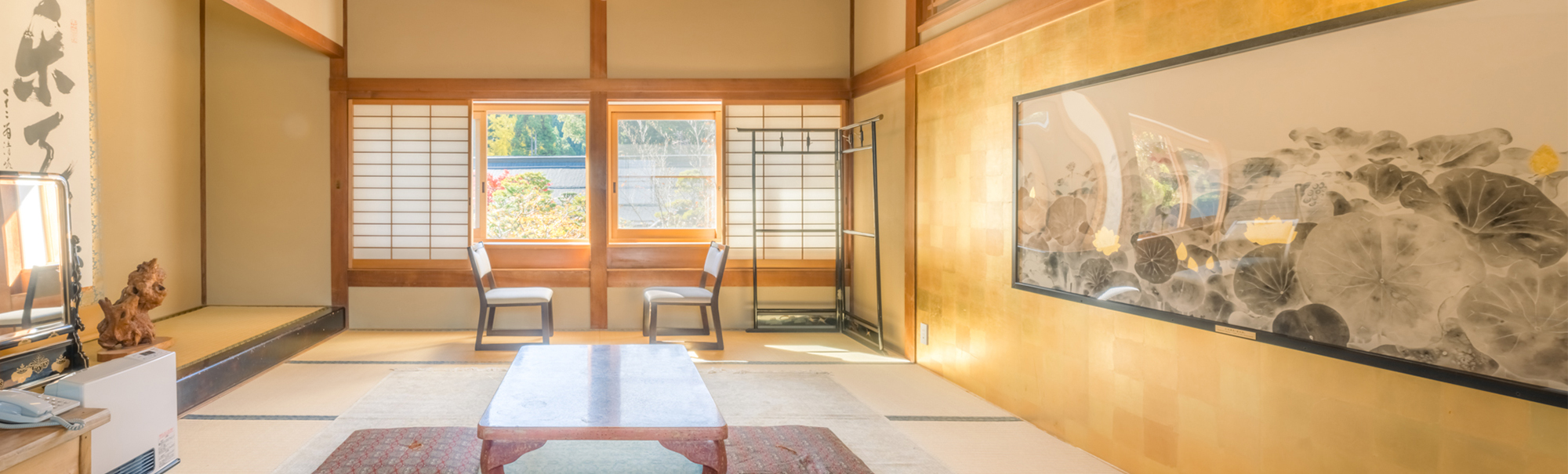
Travellers should set expectations clearly on this point: many shukubo have limited or no air conditioning, and that is by design rather than neglect. Traditional temple buildings were built for cross-ventilation — paper screens slide open, deep eaves shade the interior, raised wooden floors let air circulate underneath — and at 800 metres on Koyasan or 848 on Hieizan, that passive cooling is genuinely enough for most of the summer. A room with the screens open and a fan running, at an overnight low of 18–20°C, sleeps perfectly well. The mountain does the work that an air conditioner would have to do in the city.
That said, the picture varies by building. The renovated wings of larger shukubo — Fukuchi-in’s main wing, Enryakuji Kaikan, the modern temple-run lodgings — have proper thermostat-controlled air conditioning and hold a constant comfortable temperature. Older traditional rooms and the smaller temples often rely on a wall unit that may or may not be present, plus natural ventilation and a fan. Neither is wrong; they are different products. If air conditioning is important to you — for instance if you are sensitive to humidity or travelling with someone who is — book a modern wing explicitly and confirm it at the time of booking rather than assuming.
The single biggest comfort lever in summer is the bath. A shukubo with an onsen or a deep cypress bath turns the daily soak into a thermoregulation tool: a cooler rinse and a long soak resets you after a humid walk, and the post-bath cool of the evening mountain air is one of the genuine pleasures of a summer stay. Fukuchi-in on Koyasan and Saikan on Mt. Haguro both lean on their baths as a central part of the experience. The humidity that makes the lowland cities miserable is exactly what makes the evening bath-and-breeze rhythm of a mountain temple feel so good.
A final word on managing the heat of the lowland transfers, which is where a summer shukubo trip is genuinely uncomfortable rather than merely warm. The journey up to Koyasan, Hieizan or Dewa Sanzan begins in a hot city and on crowded summer trains, and the worst stretch is often the platform wait and the bus or cable car connection before the altitude takes over. Carry water and drink steadily — Japanese convenience stores and vending machines sell cold sports drinks and salt-replacement tablets (the locals swear by them in August), and dehydration sneaks up faster in the humidity than most visitors expect. Once the cable car crests the ridge, the discomfort lifts within minutes. Plan the transfer for the cooler bookends of the day where the timetable allows, and the heat becomes a brief toll rather than the defining feature of the trip.
At sea level, Japanese summer is genuinely hot and humid, and a temple in a city like Kyoto or Nara will be uncomfortable. But the mountain shukubo this guide focuses on — Koyasan at 800m, Hieizan at 848m, the Dewa Sanzan peaks — run roughly 5–8°C cooler than the lowlands, with daytime highs around 26–29°C and overnight lows of 18–20°C. At those temperatures a temple stay is comfortable, even pleasant, especially in the evenings. The trick is to use the lowland cities for early-morning sightseeing and retreat up the mountain for the heat of the day and the night.
Some do, many do not — and at mountain elevation it often does not matter. Modern renovated wings (Fukuchi-in’s main wing, Enryakuji Kaikan, the larger temple-run lodgings) have proper air conditioning. Older traditional rooms and smaller temples typically rely on natural cross-ventilation and a fan, which is genuinely sufficient at 800 metres because the nights are cool. If air conditioning is essential for you, book a modern wing explicitly and confirm it when you reserve rather than assuming every room has it.
Mid-August (the 13th–16th) is one of Japan’s busiest domestic travel periods, so trains, roads and lodging are at their summer peak and shukubo rooms book out months ahead. It is also the only time you can witness the great Obon observances — the Manto-e lantern offering at Okunoin on August 13, segaki rites at the morning service, the okuribi farewell fires. If you specifically want those experiences, the crowds are worth it; book early and accept busy transport. If you want a quiet mountain stay, aim for late July or early August instead, just before the Obon surge.
For a temple stay, yes — more than most travellers expect. Tsuyu brings grey skies and frequent rain through to about July 20, which is poor for panoramic sightseeing but excellent for atmosphere: mist between temple roofs, moss gardens at their most vivid green, rain running off the eaves during morning service. Because a shukubo day is mostly spent indoors and under cover, rain interrupts far less than it would a city itinerary, and June is the quietest, easiest-to-book month of the warm season. Pack a good umbrella and quick-dry layers and June rewards the visitor willing to trade clear skies for solitude.
Of the major shukubo regions, the Dewa Sanzan peaks in northern Yamagata are the coolest, both because they are further north and because summer is the only season the high peaks (Mt. Gassan at 1,984m, with snowfields into July) are accessible. For an easier, more comfortable cool — without the long journey to Tohoku — Koyasan at 800m and Hieizan at 848m both deliver a reliable 5–8°C drop from the lowlands. Hieizan is the easiest to fold into a Kyoto-based trip; Koyasan offers the deepest temple atmosphere and the Manto-e festival; Dewa Sanzan offers the genuine cool and the smallest crowds.
Tip
Use altitude as free air conditioning: sightsee the lowland cities early, then retreat to a mountain shukubo (Koyasan, Hieizan, Dewa Sanzan) for the heat of the day and the cool 18–20°C nights.
Tip
For the Manto-e lantern festival at Okunoin, treat August 13 as a fixed date and book a Koyasan shukubo months ahead — it falls in the busy Obon travel week.
Tip
June (tsuyu) is the quietest, easiest-to-book warm month — trade clear skies for misty atmosphere and near-empty temples, and pack a compact umbrella over a rain jacket.
Tip
Pack insect repellent: mountain temple forests and cemetery paths have mosquitoes at dawn and dusk, exactly when you walk to and from service.
Tip
Confirm air conditioning at the time of booking if it matters to you — book a modern wing (Fukuchi-in main wing, Enryakuji Kaikan) rather than assuming every traditional room has it.
Summer is the season most foreign travellers are warned away from, and at street level the warning is fair: Japan in July and August is hot and humid in a way that genuinely tires people out. But the warning misses the move that the temples themselves represent. Climb to 800 metres and the air drops ten degrees, the maples turn a saturated green instead of red, the moss gardens glow, and the cedar forest holds a cool that the city below cannot touch. The summer shukubo is the heat escape hiding in plain sight, and the travellers who use it spend their August evenings under a light quilt with the window open while the lowlands sweat.
It is also the most spiritually charged season the temples observe. Obon brings the dead home, the Manto-e lantern offering turns the Okunoin pilgrim path into a river of candlelight on the night of August 13, and the quiet segaki rite extends compassion even to the forgotten spirits. To stay at a working temple in mid-August is to be a guest inside the most important weeks of the Buddhist year, not a spectator at a tourist event. Pair the cool with the ritual — and read the autumn and winter companions to this guide at /blog/shukubo-autumn-foliage and /blog/shukubo-winter-snow-experience to plan a return in another season — and a Japanese summer stops being something to endure and becomes the most atmospheric temple trip on the calendar.
Ready to book?
Browse our curated collection of authentic Buddhist temple stays across Japan. Filter by region, sect, and experience.
开始探索本指南推荐的宿坊
恵光院
高野山淑姥的旗舰店,提供由英语导游讲解的戈马火祭仪式、Ajikan 冥想和每晚的 Okunoin 之旅。
起价 $130 //晚

福智院
唯一一座拥有天然温泉、三座 Mirei Shigemori 庭园和精致烧酒的高野山筑房。
起价 $175 //晚

延暦寺会館
比叡山唯一的 "shukubo "位于被联合国教科文组织列入世界遗产名录的圆乐寺内,早上 6:30 在国宝 "金盆中堂 "举行仪式,并可将琵琶湖美景尽收眼底。
起价 $130 //晚

羽黒山参籠所 斎館
由出羽三山神社运营,羽黑山山顶上唯一现存的江户时代宿坊,以入选米其林绿色指南的山菜精进料理闻名。
起价 $75 //晚
遍照尊院
在弘法大师苦行的山上建造的高野山筑房,有一个大柏树浴池和阿字观冥想室。
起价 $95 //晚
Explore Destinations