|
|
|
|
|
|
The first thing that hits you is not the cold. It is the weight. Before dawn, standing on a slick stone in a shallow mountain pool, you step forward into a column of water falling from six or seven metres above, and a few kilograms of mountain snowmelt land squarely on the crown of your head and shoulders at once. The cold arrives a half-second later, a white shock that drives the air out of your lungs. Somewhere underneath the roar a priest is shouting a chant, and the only correct response — the entire technique, really — is to keep chanting back, to keep breathing, and to not flinch out of the water. This is takigyo (*takigyo*, 滝行): waterfall ascetic training, one of the oldest and most physically uncompromising practices in the Japanese religious repertoire.
Most foreign travellers to Japan meet temple life through its gentlest doors — seated meditation on a cushion, copying a sutra with a brush, a quiet vegetarian dinner at a temple lodging. Takigyo is the opposite end of that spectrum. It is loud, freezing, brief, and genuinely demanding, and it belongs to a mountain tradition most visitors have never heard of. This guide explains what takigyo actually is, where it comes from, what the experience is like minute by minute, where ordinary visitors can try it under supervision, and — just as importantly — who should not attempt it at all.
Takigyo is the practice of standing beneath a natural waterfall, usually while reciting prayers or mantras, as a form of religious discipline. The word is a simple compound: taki (滝, waterfall) plus gyo (行, ascetic practice or training). It is not a sport, not a wellness treatment, and not — despite how it sometimes gets marketed — a cold-plunge biohack. It is a devotional act with roots reaching back well over a thousand years, and to understand it you have to understand the tradition that produced it.
That tradition is Shugendo (*Shugendo*, 修験道), Japan's syncretic religion of mountain asceticism. Shugendo fuses Esoteric Buddhism (chiefly the Shingon and Tendai lineages), pre-Buddhist Shinto kami worship, Daoist mountain-immortal lore, and Japanese folk animism into a single practice oriented around physical hardship in the mountains. Where Zen sits and Shingon performs elaborate ritual, Shugendo walks ridgelines, fasts in caves, climbs sacred peaks, and stands under waterfalls. The mountains themselves are the temple, and the body is the instrument through which a practitioner seeks transformation.
Its practitioners are called yamabushi (*yamabushi*, 山伏), literally 'those who lie down in the mountains.' Historically they were the wandering ascetics, healers, and ritual specialists of rural Japan, recognisable by their distinctive dress — a checked stole, a small black cap called a tokin worn on the forehead, and the horagai conch trumpet whose low call still echoes through the cedar forests of sacred mountains today. The yamabushi did not theorise about enlightenment; they enacted it through the body, and takigyo is one of the purest expressions of that bodily approach.
The tradition traces itself to a single semi-legendary founder: En no Gyoja (*En no Gyoja*, 役行者, 'En the Ascetic'), a late 7th-century practitioner from the Kazuraki region of present-day Nara. Tradition holds that through years of severe austerities in the mountains — fasting, exposure, and yes, standing under waterfalls — En no Gyoja gained extraordinary spiritual power and received a vision of Zao Gongen, the wrathful guardian deity who became the central figure of Shugendo. Whether or not the legends are literally true, En no Gyoja is the figure every yamabushi lineage points back to, and the mountains most associated with him — Yoshino and Omine in Nara — remain the spiritual heartland of the practice.
It is worth saying clearly that takigyo is not exclusive to Shugendo. Waterfall austerities also appear in some Tendai and Shingon Buddhist training, in certain Shinto purification rites, and in folk practice around sacred falls all over Japan — Nachi Falls in Wakayama, one of the tallest in the country at 133 metres, has been an object of waterfall worship for well over a thousand years and is venerated as a kami in its own right. But the Shugendo and yamabushi framing is the one most visitors will encounter when they sign up for a guided experience, and it is the lens through which the practice makes the most sense.
A brief word on history helps explain why the practice survived at all. For most of the medieval and early-modern periods, yamabushi were woven into the everyday religious life of rural Japan — leading pilgrims up sacred mountains, performing healing and exorcism, and maintaining the falls and shrines where austerities took place. Then, in 1872, the new Meiji government banned Shugendo outright as part of its forced separation of Buddhism and Shinto, and many lineages were suppressed or absorbed into one of the parent traditions. The ban was lifted after the Second World War, and the major centres — Yoshino-Omine in the south and Dewa Sanzan in the north — gradually rebuilt their training cycles. The takigyo a visitor experiences today is therefore both very old and, in its current organised form, a deliberate twentieth-century revival of something that nearly disappeared. That fragility is part of why the heartland temples treat it with such seriousness.
To an outsider, deliberately standing under freezing water looks like pointless self-punishment. Inside the tradition it is nothing of the kind. The central concept is misogi (*misogi*, 禊) — ritual purification by water. Misogi is one of the oldest ideas in Japanese religion, predating Buddhism entirely; it appears in the earliest myths, when the deity Izanagi washes away the pollution of the underworld in a river. Cold, moving, natural water is understood to carry away kegare — spiritual impurity, accumulated stain, the residue of daily life — and to restore a person to a clean, original state. The waterfall is misogi at its most concentrated: not a basin to rinse your hands in, but a continuous torrent powerful enough to scour you.
Layered on top of the purification logic is the ascetic logic — the deliberate confrontation with discomfort. Shugendo holds that the everyday mind is cluttered, distracted, and soft, and that genuine clarity is reached through controlled hardship. The cold of the waterfall is so total and so immediate that it leaves no room for the wandering thoughts, anxieties, and to-do lists that fill an ordinary mind. There is only the water, the breath, and the chant. In that sense takigyo is a meditation technique with the volume turned all the way up: where seated meditation slowly quiets the mind over many minutes, the waterfall does it in a single brutal instant. Practitioners describe a paradoxical stillness in the middle of the chaos — a calm that exists precisely because the body has been given something undeniable to attend to.
The chant is the third element, and it is not decorative. Most takigyo is performed while reciting a mantra or short sutra — very commonly the mantra of Fudo Myo-o, the immovable wisdom king who stands wreathed in flame and is the patron deity of ascetic practitioners, or the syllables of the Heart Sutra. The chant does practical work: it forces a rhythm onto the breath, it gives the mind a single object to hold, and it keeps the practitioner from gasping or panicking when the water lands. Vocalising into the cold is a way of meeting it rather than recoiling from it. Many guides will tell you plainly that the people who struggle most are the ones who go silent and tense up; the ones who chant loudly tend to last.
Fudo Myo-o is worth dwelling on, because the deity and the practice mirror each other almost exactly. His name means 'the immovable one,' and he is depicted seated or standing amid roaring flames, holding a sword to cut through delusion and a rope to bind the passions, his face fixed in a fierce scowl. The point of the imagery is that he does not flinch — the fire rages around him and he stays exactly where he is. That is precisely what the practitioner is asked to embody under the water: to become, for a few seconds, immovable in the middle of an overwhelming sensory assault. When a takigyo leader has you chant Fudo's mantra, he is not asking you to recite a magic formula; he is asking you to borrow the posture of a figure who, by definition, will not be moved by the force falling on him. The waterfall is the flame, and you are trying to be the deity who stands inside it without retreating.
Tip
If you take only one technique into the water, take this: keep your breath long and your voice loud. The instinct under cold shock is to gasp, hold the breath, and clench. The trained response is the reverse — a steady, audible exhale on the chant. The breath is the difference between an ordeal you endure and a practice you actually perform.
Strip away the philosophy and here is the physical reality. A typical supervised takigyo session is short — the time actually spent under the falling water is often measured in tens of seconds to a couple of minutes, not the long endurance feats that occasionally make the news. That brevity is not a watered-down version for tourists; even seasoned practitioners rarely stand under a serious cold fall for very long, because the body's tolerance is genuinely limited and the leaders know it.
Sessions almost always run at dawn or in the early morning. Partly this is tradition — the day's first light is associated with purity and fresh beginning — and partly it is practical, since the practice is meant to bracket the start of a day of training. You will usually change into the prescribed clothing (more on that below), gather at a small altar or shrine near the falls, and perform preparatory rituals: bows, a purification with salt or by sipping water, and warm-up movements. Many groups perform a vigorous set of breathing exercises and a count-off shout to raise body heat and resolve before anyone goes near the water. None of this is filler. The preparation is what makes the cold survivable.
There is also a posture to it. You do not simply slouch under the water and wait it out. The trained stance is active: feet planted and braced against the slippery stone, knees slightly bent, hands often pressed together in front of the chest or formed into a ritual mudra, head bowed just enough that the water lands on the back of the neck and shoulders rather than driving straight down onto the skull. The leader will position you and may keep a hand on your back or stand alongside you in the pool. The whole arrangement is designed so that you can hold the column of water with your body for the prescribed seconds without losing your footing or your breath. Done right, it looks almost still from the outside — a person standing firm in a place where standing firm should be impossible.
Then comes the water itself. The cold of a Japanese mountain waterfall is hard to overstate: this is snowmelt and spring water, often in the single digits Celsius even in summer, and in spring or autumn it can be just above freezing. The sensation when it lands is less 'cold' than 'electric' — a full-body alarm that punches the air out of you and makes your skin scream. The first few seconds are the worst. Then, strangely, many people report that the panic peaks and breaks, and a kind of fierce clarity sets in. You are not comfortable. But you are entirely, undeniably present. The roar of the water blots out all other sound; the chant becomes the one thread you hold onto.
How long you actually stand there varies by tradition, by leader, and by the day's water. For a first-timer the in-water portion is often a single set of perhaps thirty seconds to a minute, sometimes repeated two or three times with a break to recover between them. The leaders calibrate it to the group; a session for hardened practitioners runs longer and harder. The point is never to set a record. A leader who pushes a nervous beginner to stay under far longer than is comfortable is not making the practice more authentic — authentic takigyo is precisely measured, and the measure is set by the leader's judgement of what each body can safely take that morning.
Then you step out, and the second wave hits — the rush of returning warmth and adrenaline, often described as the most euphoric part of the whole thing. Your skin tingles, your mind feels scrubbed clean, and there is a giddy, slightly disbelieving lightness. This after-effect is a large part of why people seek the practice out, and it is genuine: a brief cold-water shock triggers a real physiological cascade. But it is worth keeping the religious frame in view. Within the tradition, that lightness is not the goal; it is a side effect of the purification, not the point of it.
Takigyo is not a casual drop-in activity, and it is not offered everywhere. Because it is a genuine religious practice with real physical risk, it is almost always done under the direct supervision of a priest or trained yamabushi, as part of a wider program rather than as a standalone gimmick. The two regions where travellers have the most realistic chance of arranging it are Dewa Sanzan in Yamagata and the Yoshino-Omine area in Nara — both of which are among the historic heartlands of Shugendo.
Dewa Sanzan — the Three Sacred Mountains of Dewa (Haguro, Gassan, and Yudono) in Yamagata Prefecture — is arguably the most accessible serious yamabushi country in Japan. The town of Toge at the foot of Mount Haguro has hosted pilgrim lodgings for centuries, and the area runs structured yamabushi training experiences for outsiders, sometimes including waterfall and cold-water austerities as part of a multi-day program. Mount Haguro is the only one of the three peaks accessible year-round, which makes it the natural base. Lodgings such as Saikan, the historic pilgrim hall on Mount Haguro itself, and Dainichibo near Mount Yudono put you inside the living tradition rather than adjacent to it. For the full picture of staying overnight here, see our /blog/dewa-sanzan-shukubo-guide.
Yoshino and the Omine range in Nara are the other great option, and the more historically charged of the two — this is En no Gyoja's home ground and the cradle of Shugendo itself. The working temples on Yoshino-yama, several of them still leading multi-day ascetic traverses of the Omine ridge, are the kind of places where waterfall and mountain austerities are part of the genuine training calendar rather than a visitor add-on. Sakuramotobo, founded by a direct disciple of En no Gyoja, runs formal Shugendo programs for participants who are physically fit and willing to apply in advance; Chikurin-in Gunpoen offers a more comfortable garden-inn base nearby for travellers who want the address and atmosphere. The deeper picture of staying on this mountain is in our /blog/yoshino-shukubo-cherry-shugendo guide.
Beyond these two heartlands, individual temples and shrines scattered across Japan run their own takigyo days, and the Kumano region in southern Wakayama — home to the towering Nachi Falls and the ancient Kumano Kodo pilgrimage routes — has its own deep waterfall-worship tradition; our /blog/kumano-kodo-shukubo-viator-guide covers temple lodging along those trails. Some commercial operators near Tokyo and Kyoto also offer half-day waterfall experiences, and there are well-known takigyo sites within reach of the big cities — falls in the western mountains of Tokyo and in the hills north of Kyoto run beginner sessions in the warmer months. Quality varies enormously. The ones worth doing keep a priest or trained leader in the water with you, run proper preparation and aftercare, and treat the practice as devotion rather than spectacle.
Season matters more than most first-timers expect. The classical training calendar peaks in summer, and for good reason: the air is warm enough that the contrast with the cold water is bracing rather than dangerous, and the body recovers quickly once you step out. Some lineages also run austerities in the depths of winter, when the practice becomes a far more extreme test reserved for committed practitioners — this is not where a curious visitor should start. As a general rule, if you are arranging your first takigyo, aim for late spring through early autumn, ask the operator directly what the water and air temperatures will be on your date, and treat any winter waterfall offer with healthy caution. The heartland programs at Dewa Sanzan and Yoshino are also tied to the wider mountain-opening seasons, so the windows when formal training runs are narrower than you might assume; confirm dates well ahead.
Tip
Booking realities: most authentic takigyo in the Dewa Sanzan and Yoshino heartlands is arranged by phone in Japanese, often as part of a longer training program, and may require advance application. If you do not speak Japanese, book through your shukubo, a specialist tour operator, or a bilingual guide. A commercial day-experience near a major city is the easiest entry point, but for the real tradition, build it into a Shugendo temple stay.
This is the section to read slowly. Takigyo involves two genuine hazards stacked on top of each other: sudden immersion in very cold water, and standing on wet rock under falling water with reduced balance and sensation. Cold-water shock is not trivial. The sudden plunge into cold causes an involuntary gasp reflex, a spike in heart rate and blood pressure, and a tightening of the blood vessels, all within seconds. For a healthy person under supervision and for a short duration, this is manageable and is the entire point. For some people it is genuinely dangerous.
Do not attempt takigyo if you have any heart condition, high blood pressure, or a history of cardiovascular problems — the cold-shock spike in blood pressure and heart rate is exactly the kind of stress that can trigger a cardiac event. The same caution applies if you are pregnant, if you have a respiratory condition such as asthma that can be aggravated by cold, if you have epilepsy or any seizure disorder, or if you have a condition that affects your balance or sensation. Anyone with a serious chronic illness should clear the practice with a doctor first, and should disclose it honestly to the leader. A responsible operator will ask; a careless one may not, and it is on you to volunteer the information.
Some absolute rules. Never do takigyo alone, and never do it at an unsupervised wild waterfall on your own initiative — without local knowledge you cannot judge the water volume, the depth of the pool, the slipperiness of the rocks, or the risk of a flash surge after rain upstream. Never attempt it after drinking alcohol or while dehydrated. Do not push past your limit to impress anyone; stepping out early is always allowed and is not a failure. If you feel chest pain, severe dizziness, confusion, or numbness that does not pass quickly on warming up, treat it as an emergency. The leaders run aftercare — drying off fast, layering up, hot drinks, gentle movement — for a reason, and it is as much a part of the practice as the water.
Tip
Honest gut-check before you book: takigyo is safe for a reasonably healthy adult under proper supervision, for a short time, with good preparation and aftercare. It is not safe for people with heart conditions, high blood pressure, respiratory or seizure disorders, or during pregnancy, and it is never safe done solo at a random waterfall. If any of that applies to you, choose a different temple practice — seated meditation, sutra copying, or a morning service will give you the spiritual core without the cardiovascular gamble.
Takigyo makes far more sense as part of an overnight stay than as a one-off activity, and the natural place to base yourself is a shukubo (*shukubo*, 宿坊) — Buddhist temple lodging — in Shugendo country. There is a rhythm to it that a day-trip cannot reproduce. You arrive in the afternoon, settle into a simple tatami room, eat a vegetarian shojin-ryori dinner, and go to bed early because the practice starts before dawn. The waterfall session bookends a morning that may also include chanting, a mountain walk, or a fire ritual, and then you return to the lodging to warm up properly and rest. The austerity is held inside a structure of care, which is exactly how the tradition intends it.
It also matters culturally. Doing takigyo as a guest of a working temple, led by its priests, frames the practice as devotion and places you — however briefly — inside a living lineage rather than at the receiving end of an attraction. The shukubo dinner, the pre-dawn quiet, the morning service, and the waterfall all belong to the same continuous practice. If you have never stayed at a temple before, read our /blog/shukubo-first-time-guide first so the rest of the experience does not feel disorienting; then build the takigyo session in as the intense centrepiece of a one- or two-night Shugendo stay at Dewa Sanzan or Yoshino.
There is a particular emotional logic to the sequencing, too. The vegetarian dinner the night before is light and quiet; you sleep early, often badly, with the next morning hanging over you. The pre-dawn wake-up in an unheated mountain room is itself a small austerity. By the time you reach the falls you have already been stripped of comfort and routine for half a day, and the body that steps into the water is not the body that arrived at the gate the previous afternoon. Afterwards, the return to the lodging — the hot tea, the warm bath if there is one, the simple breakfast — lands with a sweetness that no ordinary morning has. The waterfall is the sharp peak in the middle of a deliberately shaped arc, and the lodging is what gives the arc its shape. A day-trip delivers the cold; only a stay delivers the whole curve.
Clothing is usually provided and prescribed — you do not turn up in a swimsuit. Traditionally, men wear a white loincloth (fundoshi) and women a white robe or wrap; many programs now provide a simple white cotton garment for everyone, sometimes with a headband. White is the colour of purity and of pilgrimage, and the wet cotton is part of the point. The temple or operator will tell you exactly what to wear and will supply it; do not improvise. Bring a full change of warm, dry clothes for afterwards, including a hat, because you will be shedding heat fast once you step out.
Practical packing: a large quick-dry towel (or two), warm layers and a windproof outer layer for the walk back, dry socks, and footwear that handles wet stone — many sessions provide simple straw sandals or grippy footwear for the water itself, but you want solid shoes for the trail. Bring nothing valuable or electronic near the falls; phones and cameras stay with your dry kit, and most leaders will ask you not to film the practice out of respect. Eat lightly beforehand, hydrate, and avoid alcohol the night before.
A note on etiquette and attitude, because it shapes how the leaders treat you. Takigyo is somebody's religion, not a theme-park ride, and the people guiding you have very likely been doing it for decades. Small things signal respect: arriving on time, bowing when shown how, staying quiet during the ritual portions, not treating the altar or the falls as a backdrop for selfies, and thanking the leaders properly at the end. Tipping is not customary in Japan and can cause confusion; if you want to express gratitude beyond words, a donation to the temple in an envelope is the appropriate gesture. None of this is about stiffness or performance — it is about meeting the practice on its own terms, which is also, not coincidentally, the frame of mind in which the cold is easiest to bear.
What to expect of yourself: arrive with humility and follow instructions exactly. The leader's count, the sequence of bows, the moment to step in and the moment to step out are not suggestions — they are the safety system and the ritual at once. Expect to feel nervous; that is normal and even appropriate. Expect the cold to be worse than you imagined for the first few seconds and the after-glow to be better than you imagined. And expect to be quietly changed by it in a way that is hard to articulate afterward, which is, in the end, the whole reason the practice has survived for over a thousand years.
Tip
For a reasonably healthy adult, done under proper supervision for a short time with good preparation and aftercare, it is a manageable and controlled risk — that is the entire design of a guided session. The real dangers are cold-water shock and slipping on wet rock, and they become serious for people with heart conditions, high blood pressure, respiratory or seizure disorders, or during pregnancy, and for anyone who attempts it solo at an unsupervised waterfall. Always go with a trained leader, disclose any health conditions honestly, and never push past your limit.
Tip
Cold enough to take your breath away. Japanese mountain waterfalls run on snowmelt and spring water, often in the single digits Celsius even in summer, and close to freezing in spring and autumn. The shock when it lands is intense for the first several seconds, then for many people the panic breaks into a strange clarity. The brevity of the session — frequently under a couple of minutes in the water — is precisely because the cold is so genuinely demanding.
Tip
In an authentic session, yes — and you will be glad of it. The chant, commonly the mantra of Fudo Myo-o or the Heart Sutra, is taught beforehand and is not just ritual decoration: it forces a steady rhythm onto your breath, gives your mind a single object to hold, and is the practical technique that keeps you from gasping and tensing under the cold. You do not need to understand every syllable; you need to vocalise it loudly and keep breathing.
Tip
Not a swimsuit — prescribed white clothing, almost always provided by the temple or operator. Traditionally a white loincloth for men and a white robe for women, though many programs now issue a simple white cotton garment for all participants. White signifies purity and pilgrimage. Bring a full set of warm, dry clothes and a couple of large towels for immediately afterward, plus footwear that handles wet stone. The organiser will tell you exactly what to wear; follow their instructions rather than improvising.
Tip
Yes, provided you are reasonably healthy and have no disqualifying medical condition. Most supervised takigyo experiences are specifically designed for first-timers and laypeople, with thorough preparation, a short time in the water, and proper aftercare. No prior meditation or fitness training is required beyond ordinary good health. What matters far more than experience is honesty about your medical history, willingness to follow the leader's instructions exactly, and the humility to step out if your body tells you to.
Takigyo asks more of a visitor than almost any other temple practice in Japan, and that is exactly its value. It cannot be done at arm's length or treated as a photograph; you either step into the water or you do not. For the adventurous traveller curious about the mountain religion most guidebooks never mention, a single dawn under a cold fall — chanting, breathing, undeniably present — offers a more direct line into Shugendo than any amount of reading or watching from the bank.
Approach it with respect rather than as a thrill, be ruthlessly honest with yourself about your health, choose a setting where a trained leader is in the water with you, and frame it as part of a proper stay in Shugendo country rather than a checklist item. Build it into a night or two at a shukubo on Yoshino-yama or in the Dewa Sanzan foothills, and the cold will not be the thing you remember longest. The thing you remember will be the silence afterward — the scrubbed, lightened, faintly disbelieving calm of someone who walked into a wall of freezing mountain water at dawn and walked back out the other side.
Ready to book?
Browse our curated collection of authentic Buddhist temple stays across Japan. Filter by region, sect, and experience.
开始探索本指南推荐的宿坊
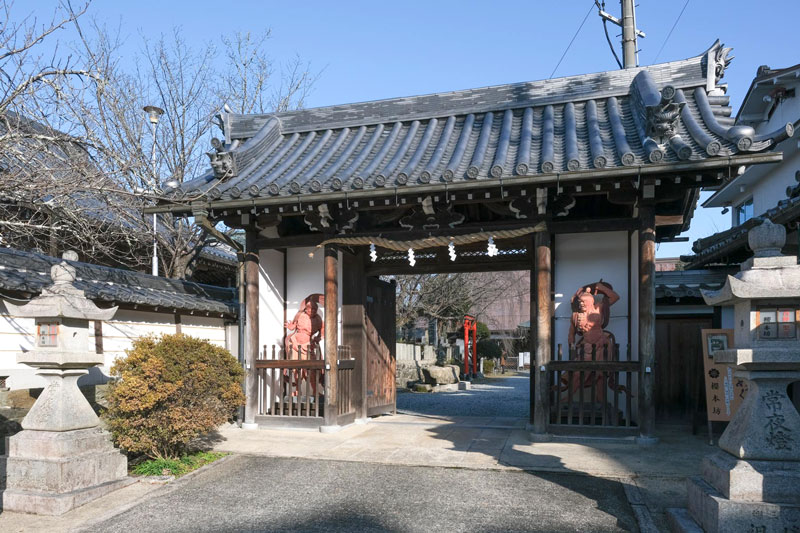
井光山 五臺寺 櫻本坊
坐落于世界遗产吉野山的修验道道场宿坊,由天武天皇的梦境发愿建立,供奉三尊国家重要文化财佛像。
起价 $80 //晚
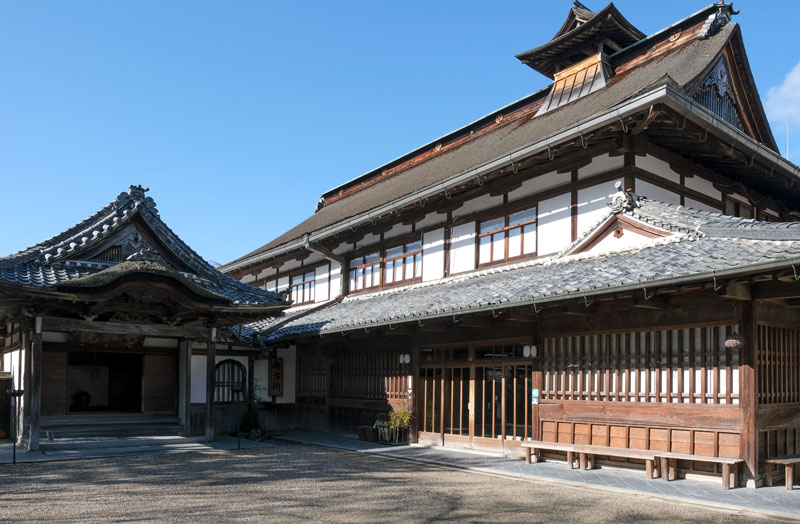
竹林院 群芳園
吉野山最具格调的宿坊旅馆,相传由圣德太子建立,以千利休作庭、名列大和三大名园的「群芳园」为核心。
起价 $110 //晚

羽黒山参籠所 斎館
由出羽三山神社运营,羽黑山山顶上唯一现存的江户时代宿坊,以入选米其林绿色指南的山菜精进料理闻名。
起价 $75 //晚

湯殿山総本寺 瀧水寺金剛院 大日坊
空海于807年开基的汤殿山真言宗总本寺,安置真如海上人即身佛(自我木乃伊化的活佛)与国家重要文化财释迦如来。
起价 $75 //晚
Explore Destinations