|
|
|
|
|
|
 Photo by Europeana on Unsplash
The first character is the hardest one. You press the brush to the grey trace line, and everything you thought you knew about holding a pen becomes irrelevant. The brush is not a pen — it has no edge, no reliable width, no spring to push back against the pressure of your hand. A monk at the desk beside you is already on the third line, his strokes fluid and certain in a way that has nothing to do with speed. You are still on the first character of the Heart Sutra, a single stroke that curves down and fans open at the base, and the paper is thinner than you expected. The ink bleeds slightly at the end of the stroke. You breathe. You move to the second character. The room is completely quiet except for a distant wooden percussion from the main hall — a priest performing the morning liturgy somewhere deeper in the temple compound. This is shakyo (写経), and the next sixty minutes will be unlike anything else you do in Japan.
This page is the nationwide guide to shakyo — what it is, what the practice actually entails from the ritual handwashing through the final dedication, and where to sit down with a brush across Koyasan, Kyoto, Mt Hiei, and Nikko. If you want the full temple-by-temple breakdown of ten specific venues plus the shabutsu (Buddha-image tracing) variant in detail, go to our in-depth shakyo and shabutsu guide. If you want to pre-book online and skip the direct-reservation friction, the Klook shakyo experiences guide covers the best packages available. This post gives you the what, the why, and the framework to choose the experience that fits your itinerary and your patience for silence.
Shakyo (写経) means, literally, "copying scripture." The practice consists of sitting at a low desk, loading a fine-tipped brush with black ink, and tracing — character by character, column by column — a pre-printed sheet of the Buddhist sutra laid beneath a semi-transparent sheet of washi paper. The practitioner does not compose the text, does not translate it, does not need to understand its meaning in any discursive sense. The instruction is simply to copy it, with attention, with composure, and with the brush moving at the pace that keeps the strokes faithful to the model below.
The sutra most commonly copied at Japanese temples is the Heart Sutra (Hannya Shingyo, 般若心経) — 262 Chinese characters, short enough to complete in sixty to ninety minutes for a first-timer, long enough to occupy the full attention. The Heart Sutra is the condensed essence of the Prajnaparamita (Perfection of Wisdom) literature: it is the text that declares form and emptiness to be identical, that enumerates what the enlightened mind no longer clings to, and that ends with a Sanskrit mantra (gate gate paragate parasamgate bodhi svaha) that the transliteration preserves even in Chinese characters. Most practitioners copying it in a temple have read it many times. They copy it again because the reading and the copying are entirely different activities.
Some temples — particularly those with esoteric Buddhist lineages like Shingon temples on Koyasan — also offer longer texts: the full Lotus Sutra passages, the Kegon Sutra excerpts, or short dharanis specific to the temple's founding deity. A few temples have resident monks available to discuss the text after the session, if the visitor's Japanese allows for it. But the most common format across Japan, from Kamakura to Koyasan to the Nikko mountains, is the Heart Sutra on a single sheet: 262 characters, one brush, one hour, complete silence.
Shakyo arrived in Japan from China around the sixth century, traveling with the broader transmission of Buddhism across the East Asian world. The earliest documented Japanese shakyo — government-sponsored sutra-copying projects — date to the reign of Emperor Shomu in the mid-eighth century, when the court established a bureau of official sutra copyists (shakyosho) at Nara. Monks trained for years to produce faithful copies of the canon, and the resulting scrolls were distributed to provincial temples across the nascent Japanese state. The practice was understood simultaneously as a form of merit-making (each copied character accruing spiritual benefit for the practitioner and their ancestors), a preservation technology (calligraphy on washi lasts centuries where early print media does not), and a disciplinary form — the copying of sacred text as a mind-settling practice, analogous to the chanting of sutras or the sitting of meditation.
During the Heian period (794–1185), shakyo became a court practice as well as a monastic one. Aristocratic women copied sutras as offerings for deceased relatives; Fujiwara lords commissioned entire sutra sets on gilt paper as temple dedications. The Lotus Sutra in particular attracted intense copying devotion — the tradition that a single copied character of the Lotus generates the same merit as building a full stupa ran through the medieval period as both theological claim and social motivation. By the medieval era shakyo had bifurcated: at the monastic level it remained a serious textual-preservation and spiritual practice; at the lay level it had become something closer to a votive offering, the completed sheet handed to the temple rather than kept by the copyist.
Modern shakyo as a tourist and lay-practice experience emerged in the late Showa period, as Japanese temples increasingly opened their ritual spaces to lay participation. The format standardized: a pre-printed tracing sheet, an ink stone, a supplied brush, and a supervised sitting room. The session ends with the visitor dedicating the completed sheet at the altar — the ganmon, or dedication statement, written at the sheet's foot records the intention: for a deceased relative's peaceful repose, for the health of a family member, for world peace in the most general formulation. The sheet is then received by the temple and eventually burned in a ritual fire. The visitor takes a blank copy as a souvenir, or a stamp to confirm attendance. The practice has now been running continuously, in some form, for approximately 1,400 years.
Shakyo is not simply "sitting down and writing." It is held within a ritual frame that distinguishes it from calligraphy practice or journaling, and understanding the frame in advance makes the experience land differently. The frame has four parts: purification, preparation, copying, and dedication.
Purification begins before you enter the copying room. Most temples direct visitors to the hand-washing basin (temizuya or chozuya) at the entrance to the main hall — you ladle water over each hand in turn, rinse your mouth (or simply the lips), and shake the water free before entering. At some temples the purification is more minimal: a small basin of water at the door to the copying room, a damp cloth to wipe the hands clean. Either way, the gesture is intentional — the hands that will hold the brush are being prepared for a different kind of work than their ordinary life.
Preparation at the desk involves grinding the ink. Many temples now supply pre-ground liquid ink (bokujuu), which removes the grinding step and allows you to begin immediately. Temples that maintain the full traditional format — a solid ink stick, a stone mortar, a small amount of water — will allow five to ten minutes of grinding before the session begins. The grinding has its own value: the motion is slow and circular, the smell of the ink is distinctive and grounding, and by the time the ink has reached its proper consistency, most practitioners find that their breathing has slowed and their attention has narrowed. This is not accidental. The grinding is the on-ramp to the copied concentration that follows.
Then the sheet is placed on the desk, the semi-transparent washi laid over it, and a small weight holds the upper edge flat. You dip the brush, press out the excess ink against the rim of the stone, and begin the first column. The instruction at most temples is to copy the title heading first — Maka Hannya Haramita Shingyo, the full name of the sutra — before moving to the main body text. Some temples suggest a short silent bow before beginning; others simply let the visitor start when ready. Either way, the atmosphere of the room — the other visitors already working, the occasional muted bell from the main hall, the quality of the light through paper screens — does most of the preparation for you.
The copying itself is sixty to ninety minutes of slow, column-by-column transcription. Unlike calligraphy practice, where the goal is to produce beautiful strokes with one's own style, shakyo specifically requires faithful tracing of the characters below. The goal is accuracy and attention, not artistic expression. Practitioners report that the first twenty minutes involve a degree of self-conscious effort — keeping the strokes on the trace lines, managing the brush pressure, watching for bleeding. Around the thirty-minute mark, for most people, something shifts. The mechanics become less effortful. The character in front of you occupies the full attention without a separate act of will. The quality of mind that arrives is similar to what zazen practitioners describe in the second round of sitting — not dramatic, not visionary, but quiet in a way that is different from ordinary quiet.
Dedication is the final step, and it is the step that makes shakyo a ritual rather than a craft. At the foot of the tracing sheet there is a space for the ganmon (願文), the dedication statement — a line in which you write your name, the date, and the intention for which the copying was done. Common intentions are the peaceful repose of a deceased ancestor, the recovery of a sick family member, gratitude for a safe journey, or a general dedication to the benefit of all beings. Some visitors write nothing specific — the template text on the sheet usually provides a placeholder. When the sheet is complete, the visitor brings it to the temple reception, or in some cases to a small altar in the copying room itself, and places it in a designated tray or box. The temple will dedicate the accumulated sheets at a fire ceremony (kito) at a later date. What you take home is the ink smell on your hands, a souvenir stamp, and the memory of what sixty minutes of attention to a single task feels like.
Tip
If you copy the sutra with a specific person in mind — a parent who has died, a friend who is ill — write their name in the ganmon line rather than your own. The temple staff will confirm this is correct at most venues. Dedicating the merit of the copying to another person is one of the oldest uses of the practice, and the act of naming someone before you begin changes the quality of attention you bring to the subsequent hour.
Shabutsu (写仏) is the visual counterpart to shakyo: instead of tracing sutra characters, the practitioner traces a printed image of a Buddhist deity — typically Amida Buddha, Kannon (Guanyin), or Fudo Myoo — in fine brushwork. The skill threshold is slightly different from shakyo (curved figurative lines require a different brush-control than square Chinese characters), and the session tends to run somewhat longer — ninety minutes to two hours for a first-timer working with a detailed deity image. The meditative effect is arguably more immediate than shakyo: the face of the deity occupies the full field of vision and attention for the entire session in a way that lines of text do not.
Shabutsu is offered at a smaller subset of temples than shakyo — primarily Shingon and Tendai temples with strong esoteric practice lineages, and more frequently in Kyoto and Koyasan than in other regions. The in-depth guide to shakyo and shabutsu covers the shabutsu format in detail, including the specific temples that offer it and the deity images most commonly available. If you are drawn to a more visual, image-based practice, that guide is where to go.

Shakyo is available at hundreds of Japanese temples — more widely than zazen, in fact, because it requires no body-specific preparation and can be offered without a supervising monk in continuous attendance. The range of experiences runs from silent, supervised sessions in a dedicated copying hall at a working monastery, to drop-in calligraphy tables in a temple annexe where you can stay for as long as you like and buy tea at a window afterward. Below is an honest picture of the regions and the representative temples.
Koyasan is the headquarters of Shingon esoteric Buddhism, founded by Kukai (Kobo Daishi) in 816 and still home to over a hundred temples on a mountain plateau in Wakayama. Shakyo here carries a specific theological weight — Shingon practice holds that the physical act of writing the mantra-seeded text is itself a form of contact with the deity, and the copying session at a Koyasan temple is framed within that understanding rather than as a secular mindfulness exercise.
Kongo-Sanmai-in is one of the oldest shukubo on the mountain and offers morning shakyo in a dedicated room adjacent to the guest hall. The session begins after the 6 a.m. morning service, with incense already in the air from the ritual and the first light coming through the shoji screens. Sheets range from the Heart Sutra to shorter Shingon dharanis specific to the temple's primary deity, Dainichi Nyorai. The session is self-paced, supervised, and silent. Fukuchi-in, another of the mountain's premier shukubo, offers shakyo as part of its standard overnight program — the activity sits between the evening meal and the morning service, giving it an unusual placement that suits the contemplative mood of the mountain at night.
What distinguishes Koyasan shakyo from the urban temple format is the surroundings: you are sitting on a mountain that has been a sacred space for 1,200 years, in a room that opens toward cryptomeria cedar forests and stone lanterns draped in moss. The combination of altitude, forest air, and Shingon ceremonial gravity makes the practice feel different from the same activity in a Kyoto tourist district. If you have one opportunity to do shakyo in Japan and you are comfortable with a full shukubo overnight stay, Koyasan is the recommendation.
Kyoto offers the widest variety of shakyo formats in Japan, from the drop-in calligraphy sessions at busy Higashiyama temples (where you pay at a window and sit at a table in a garden annexe without any formal framing) to the full supervised ritual format at shukubo with overnight stays. The range is useful precisely because it allows you to choose your entry point.
Shunkoin, the Rinzai subtemple in the Myoshin-ji complex that is well known for its English-friendly zazen program, also offers shakyo sessions paired with zazen on request. The combination — thirty minutes of zazen, a short walk, sixty minutes of shakyo — is one of the better single-morning formats available in Kyoto for the visitor who wants both the sitting and the writing practice. The abbot's English is fluent, and the session includes a brief explanation of the sutra's content before you begin copying it.
Chion-in and the temples of the Higashiyama corridor also offer shakyo, though the format there is closer to a well-managed tourist activity than a supervised ritual practice. The prices are similar (¥1,000–¥1,500), the sheets are the same, but the atmosphere of a busy eastern Kyoto temple on a weekend afternoon is different from a Monday morning at Myoshin-ji. Both are legitimate. Your choice depends on how much ambient silence matters to the experience you want.
Mt Hiei is the headquarters of Tendai Buddhism, founded by Saicho in 788 as a counterpart to the Shingon mountain culture of Koyasan. The mountain lodges at Enryakuji Kaikan, the main guest facility for Enryakuji temple complex, offer shakyo as part of their overnight program with a Tendai ceremonial frame — the dedication at the end of the session is offered at the Konpon Chudo hall, the main hall of Enryakuji, where the fumetsu no hoto (eternal flame, lit 1,200 years ago by Saicho) has been burning continuously since the temple's foundation.
The practical difference between Mt Hiei and Koyasan for a shakyo visitor is the proximity to Kyoto: the Eizan Railway and a cable car bring you from central Kyoto to the mountain summit in under an hour, which makes Mt Hiei viable as a day-trip for the Kyoto-based traveler who wants a shorter overnight commitment. The mountain environment — Lake Biwa visible on clear days to the east, Kyoto spread below to the west — gives the copying session the same quality of spatial remove as Koyasan without the longer travel from Osaka.
Nikko's temple complex in Tochigi Prefecture combines Shinto and Buddhist elements in a way that is unique in Japan — the Toshogu Shrine and the Buddhist temples of the mountain share sacred space in the old shinbutsu shugo (Shinto-Buddhist syncretism) fashion that the Meiji government's 1868 religious separation decree tried to disentangle. Rinno-ji Tendai, the major Buddhist temple of the Nikko complex, offers shakyo in its guest facilities as part of its shukubo program. The autumn foliage season at Nikko is one of the most celebrated in the Kanto region, and doing shakyo at Rinno-ji in late October or early November — the light coming through maple leaves at their peak, the air cold and still — is a combination that the Kyoto versions cannot quite replicate.
Tip
Nikko's shakyo program is less internationally prominent than Koyasan or Kyoto, which means the booking window is shorter and the autumn foliage peak is still accessible with three to four weeks' notice rather than the two-month advance required for comparable Kyoto dates. If your travel falls in October or November and you want the seasonal dimension in the experience, Rinno-ji is the under-known choice.
The practical parameters of shakyo are consistent across most Japanese temples, which makes planning straightforward. A single shakyo session at a walk-in or pre-booked venue typically runs sixty to ninety minutes for the Heart Sutra format. The first ten minutes are instruction and setup; the core copying occupies fifty to seventy minutes depending on your pace; the dedication and cleanup takes five to ten minutes at the end. Faster copyists (those with prior brush experience or familiarity with the characters) may complete the Heart Sutra in forty-five minutes; first-timers who pause to load the brush carefully and check each stroke against the model below may take up to two hours. Neither pace is wrong. The temple sets no deadline.
Cost runs from ¥1,000 to ¥2,000 at most venues for a single session including materials — the tracing sheet, the brush, the ink (liquid or stick), and the use of the room. Some temples price the session at ¥1,500 and include a cup of matcha and a seasonal wagashi sweet at the end; this is the standard format at several Kyoto subtemples. At Koyasan shukubo, shakyo is frequently included in the overnight lodging fee rather than charged separately. At temples that offer both shakyo and shabutsu, the shabutsu session typically costs ¥200–¥500 more, reflecting the more complex deity image and the longer session length.
No previous skill is required — or, more precisely, the skill the practice requires is not calligraphy. You do not need to be able to write Chinese characters. You do not need to read them. The session is tracing, not composing: the model is printed below the washi, you can see it clearly through the paper, and the instruction is to follow the strokes as faithfully as your hand allows. Practitioners with zero prior experience with a brush regularly produce completed sutra sheets of which they are proud. The brush will respond differently from a pen, and the first ten minutes will feel awkward. By the thirtieth minute the awkwardness has usually resolved into something more like absorption.
If you want to pre-book an English-supported shakyo experience without navigating Japanese temple reservation systems, the Klook shakyo experiences guide covers the best platform-bookable packages across Kyoto, Koyasan, and Tokyo. These typically cost ¥3,000–¥6,000 and include bilingual instruction and a temple tour alongside the copying session — higher than direct booking but significantly lower friction.
Shakyo suits a wider range of travelers than almost any other Japanese temple practice. It requires no physical flexibility, no prior meditation experience, no tolerance for 4 a.m. wake-up bells. It is available year-round, across climate zones and temple traditions, at price points that are entirely reasonable. The minimum requirement is that you can sit at a desk for an hour without becoming restless — and the practice itself tends to resolve restlessness once you are twenty minutes in.
For the traveler who is curious about Buddhism but does not want to engage with it as a belief system, shakyo is the least doctrinally loaded of the major temple practices. You are copying a text, not affirming it. The dedication at the end can be written for a purely secular intention — gratitude, memory, hope — without any theological claim. Many non-Buddhist Japanese people do shakyo regularly at their family temple for exactly this reason: it is a practice that holds its meaning lightly, asks only for attention, and returns something useful even when the practitioner cannot name what that is.
For travelers already engaged with meditation practice — zazen, vipassana, yoga — shakyo offers a useful counterpoint. The challenge of sitting meditation is learning to do nothing with attention; the challenge of shakyo is learning to do one specific, detailed, demanding thing with attention. Both sharpen the same muscle from different angles. Many practitioners find that a day of shakyo prepares the attention for an evening of zazen more effectively than an hour of pre-sit stretching.
It is also, practically, one of the better activities for a rainy day in Japan. The copying room at a Japanese temple is dry, warm, quiet, and uncrowded. The practice is absorbing enough to occupy a full morning without boredom. The souvenir — your completed sutra sheet, if the temple allows you to keep it rather than dedicating it — is useful for nothing but is surprisingly hard to throw away. It goes on a shelf and stays there. You look at it occasionally and remember the quality of the room.
Wear clean, comfortable clothing without strong fragrance. The copying room is a temple space — the same codes apply as for any temple visit: sleeveless tops and shorts are discouraged, though a summer dress or light trousers are fine. Remove shoes at the entrance to the copying room (tatami or polished wood floor) and sit in socks. Most temples provide low desks with cushions for floor-sitting; a few have Western-height tables with chairs. If you have back problems that make floor-sitting difficult for an hour, ask when booking — chair accommodation is usually available and willingly provided.
The materials are provided. You do not need to bring a brush, ink, or paper. If you have a specific ink stone or brush you prefer to use (some practitioners carry their own), ask the temple in advance — some welcome personal equipment, others prefer to supply everything for consistency. Leave rings and bracelets that might drag across the paper in your pocket. Switch your phone to silent — the room is quiet enough that a notification tone will disturb the other practitioners.
Tip
If you have never held a brush before: practice the pressure range in the first thirty seconds before you start the first character. Dip, press against the ink stone rim, then on a corner of scrap paper — press the brush hard (broad, blurred strokes) and then lift to almost nothing (fine, hairlike strokes). Know where both ends of the range are. Then begin with a medium pressure and adjust as you go. This thirty-second exploration will save you the mid-sheet adjustment that happens when you discover the brush's range by accident at character forty-seven.
Direct booking is the simplest path for most venues. Koyasan shukubo like Kongo-Sanmai-in and Fukuchi-in accept email and online reservations in English through their own websites or through shukubo booking platforms. Enryakuji Kaikan on Mt Hiei books through a Japanese-language form but is manageable with browser translation. Rinno-ji Tendai at Nikko operates a Japanese-language phone and email system; if you have difficulty, the tourist association of Nikko maintains an English-language concierge service that can assist with temple reservations.
Walk-in shakyo is available at many Kyoto temples without advance reservation — you arrive, pay at the reception desk, and are shown to the copying room when a desk is free. This works well for popular Higashiyama venues on weekday mornings. It does not work for shukubo shakyo sessions (which are coordinated with the lodging schedule), for venues with small copying rooms (which fill quickly on weekends), or for any temple during the peak foliage and blossom seasons. When in doubt, book ahead.
For travelers who want the convenience of English-language booking, a confirmed time slot, and a bilingual guide included in the price, the platform-booked options in our Klook shakyo guide are a practical solution. The premium over direct booking is real but not large, and the reduction in friction — no Japanese reservation form, no ambiguity about what is included — is worth it for many itineraries.
No. Shakyo is tracing, not composing — the sutra text is printed below the semi-transparent washi, and you follow the strokes visually. The same skill that lets you trace a drawing applies here, regardless of whether you can read the characters. Most first-timers who cannot read Japanese at all produce a complete and legible Heart Sutra sheet without difficulty. The dedication line (ganmon) at the foot of the sheet is sometimes in a fill-in-the-blank format that requires only your name and the date; the temple can assist with the kanji if needed, and some venues provide a romanized option for foreign visitors.
Allow ninety minutes from arrival to departure. The copying itself takes sixty to seventy minutes for most first-timers working with the Heart Sutra (262 characters). If you work faster — prior calligraphy experience, familiarity with the strokes — you can complete it in forty-five to fifty minutes. If you pause often to clean the brush or check your strokes carefully, ninety minutes for the copying alone is not unusual. The instructions and setup at the start take ten minutes, and the dedication and handover at the end take five. Many people find the session goes faster than they expected; the absorption is real.
It depends on the temple's format. In the traditional votive model, the completed sheet is offered at the altar and eventually burned in a ritual fire — this is the temple's practice at many Koyasan and Nikko venues, and the session fee includes this dedication as part of the ritual. At other temples — particularly the more tourist-oriented Kyoto venues and some day-trip formats — the sheet is yours to keep, and you roll it into a protective tube provided by the temple. When you book, ask specifically: sutra kept by temple, or kept by visitor? Most temples that offer the take-home option also provide a small printed card explaining the sutra, which pairs well with the sheet as a souvenir.
Yes, from around age eight or nine, depending on the child's concentration span and fine motor comfort. The brush is more challenging to control than a pencil, and the low desk-and-cushion format requires sitting still for an hour — which is the practical limit for most younger children. Some temples offer shorter shakyo formats (copying a single short passage rather than the full Heart Sutra) that work well for children in the eight to twelve range. A few Kyoto venues have tried family shakyo sessions with both a short sutra sheet for children and the full format for adults, with the family sharing a desk. Ask when booking whether a children's or shortened format is available if you are travelling with young kids.
Shodō (書道) is the art of calligraphy — the goal is beautiful, expressive brushwork that reflects the practitioner's own style and skill. Shakyo is the copying of sacred text with the goal of faithful accuracy and meditative attention, not artistic expression. In shodō, a skilled practitioner writes a single character twenty times seeking the ideal version; in shakyo, the practitioner traces the model below as accurately as possible and moves to the next character. The aesthetic goal of shodō (beautiful strokes) is explicitly not the goal of shakyo (faithful attention). Both use the same tools — brush, ink, paper — but they produce different internal states and value different outcomes. If you want calligraphy lessons, look for a shodō class; if you want a meditative practice grounded in Buddhist tradition, shakyo is the right form.
You will finish the final column — the mantra, transliterated, the strokes denser and more confident than the first column was — and put the brush down. The silence of the room is the same silence it was when you began, but you are in a different relationship to it. The hour has been absorbed somewhere. This is not the silence of waiting; it is the silence of having been occupied with one thing, completely, without division. The monk at the desk beside you finishes a moment later. He blows lightly on the ink to help it dry. The priest's percussion from the main hall has stopped.
You write your name at the foot of the sheet — or your mother's name, or no name at all — and carry it to the altar. The temple receives it without ceremony. You wash your hands at the basin outside and walk back into the temple grounds with the ink smell still on your fingers. That smell will stay faintly on your hands for the rest of the day. Some people say it is the best part.
For the full temple-by-temple guide — ten venues with individual session details, the shabutsu format, and regional comparisons — visit our shakyo and shabutsu experience guide. For pre-booked English-supported sessions available on Klook across Kyoto, Koyasan, and Tokyo, see the Klook shakyo experiences guide. Your brush is ready. The sutra is waiting.
Ready to book?
Browse our curated collection of authentic Buddhist temple stays across Japan. Filter by region, sect, and experience.
Start ExploringRecommended Temples for This Guide
金剛三昧院
A historic Koyasan shukubo built by Hojo Masako in 1211, home to a National Treasure Tahoto pagoda and over a dozen Important Cultural Properties.

福智院
The only Koyasan shukubo with a natural hot spring, three Mirei Shigemori gardens, and refined shojin ryori.
from $175 /per night
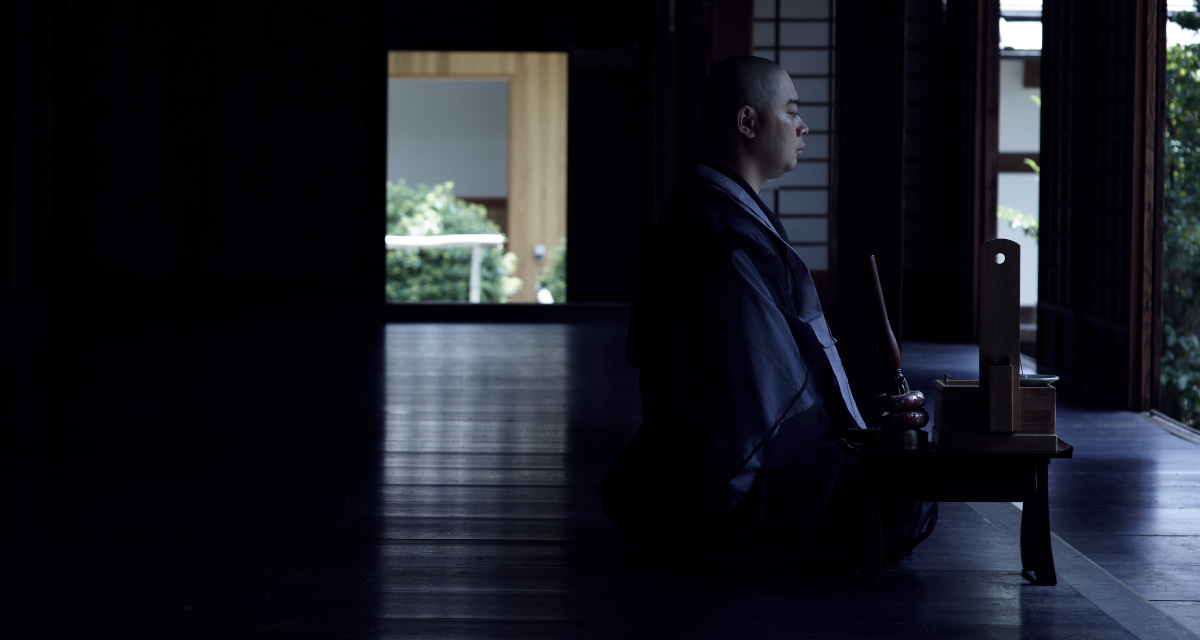
春光院
Kyoto's most internationally renowned Zen shukubo, offering English-led meditation classes and modern en-suite rooms inside a 1590 Myoshin-ji sub-temple.
from $60 /per night

延暦寺会館
The only shukubo on Mt. Hiei, located inside UNESCO-listed Enryaku-ji with a 6:30 morning service in the National Treasure Konponchudo and panoramic Lake Biwa views.
from $130 /per night

